“How Not To Be A Hero” by Edward Snowden

“If his motives are as he has represented them-–“I understand that I will be made to suffer for my actions,” but “I will be satisfied if the federation of secret law, unequal pardon and irresistible executive powers that rule the world that I love are revealed even for an instant,” he wrote in a note accompanying his first set of leaked documents—-then he acted courageously and selflessly.”

—- Ethics Alarms, June 10, 2013, referring to the conduct and statements of Edward Snowden, NSA “whistleblower.”
That's outrageous! They are collecting our phone records and our...hey, "The Fugitive!" I LOVED that show!!

That’s outrageous! They are collecting our phone records and our…hey, “The Fugitive!” I LOVED that show!!

Now we know that his motives are not as he represented them. From his statement that I quoted, I assumed that Snowden’s intent was to make himself available to U.S. authorities, and to prompt debate regarding the government’s widespread intrusions into the private communications of presumed-to-be-innocent citizens, as well as to ensure that the issue did not get drowned out, superseded and swept aside by distractions, as so many vital issues are. This was an indispensable second step, though I did not begrudge him some time to prepare for it. It would be the action of a one engaged in classic civil disobedience; it would demonstrate sincerity, public-mindedness and courage, and it would avoid his exploitation by the many around the world, and domestically, who wish the U.S. ill.

Instead, Snowden decided to run. Continue reading →
July 3: A Day To Honor Custer’s FIRST Stand, At Gettysburg… And Reflect On How Our Greatest Strengths Can Be Our Fatal Flaws

custercharge

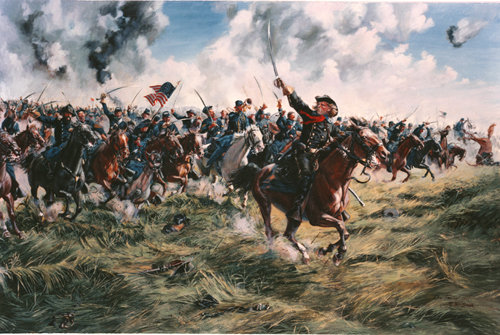
I wrote this post two years ago, concerning my favorite neglected episode of the Civil War, when young George Armstrong Custer shocked Confederate J.E.B. Stuart with his unexpected and furious resistance to Stuart’s attempt at disrupting the Union flank while Gen. Meade’s army defended itself against Pickett’s Charge. As with the First Minnesota’s suicidal stand on the second day of the Battle of Gettysburg, Custer’s crucial moment of truth has been largely neglected in the assembly of the battle’s heroes; I don’t think it has ever been depicted in a Civil War film, for example, though there is at least one book about it.

The incident is especially fascinating to me because of the its multiple ironies. Custer succeeded when his nation needed him most because of the exact same qualities that led him to doom at the Little Big Horn years later. Moreover, this man who for decades was wrongly celebrated in popular culture as an American hero for a shameful botched command that was the culmination of a series of genocidal atrocities actually was an American hero in an earlier, pivotal moment in our history, and almost nobody knows about it.

Thus it is that among the brave soldiers of the Blue and Gray who should be remembered on this 150th anniversary of the greatest battle ever fought on this continent is a figure whose reputation has sunk to the depths, a figure of derision and ridicule, a symbol of America’s mistreatment of its native population. Had George Armstrong Custer perished on July 3, 1863, he might well have become an iconic figure in Gettysburg history. The ethics verdict on a lifetime, however, is never settled until the final heartbeat. His story also commands us to realize this disturbing truth: whether we engage in admirable conduct or wrongful deeds is often less a consequence of our character than of the context in which that character is tested.

Here is the post, slightly lengthened:

July 3, 1863 was the date of Pickett’s Charge, when Confederate General Robert E. Lee ordered a desperate Napoleonic advance against the Union line at Gettysburg in what has come to be a cautionary tale in human bravery and military hubris. The same day marked the zenith of the career of George Armstrong Custer, the head-strong, dashing cavalry officer who would later achieve both martyrdom and infamy as the unwitting architect of the massacre known as Custer’s Last Stand. Continue reading →

July 2, 1863: When 262 Minnesotans Saved The United States Of America

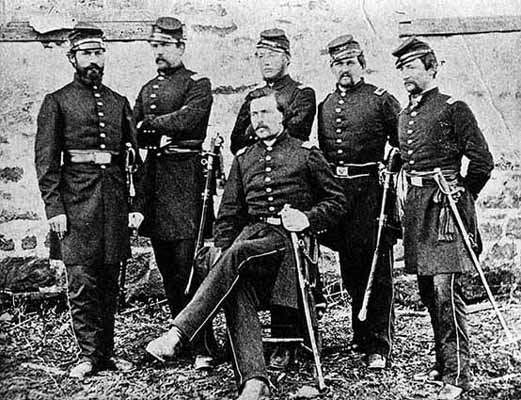
Officers of the First Minnesota Volunteer Regiment

Officers of the First Minnesota Volunteer Regiment

For the last two years, I have posted here about the courage and sacrifice of the men of the First Minnesota Volunteer Regiment at the Battle of Gettysburg. There was more than enough of those qualities, on both sides, to go around that day, and unless you are in the vicinity of that lovely and unbearably sad little Pennsylvania town, it isn’t just the brave Minnesotans who are neglected, but all of the participants. Yesterday was July 1, the anniversary of the beginning of the battle in 1863, and there was scant mention of it in the media. After all, there is the Zimmerman trial, and outrage over Jennifer Lopez accepting a million dollars to sing “Happy Birthday” for a brutal dictator, and whether movie viewers will flock to see Johnny Depp play Tonto. One of the few excellent acknowledgements of the date and its significance was by CBS, which also featured the famous feature on the battle published years ago by the Saturday Evening Post. 

In an ambitious mood, I once resolved to find a different group of battlefield heroes from that day to feature every July 2, the messiest, most important pivotal of the battle that itself has been overshadowed by the tragedy of suicidal Pickett’s Charge on July 3. But I have neither the historical research skills nor time to do justice to such a task, though the injustice of so many forgotten heroes is great. It is best to allow the First Minnesota Volunteer Regiment, who obeyed a desperate order to fill a breach in the Union line, knowing that it meant almost certain death,  “to gain a few minutes’ time and save the position and probably the battlefield,” to stand for all of them.

As for me, I’m going to watch, once again, Ted Turner’s excellent film Gettysburg, and play its soaring score in my home and my car. We have a duty to remember, and honor, every moment of those three days in July, 150 years ago. Continue reading →

ARRRGH! Outrageous Ethics Malpractice By “The Ethicist”!!!!

Well, you did it again, Chuck..you made my head explode. But now I have a place to keep my keys...

Well, you did it again, Chuck..you made my head explode. But now I have a place to keep my keys…

It’s time for Chuck Klosterman, the New York Times’ designated amateur who now handles “The Ethicist” advice column, to hang it up, and let some randomly chosen unemployed New Yorker take a shot at the job. Since assuming his post, Chuck has had good moments and bad, but this botch is embarrassing, and signature significance—no one who isn’t a bona fide Ethics Dunce could make such a terrible call.

Get this: Klosterman was asked whether surreptitiously taking cuttings from plants owned by a shopping center was unethical:

“…While walking through our local shopping center, we noticed a particular plant that we both liked and decided to get it for our patio….My wife thought she could grow it from cuttings, so we went back and took about three or four cuttings from one of the many plants that were scattered around the shopping center. The plant was not hurt or damaged in any manner or form, but my gut instinct told me that this was wrong. Was it?”

Does this question really need asking? Apparently, because the fraud masquerading as an ethicist at the Times thinks it’s a “thorny” question (Chuck likes puns…maybe the column should be called “The Punster”) about an “unethical act that has a positive impact.” ( Helpful hint to Chuck: the issue is stealing.)  Klosterman then embarked on a rationalization orgy: Continue reading →

GLAAD Joins The Hilaria Baldwin Ethics Lionel Wreck

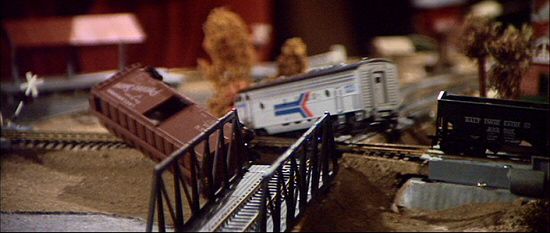
model_trainwreck2

Ethics train wrecks can develop at any time, though sometimes the participants and the incidents involved limit the results to small-scale ethics damage. Let’s call these “Ethics Lionel Wrecks,” in honor of the model train sitting in a cardboard box in my basement. This week’s tale of Hilaria Baldwin’s mistimed tweets defines the genre.

The progression:

1. George Stark Starts the Train

This one began when the pregnant wife of actor/ pitchman/liberal blowhard/ bully Alec Baldwin was called out by the Daily Mail for tweeting trivial, giddy messages during the funeral of recently departed actor James Gandolfini. That would have been certifiably disrespectful conduct in the rare sub-category of Funeral Ethics; indeed Ethics Alarms certified it. The problem is that Mail reporter George Stark was wrong.

Salon explained that the error was caused by “a technical glitch on Twitter that reflected GMT instead of ET…an analysis of the source code of Hilaria Baldwin’s tweets reveals that she tweeted between 11 am and 2 pm, as opposed to 8 am to 11 am. The Daily Mail has stated that “the tweets did appear accurately timed on mobile devices such as smartphones and iPads,” but “the only way MailOnline was able to establish the REAL time the tweets were sent was by viewing the twitter web page source code, something almost no normal member of the public would ever do.”

I have no idea what the hell that means, but I was one of the people who relied on Stark’s report, which seemed convincing, with screen shots of the tweets themselves and their timestamps. Was he unethically sloppy, as Baldwin and others have claimed, or was this just an excusable mistake? Twitter is new enough that there may be some justification for not checking the source code before using the time stamp to conclude something from a tweet: I can’t determine whether there is a journalistic protocol for this at the Daily Mail or elsewhere. Before a reporter attacks the conduct of a pregnant woman at a friend’s funeral, he would presumably be obligated to be certain of his facts, since readers, like me, will assume that he was. If this really was, as Salon says, a freak Twitter glitch, then Stark was unlucky rather than unethical.

2. Ethics Alarms rides the rails Continue reading →

Hilaria Baldwin’s Funeral Etiquette

[Update: June 28…The tweets that inspired this commentary were shown to be wrongly time-stamped, and the reporter’s newspaper have apologized for the error, but not before there were some other developments, discussed here.  Ethics Alarms apologizes to Hilaria too. The criticism of her is withdrawn; the commentary below about tweeting at funerals, and Hilaria’s husband stands.]

In case you wondered what kind of a woman would marry actor Alec Baldwin during his late career, “mega-jerk and proud of it phase, wonder no more.

Baldwin’s wife Hilaria demonstrated that she is at least as self-centered, rude and lacking respect for basic human courtesies by tweeting her head off during James Gandolfini’s funeral in New York.

It’s simple, really. You don’t have to attend anybody’s funeral (though, as Yogi Berra famously warned, if you don’t go to theirs, they won’t come to yours), but if you do, you are obligated to put aside the petty details of your life for a few hours while you solemnly and respectfully join family members and friends in remembering and honoring the concluded life of the deceased. You don’t spent the time passing notes with knock-knock jokes on them to other mourners, you don’t hum inappropriate ditties, and you sure as hell don’t spend the funeral tweeting inane stuff like like this... Continue reading →

Unethical Quote of the Week: Senate Majority Leader Harry Reid

“The idea that allowing two loving, committed people to marry would have a negative impact on anyone else, or on our nation as a whole, has always struck me as absurd.”

—Senate Majority Leader Harry Reid, after calling Wednesday’s Supreme Court ruling striking down the Defense of Marriage Act “a great, historic day for equality in America.” Reid voted for the law when it was overwhelmingly passed by the U.S. Senate, back when treating gays like second-class citizens was popular.

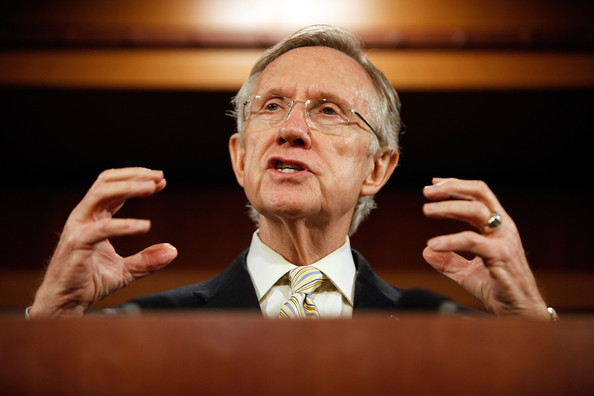
Harry Reid, embracing absurdity when it is politically expedient...

Harry Reid, embracing absurdity when it is politically expedient…

It’s hard to say which of the legislative lions prowling the cloak rooms of Capital Hill are more loathsome—Republican Mich McConnell, Nancy Pelosi, or Harry Reid. It’s easy to decide which is more shamelessly cynical and hypocritical, however. That would be Harry Reid.

If he “always” thought that DOMA was “absurd,” why did he vote for it? Are we to take from this that he not only is willing to vote for absurd measures (he has voted for many), but also votes for measures when he believes they are absurd? Or does he just say whatever he thinks will sound good to the low-information, knee-jerk progressives who have a memory of about two weeks (if that) regarding any issue, and possess the naïve belief, also absurd, that only Republicans lie to them? Continue reading →

Ethics Dunce: Jim Carrey

 Jim Carrey, not fooling as much as we thought...

Jim Carrey, not fooling as much as we thought…

There are no rule, laws, or principles of ethics that requires that an actor who usually portrays an ass actually has to be an ass, but if there were, Jim Carrey would be in complete compliance with them.

Jim Carrey announced via Twitter that he now objects to  “Kick-Ass 2,” the soon-to-be-released movie he stars in, citing as his reason the December, 2012 Sandy Hook shooting, which he apparently thinks will be made worse by the movie, or would have been caused by it if the film had come out earlier, or, well, something.  “I did Kick-Ass a month [before] Sandy Hook and now in all good conscience I cannot support that level of violence,” Carrey tweeted. “I meant to say my apologies to others [involved] with the film. I am not ashamed of it but recent events have caused a change in my heart.” Continue reading →

Superhero Ethics: The Duty To Rescue

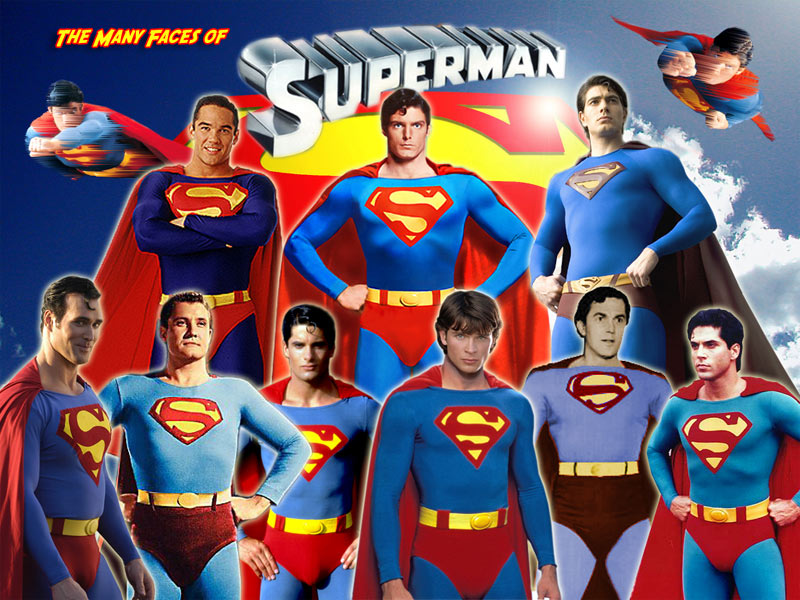
Which is the cold, calculating, utilitarian face?

Which is the cold, calculating, utilitarian face?

In the new Superman film, Supie fails to rescue an important character in distress after the character requests that he allow him to perish.

Lawyer and superhero obsessive James Daily, co-author of “The Law and Superheroes” and the Law and the Multiverse blog, has taken to his keyboard to examine whether the transplanted Kryptonian had a legal duty to rescue the victim anyway.

His conclusion, and the law’s, is no. Daily writes,

“People are sometimes surprised to learn that, by default, there is no obligation under American law to help or rescue other people…Even “Good Samaritan” laws do not create an obligation to act as a Good Samaritan, but instead only encourage such acts of kindness by shielding some would-be rescuers from legal liability if they accidentally end up hurting rather than helping the victim. This “American rule” (not to be confused with the American rule for attorneys’ fees) applies even when a life could be saved with the most minimal of effort. As a result it has been called “morally repugnant” and “revolting to any moral sense,” but it is nonetheless the law in most states….” Continue reading →

Food Network Thought Crimes

[Now that is a headline I never conceived of having to use.]

"Love your cooking, Paula, but that joke you laughed at in 1996 means that you're racist scum. Rot in Hell."

“Love your cooking, Paula, but that joke you laughed at in 1996 means that you’re racist scum. Rot in Hell.”

Paula Deen, Southern cuisine star of the Food Network, has been fired because of the public uproar after she admitted in a law suit deposition that she had, on occasion and in the past, used the term “nigger” and tolerated racist jokes. This outburst of honesty (she was under oath at the time) apparently justifies social network hatred being directed her way in waves, and Jake Tapper, on CNN (WHY do I keep watching CNN?) conducting an inquisition this afternoon in which he asked third parties whether formerly using “the N-word” means Deen is a racist.

I don’t give two hoots about Paula Deen or her career. I watch the Food Network about as often as I watch MSNBC or YES.  She has always seemed more than a little bit silly and dim to me, and the reasons for her popularity elude me. But if there are many Americans who grew up in the South when Deen did who never used “nigger” and who never laughed at a racist joke, I’ll be shocked. That isn’t a “everybody does it” excuse. That is a “stop condemning people who reflected their narrow culture until they gained some perspective and wisdom” explanation. My father grew up in Kentucky in the 20’s and 30’s. Do I think he would have answered a deposition the same way Deen did? I sure do, and if one percent of those attacking Deen now possess sufficient integrity, honesty and essential fairness to be worthy of licking my Dad’s combat boots, I’ll be even more shocked. Dad is hardly the only admirable individual who spoke this way in his younger years. During his successful campaign for the U.S. Senate in Virginia, former Democratic Senator and war hero (and my classmate) Jim Webb bravely admitted that he had also used “nigger” when he was younger, and that crucifying his Republican opponent, George Allen, for similar, long-past indiscretions was unfair. He was right about Allen, and his  defense applies to Deen as well. Continue reading →