Our Sports Superstars and Their Non-Profit Scams

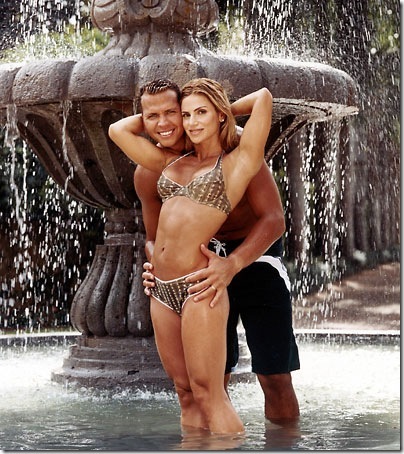
Hey, don't be cynical! Yes, this is the A-Rod family, and that's the Font of Human Kindness behind them!

Hey, don’t be cynical! Yes, this is the A-Rod family, and that’s the Font of Human Kindness behind them!

Pro athletes who receive insanely high salaries for their unique talents and awe-inspiring achievements often deflect the public jealousy, envy, resentment and criticism their riches inspire by launching charitable foundations aimed at providing assistance and comfort to poor children, disaster victims, orphans, kids with dread diseases, puppies, and anything else that will produce a collective, “Awww! He’s really a good guy!” Some of these athletes really are good guys, like former tennis star Andre Agassi, a true philanthropist, whose Foundation raised and handed out millions while he was playing and continues to do so. Agassi also frequently led all pro athletes in money donated to charity, and he had no scandals that he was trying to make people forget. He’s third on the list now. The first two: Tiger Woods and Lance Armstrong.

Other stars, however, are a different story. Continue reading →

“Argo” and the Horrible Thought

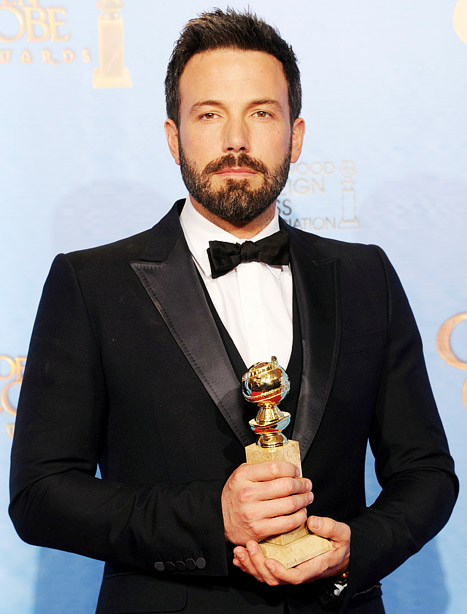
Thanks a bunch, Ben.

Thanks a bunch, Ben.

“Argo” prompted a disturbing thought that has been haunting me since I saw the picture. I am sorry that I had the thought, and hoped that it had been successfully banished by time and hope. Unfortunately, the juxtaposition of “Argo” winning the Best Picture Oscar combined with the inappropriate and intrusive appearance of Michelle Obama to announce it, complete with a politics-tinged speech that was as gratuitous as it was manipulative, caused that thought to begin burning in my brain again. Alas, here it is.

At the conclusion of “Argo,” former President Carter is heard emphasizing the obvious, that in 1980 he would have loved to have taken credit for the audacious  rescue of the six American Embassy workers from Iran that was engineered by his CIA. But, Carter says, do so would have endangered the remaining hostages, and though it would have helped his politically besieged Presidency (which was lost to Ronald Reagan that same year, in part because of Carter’s perceived weakness in handling the hostage crisis), giving all of the credit to Canada was the right and responsible thing to do.

I am no admirer of Jimmy Carter’s policies, personality, Presidency or leadership. He is, however, an ethical man. He was President before the hyper-partisanship that has rotted our politics, before the “perpetual campaign” style of leadership launched by Clinton, and before every act by every main stage player in Washington appeared to be dictated by the need to hold power, rather than by the needs of the people. My horrible thought is that I believe the current President and his  Machiavellian political advisors would not have done as Carter did, if the “Argo” scenario played out in 2012, as that Presidential election approached. This White House, facing the prospect of defeat, would find a way to leak its participation in the successful rescue, judging its retention of power a higher goal than protecting the hostages that may well have died anyway.

I wish I didn’t have this thought, but I cannot banish it. The unseemly chest-thumping and credit-grabbing over the killing of Bin Laden, the leaking of details about the deliberations leading to it, the deceptive handling of the Benghazi disaster, and yes, the inability of the President’s political strategists to resist attaching the President or his wife to anything remotely positive—even the Academy Awards— while refusing to accept responsibility for any mistake, miscalculation or failure (See Bob Woodward on the disinformation campaign regarding the looming sequester, beginning with Obama’s outright lie in the third Presidential debate, “The sequester is not something that I’ve proposed.”), all have me convinced that the days when we can trust a President to risk his own grip on power for the good of the country are gone, perhaps forever.

As I said, it is a horrible thought, and I fervently wish I didn’t have it. I want to trust and admire our nation’s leaders, the President most of all. But the leaders of both parties have earned this level of distrust, and I see no signs that they are capable of making that horrible thought, and other too, go away.
Ethics Hero: Michael Arrington

michaelarrington

Michael Arrington is a tech publisher and blogger who made a good amount of money selling his previous blog, Techcrunch. He bought a boat with some of it, a nice one, with state of the art electronics. On the day his new toy was to be delivered, he had to work through customs and Homeland Security paperwork, since the boat was built in Canada.  Something went wrong, something stupid.  He writes,

“My job was to show up and sign forms and then leave with Buddy (WA sales tax and registration fees come a week later). DHS takes documents supplied by the builder and creates a government form that includes basic information about the boat, including the price. The primary form, prepared by the government, had an error. The price was copied from the invoice, but DHS changed the currency from Canadian to U.S. dollars. It has language at the bottom with serious sounding statements that the information is true and correct, and a signature block.”

It’s serious all right. It is a government form, and signing it is a legal attest that the information is correct. Arrington continues, Continue reading →

The “Do You Know Who I Am?” Prosecutor and the Strip Club

"My mistake--that's a POLE, not the Florida BAR! Silly me. I just made a mistake..."

“My mistake–that’s a POLE, not the Florida BAR! Silly me. I just made a mistake. Wrong address…”

Personally, I find few varieties of unethical conduct more nauseating than individuals of fame, position, power or influence who use that status to squeeze special privileges and considerations from ordinary citizens. From the cop who assumes that he won’t be charged for street grocer’s apple, to the judge who talks his way out of a speeding ticket, to the famous actress  who tries “Do you  know who I am?” when she’s stopped while driving drunk, this behavior warps justice, broadcasts unfairness, and saturates the culture with the toxic assumption of class and privilege, the idea that not only are the rich, powerful and famous subject to different and more lenient standards than the rest of us mere mortals, but that they deserve such treatment.

Ari Pregren, a Miami-Dade County prosecutor, was just fired from his job for embracing this tactic, and appropriately so. The fascinating aspect of the incident for me is that I am certain that his miserable conduct does not rise to level that the legal profession would deem professional misconduct. In Pregren’s case, this means that a state prosecutor who uses his position to get special consideration at a strip club is an unethical jerk, but not necessarily an unethical lawyer, at least in the eyes of the legal profession.

Hmmmmm…. Continue reading →

Ethics Dunce: Any South Carolinian Who Votes For Disgraced Ex-Governor Mark Sanford

You'll never know if this movie is still playing in the Mark Sanford Head Multiplex...

You’ll never know if this movie is still playing in the Mark Sanford Head Multiplex…

When Mark Sanford was last entrusted with high elected office in South Carolina, he…

  • Carried on a clandestine adulterous affair with a South American “soul mate” when he was supposed to be serving as the governor of the state,
  • Went AWOL from the state and his duties, telling aides that he was “hiking” in South America when he was really doing something very different in Argentina,
  • Used official funds to pay for his personal affair,
  • Lied about it,
  • Humiliated his wife and family while embarrassing South Carolina and his party, and
  • Was censored by the state legislature.

Now, displaying a level of gall only politicians and Hollywood actors can achieve, Sanford is back seeking office in South Carolina, running for the open seat in its 1st Congressional District. His strategy appears to be that old stand-by of the habitual miscreant, evoking the virtue of forgiveness and redemption, as well as suggesting that God wouldn’t rule out voting for him. In his first TV ad, Sanford says that he has learned about a “God of second chances.” Continue reading →

Being Clear on Pete Rose and the Hall of Fame

Hall OFLast week, I raised the greasy topic of Pete Rose, in fact defending Pete against the unethical efforts by Topps to avoid invoking his name on their cards, as if he were baseball’s Voldemort. Somehow, the comments morphed into debate about whether Pete deserves to be in the Hall of Fame, and I fear that my position regarding Pete’s qualifications was muddled in the various exchanges.

No, Pete doesn’t deserve to be in the Hall of Fame, for two very clear reasons. His conduct in betting on baseball games, including his own team’s games, while he was a Major League manager requires that he be banned from baseball for life under Rule 21 of Major League Baseball’s official rules, and the Major League Baseball Hall of Fame in Cooperstown has its own rule that makes any player so banned ineligible for enshrinement. Rose is prevented from admission to the Hall by those rules, which were in place when his conduct brought them into play. He doesn’t deserve to be in the Hall, because the rules say so. Pete Rose broke a cardinal rule that potential Hall candidates cannot break. The ethical reason he should not be in the Hall is accountability, or as Tony Baretta used to say on the old TV show, “Don’t do the crime, if you can’t do the time.”

Is there anything at all about Rose’s career record as a player that doesn’t qualify him for the Hall, indeed, over-qualify him? No. Unlike Barry Bonds or Mark McGwire, his statistics are beyond challenge or criticism. He didn’t cheat. He was a great and admirable player in every way.

Was there anything in his conduct as a player on the field, as a player off the field, or off the field as a retired player, that constituted such egregious misconduct that it would justify refusing his admission the Hall of Fame under its so-called character clause? [ “Voting shall be based upon the player’s record, playing ability, integrity, sportsmanship, character and contribution to the team(s) on which the player played.”]

Here is where I want to clarify my position. My answer to this is “No.” Continue reading →

Tricking Yourself Into Being More Ethical

Cracked 5 waysOver at Cracked, the website that excels at developing clever factoid lists and debunking conventional wisdom, they have posted a list of “5 Scientific Ways To Trick Yourself Into Being A Good Person.”

Uh-huh. As usual for this site, the headline is just a bit overstated. “Trick” is a misleading word here: most of the devices involve the phenomenon of priming, which basically means that we are more ethical the more something focuses our attention on the ethical implications of what we are doing. By Cracked’s definition of “trick,” Ben Franklin’s morning and evening questions are tricks.

Skepticism is also warranted because we are just getting summaries of studies, and brief, non-technical, non-critical ones at that. It is impossible to know what extraneous factors might have polluted the results, or what biases the researchers brought to their research. Social science research is notoriously fallible and subject to design flaws, particularly regarding sample size. Such research is also prone to confuse cause and effect. I am especially dubious of #2 on the list, “Washing Your Hands Makes You Less Prejudiced.” Yes, researchers found that those who chose to use sanitary wipes on their hands when given the option during a flu epidemic scored better after doing so than those who declined to sanitize when they were asked to answer a survey designed to measure prejudice. I think it is a logical stretch to conclude that the act of ridding their hands of germs washed away the subjects’ biases; it is more likely that those who were more considerate of people around them, as indicated by their interest in sanitizing their hands during a flu outbreak, were also the most empathetic, tolerant and unbiased to begin with. That result isn’t nearly as startling as the claim that handwashing magically heals one’s prejudices, but Cracked apparently needed something to fill out a list of four.

It’s still an interesting article, even though ethical conduct takes a lot more cognitive effort than “tricks.”. You can read the whole thing here.

Judge Ken Anderson: A Judge With An Ethical Obligation To Resign

Ken Anderson

Regret isn’t enough.

Ken Anderson has been a Williamson County (Texas) district judge since 2002, but in 1987  he was the district attorney who prosecuted Michael Morton for fatally beating his wife to death. Morton was convicted and served 25 years in prison before DNA tests proved he was innocent. (This is yet another triumph of The Innocence Project.) Another man has been arrested for the murder of Morton’s wife Christine, as well as a second woman he allegedly killed in similar fashion while Morton was behind bars.

Last week, a five day hearing examined Judge Anderson regarding his conduct in the case, in a special court of inquiry to determine whether he engaged in criminal wrongdoing as well as unethical prosecution. Among the questions raised was why Anderson never divulged to Morton’s defense team a police report that Morton’s neighbors had said that they saw a suspicious man walking into the woods behind the Morton home shortly before the murder, and why Morton’s three-year-old son’s statement that “a monster,” not his father, beat the child’s mother to death was similarly withheld. On the stand enduring five hours of questioning, a tearful Anderson could only say that he didn’t remember not turning over the evidence to the defense, while defense attorneys adamantly insisted that they never received it. The hearing also revealed that Anderson kept his lead investigator from testifying at trial, when his testimony would have ensured that the child’s statement and the report about the stranger were raised in court, as well as allowing defense attorneys to cross-examine the investigator regarding his peculiar theory of the case.The theory, which was subsequently endorsed by DA Anderson, was that Morton become homicidal after his wife fell asleep when he sought to have sex with her, and donned his scuba wet suit so his son wouldn’t know it was him beating her to death. Continue reading →

Easiest Ethics Question Of The Month

" Dear Ellie: The firm seems a little shady to me, but I need the experience. Should I take the offer?"

” Dear Ellie: The firm seems a little shady to me, but I need the experience. Should I take the offer?”

Over at Above the Law, Ellie Mystal posts a request for advice from a desperate job-seeking lawyer, and polls readers for their response. The lawyer has an offer from a local attorney she says has a reputation for being unethical and untrustworthy. He has filed for bankruptcy once; he is being investigated by the local bar and the government, and former employees say he’s atrocious to work for. The inexperienced lawyer asks,

“Is this really bad for an entry-level lawyer to work for an (arguably) bad lawyer? Is it an absolute NO? Which one is more important: get some experience or working at a right/good firm? To put it another way, which one is worse: having no experience or working at a bad firm? I keep searching job postings and there is no opening for entry-level. Everyone looks for experienced lawyers. So I get the impression that no experience is the worst.

“I don’t know what to do with this offer. Feels not right to accept this offer but cannot just forgo. So give me some advice — should I accept his offer?”

Well, let me th—NOOOOOOOO!!!! Absolutely NOT! Never in a million years! NEVER!

And yet, almost 20% of Above the Law’s mostly lawyer readers voted for the choice reading, “Yes. Beggars can’t be choosers.”

That is disturbing. Continue reading →

The Red Caboose On The Penn State Ethics Train Wreck Arrives: The Paterno Family’s Report

1-train-wreck-kari-tirrell

To understand what the Joe Paterno’s family’s report (released on Feb. 10) regarding the late Penn State football coach’s culpability in the Jerry Sandusky child abuse cover-up means, one has to understand what lawyers do, and why it is completely ethical for them to do so, as long as their role isn’t misrepresented by them or their clients.

Lawyers exist to allow non-lawyers to have access to a legal system that is (needlessly) complicated and technical, and to provide their legal training, analytical skills and advocacy abilities to their clients’ legal and legitimate needs and objectives. A lawyer who interposes his or her own opinions, judgments and desires on the client without being asked to do so is, in most cases, behaving unprofessionally and unethically. This is an essential principle to grasp, and yet the vast majority of the public do not grasp it. Nonetheless, without the partisanship a lawyer brings to the attorney-client relationship, regardless of whether a client is rich or poor, altruistic or venal, kind or cruel, we would all be slaves to the laws we supposedly create ourselves, through the machinery of a republic.

An independent investigation of the Penn State administration’s failure to stop serial child molester Jerry Sandusky from harming young children found that iconic football coach Joe Paterno was at the center of the school’s misconduct and the catalyst for it. The investigation was performed by Louis Freeh, a lawyer, a former prosecutor, a former federal judge, and once the head of the F.B.I.  His charge was to find out what happened and who was at fault—not to nail Paterno or anyone else.  It was an independent investigation, with no dictated result. Don Van Natta, a sportswriter whom I supposed should not be expected to understand such distinctions, writes,

“If the Freeh report was a prosecutor’s relentless opening statement that delivered devastating, far-reaching consequences, the Paternos’ rebuttal is a defense attorney’s closing argument brimming with outrage and fury.”

Wrong, wrong, wrong. The Freeh report was not a work of advocacy in an adversarial setting, but akin to a judge’s objective decision after reviewing the relevant and available facts. The Paterno family report, in contrast, is a work of advocacy, like a brief arguing an appeal to overturn a judicial decision against a lawyer’s client. The charge given to Freeh in his investigation was to find out what went wrong and why. (It began with the assumption that something did go wrong, which was reasonable, since a child predator had somehow managed to roam the Penn State campus for decades, including a ten-year period after he had been seen sexually assaulting a child in a Penn State shower.) Freeh was not told to get Penn State off the hook, or to pin as much as possible on Joe Paterno. The authors of the Paterno family report, however, were charged with the task of rebutting and discrediting Freeh’s report in order to rescue Joe Paterno’s reputation and legacy. It is an advocacy memorandum, like the torture memos and the recent Justice Department justification of the killer drone program. Continue reading →