Ethics Quote of the Week: Joe Paterno

“This is not a football scandal and should not be treated as one.”

—The late Joe Paterno, legendary Penn State football coach, in a previously unreleased and unpublished column he wrote in the wake of the  Joe Sandusky child abuse scandal, in which he played a major role. The internal Penn State investigation into the university’s handling of the episode was released today.

Denial

In denial to the end, Paterno never understood how he, and football, contributed to the culture that allowed Sandusky to prey on young boys with the passive assistance of Joe and the school he loved.

Of course the scandal was about football. It was about how reliance on football to the exclusion of all other priorities and values warped an academic culture. It was about the danger of elevating a football coach to such status and power that his tunnel-vision could infect an entire college campus. It was about how the grotesquely exaggerated importance, popularity, visibility, and financial profitability of a football program can elevate those responsible for its success to a degree where they become unaccountable, and able to exploit their power for private and possibly criminal motives. Continue reading →
Liars For President

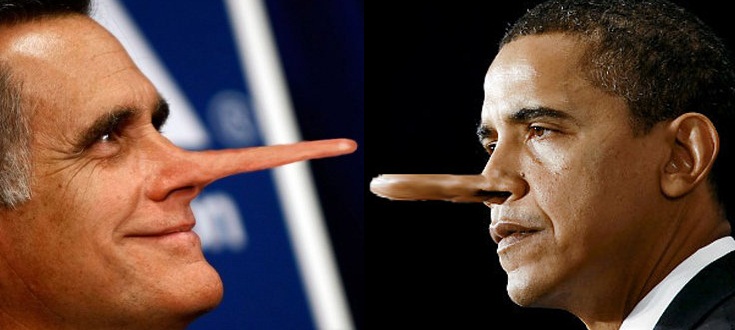
I don’t know about you, but I don’t want a liar as President. I’m not talking about the kind of lies that are periodically unavoidable in leadership and governance, as much as we would like to pretend they are not. I’m talking about “I did not have sexual relations with that woman” type of lies, intentional falsehoods designed to deceive the public for  political advantage with no benefit to the nation or its occupants whatsoever. Unfortunately, we are about to elect a liar as President, because lying in political campaign ads, and particularly negative ads, is sunk deep into the system like an inoperable brain tumor. It is fair to say that every President since George Washington has done it, and thus the public accepts it, and the news media shrugs it off. Continue reading →

Banning the Privacy Bomb

Yes, I think posting this photo is a lousy thing to do to your dog, too.

The stories come out routinely, and the opposing opinions are predictable. A boorish date dumps a woman via arrogant e-mail, which is promptly forwarded to thousands, making him a national laughing stock and pariah. A movie star sends an angry and mean-spirited message to his teenage daughter, who places it in the hands of the celebrity-devouring media…which then use it to savage the star’s reputation.  A Harvard law student takes an e-mail sent by a friend and fellow-student as a follow-up to a contentious discussion about race, and forwards it to minority advocates on campus, who then condemn the “friend” as a racist. A model live-tweets her encounter with the married actor sitting next to her on a flight, as he engages in awkward flirtation. In each case, defenders of the punitive distributor of the embarrassing communication argue that the victim deserved it, while critics of the conduct insist that it is a betrayal of privacy and trust.
We need to decide, as a culture, whether we believe that reasonable expectations of privacy should be respected or not; indeed, whether they should survive or not. Those who endorse, defend and encourage the kind of conduct in these incidents and many more are, whether they realize it or not, fouling the nest of our national culture and community, making not just privacy, but also friendship and intimacy, almost impossible. Continue reading →

Ethics Dunce and Unethical Quote of the Day: Jon Dawson

“OH, you mean the one with the word “Column” at the beginning?”

—-Jon Dawson, alleged columnist for the Kinston Free Press, in snotty response to my query regarding his fake story that prompted my recent post, “Ethics Train Wreck in a Little Tea Pot.” I asked if his story was a hoax.

Yeah, you’re right…if I had seen the photo first, I might have been more suspicious….

I guess his answer means yes. I also guess somebody ought to tell all the other local news and city beat columnists around the country that the heading “column” by their names is supposed to be understood as “Don’t believe a thing I say.” Someone should also let national writers like E.J. Dionne, Robert Samuelson, Kathleen Parker, John Avlon, Andrew Sullivan…anyone with a column, really…that their brand of punditry and journalism is supposed to be assumed to be satirical and tongue-in-cheek, because “column” gives proper notice that the “facts” the column contains are likely to be hooey.

Back when I lived in Boston, there was a city beat columnist I enjoyed and read often. He was clever and funny, and his specialty was local Boston stories. His name is Mike Barnacle. He’s not in Boston any more: they ran him out of town for making up stories or embellishing them with phony facts. (He is now seen on MSNBC, where facts are beside the point.) I thought they were a bit rough on Mike in Boston, and I wonder why he didn’t inform his paper that the fact that he wrote a “column” gave him leave to test the gullibility of his readers every day. Continue reading →

Ethics Train Wreck In A Little Teapot

I don’t understand this story at all.*

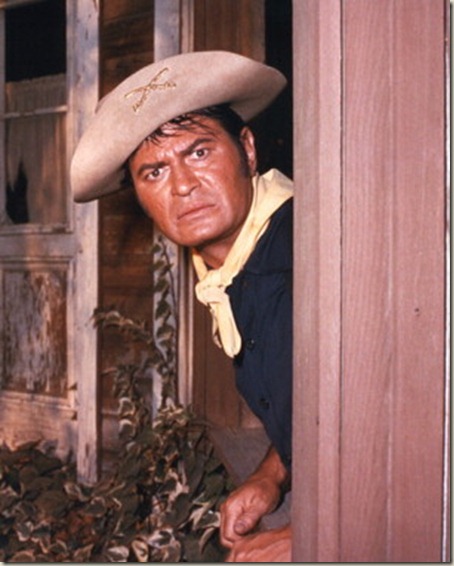
Not THAT Larry Storch! That Larry Storch made sense to me.

Larry Storch is no relation to the late comedian of “F Troop” fame, but is a defiant, uncivil 89-year-old scofflaw who insists on driving around his North Carolina community with his sound system at eardrum-popping levels. “They’ve been giving me noise tickets for years,” Storch said. “I guess they thought their tickets would deter me, but every time I paid off a ticket I’d stop by the speaker place on the way home and add a little more boom to my zoom.” Good for you, Larry; by the way, you’re an asshole. His latest arrest for breaking noise ordinances brought him before a judge who was ready to throw the book at Storch, but who had a peculiar way of doing it. Lenoir County District Judge Robert T. Ironside—who is no relation to the wheelchair-bound Robert T. Ironside played by post- “Perry Mason” Raymond Burr in a CBS detective show—told him:

“You’ve come before this court many times over the years Mr. Storch. In the past I’ve fined you, sentenced you to community service, and at one point even forced you to watch the fourth hour of the ‘Today Show.’ Since none of those punishments have done anything to curb your jackassory behavior, I’ve decided to get medieval on where your butt — if you had one — would be.” Continue reading →

Why Journalists Can’t Shoot Straight

George probably wasn’t lying, but Bill sure was.

The issue in the Washington Post’s weekly Outlook section concerned the virtues and dangers of honesty in a Presidential campaign, a matter that interests me from the perspective of ethics, presidential history, and citizenship. Two Post reporters were given the assignment of creating sidebars to the main article, one on candidates who told the truth and were punished for it, the other on campaign lies that came back to haunt the Presidents involved.

These are not difficult assignments, by any means. Either would be a legitimate term paper topic for a high school senior’s history class; both would be rejected as a history major’s thesis topic as overly simplistic. Yet both Rachel Weiner and Aaron Blake botched their tasks, and would have earned D’s at best in high school history, and that’s only because of grade inflation. The reasons for their failures exemplify the inadequacy of the mainstream media for the job we need it to do during a Presidential election.

Continue reading →

The Difference Between Unemployed Scientists and Unemployed Lawyers

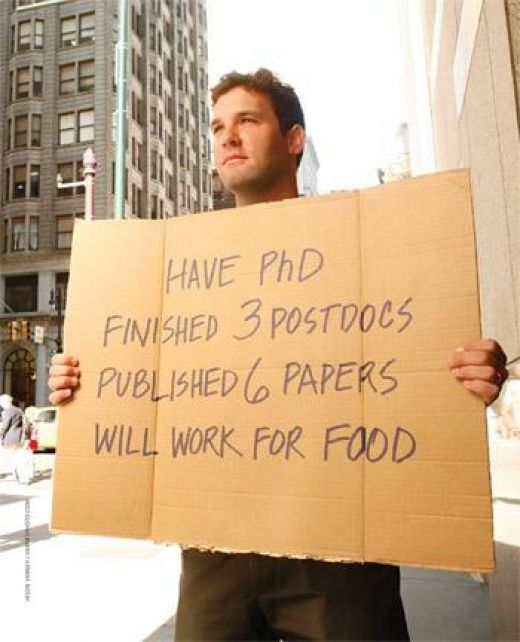
A front page story in today’s Washington Post casts interesting perspective on an Ethics Alarms rumble that broke out here a couple of weeks ago. One of the many websites where underemployed, over-indebted law grads hang out to commiserate—sites with pathetic names like “butidideverythingrightorsoithought”—discovered a post from the days when people were taking Occupy Wall Street seriously, in which I chided a protester whose sign blamed his law school  for his failure to  find a job, without giving due weight to the fact that sitting in a park whining about his plight wasn’t doing him any good either. Suddenly Ethics Alarms experienced an avalanche of indignant and often personally insulting comments introducing me to the strange world of the JD conspiracy theorists, who maintain that law schools engaged in an intentional conspiracy or “scam” to gull naive college grads into believing that a law degree was a sure-thing ticket to Easy Street and six-figure starting salaries.

In the Post’s report, we learn that other advanced degree-holders, namely PhDs in scientific fields, are also unable to find work or toiling in fields unrelated to their degrees. The Post says:

“Traditional academic jobs are scarcer than ever. Once a primary career path, only 14 percent of those with a PhD in biology and the life sciences now land a coveted academic position within five years, according to a 2009 NSF survey. That figure has been steadily declining since the 1970s, said Paula Stephan, an economist at Georgia State University who studies the scientific workforce. The reason: The supply of scientists has grown far faster than the number of academic positions.”

Sounds a lot like the legal market to me! Continue reading →

Unethical Column of the Century: CNN’s L.Z. Granderson

OK, maybe I’m exaggerating.

But not much.

L.Z. Granderson’s role model. I’m not kidding.

In a horrifying opinion column, the regular CNN political pundit L.Z. Granderson evoked the virtues of public apathy and unchecked government conduct with warped logic and unethical rationalizations, to make the case that the public should merely shrug off scandals like “Fast and Furious.” I was only able to finish reading it without retching it by imagining Granderson’s motives for writing such mind- and culture-poisoning swill. At least, as an African-American journalist, a liberal and a Obama supporter (I know I repeat myself), he has the self-respect, fairness and integrity not to claim that critics of Attorney General Holder’s Waterloo are being racist. Like the race-baiters, however, he is in denial, and willing to throw principle to the wolves to protect the first African-American Attorney General, though far from the first corrupt and incompetent one.

In a column with the descriptive and idiotic title, “Don’t be nosy about Fast and Furious,” Granderson argues…

“…Times have changed. Yet, not everything is our business. And in the political arena, there are things that should be and need to be kept quiet…..there comes a point where the public’s right to know needs to take a back seat to matters like national security and diplomacy. Heads should roll because of the Fast and Furious debacle. We don’t need every detail of that operation to be made public in order for that to happen. If it were an isolated sting, maybe. But it is at least the third incarnation of a gun-running scheme stretching across two administrations, which means we could be pressing to open Pandora’s Box. We do not want to open Pandora’s Box, not about this and certainly not about a bunch of other potentially scandalous things the federal government has been involved with.” Continue reading →

The Economic Meltdown: Accountability Check

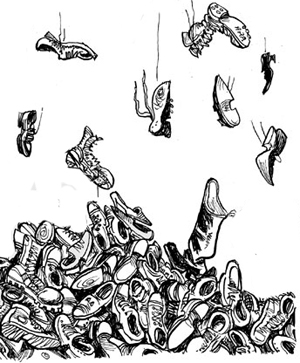
The shoe fits both Parties.

The ethics story of week was the dropping of the missing shoe in the “Friends of Angelo” scandal that helped drive Democratic Senator and party leader Chris Dodd into retirement. (More here.) It fell like this:

WASHINGTON (AP) — The former Countrywide Financial Corp., whose subprime loans helped start the nation’s foreclosure crisis, made hundreds of discount loans to buy influence with members of Congress, congressional staff, top government officials and executives of troubled mortgage giant Fannie Mae, according to a House report.

What the report indicates is that the bribery of regulators and members of Congress to allow the sub-prime mortgage con-game to continue was far worse and for more widespread than anyone realized. Countrywide offered special loan deals to dozens of influential government officials to stave off regulations that might have avoided or greatly lessened the mortgage collapse that triggered the current long-term economic crisis: 

“Documents and testimony obtained by the committee show the VIP loan program was a tool used by Countrywide to build goodwill with lawmakers and other individuals positioned to benefit the company,” the report said. “In the years that led up to the 2007 housing market decline, Countrywide VIPs were positioned to affect dozens of pieces of legislation that would have reformed Fannie” and its rival Freddie Mac, the committee said.“

More: Continue reading →

Ethical and Unethical Adultery Advice: There is Carolyn Hax, and Then There Is Emily Yoffe

Sometimes, you just have to tell your slimy boss “No.”

Emily Yoffe is Slate’s advice columnist, in its “Dear Prudence” feature. She specializes in extreme situations: a recent column involved a teenager who realized that his mother had breast-fed him far too long because she was sexually aroused by it, and then had him fondle her breasts for years after he stopped be willing to suck on them. He asked what he should do now that his mother was subjecting his younger sister to the same treatment. (Emily did get that one right: she told him to call child services on his mother, and to seek professional help for himself.)

Last week I congratulated Carolyn Hax for her advice to a woman torn between the adulterous relationship of one friend with another friend’s husband. Notwithstanding the persistent argument of one crusading commenter who felt that I should have stood for universal adultery whistleblowing on friends and strangers alike, Hax gave, as usual, practical, ethical and measured advice.  She suggested that the inquirer tell the cheating husband that his secret was out, and that she would not lie to protect his illicit affair.  I believe that’s the right ethical balance. Hax’s advice to the woman was to be proactive in both extracting herself from the split loyalties and to be a catalyst for either disclosure or ending the affair. I also noted that the ethical duty on the questioner may be different when the betrayed spouse is an especially close friend, or a family member. Then loyalty and trust could require disclosure.

That same week, Yoffe got an inquiry from a “well-paid assistant of a successful business mogul.” Among her duties, she told “Prudence,” is to facilitate her boss’s extra-marital affair: lying about his whereabouts to business associates, deceiving his wife when she calls, and even buying gifts for the illicit lover. “Next month he’s going on a weeklong business trip,” she wrote. “He only needs to be gone for two days, but he’s taking his girlfriend with him and staying longer. I know I’m doing wrong by his wife. But I love my job, and I’m not sure what I could or should do to behave honorably in this situation.” Continue reading →