The Curse of Michael Steele: The Republican National Committee’s Shameful, Outrageous Supreme Court Lie

Michael Steele, when he was its Chair, brought Republican National Committee operations to a new ethical low that might have been favored by Michael Corleone. He never did anything this despicable, however, perhaps because he was replaced just as he was getting warmed up. Or maybe, just maybe, it was because even Steele knew that some political tactics were just too despicable to engage in.

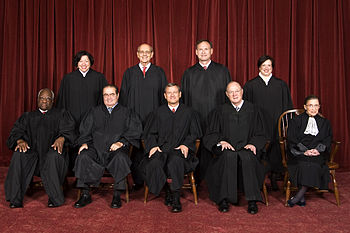
In a web ad circulated this week designed to attack the health care reform law, the Republican National Committee excerpts the opening seconds of the March 27 presentation to the Supreme Court by Solicitor General Donald Verrilli, defending the law’s constitutionality. In the ad, he is heard struggling for words and twice stopping to drink water. “Obamacare,” the ad concludes, in words shown against a photograph of the high court. “It’s a tough sell.”

The transcript and recordings, however, give a different impression. Verrilli took a sip of water just once, paused for a much briefer period and completed his thought — rather than stuttering and trailing off as heard in the ad. In short, the tape was edited by the RNC to misrepresent what occurred inside the halls of the U.S. Supreme Court.

It is a lie, and a particularly heinous one, even by political ad standards, which are a cut below Shamwow and the Fishin’ Magician. Even by Michael Steele standards—he who twice approved fundraising appeals disguised to look like U.S. Census documents. Continue reading →
Ethics Quote of the Day: The Editorial Board of the Washington Post

“Sadly, even before the sessions on health-care reform had ended, some liberals were preemptively trying to delegitimize a potential defeat at the court. If the justices strike down the individual mandate to purchase health insurance, they said, they will prove themselves partisan, activist and, essentially, intellectually corrupt. We share in the disappointment that the justices on both sides of their ideological divide are, for the most part, so predictable. That’s not, in the ideal world, how judging is supposed to work. But we also think there’s a kind of cynicism, or at least intellectual laziness, in asserting that this is an easy or obvious call — that no justice could possibly strike down the mandate out of honest, reasoned conviction.”

—The Editors of the Washington Post in this morning’s superb, balanced and fair editorial entitled “Civics Lesson From

the Supreme Court.”  The Post leaves no question that it supports the individual mandate as necessary—at least now, after the fact of

"Biased political hacks!! The ones who disagree with us, that is..."

Obamacare’s passage into law—because “no American should go without health care, and that society as a whole should be willing to pitch in toward that end.”  But the editors also properly chastise the cynical and cowardly political calculations by the bill’s supporters that placed the constitutionally-dubious mandate in the position to jeopardize the whole law, as well as criticize the unethical phenomenon that Ethics Alarms discussed here-–the preemptive effort by Democrats and their pundit allies to blame the rejection of Obamacare, if it occurs, on “judicial activism” and political bias by the conservative justices. Continue reading →

What A Race! It’s A Thrill A Minute With Roseanne Barr Lapping Spike Lee As The Biggest Celebrity Dunce in The Trayvon Martin Ethics Train Wreck!

An earlier classy career high for Roseanne...mocking the National Anthem.

And you thought Spike Lee had established an unapproachable low point in celebrity, self-indulgent, arrogant irresponsibility by trying to tweet George Zimmerman’s address (all the better to get him killed), and inadvertently siccing the sickos on an elderly Florida couple who were minding their own business? How charmingly naive of you! For remember, no matter how ignorant and unethical a celebrity may be, there are always, always, bigger, more ethically clueless jerks and fools with an entry in Wikipedia and an itch to get back in the limelight.

A celebrity like…Roseanne Barr! She lapped Spike’s mean-spirited Twitter idiocy in his own chosen medium by… Continue reading →

A Facebook Suicide and the Duty To Rescue

One takeaway from Claire Lin's death: it's a good idea to have Facebook friends with character.

In Taiwan, a distraught young woman sent streaming photos* of her suicide attempt as she conversed with nine Facebook friends. Some urged her to stop, but none tried to contact police or rescue professionals as she asphyxiated herself with burning charcoal fumes. Yes, her attempt was successful. You can read the disturbing story of Claire Lin’s Facebook suicide here.

Would this happen in America? I wouldn’t be surprised. Sociologists are already weighing in with opinions about the isolation of social media and how the internet makes reality seem less real. I doubt that any of that was especially important in this incident. There have been so many other examples of people left to die with potential rescuers aplenty that were documented on Ethics Alarms and elsewhere, from the Mount Everest climbers who walked past their dying companion, to the more recent case of the Apple store employees who listened to a women get beaten to death in Maryland, that teach us that too many people have the natural inclination not to take affirmative action to help another in distress, and that the instinctive rescuers are the exception, not the rule.

Our culture should teach and reinforce the shared societal duty to come to the assistance of others in peril, but in fact it teaches the opposite. Most of us are told to mind our own business, to think of “Number One”, and  make reverse Golden Rule calculations to rationalize inaction (“He wouldn’t have lifted a finger to help me!”) We are taught to fear lawsuits, to wait for professionals (even if they aren’t coming), and to be fearful of making a bad situation worse. And, of course, we are conditioned to let the other person take the risk, so we can have our cake (not get involved) and eat it too ( see the situation resolved without anyone being harmed). And if we wait just a bit too long for that other person to do the right thing, we can always blame him (or her), saying, “I thought someone else would do it!” Continue reading →

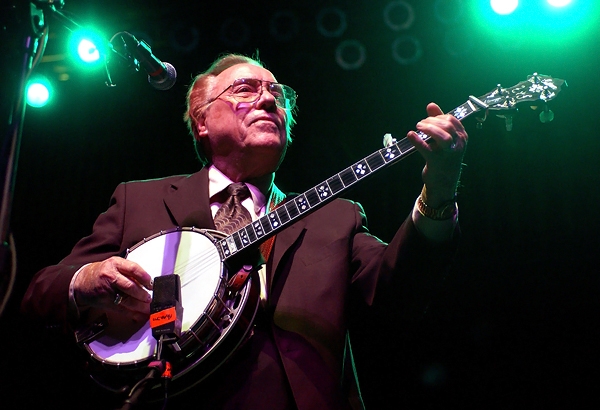
Ethics Quote of the Week: Earl Scruggs, Banjo-picker (1924-2012)

“If you don’t let things develop, it’s like keeping something in a bag and not letting it out to fly”

—-Bluegrass innovator and legend Earl Scruggs, who died yesterday, in an interview he gave in 2000. He was talking specifically about creating new sounds and kinds of music, but his larger point applies to everything in life, and is an ethical one.

Earl Scruggs almost single-handedly changed the banjo from an instrument associated with clowns and minstrel shows to a vital element in American music. His single-hand was his right hand, as he perfected a three-fingered playing style that gave the banjo as much range and depth as a guitar, cello or violin. With his long-time partner Lester Flatt, he injected bluegrass music into the American mainstream with his music for the film “Bonnie and Clyde,” and, of course, TV’s “The Beverley Hillbillies.”

What Earl Scruggs recognized was that just as the fact that “everybody does it” doesn’t make something right, the reverse is also true. The fact that “everybody” hasn’t been doing something, or even that it has never been done or even considered, doesn’t automatically make it wrong. Ethics doesn’t impose rules to freeze societal standards and values, but to give us systems to evaluate whether standards of conduct and values need adjustment or reconsideration. Often we hear the verdict “Now that’s just wrong!” to condemn something that may not be wrong at all, but just surprising, non-traditional and strange to those who never imagined such a thing. Too often that confusion of wrong and different inhibits creativity, innovation, and change for the better. That’s why innovation and condemnation are frequently linked, and why boldness and courage are prerequisites for positive change. Continue reading →

Incompetent Elected Officials Of the Month: Oh, Brother!

My mood after I wrote this...

As more and more observers predict that the individual mandate, a cornerstone of Obamacare, will be declared unconstitutional by the Supreme Court, I found my mind returning to the topics that have bothered me from the beginning. Why didn’t Congress make certain that it was on sound constitutional ground when it passed the law? Did they really understand what they were passing? Is it possible that our elected officials could spend so much time and occupy so much of the nation’s attention on an issue they didn’t understand? Surely our highest elected officials entrusted with devising the laws of this great nation must understand the powers and limits that relate to their duties in the Constitution. Don’t they? Isn’t that a minimum qualification for office?

George Mason Law Professor David Bernstein has provided clues to the answers to those question, and you’re not going to like them. He writes: Continue reading →

Trayvon-Zimmerman: Stop This Ethics Train Wreck!

Unstoppable?

The Trayvon Martin-George Zimmerman episode is escalating into a full-scale ethics train wreck at a frightening pace, pulling in participants and bystanders alike, and threatening to become a national catastrophe. Usually such things need to play out until all the carnage is exhausted, but this train wreck is different. Too many parties, including the media, are behaving irresponsibly, given the sensitivity of the issues at hand and the possible worse case scenarios. If the train can’t be stopped, it desperately needs to be slowed down.

At this point, however, I wonder if it can. The activists now driving the action obviously no longer care about little nuances like facts, fairness, and law. The participation of Ethics Train Wreck Engineer Extraordinaire Al Sharpton perfectly suits the situation. Whatever the witnesses say, whatever the facts may appear to be to rational and reasonable observers, too many people are invested in the presumption that a white racist shot an innocent black teen for “walking while black,” and nothing short of harsh punishment will avert claims of society-wide racism and the attendant anger, protests, and violence to come.

Disgracefully, more respectable media figures than Sharpton are also throwing kerosene on the fire.  Here, for example, is Pulitzer Prize winning Washington Post columnist Eugene Robinson’s opening to today’s column: Continue reading →

A Journalist’s Integrity: “To Hell With Of Freedom of the Press— MY Interests Are At Risk!”

Andrea, in her alternate "news censorship is bad" persona

Earlier this year, Andrea McCarren, a reporter with D.C.’s WUSA Channel 9 News, did a controversial special report om under-age drinking in the upscale Washington suburb of Bethesda, Maryland, with special focus on how parents excused and facilitated the law-breaking. She was subjected to a deluge of hate mail and online attacks for her story, and her children, who go to a Bethesda high school, were mocked and harassed by other students. The incident and the uproar had finally calmed down, when the school paper at Bethesda-Chevy Chase High, where the McCarren children are enrolled, decided to publish a feature about the episode.

McCarren—journalist, champion of the public’s right to know and the dedicated defender of the First Amendment—called the school’s principal and persuaded her to confiscate issues of the paper that had not yet been distributed, and to demand that students who already had copies return them. Why? Was the story false, libelous, or misleading? No. Was it a legitimate news story with relevance to the school? Of course.

McCarren had the school paper censored because she had the power and influence to do it, and because she felt that the story could have inconvenient and unfortunate consequences for people she cared about. Continue reading →

Ethics Hero: Kendra Wilkinson

“I have no talent. I have nothing to offer.”

Are you paying attention, "Sitch"?

With that honest, candid, unadorned, modest and undeniably true self-assessment in a recent interview with People magazine, cable reality show star (“Kendra”) Kendra Wilkinson instantly became an Ethics Hero, a role model for other empty-shell pop culture celebrities, and my favorite Hugh Hefner girlfriend of all time.

Now if Kendra’s integrity could only persuade Nicole Richie, Snookie, “The Situation,” Paris Hilton, Megan McCain, Bristol Palin, Tori Spelling, Lauren Conrad, Heidi Montag, Ivanka Trump, Jack and Kelly Osborne, Michael Lohan, and, of course, all the Kardashians, to make the same confession and voluntarily hurl themselves into a landfill (in Jersey, of course), our trivialized, brain-rotting culture can finally start to heal itself.

But you don’t have to go to the landfill, Kendra.

You do have something offer.

Ethics.

Ethics Quiz: What if the Westboro Baptist Church Is Just Kidding?

I know just how you feel, Homer.

This is a unique Ethics Alarms quiz, because I am offering it while having absolutely no idea what the answer is, or even, perhaps, what the right question should be.

The story you can read here describes the Westboro Baptist Church’s interactions with an openly gay DJ. You will recall that the church’s followers have achieved infamy by loudly protesting on the scene of private funerals for military personnel killed in combat, with “God Hates Gays” being one of their signature protest signs. Yet the DJ, when he visited the group, found them to be friendly, unthreatening, civil and kind. They hugged him. The asked him over for dinner.  The surprised and puzzled writer suggests that the Fred Phelps followers’ act may be a form of First Amendment-testing performance art, sort of like Bill Maher. Maybe they aren’t really hateful after all. Maybe they just act that way!

My Ethics Quiz question for you to consider:

Does the fact that they can be kind, tolerant and accepting in the privacy of their abode make the Westboro Baptist Church protesters less unethical, more unethical, or does it make no difference at all? Continue reading →