Unethical Quote of the Month: Mike Daisey

“Well, I don’t know that I would say in a theatrical context that it isn’t true. I believe that when I perform it in a theatrical context in the theater that when people hear the story in those terms that we have different languages for what the truth means.”

—Actor, writer, activist Mike Daisey, in an interview with NPR’s Ira Glass, exploring how Daisey was able to justify fabricating facts and accounts for the earlier aired—and just retracted—“American Life” installment called “Mr. Daisy  Goes To The Apple Factory.” NPR checked the particulars of Daisey’s first hand account of the human rights and labor violations he claimed to witness at Apple’s factory in China, and found that the writer had embellished, exaggerated,  and misrepresented much of what he reported. What NPR had broadcast as journalistic reporting was an excerpt from Daisey’s acclaimed touring one-man stage show, “The Agony and Ecstasy of Steve Jobs.”

Mike Daisey, lying to us for our own enlightenment

Daisey’s quote, which is both illuminating and chilling, argues that using made-up stories and personal accounts in a theatrical context qualifies as truth, even if the same misrepresentations in a journalistic context are inappropriately false. The problem with his argument, and the flawed ethical theory behind it, is that both the NPR audience and his theater audience believe that Daisey is telling the truth. Daisey’s solution to the problem is simple: his one-man show does tell the truth…it just uses lies to do it. Continue reading →

Ethics Corrupters on The Web: Symptoms of a Cheating Culture

I encountered this charming example of high school cheating advice quite by accident. There is a stunning amount of this kind of thing on the web, and perhaps what is most impressive about it is the matter-of-fact way it is received. This example was posted on a Facebook page, and the few posters who registered objections to it as cheating were ridiculed. mocked and insulted by the rest as prudes, fools, judgmental ass-holes, “holier-than thou” bitches, and worse. One commenter couldn’t understand why this would  even be called cheating. “Nobody’s copying any  exam answers!”, he asked, puzzled.

The trick here reminds me of a response I got from a lawyer in an ethics seminar, as I was discussing a hypothetical in which an attorney had promised to review a non-profit client’s by-laws that had to be included in a crucial grant submission. Continue reading →

Ethics Dunce: Glenn Kessler, Washington Post “Fact Checker”

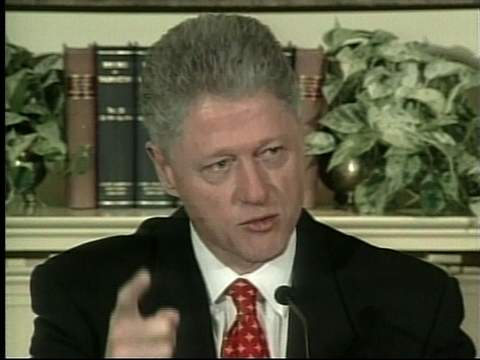
President Clinton, in a famous "true but false" moment. No Pinocchios, Glenn?

It pains me, it really does, to make Glenn Kessler, the Washington Post’s “Fact Checker,” an Ethics Dunce. He is one of the best of an often incompetent breed that, as exhaustively and repeatedly shown by Wall Street Journal blogger James Taranto, frequently defines “fact” as “the way we see it.” Kessler is notable for at least trying to keep his political biases out of the equation, and generally does an outstanding job.

His most recent column, however, took on President Obama’s repeated use of the statistic that the U.S. uses 20% of the world’s energy but only has 2% of the world’s oil reserves. Kessler correctly points out that the statement is confounding:

“…But measuring the U.S. consumption against its proven oil reserves makes little sense. Europe, with the exception of Russia, Kazakhstan and Norway, has virtually no oil reserves. Japan, a major consumer, has zero. China’s oil reserves are about half the size of the United States. In fact, in the relative scheme of things, the United States is relatively blessed with proven oil reserves — and, given the U.S. technological advantage, also with potentially large resources of oil yet to be tapped.

 “That’s why we said the president is using “non sequitur facts.” It would make much more sense to note that the United States has just 4.5 percent of the world’s population and yet we consume 20 percent of the oil, which is a finite resource, in order to urge Americans that we need to have greater energy efficiency. But in the context of higher gas prices — which is how the president often uses these figures now — it just is not logical to compare consumption to “proven oil reserves.” This is a lowball figure that does not begin to describe the oil known to be within the U.S. borders.” Continue reading →

Dear President Obama: Show Some Respect. President Hayes Earned It.

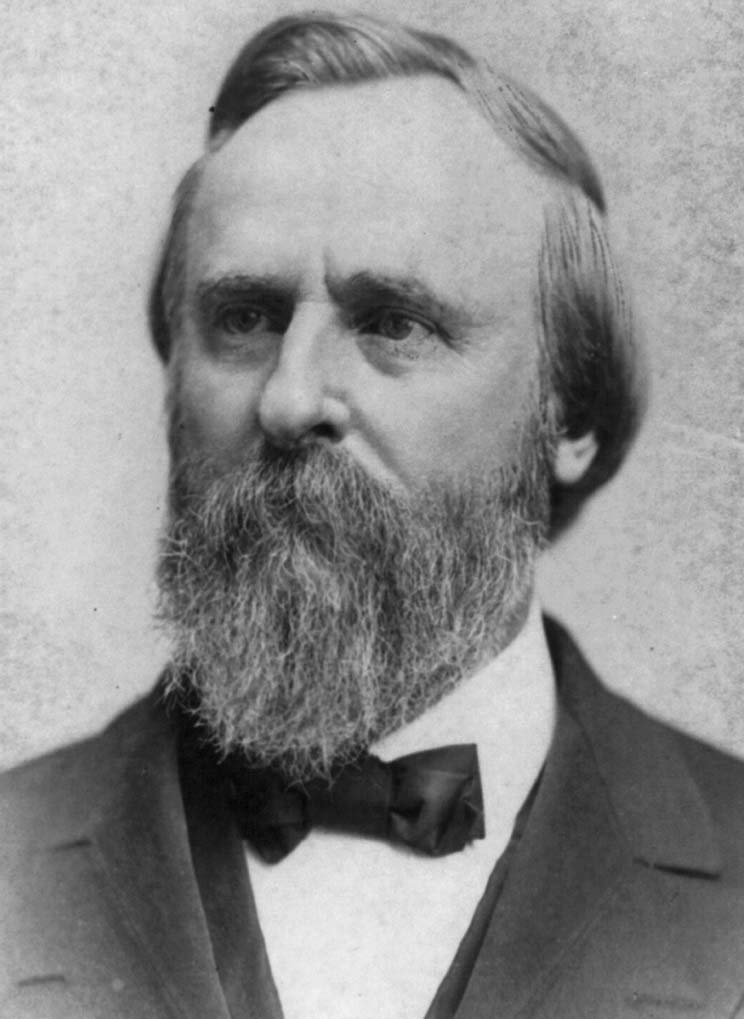
We're sorry, President Hayes. He doesn't know what he's talking about.

One of the many deplorable tendencies of the previous Democratic President was to use the memories, reputations and good names of his predecessors as props to deflect criticism for his own slimy and irresponsible conduct and lies. A standard feature of Bill Clinton’s “everybody does it” defense during his Monica travails was to have his surrogates, like the shameless Lanny Davis, mouth that Bill was no different from other Presidents who used the power of their office to cheat on their wives and exploit other women. Since it wasn’t too ennobling for this tactic to rely on the two most indisputable examples of Presidential sexual excess–Jack Kennedy being a (false) Democratic icon and a misogynist, and Warren G. Harding being the U.S.’s worst or next to worst President ever (depending upon your opinion of James Buchanan, President Clinton allowed his lapdogs to accuse FDR (who as a paraplegic was almost certainly incapable of anything but an illicit affair of the heart), and Dwight Eisenhower, whose supposedly adulterous relationship with his female driver in World War II is 1) unconfirmed rumor only and 2) has nothing to do with his conduct as President. The last time I respected Chis Matthews was when he reprimanded a Clinton surrogate for raising the Ike story, calling it—correctly—an outrageous slur on a great American patriot  to try to excuse Clinton’s inexcusable conduct.

It is disheartening to see President Obama displaying a similar lack of respect and deference for his White House predecessors. Every one of the men who served in the office of President performed a great service at significant personal sacrifice in a job both impossible and dangerous. If anyone is obligated to give these men appropriate respect, it should be the current President, whoever it is. But just as President Obama has set new records for blaming his immediate predecessor for problems deep into his own term, he has shown a Clintonian willingness to trash a past President  for his own purposes.

This would be despicable if the denigration had a basis in fact. Obama’s slur on the 19th President, Rutherford B. Hayes, however, has none. Continue reading →

Anti-Bullying Mis-steps: The Perils of Changing Cultural Norms (Part 2)

If "Hunger Games" should be able to bypass the ratings because kids can learn from it, then why shouldn't a film like "A Clockwork Orange," a better film, should also get a pass?

When society decides makes altering attitudes about any conduct a priority,an immediate danger is that it will destroy other societal safe-guards and damage other valid cultural norms in its tunnel-vision.

“Hunger Games,” a film about the consequences of bullying based on a best-selling novel, is about to hit theaters with an R rating, meaning that teens, the prime target of the nation’s anti-bullying effort, can’t see the film without their parents’ permission. Katy Butler, a young bullying victim, has led a national effort to get the film’s ratings reversed. Predictably, politicians have jumped on the bandwagon.

“Over 13 million American youths will be bullied over the course of this year alone, making it the most common form of violence experienced by young people in our nation,” begins a letter from Rep. Mike Honda (D.- Calif.) to his colleagues, in support of Butler’s campaign. “We cannot hope to control this epidemic … without discussing tough issues publicly and bringing them to the forefront of the consciousness of the American public.”

“YES! RIGHT ON! OF COURSE!” Except that what Butler and Honda are proposing essentially undermines the entire purpose of movie ratings, and if their efforts succeed, there is no way anyone will be able to argue that the system has a shred of integrity at all. Continue reading →

Greg Smith’s Urgent Ethics Alarm

“Today is my last day at Goldman Sachs. After almost 12 years at the firm — first as a summer intern while at Stanford, then in New York for 10 years, and now in London — I believe I have worked here long enough to understand the trajectory of its culture, its people and its identity. And I can honestly say that the environment now is as toxic and destructive as I have ever seen it”

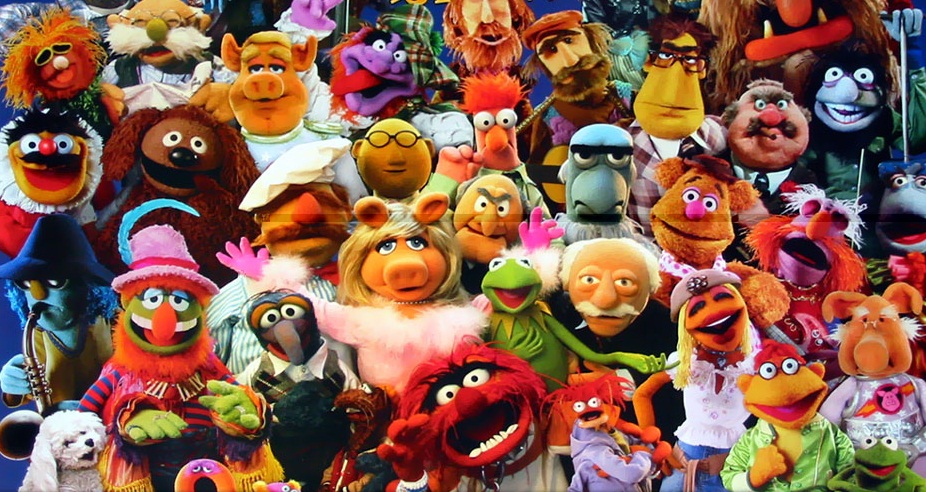
This, says Greg Smith, is how the leadership of Goldman Sachs sees its clients.

With that, Goldman Sach’s executive Greg Smith began his remarkable op-ed in the New York Times, sending his former employers into crisis mode, panicking investors, and setting the financial, political and journalistic worlds buzzing. Obviously, it was an exposé about ethics as much as anything else.  Smith described a corporation-wide breach of trust with clients, a culture in which leadership openly derided those the company pledged to serve as “muppets,” and apparently, sheep to be sheared:

“It makes me ill how callously people talk about ripping their clients off… I don’t know of any illegal behavior, but will people push the envelope and pitch lucrative and complicated products to clients even if they are not the simplest investments or the ones most directly aligned with the client’s goals? Absolutely. Every day, in fact.”

Smith cites a breakdown in leadership, resulting in a corruption of values: Continue reading →

Ethics Lessons of the Great Lotto Betrayal

Let's see how many friends you can buy now, Amerigo...

After more than a year and a contentious trial, a New Jersey jury has unanimously determined that hard-hat worker Americo Lopes cheated five co-workers out their fair shares of $38.5 million in lottery winnings. Each was awarded a $4 million share. The evidence presented in the trial was mostly circumstantial, and the case came down to what the jury believed, whom they trusted. Go figure: they chose not to believe the man who organized a lottery pool with his co-workers, collected their money and bought New Jersey lottery tickets with it routinely, and then, when he found himself with a winning ticket in the Mega-Millions game…

  • Didn’t tell any of the group.
  • Claimed he was going on leave to have surgery,
  • Quietly quit without returning,
  • Claimed that the winning ticket was bought with his personal funds, not the pool’s,
  • Argued that none of the men were friends of his and
  • Reportedly said at one point, “With all that money, I can buy new friends.”

Gee, who wouldn’t believe such a terrific guy? Continue reading →

The Process Can Be Ugly, And Sure Was This Time, But This Is How Cultural Ethics Standards Change

Greta was the tipping point.

The Rush Limbaugh-Sandra Fluke Ethics Train Wreck is over at last, but unlike with many such debacles, something positive occurred. I believe that an emphatic cultural standard was established that calling a woman—any woman, famous or not, liberal or conservative—a derogatory term designed purely to denigrate her by denigrating her gender will not be considered acceptable in political, quasi-political or arguably-political commentary henceforward. If such rhetoric occurs in a comic or entertainment context, no politician or elected official can appear to endorse the individual who utters the offensive words.

I’m not arguing right now whether this is a good or a bad development, but merely that it happened, and that it is a real change. For this to happen, a conservative radio talk show host had to use the terms “slut’ and “prostitute” to make the botched satirical point that a feminist law student activist who argued that free contraceptives were a woman’s right was the equivalent of women who wanted to be “paid for sex.” If pundits and bloggers had merely declared this statement uncivil and cruel, nothing more would have happened, and the incident would have been quickly forgotten. But sensing political points to be scored in an election year, and with the added incentive of being handed what was seen as powerful ammunition to attempt a frontal attack against a detested partisan critic, Democrats,  progressives, feminists, activists, Obama strategists and left-biased journalists decided to cast the Limbaugh’s poor judgment in extreme terms. Continue reading →

Unethical Quote of the Week: “Brad”

“How much did all these hacks get paid to do this? What a waste of money. Are they bothering somebody? Leave them alone. They obviously want to be together, and who are we to say that they shouldn’t? How much did this judge and all the hacks get paid to issue this decision? Somewhere, somehow this waste has to stop.”

—“Brad,” a commenter on NECN.com’s story about Lisa Lavole, a former teacher who was out of jail on parole after three years for the offense of having sex with her 15-year old student and running away with him. She was taken back into custody when the same student, now 18, was discovered hiding in her closet. One of the conditions of her parole was that she had to stay away from her former victim.

Lisa Lavole, doing her Norman Bates imitation

While perusing the comments to news stories often gives me more insight into the state of our culture’s ethics than reading the stories themselves, there is always the downside that many comments make me want to chuck ethics as a futile and pointless career choice and begin honest work as a bookie or a pimp. “Brad’s” comment is a case in point.

It would be difficult to pack more flawed ethical reasoning and rationalizations into a mere 60 words. The woman was hired to teach, and instead used her authority, age and power to entice a child into a sexual relationship, and then take him away from his parents and his home. By the most charitable interpretation she is a sexual predator and a rapist, as well as the betrayer of the community’s trust. Of course part of her punishment involves keeping her away from her victim, whose mind and emotions she had damaged and warped. To Brad, however, it is a “waste of money” to enforce legitimate laws, protect children from predatory adults, and make certain that at very least adults who prey on the children in their charge don’t benefit from it. She turned a child into a sex object and lover, and Brad thinks it’s a waste of time and money for society to make certain that she can’t keep reaping the benefits of her crime after her prison sentence. Continue reading →

Ethics Hero Emeritus: Rushworth Kidder (1944-2012)

Not everyone named Rush is an uncivil blow-hard. This Rush, Rushworth Kidder, was a dedicated ethicist, teacher, author and philanthropist who was one of the pioneers in the field of professional ethics. His trademark phrase was “moral courage,” but it was more than a motto: Rush thought about it, taught it, and lived it.

He founded his Institute for Global Ethics in 1990, just as the idea was beginning to take hold that organizational ethics was something that needed to be formalized and made part of the culture in companies and professional communities, and unlike many who were to enter the field as it grew, Kidder never sold out. He wasn’t in the field of ethics to make a buck. He believed. Continue reading →