The People For The Ethical Treatment Of Animals seems to be unable to grasp the simple concept that if you show yourself to be completely insensitive to matters of right and wrong involving human beings, nobody in their right mind is going care what you think constitutes the ethical treatment of animals. The latest in a long trail of proof: before the disturbing controversy over the pro-Chris Brown tweets had cooled and in the wake of the death Whitney Houston, a former of domestic abuse victim. PETA thought it was the perfect time to release a new ad celebrating the desirability of being able to harm women in the bedroom.
The 30 second spot shows a young woman without pants and wearing a neck brace as she painfully walks to her apartment. “This is Jessica,” narrator says. “She suffers from ‘BWVAKTBOOM,’ ‘Boyfriend Went Vegan and Knocked the Bottom Out of Me,’ a painful condition that occurs when boyfriends go vegan and can suddenly bring it like a tantric porn star.” Jessica reaches the apartment and smilingly get ready for another round of presumably rough sex.
There are many terms that accurately describe men who are so uninterested in the women they have intimate relations with that they cause them pain and take pride in it. Rapists. Abusers. Max Cady. Sadists. Misogynists. Ass-holes.
American Idol’s Group Day is the one stretch of the show that is more reality show than competition, and it usually delivers the best ethics dramas of the season. Last year, for example, the Group Day chaos—all the Idol wannabes have to form combos and rehearse an a capella number in harmony, often fighting, crying or collapsing in the process—produced a moment of courage and character when Scotty McCreery, the eventual winning Idol, stepped up and took full responsibility for the rotten conduct of his group, which had tossed out another young man at the last minute to take McCreery in.
This year there were ethics heroes and dunces, but mostly dunces. A real gem was the awful stage mother of competitor Brielle Von Hugel, who was filmed in rehearsals complaining how weak a singer her daughter’s fellow group member Kyle Crews was. After Crews crashed and burned in the performance, and was the only member of the group cut, Mrs. Von Hugel was shown insincerely telling him what a “good voice” he had. Kudos to Idol’s director for immediately re-running her backstage slamming of the kid’s voice in the previous episode. Continue reading →
“I arrived in the United States a month ago, thinking I had escaped the reach of Beijing, only to realize that the Chinese government’s shadow continues to be omnipresent. Several U.S. universities that I have contacted dare not invite me for a lecture, as they cooperate with China on many projects. If you are a scholar of Chinese studies who has criticized the Communist Party, it would be impossible for you to be involved in research projects with the Chinese-funded Confucius Institute, and you may even be denied a Chinese visa. Conversely, if you praise the Communist Party, not only would you receive ample research funding but you might also be invited to visit China and even received by high-level officials. Western academic freedom has been distorted by invisible hands.”
—Yu Jie, Chinese dissident and author recently relocated to the U.S., in an op-ed column in the Washington Post, exposing how America’s dependence on China for trade and financing has not only made the nation vulnerable, but is also eroding its integrity and values.
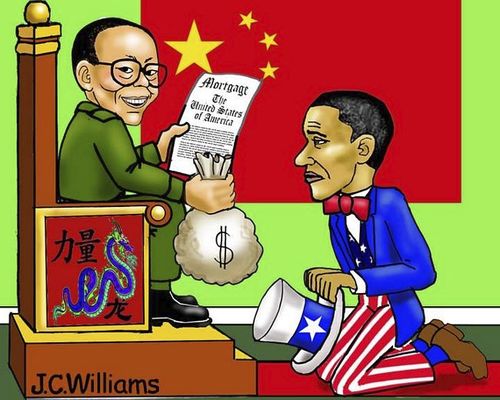
Every budget cycle that the United States permits to expand its debt makes the nation more indebted to China, and places more power in the hands of its leaders to exert influence over American policies. Yu Jie’s disturbing article shows how our values are being undermined as well. China’s is a repressive, undemocratic and often brutal regime that the United States has foolishly allowed itself to become dependent upon. What will the consequences of this be? How can the United States lead the free world while being under the thumb of the Chinese? Corruption is inevitable. Yu Jie writes, Continue reading →
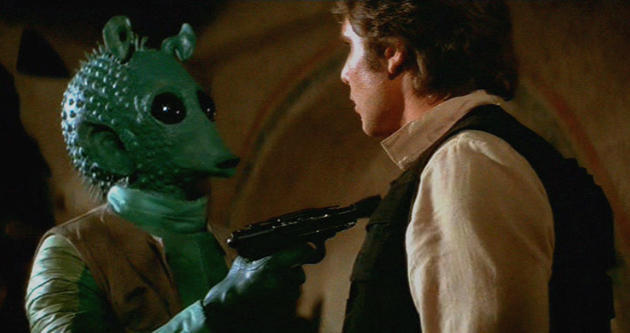
Jedi Emeritus George Lucas betrayed a warped concept of cowboy ethics, self-defense and ethics generally in a recent Hollywood Reporter interview in which he was quizzed about his technological fixes on the original Star Wars trilogy. The topic was the shooting of Greedo in the bar, when Han Solo blasts away at the green, fishy porcupine-like villain, who has a gun pointed at him:
Lucas:Well, it’s not a religious event. I hate to tell people that. It’s a movie, just a movie. The controversy over who shot first, Greedo or Han Solo, in Episode IV, what I did was try to clean up the confusion, but obviously it upset people because they wanted Solo [who seemed to be the one who shot first in the original] to be a cold-blooded killer, but he actually isn’t. It had been done in all close-ups and it was confusing about who did what to whom. I put a little wider shot in there that made it clear that Greedo is the one who shot first, but everyone wanted to think that Han shot first, because they wanted to think that he actually just gunned him down.
Lucas’s idea of what constitutes a “cold-blooded killer” runs counter to law, common sense, and ethics. Continue reading →
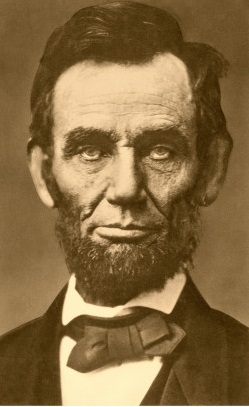
“Neither let us be slandered from our duty by false accusations against us, nor frightened from it by menaces of destruction to the Government nor of dungeons to ourselves. Let us have faith that Right makes Might, and in that faith, let us, to the end, dare to do our duty as we understand it.”
— Abraham Lincoln, 16th President of the United States, on February 27, 1860 in his Cooper Union Addressexpounding on the Founders’ beliefs regarding the regulation of slavery.
February 12 is the birthday of America’s most brilliant, bold and eloquent leader, Abraham Lincoln, born this day in 1809. You would hardly know it from the apathy of most of the news media, which is happy in its laziness to defer any honor of the man who saved the Union and ended slavery to “President’s Day,” which is still officially a celebration of George Washington’s birth. No slight against George, but Abe deserves better from us.
Happy Birthday, Abe. The nation can never repay its debt to you, but it can make itself better by striving to meet the aspirations you set for us
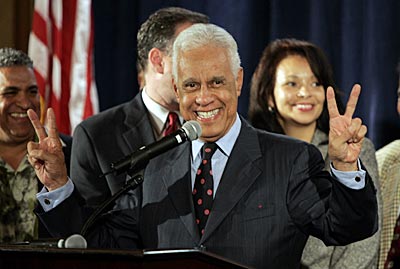
“Nearly 20 years ago, former Virginia governor Douglas Wilder announced that he wanted to create a museum that would tell the story of slavery in the United States. He had the vision, the clout, the charm to make it seem attainable, and he had already made history: the grandson of slaves, he was the nation’s first elected African-American governor.
“He assembled a high-profile board, hosted splashy galas with entertainer Bill Cosby promising at least $1 million in support, accepted a gift of some 38 acres of prime real estate smack along Interstate 95 in Fredericksburg and showed plans for a $100 million showstopper museum designed by an internationally renowned architect.”
And now? Now the U.S. National Slavery Museum project is bankrupt, filing for protection last fall. Claims against it total more than $7 million. The city of Fredericksburg has threatened to sell the land to make up for almost $200,000 in unpaid real-estate taxes. Officials have asked the court to either liquidate the organization or to appoint a trustee to oversee its finances. Through all of this, the Post reports, Doug Wilder has remained aloof, refusing interviews or even to answer phone calls. Having created the project, started an organization, induced collectors and other citizens to contribute priceless artifacts and documents to the aspiring museum’s collection, and accepted contributions, all in the justified belief that he, an established political leader, a powerful member of the African-American community and someone with access to resources and allies, would see the project through to a successful conclusion, whatever it took. Instead, Wilder abandoned the project he began completely, leaving to others the responsibility of organizing and guiding it, and making certain that its promises were fulfilled. Continue reading →
Whitney Houston, she of the musical gift we may see only once in a lifetime, is dead at 48. There has been no final determination, but there is little doubt: drugs killed her.
Houston, they say, and I have no reason to doubt it, was troubled by the pressures of show business, celebrity and stardom, and with a little help from her dead-beat, abusive husband, singer Bobby Brown, sought to relieve the stress with a variety of illegal substances, including cocaine. Over the past 15 years or so, Americans have been able to watch the relentless deterioration of Houston, once the epitome of a beautiful, intelligent, ebullient and charismatic presence, into an emaciated, ruined shell with only a hint of the glorious instrument that once, in the middle of a war abroad, delivered the most stirring rendition of the Star-Spangled Banner I have ever heard, or ever will hear.
This happened to Whitney Houston because when illegal drugs were among the options she could have chosen to accept or reject as a way to get through difficult days and troubled times, she did not have the instant reaction, hard-wired in her brain, that has to stop all of us from doing terrible, dangerous, irresponsible and anti-social things. There can be little doubt that some theoretical options would have triggered that reaction. They would be the options that did not seem like options at all, because the culture Whitney Houston lived in was unequivocal and unshakable in its verdict, a verdict virtually all members of that culture naturally adopted and accepted—because that’s what cultures do. And when that option presented itself, Whitney Houston, like the culture she was a part of, would have said “No.”
That she didn’t say no to drugs, and is dead because of it, was the direct result of an American culture that does not give its constituency a clear message and verdict. Instead, the clearest and most unequivocal signal from the culture, the fact that recreational drugs are illegal and that America enforces the laws against them, is progressively weakened by ridicule, attack, popular culture, and the defiance or hypocrisy of role models and public figures. Incredibly, though the deaths by drug-abuse among the tiny proportion of the world that is famous and talented—Michael Jackson, Amy Winehouse, Whitney—should make it obvious how massive the number of anonymous victims of drug abuse there must be, the destructive refrains grow louder: Legalize drugs! End the War on Drugs! And those calls weaken the cultural resolve further. Actually doing what they advocate would cripple it….and that day might come.
Whether they are preventing the culture from rejecting drug use because enforcement is expensive, or because they have a relative or friend in prison for drug-dealing; whether they are calling for legalization because they are libertarians and academics or Ron Paul, or because they are public officials who see a new revenue source; whether they are longing for the halcyon days of Haight-Ashbury and the Strawberry Alarm Clock, or just like getting stoned, these are the people whose advocacy continues to nurture a competing culture that killed Whitney Houston, as surely as if she had been shot her between the eyes.
I would say that if their insistence on legalization is followed, and the nation’s laws join the popular throng in pronouncing addictive and life-destroying drugs as legitimate “options,” many more like her will die….except there aren’t many more like her. But there are countless lives to destroy, and unimaginable losses to families, businesses and America to be endured.
I just watched the video of Whitney Houston’s glorious performance of our National Anthem at the Super Bowl, before the drugs had finished their work. She radiates confidence, strength and character, as well as that special joy that the fortunate few with magical gifts have. She brings a stadium full of Americans to their feet in cheers, with an exhibition of artistry that will continue to inspire forever. Drugs took all of that away, from Whitney Houston and from us.
Because our culture could not say no with enough conviction to save her.
Update (2/15/12): With some regret, I am closing comments on this post. Too many commenters refused to discuss the issue it was intended to raise, which was how cultural approval and disapproval of conduct is more powerful, ultimately, than the law in establishing standards. I have committed on this blog to responding to as many comments as possible, but the onslaught of pro-drug zealots whose tactic was to keep repeating the same arguments no matter how many times I gave my response led me into too many frustrated responses, too many nasty exchanges, and too many hasty replies that I wish I had stated more clearly. For those I apologize, both to the visitors involved and other readers. I also apologize for ending the discussion here, but I don’t have the time to monitor it. You are welcome to e-mail me personally.
The Martin Luther King Memorial Commission meets to address the quote controversy
When we last left the star-crossed Martin Luther King Memorial on the National Mall, Secretary of the Interior Ken Salazar had boldly declared that the Interior Department was ordering the embarrassing misquotation of the martyred civil rights leader changed, so he would not sound to future generations like “an arrogant twit,” in poet Maya Angelou’s neat phrasing. Now a war of words and intentions has broken out, with Salazar declaring that the entire made-up quotation (“I was a drum major for justice, peace and righteousness.”—something King never said, and probably never thought, either) had to be removed, and the correct quote (“…if you want to say that I was a drum major, say that I was a drum major for justice. Say that I was a drum major for peace. I was a drum major for righteousness. And all of the other shallow things will not matter.”) added, and Ed Jackson, the architect who oversaw the memorial’s development for years, saying that Salazar’s plan would wreck the structure. Asked if there was any way to remove the inscription from the memorial without destroying it, Jackson answered, “No.” Continue reading →
Should the state board that licenses embalmers have yanked the license of Massachusetts embalmer Troy Schoeller after he described his work in graphic and disgusting terms to a reporter?
Schoeller is suing, claiming that the discipline violates his First Amendment rights, and I would think that he has a strong case. That’s a constitutional law question, however. My question is: did Schoeller do anything so unethical that it would justify taking his profession away…by telling the Boston Phoenix writer how he works to restore traumatized corpses, how the bodies of fat people react to the embalming process , how revolting the fumes emanating from bodies can be, and, most memorable of all, how he reconstructed the smashed body of a baby “that looked like a bearskin rug,” saying…
“I had to rebuild it in nine hours. I used everything: duct tape, masking tape, tissue builder, wound filler. … I put, like, coat hangers and caulk in there and put him into a little baby outfit. … He looked awesome.” Continue reading →
Interested Blogger, or “IB,” makes some interesting observations about professional ethics enforcement generally and medical ethics in particular in the Comment of the Day, responding to the post, The Legal Profession’s Muddled Standard For “Fitness To Practice.” Her insight regarding the reasons why professionals are so reluctant to pull the licenses of misbehaving colleagues is astute, I think. Lawyers and doctors are hesitant to punish individuals for doing something they could imagine themselves doing, though the Golden Rule is being misapplied. It’s a disturbing thought, but an illuminating one: perhaps John Edwards keeps his law license because other male lawyers think, “Boy, that could happen to me: get smitten by some hot babe in the office, we fool around, she sandbags me on birth control…heck, I might panic. I might try a crazy scheme to cover it up, especially if it was all going to be played up in the tabloids. Poor guy! How can we disbar him?”