Ethics Blindness at Joe Pa’s Memorial Service

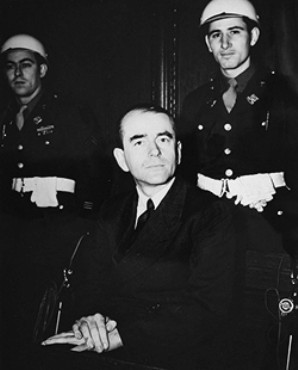
At least Albert Speer didn't have a clear conscience.

I did not expect the speakers at Joe Paterno’s emotional memorial service to avoid stepping on  some of the myriad ethical landmines that lay before them. It was a time to say good things about the late Penn State coach, and there is plenty to say. Still, two speakers did cross deep into unethical territory. Even at a memorial service, when the lessons of the Jerry Sandusky affair are so important for all to learn and accept, it was poor judgment and irresponsible for those honoring Paterno to try to minimize or deny his accountability in the tragedy.

Unethical Statement #1: Nike Co-Founder and Chairman Phil Knight. “Whatever the details of the investigation are, this much is clear to me: There was a villain in this tragedy. It lies in the investigation, not in Joe Paterno’s response to it.”

This got a standing ovation, a reaction every bit as offensive as the Penn State student riots after Paterno’s firing, indeed more so. Knight’s rationalization excuses every Enron executive who knew that the leadership was defrauding investors; every Bernie Madoff family member and enriched investor who knew something was wrong but waited for the SEC to act; every member of the Nixon White House who saw the rule of law being trampled but reasoned that since he wasn’t directly involved, there was no reason to speak up; every member of Congress who knew that Rep. Mark Foley was sexually harassing House pages and kept quiet; and every priest who knew that a colleague was sexually molesting boys and did nothing, because the Church leadership was doing nothing. Knight’s defense of Joe Paterno is a defense of all of these, and indeed a defense of evil. Continue reading →

Ethics Hero: Wolf Blitzer

Watch out, Newt! It's SUPER-WOLF!!!

Once again Ethics Alarms finds itself in the sad position of calling conduct heroic that should be routine. Unfortunately, however, competent and responsible broadcast journalism isn’t routine, and if I was looking for a bold and quick-witted journalist to exceed the standard practice, it certainly wouldn’t be CNN’s plodding, timid and often befuddled Wolf Blitzer. Last night, however, as moderator of the latest GOP candidates debate, he did what few journalists ever have the confidence or courage to do: he challenged a politician on an absurd and hypocritical statement.

And yes, I confess…if Wolf fell slightly short of true Ethics Hero status by a couple of points, the fact that the politician involved was New Gingrich the Unethical put him over the top. If that be bias, so be it. Continue reading →

Newt Gingrich and the Import of the Outright Lie

So...you like this, Newt fans?

We know politicians and elected officials lie on a regular basis, because the sheer volume of inaccurate, misleading or outright wrong statements they produce is so staggeringly large that there can be no other explanation. Catching one of them in an unequivocal, outright lie, however, is rare. For one thing, partisans and the intellectually lazy have cheapened the accusation of “Liar!” by applying it to situations where lying is not involved. A broken promise, for example, is only a lie if the promisor knew he was going to break it when he made the promise. It is also not a lie when an elected official turns out to be wrong.  A lie is not a statement that turns out to be untrue; it is a statement that the speaker knows is untrue, and is making for the purpose of deceiving others.

Was Barack Obama lying when he claimed, in his 2010 State of the Union, that the Supreme Court had “reversed a century of law to open the floodgates – including foreign corporations – to spend without limit in our elections” ? I think so—he’s supposed to be a Constitutional scholar, after all, and should know that, among other things wrong with his statement, foreign corporations were explicitly excluded from the rights affirmed in Citizens United. I can’t prove it though; heaven knows the President has made plenty of other bone-head statements. Similarly, most of the intelligent world believes that Bill Clinton’s “I did not have sex with that woman” bluff was an outright lie, but if Bill really believed, as some have claimed, that fellatio isn’t “sex”..well, his fist-pounding denial was just another Clintonian word-parsing exercise. Journalism is largely at fault for broadening the definition of lie to the point where much of the public can’t distinguish between real lies, the black-hearted variety that should sound ethics alarms and send the citizenry marching on the castle with torches and pitchforks, and the debatable falsehood. In 2010, for example, Politi-Fact called the claim that Obamacare would increase, rather than reduce, the deficit its “Lie of the Year.” It was not a lie at all. Those who maintained that (including me) believed it, and early returns indicate that they may well have been correct. Most of what are called lies in the press are really just exercises in confirmation bias. People see what they want to see, and describe it to back up what they already believe. Just like the news media.

Newt Gingrich, however, now increasingly being recognized as a GOP Bill Clinton without the charm, was just caught in an outright lie. That is meaningful,  and he should not be permitted to escape its implications. Continue reading →

Yuri’s Tweets, Flawed Analogies and the School’s Defenders

[Why is it that when I’m traveling and stuck in airports where the supposedly free WiFi doesn’t work and on airplanes that can’t keep on schedule, some post that I assumed was fairly straightforward turns into the Battle of Antietam? I apologize to the various commenter’s whose work product languished waiting for moderation—I just didn’t have the chance. This odyssey ends tonight; I apologize for slowing things down. On the other hand, it’s good to know that my presence is not required for there to be lively and interesting discussions here…thanks, everyone. Good work.]

Don Bosco Prep High School, Class of 1917-1918

That is not to say that sending gross, obscene, or abusive tweets is exemplary conduct; obviously it is not. I have concluded, however, that the proper and ethical use of social media is something that people, including minors, have to learn for themselves by trial, error, research, observing the mistakes and experiences of others, making dumb mistakes and suffering because of them.  Parents and schools, as well as the popular media, have roles to play by giving advice and calling attention to cautionary tales, but heavy-handed attempts to manage social media conduct attempted by authority figures who, as a general rule, neither use nor understand what they are attempting to regulate are both irresponsible and doomed to failure. Like it or not, social media is a primary, and growing, means of communication and interaction in American society, and students are wise….that’s right, wise...to learn how to use it. I was just speaking to a room full of lawyers, and asked them how many used Twitter. The answer: none. But their clients use Twitter, and their client’s adversaries use it, and certainly their children. Their bar associations are making rules about what these lawyers and judges should and shouldn’t be able to do on social media, and most of those bar committee members don’t use Twitter either.As a result, the various jurisdictions have inconsistent rules, based on a lack of knowledge, that are already archaic.

It is fine and responsible for any adult to try to warn a young person that comments on social media need to be considered carefully, that they have a reach far beyond any intended audience and are essentially broadcasts, and that messages or photos can reach people who they hurt or upset, or cause to have a poor opinion of the sender. Ultimately, however, the pioneers in this new frontier of personal expression and mass communication are going to have to learn their own lessons, and better that they learn them now than when they are members of Congress. All punishing students for their tweets teaches them is that people with authority abuse it, and that adults just don’t understand. Because, for the most part, they don’t.

Now the analogies and comparisons:

Public schools vs. Private schools: I gather that the theory here is that if a student voluntarily attends a private school, the student has voluntarily submitted to whatever the school regards as proper discipline, whereas public schools, since they are mandatory and creatures of the government, are constrained by the Constitution. I think I may have encouraged this by a careless reference to the ACLU, which was, of course, a mistake (and I have removed it.) This is ethics, not Constitutional law, and the values are autonomy, fairness, respect, privacy and abuse of power and authority, not Freedom of Speech. I have dealt with several private schools and one Catholic school, and none of them suggested in their printed materials or regulations that they reserved the right to punish my child for what he said, wrote, or communicated during non-school hours, or when he wasn’t physically on school grounds. Neither does Don Bosco, which states as its “philosophy”:

“Don Bosco Prep educates young men so that, through a process of self discovery, each student will come to recognize and acknowledge his talents and limitations, while pursuing academic, athletic, artistic and personal excellence.

“Mindful of both our role and responsibility as a Salesian college prep school, we respect each student as a unique individual. Through active presence in his life, we promote a joyful spirit, intellectual curiosity, self-esteem and emotional maturity. We encourage the development of character and personal responsibility, love for one’s fellow human beings, a concern for the environment and an active commitment to social justice, all of which serve as the cornerstone of each student’s spiritual growth.”

I take none of that, including references to being “an active presence” in a student’s life, “promoting” emotional maturity, and “encouraging” development of character to mean “we can punish your child for absolutely anything he does or says that we disapprove of, no matter where or when it occurs.” It, the school, does all of the things relating to its philosophy in the school, based on the student’s activities and interactions in the school. Any other reading is giving a group of strangers whose biases, background and motivations I can only guess at a blank check to manipulate a child’s life, thoughts and personal activities.

When one teacher from a private school called me to tell me that she felt it was cruel of my son to exclude a classmate whom he did not like from his birthday party, I told her that it was none of her business, and filed a complaint with the school.. Private school does not mean “we can meddle in your child’s private–as opposed to school—activities.

Catholic vs. Secular: All schools should teach character; it happens that Catholic schools do it with more fervor, but that gives them neither a greater obligation nor additional authority. Schools teach good conduct and civility by insisting on appropriate conduct and deportment in school. Are people really prepared to argue that a Catholic school can justify punishing its students for not doing household chores, not washing their hands after using the bathroom in their homes, being cruel to a younger sibling or being disrespectful to a parent? Not only is personal social networking use as unrelated to the school  as any of these, it is also far less significant. How much of a blank check do we want school administrators to have? The right answer to that is that they shouldn’t have a blank check at all, and being a Catholic school changes nothing.

High schools vs. Military Academies: This is just a bad analogy. The student at a military academy has no personal life, and has no privacy. The academy is in loco parentis; the student lives there; authority is total. There is an honor code and a code of conduct, and it applies to everything a student does, including communications. That’s the military. That’s not high school.

High Schools vs. College: Several commenters have referenced the incident from last March when Brigham Young University suspended a star basketball player for having pre-marital sex. Brigham Young is famous for its strict and far-reaching conduct code, which bans drinking, pre-marital sex and many other activities that are virtually courses at other schools. If a student agrees to attend B.Y.U., the student has also agreed to certain conditions unique to the university. Should a more typical college be applauded for suspending a student who has sex with his high school girl friend over Christmas break, in his parents’ home? No; this is none of a college’s business, and attempting to extend its authority beyond the campus and even over state lines in such a fashion is intolerable. If Yuri Wright and his parents signed a document promising that Yuri would never send an offensive tweet during his years at the school, I withdraw my condemnation of Don Bosco’s punishment.

High schools vs. the Workplace: It is true that if an employee engages in conduct outside of work that embarrasses or reflects badly on an employer, ot that interferes with the employee’s ability to do his or her job, the employer is behaving ethically if it chooses to terminate the employee. It is not ethical for an employer to terminate an employee for any private conduct it happens to disapprove of, however. It can’t tell me that I can’t drink or smoke or have sex with men in my own home. It  better not tell me that I can’t vote for Ron Paul or root for the Red Sox, either. The Naked Teacher Principle applies, of course: if I’m a Coca-Cola VP and a Facebook picture shows me chugging Pepsi, that image could undermine my effectiveness at work, and Coke can can me; it’s ethical. If I write an ethics columns for a newspaper and I am caught in an adulterous affair with Marianne Gingrich, the newspaper is only being responsible to fire its unethical, untrustworthy ethicist. None of this applies to Yuri’s tweets. They don’t reflect on the school, or shouldn’t, because the school shouldn’t have any control over his personal communications. They  don’t interfere with his studies, or make him a worse football player.

Expression vs. Conduct: Tweets aren’t conduct. Even if I accept the proposition that a school may, in extreme situations, have some legitimate role in attempting to control student conduct outside of school (and I’m not sure I do), allowing a school to punish a student for the content of his words, uttered or written away from school, is a slippery slope with no braking. If sexually and racially objectionable tweets can get a student expelled, why not tweets critical of President Obama, or cheering on Newt Gingrich? Does Don Bosco’s commitment to “social justice” mean that Yuri can’t tweet that Occupy Wall Street is a crock?

Unethical Quote of the Week: Jerry Sandusky

“Joe preached toughness, hard word and clean competition. Most of all, he had the courage to practice what he preached. Nobody will be able to take away the memories we all shared of a great man…”

My advice, Jerry? Skip the funeral.

–—Former Penn State assistant football coach Jerry Sandusky on the passing of Joe Paterno, whose failure to take the necessary steps to prevent Sandusky from sexually molesting young boys (<cough!> allegedly) on and off the Penn State campus scarred the iconic coach’s legacy, not to mention setting up children for a (<cough!> allegedly!) sexual predator’s smorgasbord.

This might be the creepiest tribute in the history of mankind. Why did any reporter ask Sandusky for a statement in the wake of his former boss’s sad end? Who cares what Sandusky thinks about Paterno’s legacy, which Sandusky played a pivotal role in ruining? Continue reading →

The Corruption Problem

“Maybe, just maybe, the legislative and judicial systems have been corrupted, by, dare I say it, corporations?”

—Ethics Alarms commenter and OWS warrior Jeff Field, in his comment regarding the weekend post, The Marianne Gingrich Ethics Train Wreck

I don’t know how Jeff reaches the conclusion that the judicial system has been corrupted by corporations. Judges, unlike legislators, do not grow rich as a result of their inside knowledge and corporate connections. Judges, unlike revolving-door Congressional staffers and lawyers, do not generally come from corporate backgrounds. The fact that a judicial decision benefits the interests of some corporations, and many do not, does not mean that the decision was not just or was influenced by more than persuasive legal arguments. Those who believe that begin with the biased and untenable position that any decision that benefits a corporation must be, by definition, wrong.

So let me put that dubious assertion aside as the result of excessive reformer’s zeal and crusader’s license, and deal with the general proposition that corporations corrupt the legislative system, and society generally. Well, sure they do, but the statement is misleading, and, I would argue, meaningless because it places disproportional importance on the corrupting influence of this one, admittedly important, societal force.

Yes, corporations can be corrupting influences. So can government, and the lure of public office. The news media is a corrupting influence on the legislature, and upon society generally. Religion corrupts; as does popular culture, with its celebration of empty celebrity, glamor and wealth. Non-profits and charities are corrupted by their tunnel vision of specific worthy objectives to the neglect of others; the civil rights movement corrupts, as does feminism and all other advocacy efforts, which often, if not usually, succumb to an “ends justify the means” ethic, which is unethical. Indeed, freedom corrupts, as does dependence. Cynicism corrupts, and corrupts with a vengeance. Ignorance corrupts; so does the belief, however well-supported, that one knows it all. Ideological certitude and inflexibility corrupts.

Education, and the cost of it, corrupts. Sports, both professional and collegiate, corrupt people, students, and institutions. Science corrupts; technology corrupts. Heaven knows, the internet corrupts. Leisure and success; triumph and defeat; wealth and poverty, love and hate, desperation, patriotism; kindness, loyalty, sex, lust; intellectual superiority, beauty, physical prowess, passion. Talent corrupts. Kindness and sympathy too.

Self-righteousness. Fear. Worry. Envy. Stupidity. Zealotry.

And, as we all know, power and the love of money.

All of these and more corrupt human beings and the institutions, organizations and governments that they make up. If individuals are corruptible, something will corrupt them, as sure as the sun rises and the quinces ripen. To focus upon any one of the limitless and abundant sources of corruption and to say, “This, above all, is the cause of our problems” is naive and unfair. By all means, we must seek ways to limit the opportunities for corruption and the damage it can do, but we must also recognize that the ability to corrupt does not mean that something or someone does not or cannot contribute much good to society as well. Heroes can corrupt, as we saw in the tragedy of Joe Paterno, but we need heroes. Leaders can corrupt, and often do, but we still need leaders.

Ultimately,  the best way to stop people and things from corrupting us is to understand what corruption is and how easy it is to be corrupted. Our inoculation is ethics, understanding right and wrong and how to recognize both, and learning to recognize when we are biased, conflicted, or being guided by non-ethical or unethical motivations. Shifting the blame for corruption away from ourselves is comforting, but intimately counter-productive. We have the power to resist corruption, just as it is within out power to select public servants who are not likely to be corrupted. It is our responsibility to do so.


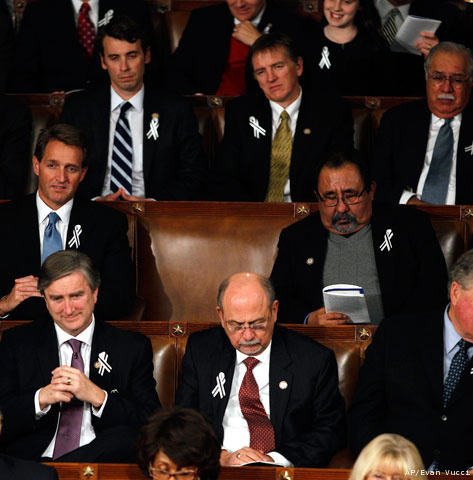
Better Late Than Never Dept.: Rep. Giffords Finally Does The Right Thing

That's the Democratic Congresswoman from Arizona in the center.

Ethics Alarms first stated that Rep. Gabrielle Giffords was seriously disabled and needed to resign from the house on January 17, 2011. I wrote:

“Almost no medical experts foresee a woman with such massive head injuries being able to return to work within a year, if she can return at all. She only has a two-year term. Is it fair to the people of Arizona, not to mention the country, to have a member of Congress who is unable to work during the days ahead, which are critical to the nation on so many fronts?”

Although the answer to this question was obvious at the time, Rep. Giffords did not resign. I returned to the topic in March, June, September and November, but not only did the Giffords camp and Democrats continue to ignore the issue, the media largely did as well. Never mind that during a contentious and important year of critical legislative issues, one Congressional District in Arizona was essentially unrepresented.

Today, finally, Rep. Giffords announced that she had resigned, more than a year after being shot in the head. Her friend, Democratic National Committee Chair Debbie Wasserman Schultz, told the press that her friend’s recovery was likely to take years, not months. WOW! That’s a bulletin! Who had any idea that the Congresswoman was that seriously injured? Continue reading →

Post-South Carolina Confession

Sunday morning, I am duty bound to play roulette with the talking head shows on the networks, watch “Reliable Sources,” Howard Kurtz’s weekly journalism ethics critique on CNN, and scour the Washington Post, all in search of contentious or interesting ethics topics.

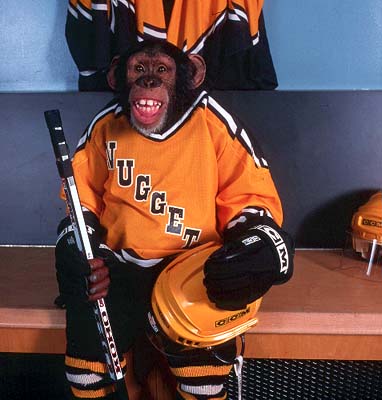
But rather than listen to endless rehashes of the South Carolina Republican primary, endure Newt Gingrich’s gloating, and again hear so-called experts repetitively apply their imaginary expertise to musings about what will happen in the next primary, Florida—-last week’s consensus: Romney had South Carolina wrapped up– I am watching “MVP: Most Valuable Primate” on Encore Family. It’s about a hockey-playing chimp (named Jack, appropriately enough).

It’s not bad.

Screw it. A man can only take so much.

The Marianne Gingrich Ethics Train Wreck

Ugh. What a mess.

The ethics miscreants:

Marianne Gingrich: Seething with hate for Newt, she decided to try to metaphorically stick a shiv in his back by airing dirty laundry from their marriage right before the South Carolina primary, a do-or-die for him. Her interview with ABC was unfair and an act of pure revenge. You couldn’t call it whistle-blowing, since anyone who doesn’t already know what a likely sociopath Gingrich is has been watching too many re-runs of “NCIS.” Gingrich’s character, or lack of it, was established and in the books by 1998. Marianne should have not had to say a word, but everything she did say, she had said before, in an interview in 2010 in Esquire. Continue reading →

Lindsay Lohan Dethroned As “All-Time Most Outrageous Excuse” Champion!

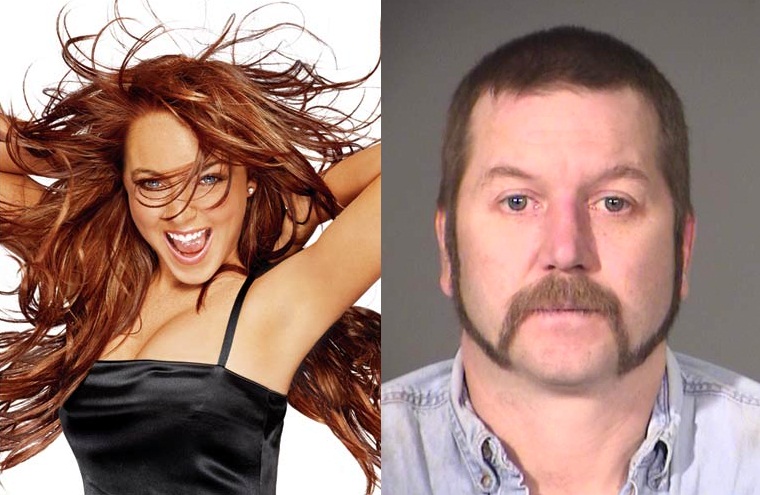
Linday Lohan, the former title-holder, and the new champion, Michael West

Back in 2007, I awarded Lindsay Lohan the championship for most brazen and manifestly ridiculous excuse ever. She had just been arrested for driving intoxicated and possession of cocaine, which had been found in the pocket of her jeans; Lindsay’s profession of innocence was that 1) she wasn’t driving her own car and 2) the pants belonged to somebody else. I noted at the time that she hadn’t yet claimed that the body she was in at the time wasn’t hers, but absent that, the “these aren’t my pants (TAMP)” excuse might well stand for all time.

In retrospect, that was rash. For one thing, many celebrities then as now already employed the Pazuzu Excuse, just a hair less ridiculous than TAMP, in which an offensive and career jeopardizing utterance is explained by the utterer as being inexplicable, that for some presumably supernatural reason—like being possessed by the demon who used Linda Blair as his ventriloquist dummy in “The Exorcist”—the individual has said something he or she not only didn’t believe, but never had even thought. The most recent purveyor of the Pazuzu Excuse noted here was Kobe Bryant; other infamous possessed have included Mel Gibson, Helen Thomas, and Michael Richards. That’s uncomfortably close to “it wasn’t my body.”  A few months ago, Newt Gingrich attributed his serial adultery and his habit of dumping his beloved wives when they got sick to his extreme patriotism; still short of TAMP, but getting close. Then, just this week, a strong contender nearly grabbed the title from Lindsay when  the chicken-hearted drunk who piloted the Costa Concordia cruise ship onto the rocks claimed left the capsizing vessel before his passengers because the he “fell into a life boat.” Uh-oh. Clearly, Lindsay’s title was teetering.

And quickly it fell. The Smoking Gun reports that in Wisconsin on Sunday, police responded to a domestic abuse call to find Mrs. Michael West bleeding from her face and saying that her husband Michael beat and tried to strangle her. Confronted by the officers, Mr. West explained that he was innocent.

A ghost did it.

Well, Lindsay’s one remaining accomplishment since “Mean Girls” is history. The new champion for “All-Time Most Outrageous Excuse” is Michael West.

This time, I’m not making any predictions. It’s crazy out there.

________________________________

Epilogue: As I re-read my Ethics Scoreboard post from 2007 about Lindsay Lohan’s ridiculous episode, I found myself becoming depressed. In 2007 she was just 21 years old and looked it; she had a career, she was obviously talented, and despite the arrest, had plenty of time to turn things around and get what had once looked like a charmed life back on track. She never did. In the intervening years leading up to 2012, she has had multiple stays in rehab and two stints in jail. She had to stand trial for grand theft, and is still on probation. This month she is featured posing nude in Playboy, usually the last ditch recovery vehicle for fading actresses who are too unstable or unpopular to get on “Dancing With the Stars,”  have too much pride to sign on to “Celebrity Rehab with Dr. Drew, and are not fat enough for “Celebrity Boot Camp.”  As she sheds her dignity in Hugh Hefner’s anachronistic soft-porn glossy, looking far older than her years, Lohan’s over-shadowed cast-mates from “Mean Girls,” Amanda Seyfried, Rachel McAdam and Tina Fey, have all become respected, bankable and still rising stars.  Her supposed teen rival from years ago, Hillary Duff, has a singing and acting career, a husband and a baby on the way. Lohan is still only 26; many people have sunk far lower than she has with fewer assets to draw on and pulled their lives out of  tailspins to be happy, successful, and productive. I hope she can too. Right now, however, her life is a cautionary tale about how a badly-parented young woman who was never taught responsibility, accountability, respect for authority or self-control can find life unmanageable despite possessing all the gifts that American society foolishly admires more—youth, beauty, riches, talent and fame.

And it makes me sad.