Update! “A ‘Great Stupid’ Court Case SO Stupid That It Makes “The Great Stupid” Look Almost Smart…”

The story that the great radio story-teller Paul Harvey would now tell us the rest of was the subject of the post below, from August 2024. As you will see, it made my head explode, but there has finally been a resolution, and ethics and common sense prevailed. Review the horrible case. Will voters really hand power back to the party that not only responsible for such things, but that still wants to establish them as our national standards? Really?

But I digress. Here is the original post, and I’ll add the recent developments at the end…

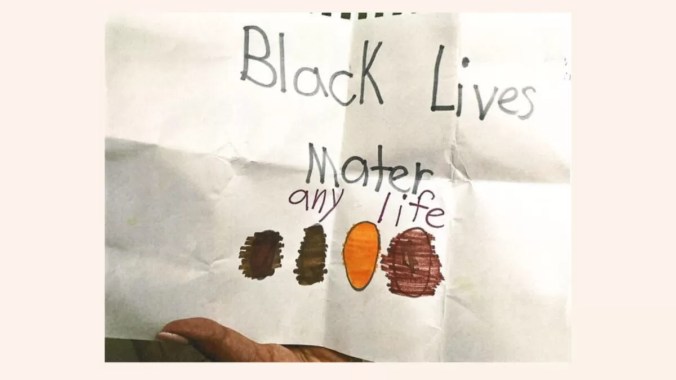
That crude, ambiguous drawing above got a first grader—we’re talking six-years-old here—suspended. That’s almost all you have to know for your head to explode if it is properly wired.

The Ethics Villains and Dunces are so thick in this fiasco you could use it to lay bricks. I’m almost embarrassed to tell the story, which I first saw at Reason

In March of 2021, a first grader referred to as “B.B.” ” drew a picture we are told was intended to show people of different races, representing “three classmates and herself holding hands.” (I’d save the money the family was planning on spending on art school for B.B., if that was their intent.) Above the drawing, B.B. wrote “Black Lives Mater” (Latin!) with the words “any life” stuck in-between the slogan and the jelly beans, or whatever they were. B.B. then gave the drawing to a black classmate, as what B.B. testified was intended as a friendly gesture. But the classmate either ratted out B.B. or the principal was told about it by the teacher, or something (because school administrators don’t have anything better to do than to police the political correctness of kids’ drawings).

The school’s principal, Jesus Becerra, admonished B.B., saying that the drawing was “inappropriate.” B.B. was ordered to apologize to her classmate, prohibited from drawing any more pictures in school, and prevented from going to recess for two weeks.

Continue reading

Ethics Hero: Laura Hughes

The widow of high school teacher Jason Hughes, 40, who died during a student prank gone horribly wrong in Gainesville, Georgia, is demonstrating how some human beings can overcome anger, bitterness and the emotional need for retribution, choosing compassion and empathy instead.

Around 11 p.m. on March 6, Jordan Wallace, Elijah Tate Owens, Aiden Hucks, Ana Katherine Luque and Ariana Cruz, all 18-years-old, toilet-papered trees outside the Hughes’ home, a continuation of their school’s tradition of such pranks during exam week. As the group piled into two vehicles to flee, Jason Hughes ran out of his home to confront the teens, but tripped and fell into the road. Wallace, who had already begun speeding away in a pickup truck, accidentally ran over the prone teacher. The teens left their vehicles to render aid, but Hughes perished in the incident.

All five teens were charged with criminal trespassing and littering on private property; Wallace has has been charged with first degree murder as well as reckless driving.

Laura Hughes, who is also a teacher, is pleading with authorities to drop the criminal charges. “We ask that you continue to pray for our family and also for the students involved in the accident along with their families,” she said in a statement to reporters. “Please join us in extending grace and mercy to them as Christ has done for us…This is a terrible tragedy, and our family is determined to prevent a separate tragedy from occurring, ruining the lives of these students.”

The late father of two (above, next to his wife) wasn’t trying to angrily confront the pranksters but “was excited and waiting to catch them in the act,” Laura told the New York Times. Insisting that her husband was not pursuing the students to reprimand them but rather to express comradery with their innocently-intended prank. Hughes said that criminal punishment “would be counter to Jason’s lifelong dedication of investing in the lives of these children.”

First degree murder sounds like extreme over-charging by authorities. The entire episode is a blazing example of the caprices of moral luck. I agree that the students’ punishment should be left to the school if Laura Hughes doesn’t want to press charges. Ethics tells us that it is time to mitigate the damage, not to make the damage worse.

Apparently A Majority Of Younger Americans Think The U.S. Invented Slavery. I’ll See You At The Wood-Chipper…

A few days ago, I saw a chart showing what U.S. demographics believed that the United States invented slavery. I noted it for a future post, and now I can’t find it, but I found plenty of authority that supports that assertion. Coleman Hughes, a fellow at the Manhattan Institute for Policy Research and a fellow and contributing editor at their City Journal, has been making this point for years. Way back in 2016, The College Fix wrote in part,

For 11 years, Professor Duke Pesta gave quizzes to his students at the beginning of the school year to test their knowledge on basic facts about American history and Western culture.

The most surprising result from his 11-year experiment? Students’ overwhelming belief that slavery began in the United States and was almost exclusively an American phenomenon, he said.

“Most of my students could not tell me anything meaningful about slavery outside of America,” Pesta told The College Fix. “They are convinced that slavery was an American problem that more or less ended with the Civil War, and they are very fuzzy about the history of slavery prior to the Colonial era. Their entire education about slavery was confined to America.”…

The origin of these quizzes, which Pesta calls “cultural literacy markers,” was his increasing discomfort with gaps in his students’ foundational knowledge.

“They came to college without the basic rudiments of American history or Western culture and their reading level was pretty low,” Pesta told The Fix….

Often, more students connected Thomas Jefferson to slavery than could identify him as president, according to Pesta. On one quiz, 29 out of 32 students responding knew that Jefferson owned slaves, but only three out of the 32 correctly identified him as president. Interestingly, more students— six of 32—actually believed Ben Franklin had been president.

Pesta said he believes these students were given an overwhelmingly negative view of American history in high school, perpetuated by scholars such as Howard Zinn in “A People’s History of the United States,” a frequently assigned textbook.

Ethics Quiz: The Movie Star’s Daughter

I have no idea what’s right or wrong in this scenario, so it makes an appropriate topic for an ethics quiz. The realm is high fashion and modeling. There are few things I know less about than those subjects. I’m kinda weak on metallurgy and thoracic surgery too.

That’s Nicole Kidman and Keith Urban’s daughter, Sunday Rose, above. The teen recently became the object of vicious social media scorn following her appearance at New York Fashion Week on February 13, 2026.

The 17-year-old’s big time modeling debut at a Calvin Klein show put her under a harsh spotlight. Many mocked her runway demeanor and declared that her qualifications for high-profile modeling opportunities consisted of famous parents and a movie-star mother, and nothing else. The central ethics issue is nepotism. One social media critic wrote, “Remember when models were stunning, unique and natural? Not just some celeb’s child.”

To be honest, no, I don’t remember when models were natural. Were they ever? Most of them look like freaks, with odd proportions that resemble newspaper drawings of women wearing dresses, and too many of them have looked like recent concentration camp escapees in make-up. But again, I don’t get the whole fashion thing, why it exists, or why anyone pays attention to it.

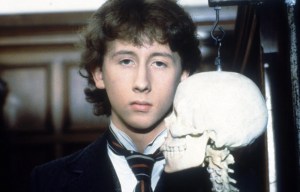
To my untrained eye, I see nothing about Sunday Rose (what an awful name!) that explains why she is a model except her Hollywood pedigree. Do you? She’s not particularly pretty, seems sullen, and resembles the original “Young Sherlock” in drag. See?

Some models resemble whomever that is with Young Sherlock…

But the real question is how to treat the children of the rich, famous and powerful fairly. Surely the fact that she is Nicole Kidman’s daughter shouldn’t prevent a young, talented, aspiring model from pursuing her dream, but how can unfair advantages be avoided? Nepotism is even more advantageous in Hollywood. Acting success is normally based more on luck and opportunity than stand-out talent, but the children of already established stars are born lucky.

Should they be blamed for accepting what their lineage hands them? Horror writer Joe Hill deliberately used a fake name on his first attempts to follow in his father’s footsteps (Dad is Stephen King) so he could be sure that his work was judged on its own merits. He’s an ethics hero for that, but the list of the offsprings of movie stars who used their names to get on screen and went on to respectable careers, sometimes even surpassing their parents, is too long to publish.

Still, if the the daughter of a movie star puts herself out in range of public judgment, is it unfair for critics to take aim? Does it change the question if she is only 17, like Sunday Rose?

Your Ethics Alarms Ethics Quiz of the Day:

What is ethical treatment for the beneficiaries of nepotism in modeling or any other competitive field?


Ethics Quiz: Ethics Zugzwang From “The Ethicist”

This time, not only does “The Ethicist,” aka. Kwame Anthony Appiah, give a bad answer to a reader’s ethics advice request, but I agree with it. [Gift link here.]

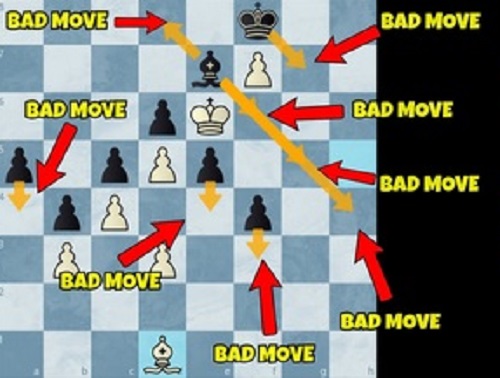
That’s because I don’t have a better answer, and that’s because there is no good answer. They are all bad; terrible in fact. The reader is in ethics zugzwang, from the term common in chess commentary, a situation where a player has no good moves available, only disastrous ones.

But I’m making this an ethics quiz on the chance that one of you out there in Ethics Land may have better answer than either of us.

As usual, it’s the pesky “Name Withheld” writing (What messes that poor boob gets into, with new ones every week!),

“My wife and I recently became the legal guardians of a teenager, and we are struggling with how to ethically navigate the emotional complexities of this arrangement.

“We met this person through our children’s athletic community. They come from an extremely difficult situation involving neglect and emotional abuse. A year ago, we offered them our home temporarily. As we learned more about their circumstances, we decided to pursue legal guardianship until they turn 18. We have no familial ties — we simply wanted to offer stability, safety and a chance at a better future.

“From the beginning, we agreed with our ward that we would treat them as we treat our own children — same expectations, same privileges and full support. For a few months, this arrangement seemed to be working: Our ward’s grades improved, they joined family activities and outings and appeared to settle into the rhythm of our family life. Then, little by little, they withdrew from us, no longer spending time with the family, and started getting worse grades again.

“Our ward has indicated that we intervene too much in their life and has complained to others that we’re “suffocating.” We’ve made adjustments — offering alternative meal arrangements, allowing them to stay with trusted friends on occasion and making space for their independence. Still, the distance has widened.

“My wife and I are about to engage in therapy with our ward. I am not looking forward to it; I worry that even in that safe space, I will not take well the possible complaints and criticisms we may hear from them.

“What obligations do we have — beyond the legal ones that we’ll meet — to our ward, and to ourselves, as we navigate a painful emotional landscape? And what moral, economic and emotional obligations should we anticipate when they turn 18 and become independent with no real support network?”

Yikes.

Your Ethics Alarms Ethics Quiz of the Day is…

What is the most ethical course for the couple to take now?

All I can offer, at least this early in the morning before a shot of coffee into my jugular, is “No good deed goes unpunished!” Somehow I don’t think this desperate couple will appreciate Oscar’s wit in their current dilemma.

Comment of the Day: “On Lincoln’s Favorite Poem, and the Poems’ We Memorize…”

What a joy to wake up this morning not only to a spectacular Comment of the Day, but also to a note from an MIA commenter who was last seen in these parts almost nine years ago! I welcome Lisa Smith back to Ethics Alarms with a well-deserved Comment of the Day honor, for her note on the post, “On Lincoln’s Favorite Poem, and the Poems’ We Memorize…”

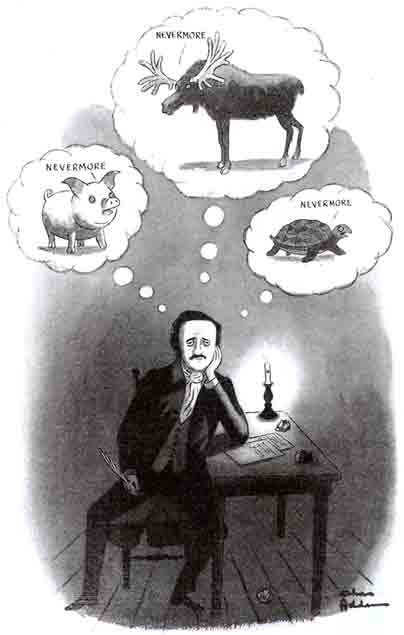
(I couldn’t resist leading this off with one of two brilliant Charles Addams cartoon about “The Raven.” The other has Poe pondering as a raven, perching over his door, says, “Occasionally.”)

***

I don’t know – Poe’s Raven has one of my favorite lines; it isn’t at all profound, but it is profoundly delightful to speak and to allow to roll over the brain like a cool river. I memorized the entire poem when I was a teen in the late 70’s and can still recite it. (But for the life of me, I can’t remember the “new” neighbor’s names, even though they have been here five or six years. Their dog is Annie. My priorities are laid bare, I suppose.)

“And the silken, sad, uncertain rustling of each purple curtain thrills me, fills me with fantastic terrors never felt before.”

There may be errors in there. I write it from memory alone. [JM: Pretty close! “And the silken, sad, uncertain rustling of each purple curtain, thrilled me—filled me with fantastic terrors never felt before”]

Poetry makes equals of us all. From Bukowski to Shakespeare. They speak to each person in their own way.

On Lincoln’s Favorite Poem, and the Poems’ We Memorize…

This topic is almost tangential to ethics, but not entirely. I give Althouse credit for raising it: she sometimes comments on crossword puzzles—I hate crossword puzzles and have never finished one in my life—and was set off into one of her tangents by the clue, “8 letters: “Poem so beloved by Abraham Lincoln that he carried it in his pocket and memorized it.” As it happens, I know the answer (Ann did not): it’s Poe’s “The Raven.” No surprise there: Abe was a depressive, and that dark poem about lingering suicidal thoughts fits his character and also his taste in poetry. I think “The Raven” is doggerel, and so were Lincoln’s poems: yes, he wrote poems, and was always puzzling to me that such a poetic writer would write such pedestrian poetry. He’s nt the only one who fits that description: Herman Melville’s poems, save for the one that ends “Billy Budd, ” is also shockingly bad. But I digress…

Ann guessed that the poem was “Invictus,” which would make sense if Abe favored a poem that inspired him, as, I believe, many of us do. That one ends with the famous verse,

“It matters not how strait the gate,

How charged with punishments the scroll,

I am the master of my fate,

I am the captain of my soul.”

Teddy Roosevelt loved that one, as you might guess. The topic got me thinking about how our schools used to teach ethics as well as literature, not to mention mental acuity, by requiring us to memorize poems. I’m sure they don’t do this now, and I’m also confident that the declining ethical instincts as well as literary competence of today’s youth are in part rooted in this sad development.

Poetry is becoming a dead genre. Althouse excluded songs from her musings about what favorite poems say about our values and character, and I find that strange. Song lyrics are poems, at least the best of them. No unscored poem touches me as much as Irving Kahal’s lyrics to Sammy Fain’s haunting melody, one of my late wife’s favorites….

I’ll be seeing you
In all the old familiar places
That this heart of mine embraces
All day through

In that small cafe
The park across the way
The children’s carousel
The chestnut tree, the wishing well 

I’ll be seeing you
In every lovely summer’s day
In everything that’s light and gay
I’ll always think of you that way

I’ll find you in the morning sun
And when the night is new
I’ll be looking at the moon
But I’ll be seeing you

Similarly, the touching Longfellow poem about his depression during the Civil War over the death of his wife, the wounding of his son and the conflict dividing his country was set to music, making it classic Christmas song that has endured in the culture beyond most of his poems. Putting a poem to music shouldn’t disqualify the poem as a poem, though the melody can enhance its power and popularly.

My favorite poems were narrative poems the celebrated heroism, courage, sacrifice, devotion and nobility. I have written several times about my father’s favorite poem, Rudyard Kipling’s “If” : the lines “If you can meet with Triumph and Disaster…And treat those two impostors just the same”; has become my credo over the years, and served me well. This past Halloween I posted my favorite poem, “The Highwayman,” which I memorized when I was 10 and have recited to audiences many times since. It is about a young woman who gives her life to warn her lover. I also memorized Longfellow’s “Paul Revere’s Ride,” an inspiring poem about an American patriot.

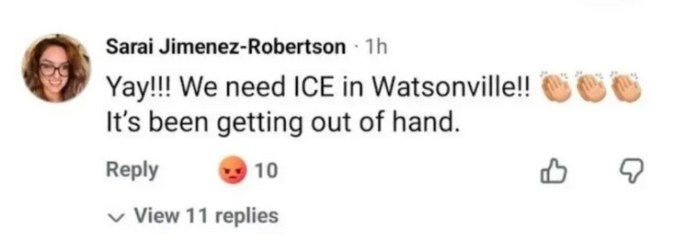
Ethics Quiz: The I.C.E. Endorsement

Sarai Jimenez, a special education teaching intern at in Pajaro Valley School District’s Watsonville, California-based MacQuiddy Elementary, endorsed the presence of I.C.E. officers in her town in a comment on Facebook last month.

“Yay!!! We need ICE in Watsonville!! It’s been getting out of hand,” Jimenez wrote, as you can see above. But the parents in Pajaro Valley Unified School District, where 84% of students are Hispanic and, given California’s sanctuary state aspirations, might belong to families with one or more illegal immigrants, considered Jimenez’s support for ICE….that is, enforcement of U.S. law…unconscionable. Many complained, and Jimenez was placed on leave from her job in Pajaro Valley School District. It appears that she will be fired, if she hasn’t been already.

“You can’t just tell the world how you feel and not expect repercussions from people because of how they feel about I.C.E.,” local parent Jorge Guerrero said. If I were awake completely, which I’m not, I would compose several alternate versions of this statement with provocative substitutes for “I.C.E.”

Jimenez tried to save her job by groveling a politician-style denial rather than an apology,“I’m sorry that the comment was taken out of context,” she told reporters. “But my actions speak so much louder than all those hateful bullies’ words.” The hateful bullies are the ones who bombarded her with threats and insults until she took down her Facebook page. “You are a shameful disgraceful disgusting woman,” one critic wrote.

Predictably, though apparently not by the interning teacher, the school administrators sided with the bullies if not their methods (although firing someone for supporting law enforcement is a lot more harmful than insulting her).

MacQuiddy Elementary Principal Sara Pearman said in a statement that Jimenez’s comment “does not reflect the values” of the school or district.

Hmmmm…

Your Ethics Alarms Ethics Quiz of the Day:

Is it ethical to fire Jimenez for expressing support for law enforcement officials doing their jobs?

I think this is a close call. Some points:

“Everybody Does It”or “Just Playing the Game”: Being Disabled At Stanford

I found the London Times story “Nearly 40% of Stanford undergraduates claim they’re disabled. I’m one of them” so annoying and rife with cultural and ethics rot that I decided not to post on it for the benefit of my own mental health. Now I see that it is getting a lot of attention all over the web and on social media, so I am ethically obligated to weigh in.

In the article, the poor, disabled student above reveals that she decided to claim endometriosis as a disability at Stanford, which would bump her to the head of the line for the best housing on campus. Her reasoning: a friend told her that Stanford had granted her “a disability accommodation. “She, of course, didn’t have a disability. She knew it. I knew it,” Elsa Johnson writes. “But she had figured out early what most Stanford students eventually learn: the Office of Accessible Education will give students a single room, extra time on tests and even exemptions from academic requirements if they qualify as ‘disabled.'”

“Everyone was doing it,” she continues. “I could do it, too, if I just knew how to ask.”

That’s lying. It’s also cheating. At a college. “The truth is, the system is there to be gamed, and most students feel that if you’re not gaming it, you’re putting yourself at a disadvantage,” she writes.

Elsa cites how much everybody does it to justify her embrace of corruption.

“The Atlantic reported that 38 percent of undergraduates at my college were registered as having a disability — that’s 2,850 students out of a class of 7,500 — and 24 per cent of undergrads received academic or housing accommodations in the fall quarter.

At the Ivy League colleges Brown and Harvard, more than 20 per cent of undergrads are registered as disabled. Contrast these numbers with America’s community colleges, where only 3 to 4 per cent of students receive disability accommodations. Bizarrely, the schools that boast the most academically successful students are the ones with the largest number who claim disabilities — disabilities that you’d think would deter academic success…at Stanford, almost no one talks about the system with shame. Rather, we openly discuss, strategise and even joke about it. At a university of savvy optimisers, the feeling is that if you aren’t getting accommodations, you haven’t tried hard enough. Another student told me that special “accommodations are so prevalent that they effectively only punish the honest”. Academic accommodations, they added, help “students get ahead … which puts a huge proportion of the class on an unfair playing ground.”

Conclusion here: Colleges and universities are not merely indoctrinating students in Leftist ideology, political theories and world view, they are also teaching students to accept cheating, lying and corruption as “the system” that they would be fools not to master.

This does not come as a surprise to me, as I saw this slippery slope coming when President Bush the First signed the Americans with Disabilities Act, saw it roll out of control, and watched it lead to lawsuits, employees who were impossible to fire, drags on organization budgets and productivity, and now students at colleges and graduate schools getting special privileges and advantages if they can make administrators feel sorry for them.

First, this trend is antithetical to individualism, one of the cornerstones of American values, and explains why the culture is becoming increasingly hostile to the idea that citizens are responsible for their own success, failures, advancement, and achievement. Second, it benefits the least ethical rather than the principled among us.

I had two epiphanal experiences with this ethical dilemma, and I’ve written about both on Ethics Alarms.

The first was as an administrator at Georgetown Law Center when a college applicant asked me whether she should note on her law school application that her grandfather was Japanese, making her a minority in the eyes of GULC’s (then and now) affirmative action obsessed admission process. She said she didn’t want to apply as a minority student, since she was from an affluent family, nobody knew she had Asian ancestry, and was not in any way “disadvantaged” by it.

I told her that the admission process was already arbitrary. Her grades and scores indicated that she was qualified for Georgetown Law, but borderline for a white female in the tough pool of applicants. As a minority, however, she would be guaranteed admission: her scores were in the top 20% of that pool. And by the school’s own rules, she was a minority. I told her I agreed with her, that applicants like her should not get any special advantages, but that the school’s policies were its policies. She wouldn’t be cheating or lying to take advantage of them, since her competition would be.

The other episode was when, as a law student, I had a lazy, jerk of a professor who gave us a Constitutional Law exam that was take-home, and self-timed.I followed the instructions and stopped writing when my alarm clock went off, failing to complete the last essay question. I then learned that almost nobody else in the class did. I complained to the professor, who didn’t care. My reward for not indulging in the “Everybody Does It” rationalization was a C+.

Our culture, of which educational institutions are a major and crucial part, increasingly send the wrong messages to our rising generations. We are seeing the results in the caliber of our elected leadership, in policies like DEI, and in the empathy being lavished on law breakers and illegal immigrants.

Elsa writes, “The students aren’t exactly cheating and if they are, can you blame them?” My answer: yes, I can and do blame them, because they are cheating. I also blame the parents, teachers and society that allowed them to reason they way they do.

Jeez, Conservatives! Ever Heard of the Ethical Virtues Prudence, Proportion, Self-Restraint, Respect and Fairness?

How about “priorities”?

Who would have guessed that Otter would become a conservative? The Rule of Law is under organized, well-funded attack in this country, states are defying federal law and law enforcement, elected Democratic officials are telling citizens that the national government is the Gestapo and should be violently opposed, the news media is paving the way for two years of Congressional obstruction, and conservatives are organizing…against gay marriage?

A coalition of 47 conservative organizations is launching a campaign to challenge the Supreme Court’s 2015 ruling in Obergefell v. Hodges, declaring same sex marriage to be a civil right. Wow, what great timing. The Democrats are intent on packing the Supreme Court already, the news media is fear-mongering daily about what the Evil Republicans have in store, and just in time for the mid-term elections, which already are looking like an open door to an impeachment orgy and a return to open borders and weenie foreign policies, conservatives decide to metaphorically die on a hill for a cause that is both futile, unpopular and unethical.

Among these deluded obsessives are Them Before Us , the American Family Association, the Colson Center for Biblical Worldview, the Family Research Council, Focus on the Family,the Christian Medical and Dental Association, Live Action, the Ruth Institute, the Council on Biblical Manhood & Womanhood, and family policy nonprofits across the country, representing Alaska, Iowa, Nebraska, Pennsylvania, Ohio, Wisconsin, and others.

This group of bitter-enders should be joining principled conservatives in critical, winnable battles instead of focusing their time, trumpets and resources on an issue that has not only been settled but settled ethically. The right to same-sex marriage cannot be reversed without cruel and massive upheavals of lives and families, never mind giving the Left something else to riot about. Such a movement also guarantees the alienation of libertarians, who already line up with the Left regarding open borders.

The stubborn foes of the right to marry have laid out a three-prong strategy: “returning marriage policy to focus on the parent-child relationship; changing public opinion by emphasizing how same-sex marriage and other forms of family breakdown harm children; and mobilizing Christian churches to take a stand for protecting children.”

Hmmm, let’s see: