This juror is telling you from the prosecution’s opening statement that she was team free Lindsay regardless of any evidence they would produce. pic.twitter.com/HsTxl54EXA
As EA noted from the beginning of the Lindsay Clancy Ethics Train Wreck, the trial presents an excellent argument for why women should be subject to peremptory challenges in voir dire when their biases are likely to result in jurors like this woman.
The prosecution isn’t supposed to show “compassion” for accused murderers. Nor are prosecution opening statements supposed to be warm and fuzzy toward a defendant. The state’s concern is with the victims, as well as the fabric of society wounded by terrible crimes.
Moreover, no “character witnesses” need testify that a woman who murders her own children is a “bad mother.” In a sane world, a woman who strangles her own children is by definition a bad mother. Presuming that a mother must be insane to do this is a pre-existing bias that should have disqualified this juror and any juror.
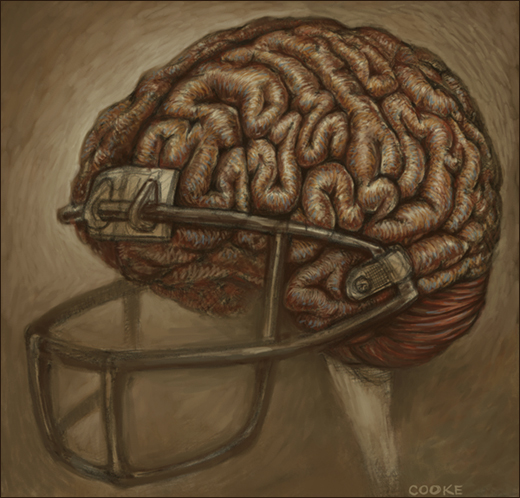
New data provides a sobering indication: At least one in four of all the people who have played in the N.F.L. might expect to end up with chronic traumatic encephalopathy, according to a study of hundreds of cases over a recent six-year period.
Researchers considered every former N.F.L. player who died from 2016 to 2021. There were 878. Some died in their 20s, some in their 80s, most in between.
The study’s main finding was simple math: At least 215 of those 878 former players — 24.5 percent — had C.T.E.
The actual prevalence could be far higher. The roughly 25 percent rate does not consider the 643 brains that were not examined. Some of those, maybe many of them, likely had C.T.E. too.
C.T.E. is a progressive neurological disease caused by repeated impacts to the head. It can be definitively diagnosed only by examining the brain after death.
Studies have shown that the rate of C.T.E. in people who have not sustained repeated impacts to the head is nearly zero.
If the new study’s statistics were applied to today’s players — 1,696 on the league’s 32 regular-season rosters, not including more than 500 members of practice squads and those ineligible due to injury — at least 400 of them would be diagnosed with C.T.E.
Experts say that the rate of brain disease represents an occupational safety hazard with little comparison in the American workplace.
I have written this before, and had this story on the EA runway for a long time because it makes me angry. People who cheer on football are literally encouraging young men to cripple themselves for their entertainment. It is unethical, and indefensible.
“He had the hardest time getting off the fact that Lindsay viciously killed her children.”
—Kellie Farina, one of the three jurors interviewed following the mistrial called in the Lindsay Clancy murder case, after the jury deadlocked 11-1 with a single hold-out male juror refusing to vote for acquittal.
That may end up being an iconic unethical quote, one that echoes through the years as America comes to realize how shattered the values of American women have become in the wake of the Supreme Court’s overturning of Roe v. Wade.
The especially nice touch is the use of “viciously,” don’t you think? ‘Imagine, this idiot was somehow stuck on the fact that a mother murdered her three small children viciously! What’s the matter with him?’
I’d like to know what’s the matter with anyone who can “get over” the fact that three children were murdered by their own mother “viciously.”
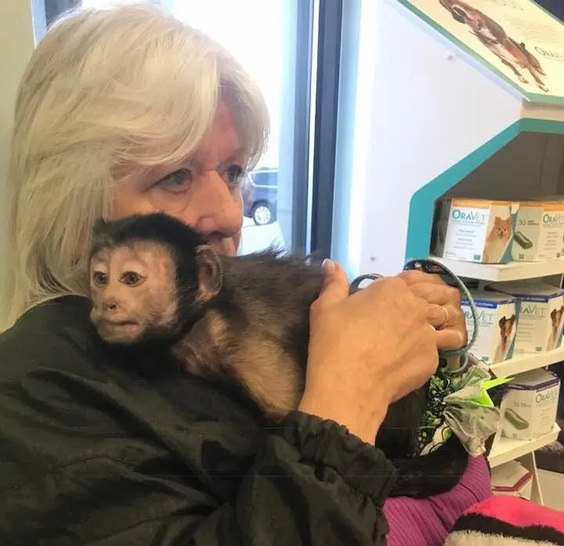
Brenda Deutsch, 70, a serial foster mother in Missouri, was sentenced to seven years in prison for child endangerment, because, among other things, she traded her teenage foster daughter for a monkey.
Nonetheless this creature—Deutch, not the monkey—avoided prison time, or even zoo time. Judge Thomas Frawley condemned her in open court as reprehensible and apologized to her alleged victims for a foster care system that had failed them, but he suspended execution of the sentence and placed her on three years of probation. Hey, after all, she was good to the monkey! The judge also revoked Deutsch’s foster care license and criticized the state of Missouri for allowing her to keep it.
Deutsch was arrested in April after authorities investigated allegations that she sent the girl she was fostering, now 17, to Texas to stay in a home that Deutsch admitted in court she knew nothing about. After Deutsch sought permission to take the girl to visit “a friend” in Texas, an anonymous caller alerted the Missouri Department of Social Services Children’s Division that Deutsch was allegedly physically and mentally abusing a child. Investigators later learned that the girl had been allegedly traded for “an exotic animal,” aka. the monkey, and was now living in Texas with the “friend.” She was also apparently living in squalor, because her new home was packed with animals. The teenager told investigators that Foster Mom had told her trading partner that she could keep the girl, but that Deutsch “will be keeping the check.” And the monkey, of course.
I don’t understand why Deutch isn’t receiving the same kind of passionate support Lindsay Clancy is. Heck, all Deutch did was trade a child for a monkey; she didn’t kill her. And everyone knows that teenagers are much more annoying than toddlers and babies.
It also seems pretty clear that Deutch is at least as nuts as Clancy is, just in different ways. (Note that I resisted saying that she was “bananas”…) So where’s the compassion? Where are the demonstrators in pink? How many mothers haven’t had moments when they would have happily traded their unruly, hateful teen for a monkey, a Hershey Bar or a 1958 Gino Cimoli baseball card? I see no signs reading “Listen to Mothers…Who want to Trade Their Teens for Monkeys!” This is a double standard.
Apparently Deutch has fostered over 200 kids. What a great child welfare system we have!
An ethically clueless woman asked the New York Times advice columnist “The Ethicist,” aka. NYU’s Kwame Anthony Appiah, a philosophy prof, an even more ethically clueless question than his usual inquirers.
She said that a friend of her teenage daughter obviously has a serious drinking problem, passing out, falling down and urinating on herself. Should Mom alert the girl’s parents?
“…Her parents, however, are known to be very strict, and the girls fear that telling them will result in severe punishment rather than support, or that it will ruin their friend’s trust completely.As a parent, my instinct is clear: If this were my daughter, I would want to know so I could intervene before something catastrophic happens. But I worry about blowing up this girl’s home life or driving her behavior further underground if her parents react punitively rather than therapeutically. Do I have a moral obligation to inform her parents, even if it might mean harsh consequences for her? Or does my duty lie in guiding the teenagers on how to handle this among themselves?”
What a moron.
Oh no, clearly your duty is to wait until this girl dies, or lets untreated alcoholism ruin her life, because you wouldn’t want her to stop trusting her friends like your daughter! Not only that, but we all know that the ascendant Left doesn’t believe in harsh consequences for anything, not even murdering one’s children. By all means, leave the girl’s fate in the hands of a bunch of teenage girls! They are renowned for solving complex problems with impeccable judgment. Look at this from the drunk girl’s perspective, ideally after about four shots of bourbon.
The woman actually employs the Golden Rule, which is ideally suited for ethics issues like this, then tries to talk herself out of the right response because of toxic empathy. Buried in The Ethicist’s typically wordy response (he has a column to fill, after all) is this definitive point:
“It’s hard to see how she can get the assistance she requires without her parents knowing.”
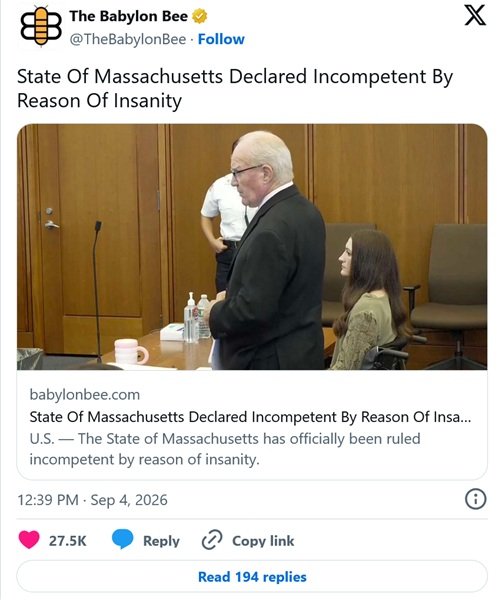
Things are not as simple as the Babylon Bee would have us think. Ethics Alarms already posted two essays on this case, here and here. The latter, a Comment of the Day by Tim Levier, concluded by describing the protesters and demonstrators thusly:
The Protestors / Defenders / Supporters – Providing financial and material support to someone with whom they have no prior connection.
These people are deranged and one has to question where they came from and who has time to commit to such folly at a time when everyone and their mother is complaining about the cost of things. Why would anyone protest due process? She’s making her case in a court of law and the fair process will play out resulting in a judgment. This isn’t an area for “opinions” and to influence an outcome. Its meddlesome and the act of a narcissist that believes in one’s own “greatness” or “importance” over that of an impartial judicial institution.
Clancy’s trial, presumably the first of two (at least), ended in a mistrial yesterday due to a hung jury. A single juror, widely believed to be one of the three men on the 12 juror panel, was apparently refusing to budge from his unshakable belief that the woman who has confessed to murdering her three children is guilty of murder. I dunno, that seems like a defensible verdict to me, but I wasn’t in the courtroom during the trial.
But I digress. Here are recent ethics-related developments and observations:
I’m getting this Comment of the Day by Tim LeVier up about a week late. Fortunately, I was reminded of the topic because essays and articles about the weird outpouring of support for a child-killer keep coming. Here’s the beginning of one I read today in The Free Press:
“Struggling, sleep-deprived moms are propping up their phones in their bathroom, hitting the record button and throwing ice at it while screaming for a whole minute. “Instead of having a screaming match with my toddler,” one mom wrote in a social media post, “I throw ice into my tub. It allows me to feel angry without being destructive.” Moms are also setting up ring lights to film themselves hysterically sobbing in front of their small children. Others are filming their crying babies with the caption “Me too, Lindsay,” in solidarity with Lindsay Clancy, the Massachusetts mom who killed her three children—ages 5, 3, and 8 months—and is currently on trial for murder. This brain rot has spread like wildfire, as the algorithms made sure it would, and in the momosphere—the network of TikTok moms and mommy influencers and mom bloggers—it has been almost universally embraced as a healthy, liberating way for mothers to exhibit their rage.”
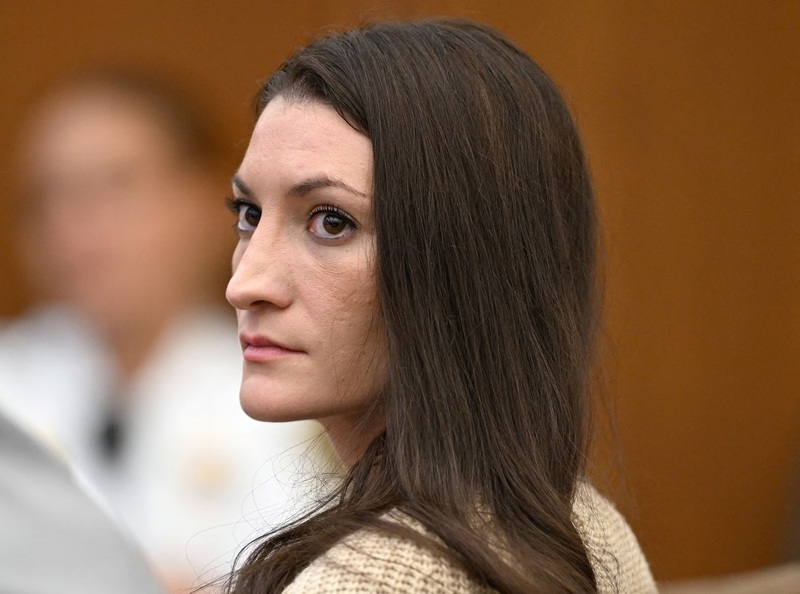
Tim’s analysis is as useful as I found it to be last week. Here is his Comment of the Day on the post, “On The Lindsay Clancy Support Movement: ‘What’s Going On Here?’”….[Oh…I know it’s foolish and biased to judge people by countenance, but boy, if I were casting Medea—or Lizzie Borden—that face would be irresistible.]
***
I have to break down any comment by the groups involved:
1. L. Clancy – She’s on trial. She did the deed. By her plea, I would say that’s an admission of being the one to have done the deed, her defense is not that she didn’t do it, her defense is that there’s disagreement to the severity of the charge due to her mental health. That is a proper question and should be settled by the courts / justice system.
2. The Parents and their Fundraisers – As I had heard it, money was being raised to support her parents through this and provide them with a place to stay because 3 years of motel rooms adds up.
It is a noble enough goal for the parents to attend the trial and confront the facts and reality of what is determined regarding your child. The people legitimately raising funds and supporting only this goal are probably showing some kind of exemplary ethics in being able to overlook the “Ick Factor” of the case and demonstrating a duty to care. How much easier would it be for the parents to not confront reality and wipe their hands of their daughter?
3. The Grifters – Ostensibly, there must be online grifters that have their own interests in play. They find hot button issues to sell some t-shirts and signs and whatever else will turn them a profit. They’ll lie about donating money and they’ll fan the flames to market and sell their wares.
These people are scum and not real people. They likely use AI generated video characters to fan these flames and profess their own special kind of virtue.
4. The Protestors / Defenders / Supporters – Providing financial and material support to someone they have no prior connection.
These people are deranged and one has to question where they came from and who has time to commit to such folly at a time when everyone and their mother is complaining about the cost of things. Why would anyone protest due process? She’s making her case in a court of law and the fair process will play out resulting in a judgment. This isn’t an area for “opinions” and to influence an outcome. Its meddlesome and the act of a narcissist that believes in one’s own “greatness” or “importance” over that of an impartial judicial institution.
Is it stupid woke Halloween controversy season already? Sadly, it is.
Target removed a Halloween clown costume from its website and presumably its stores after social media mobs claimed that it was racist, evoking blackface and minstrel shows. As we know, companies are infamous weenies any time the race card is played against them, and virtually always grovel an apology. Thus Target sobbed on social media this week,
“An apology from us: We removed an offensive Halloween costume that should never have been part of our assortment. It is no longer for sale. As a company, we got this wrong, and we are deeply sorry. We know this is especially hurtful for our Black guests, team members and partners. Removing the costume is an important first step, and we are looking closely at how this happened and what needs to change to ensure this won’t happen again.”
I am strongly inclined to view this as another “Gotcha!” exercise from the race-obsessed. Talk about a case of “If you hear the dog whistle, you’re the dog” ! Let’s see: what aspect of the costume evokes blackface or minstrelsy? Did blackface performer swear orange costumes like that? Noooo. Did they wear black gloves on their hands? No! Did they wear little clown hats? Ruffles around their necks like Bozo? Also no. So what exactly creates the “minstrel show” vibe?It’s the fact that Target hired a black kid to model the costume! Put a white child in that thing and it looks like what it is: a clown costume.
Let me get this straight: Admirably, Target doesn’t see racist images at every turn, and hired a black model, when it should have hired a white model because the black kid made race-obsessed victim-mongers think of blackface. That wasn’t blackface, that was a child’s black face!
Is it the smile that’s the problem? You know, evoking this…
…? Again, it’s the actual black face wearing that smile that triggered the easily race-triggered. As for the smile , which the race-hustler think deliberately evokes “Mr. Bones” above, it is a creepy, killer clown smile, as worn by the murderous clown in Season 4 of “American Horror Story”…
Does that character evoke blackface and minstrel shows?
We are never going to get out from under the iron boot of race hustlers until companies and celebrities stop capitulating to race-baiting like this. On the other side of this ugly coin, what realistic, sound business options did Target have? Well, it could have asked whether its critics want the company to discriminate against black models. It could have educated the public and its customers about what is and isn’t blackface and minstrel imagery. It could have put a warning in the constume’s package, “Do not buy if your kid is black. The Woke and wonderful will think he’s in blackface.”
Or is this another example of the ditty, “He was right, dead right, as he sped along, but he’s just as dead as if he were wrong”? If standing on principle loses a company sales and public support, is it ethical?
Your Ethics Alarms Early Halloween Ethics Quiz of the Day is…
Was Target right to apologize and pull the offending costume?
There has been so much weird, impulsive, counter-intuitive and counter-factual support for frauds, knaves and evil-doers on the ideological left that I have had a hard time keeping up with it—or maybe my brain is just rejecting what it regards as bad juju. An astounding number of young Democratic-Socialists lionize Luigi Mangione, who shot an insurance exec in the back in an alley. Hasan Piker, who campaigned with Abdul El-Sayed, now the Michigan Democratic Party candidate for the U.S. Senate, has repeatedly expressed his approval of the assassination of Charlie Kirk. I have several Trump-Deranged friends who would have sent metaphorical flowers of thanks to any of the recent failed assassins whose target was President Trump. The support for Jason Arday and his sanctification as a victim is also part of the trend.
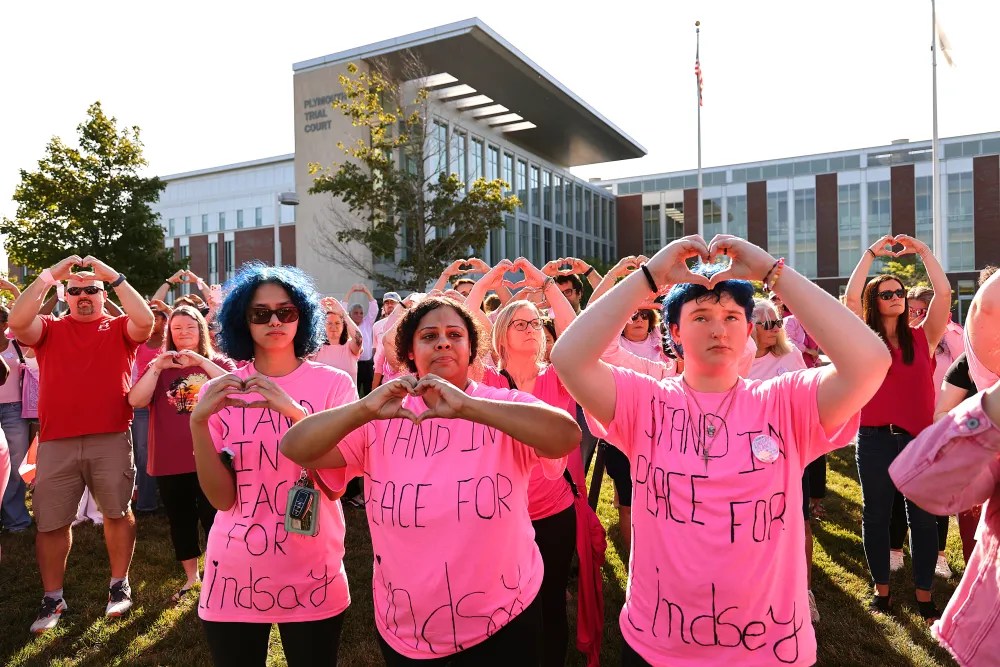
But this latest example is special. Hundreds of women, dressed in pink, protested last week outside Plymouth Superior Court in Massachusetts to show their support for Lindsay Clancy, the former nurse being tried for the murder of her three young children.
The mob wore shirts reading “Believe,” “She Needed Help” and “Peace for Lindsay.” Clancy, 36, pleaded not guilty to three counts of first-degree murder in the deaths of her children—Cora, 5, Dawson, 3, and Callan, 8 months, in January 2023. Her defense now is that she was suffering from postpartum psychosis and severe mental illness and therefore should not be held criminally responsible. Okay. That’s the defense’s job in a case like this, and surely any mother who would murder her own kids, or any children for that matter, has a strong argument that she was legally insane. However, in 1994 when Susan Smith was convicted of murdering her two sons, three-year-old Michael and one-year-old Alexander, by strapping them in their car seats, and rolling her car into a lake, there was no such public sympathy for her. The defense’s insanity defense was rejected by the jury.
Social media, of course, is part of the difference, and the Clancy episode may stand as a perfect example of how the internet warps values, perception and ethics. The murderous mother’s sympathizers have followed the livestreamed trial daily, often analyzing witness testimony in real time. TikTok has viral videos with legends like “I Am Lindsay Clancy,” often showing the poster holding her own infant. (I would think such videos justify visist from child protective services.) “I Stand With Lindsay” merchandise—shirts, hats, stickers, mugs, socks and bags —-are being sold on line. A GoFundMe established for Clancy’s parents had 31,000 contributions by the end of last week, raising over a million dollars.
This woman murdered her children, remember, and there is evidence that she planned it; she didn’t just “snap.”
So Ethics Alarms has to ask the threshold question to begin an inquiry into so many ethics problems: “What’s going on here?”
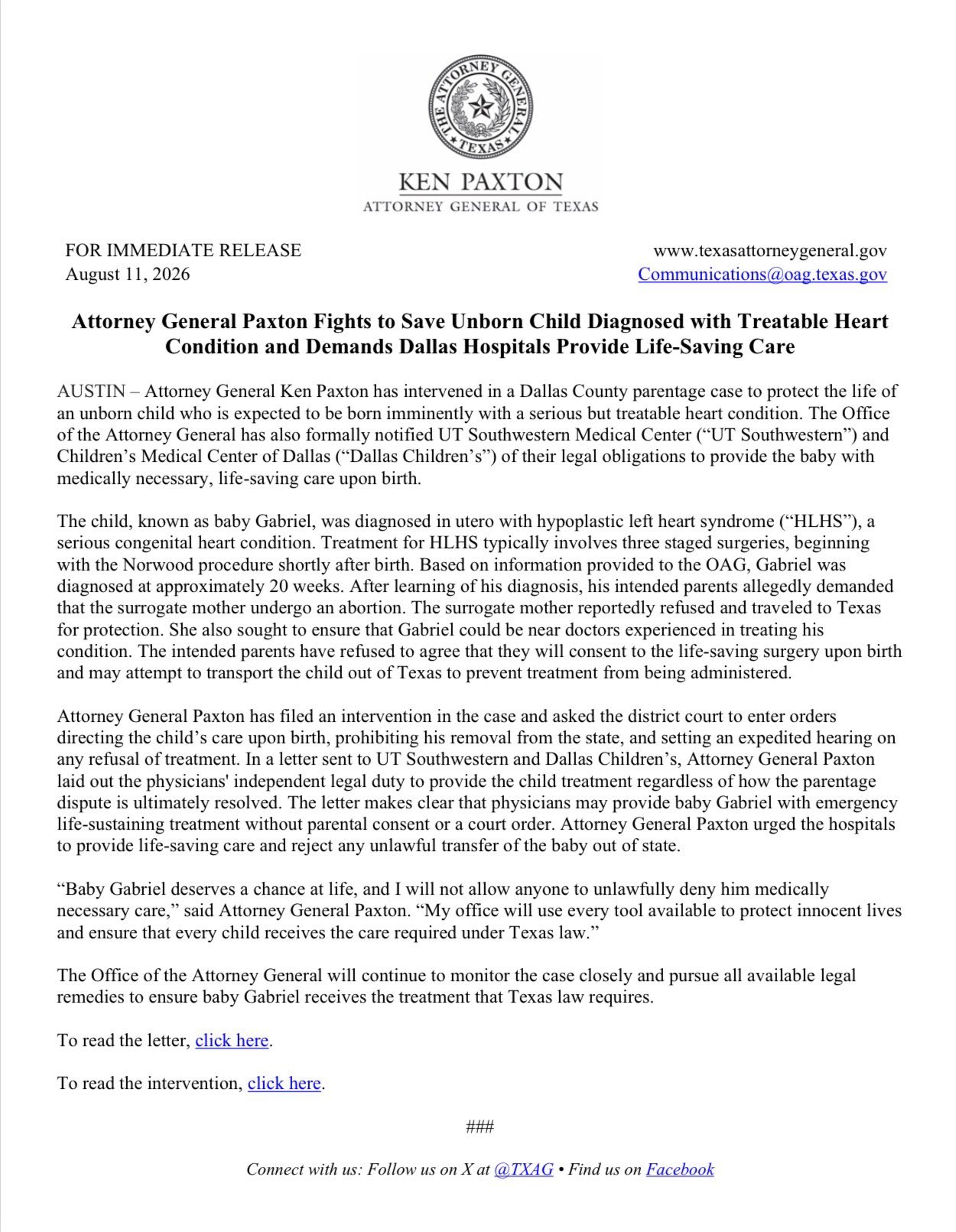
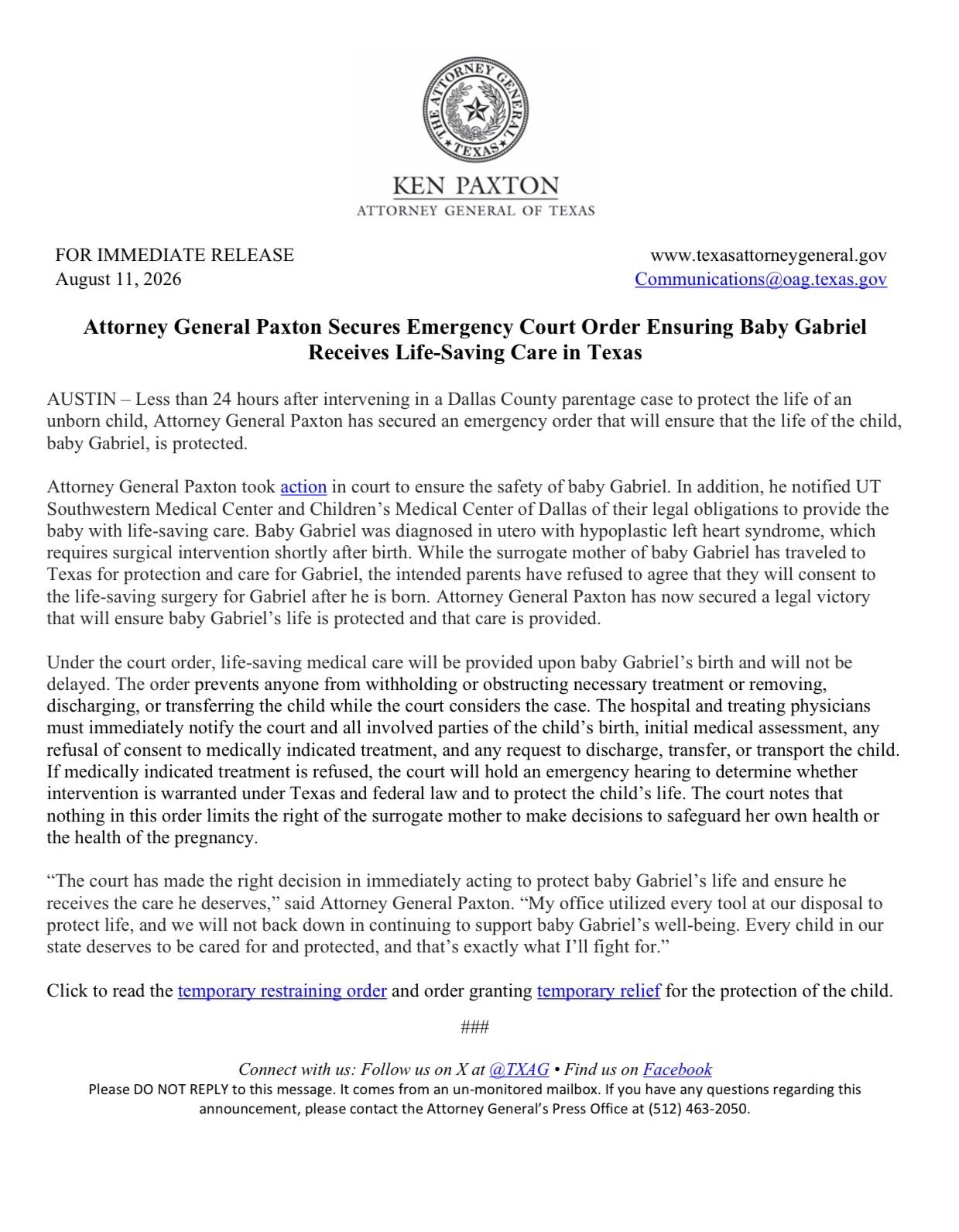
Again, I don’t know how any thoughtful, ethical person could question the outcome in this case. Apparently the “intended parents” refused to agree that they would seek appropriate medical care for the child after he was born with a serious but medically correctable heart problem. Having been unsuccessful in their efforts to have the child aborted late term, these ghouls were going to get custody of the child and perhaps have a hospital administer “palliative care”…that is, let the baby die. Pleasantly, of course,
A legal battle, at least regarding the life of the child, was averted when the child was born ahead of the September 3 due date.
As with some of the other cases discussed in Part 1, how could a typical pro-abortion advocate who uses the standard pro-abortion rhetoric about women’s “bodily autonomy” argue that the parents could force the surrogate to undergo an abortion? Yet abortion activists are apparently immune to integrity, logic, and decency. The main thing is to get the unborn child disposed of.
The surrogate’s contract contained a clause obligating her to submit to an abortion if the “intended parents” demanded it. The lawyers who drafted that contract should be sued for legal malpractice, and there are arguable ethical violations as well. I am wondering how common such contracts are, and how often they are enforced. For human beings cannot sell themselves into slavery or otherwise contract away their “unalienable rights.” That contract provision is unenforceable as against public policy, and should be made illegal by statute.
Republicans should pass the bill in the House and make Democrats show their lack decency when they vote it down.