It is indeed strange to call someone an ethics hero for taking reasonable steps to save his own life. In the case of Chris Borland, however, it is appropriate.
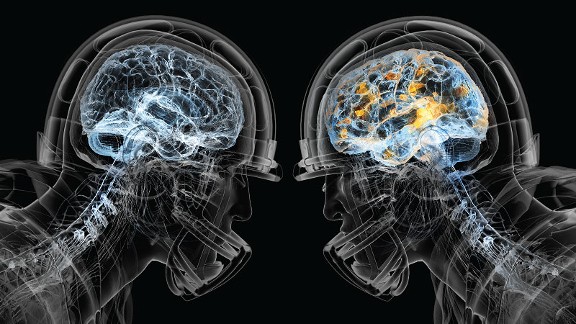
Borland, one of the NFL’s top rookies in 2014, announced that he is retiring after just one season he does not want to risk the long-term effects of repetitive head trauma.
Borland, 24, said he made his decision after consulting with concussion researchers, and current and former teammates, as well as researching the relationship between football and neurodegenerative disease.
“I just honestly want to do what’s best for my health,” Borland told ESPN. “From what I’ve researched and what I’ve experienced, I don’t think it’s worth the risk.” Continue reading →
“Oggy and the Cockroaches” is a French animated comedy series produced by Xilam and Gaumont Film Company. Its future on the Nickelodeon children’s TV cartoon channel NickToons is in doubt, however, after the channel was thrust into an unwanted controversy by an unknown French cartoonist’s practical joke.
A recent episode that aired on NickToons featured a brief view of a framed wall hanging showing a cartoon female duck sporting a pair of bikini briefs, sunglasses and bouffant hair-do, and most significantly, naked torpedoesque breasts of a variety more familiar to afficionados of “Fritz the Cat” than the target audience of eight-year-olds. Naturally, the station was deluged with complaints from parents.
The NickToons website now appears to have removed the show from both its schedule and its homepage. Good start. It should also end any relationship it may have with Xilam and Gaumont.
I know cartoonists are not known for an excess of maturity, but a network needs to be able to reside a modicum of trust in its contractors, suppliers and partners. If an animator would think it’s funny to slip a topless, sexy duck into a kid’s show, then who is to say the next “joke” won’t be a giant talking penis or Adolf Hitler having sex with a cow?
Far more disturbing than the prank itself are the rationalizations and justifications being offered for it in online comments to the story and in social media: Continue reading →
It isn’t news. It is poison. The press release makes the false claim that vaccinations spread measles, as well as other diseases. This is standard anti-vaxx hysteria, and it gets children killed. It is false. “Measles live vaccine doesn’t transmit easily at all,” said Dr. Jane Seward of the CDC’s Division of Viral Diseases told NBC, which apparently doesn’t communicate with its subsidiaries. “I don’t think there has ever been a secondary transmission,” she added. “There is no evidence of any transmission of measles virus from a child to household contacts.” As for the Foundation itself:
“The Weston A. Price Foundation is a nonprofit, tax-exempt charity founded in 1999 to disseminate the research of nutrition pioneer Dr. Weston Price, whose studies of isolated nonindustrialized peoples established the parameters of human health and determined the optimum characteristics of human diets. Dr. Price’s research demonstrated that humans achieve perfect physical form and perfect health generation after generation only when they consume nutrient-dense whole foods and the vital fat-soluble activators found exclusively in animal fats….
Yes, it is strange, like Dr. Price’s theories, and not in a benign way. Among the foundation’s other objectives is to show that vaccinations are unnecessary if you eat right, or something: when a home page prominently displays a link that reads, COD LIVER OIL: Our Most Important Superfood, my eyes tend to gloss over, I file the group under “Nut Balls” and move on.
CNBC posted this promotional piece uncritically and without context, leaving the impression that it was actual news, thus allowing fake news to go to the top of Google searches for gullible readers. At the bottom of the screen it says “More from CNBC” and not “More from health food hyping anti-science fanatics.” Continue reading →
The District of Columbia is poised to completely legalize pot, which will be the most ringing of government endorsements of societally destructive personal conduct, in a malfunctioning culture that should not be placed at further risk. This overwhelmingly black, poor, educationally-challenged and struggling population needs competent, trustworthy leadership and an injection of values. It is a community, after all, that idolized the late Marion Barry, a mayor who smoked crack on the job, and never apologized for it. It’s not surprising that the adults in the District would tell the young African-Americans that it’s cool to spend their your money to get stupid, to avoid clear thought rather than practice it.
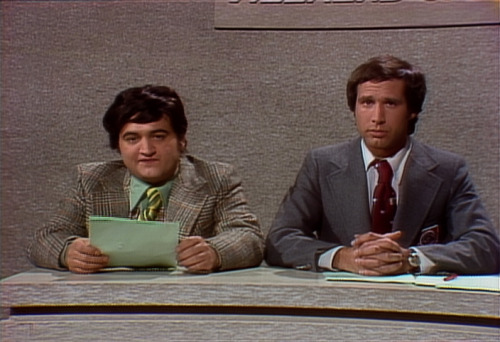
Every March 1, I watch this old clip (below) from Saturday Night Live (it’s not on YouTube, so I can only link to it) , featuring the great, and thanks to recreational drugs, late John Belushi. It unfailingly makes me laugh out loud. It also makes me furious that a talent like this gave himself so little time to entertain us, because he killed himself with an insatiable appetite for illegal drugs.
For me, March 1 is “Remember What Drugs Cost Society Day.” Those arguing for our government placing a societal seal of approval on these costs have yet to persuade me that it is ethical, wise or even sane to not just accept them, but to multiply them by a number unknown.
There’s a lot going on here, and I may lack the ethics dexterity, or perhaps the courage, to figure it out.
I learned about the story on CNN this morning, as the newscasters were getting misty-eyed and “Awwing” all over the place. With a lot of fairly disturbing ethics issues rotting on my plate, I was looking for something uplifting to write about. I’m not sure whether this is it or not.
Here is the most recent on-line story about Kory Mitchell, a sophomore on the varsity cheerleading squad for Manitou Springs (Colorado) High School, who was born with Down Syndrome:
DENVER, Colo. – A Colorado teen with Down syndrome has made her dream of competing in a cheerleading competition come true.
Colorado’s 3-A cheerleading champions hail from Manitou Springs. At the top of their pyramid is a teenager who has overcome serious challenges in her life. The countdown is on as thirteen girls get one last practice in at the Colorado School of Mines. In minutes, the Manitou Springs Mustangs huddle will compete against other top teams.
Cheerleaders take center stage showcasing their spirit and synchronicity. The Manitou Springs Mustangs huddle one last time. And for the first time, joining them in competition is 16-year-old Kory Mitchell.
“She is full of life and full of energy and always wants to be a part of everything,” says her mom, Bonnie King, as she watches with pride.
Her daughter has dreamt about being a cheerleader since elementary school. Her mom is emotional.
But learning these already complicated routines is harder for Kory. “It`s just a tough road when you have a differently-abled child. And to see them have a sense of belonging and acceptance is what she wants, of course, is just so beautiful to see it,” mom says.
Kory’s teammates see what’s under the surface. Things like courage, patience and unconditional acceptance.
“She`s pretty spunky. And she`s got some sass. She loves being out there. It`s nice to see her smile and part of the team,” says one of her teammates. Sometimes competitions aren’t about who wins, but a little hardware doesn’t hurt.
Kory accepted the trophy and a hand from her teammates.
“It`s my dream come true. I love my girls a lot. I`m a big fan of cheerleaders,” Kory said.And Kory’s teammates are big fans of her. This was Kory`s first competition, but she has cheered with the team since last year at football and basketball games.
As described here, Chicago’s Jackie Robinson West Little League Baseball team was stripped of its U.S. title after Little League International found out–later than it should have— that the team’s adult leadership changed the district boundaries without permission to create what was really an all-star team. The championship, to be blunt, was won through cheating.
Since the team’s members were all African-Americans, Jesse Jackson and many of the parents immediately claimed that racism was behind the forfeit. If, however, a white team had been found to have prevailed over a black team by cheating and was allowed to keep its ill-gotten championship, Jackson would also scream racism. (This was a #11. on the Draft Ethics Alarms Race-Baiting Scale: Presumed Racism: Accusations of racism based on no other factors but the races of the individuals involved.) Jackson and Chicago Mayor Rahm Emanuel then pressured the Little League to reverse its decision, essentially allowing cheating to be 100% successful, as it often is in politics. To its credit, the organization refused to bend.
Never mind: Emanuel is a veteran of the Obama administration, and also has a large black constituency to pander to. Thus he plans on giving the team championship rings at next month’s city council meeting. Emanuel found private donors to fund championship rings shortly after the Little League World Series. Each ring has the player’s name, jersey number and the number 42, in tribute to Jackie Robinson. On the inside of each ring, the legend, “Who says cheaters never prosper?” is engraved in script.
In January 2013, I realized I had used “Now this is the worst example of insane no-tolerance school conduct that there can ever be!” multiple times, and that it was time to make some close calls. I asked readers to rank the following real examples of child abuse by schools, in which children of various ages were punished cruelly and excessively for harmless conduct that violated a poorly envisioned no-tolerance rule. This was the list:
1. Biting pizza into the shape of a gun.
2. Pointing a finger in the shape of a gun and saying “Bang!”
3. Threatening to shoot a student with a bubble gun.
4. A deaf child who makes the obvious sign-language symbol for gun, to “say” his own name, because his first name is “Hunter”
5. Expelling a student and bringing charges of criminal assault for shooting another student with a spitball through a straw
6. Accidentally bringing a paring knife to school in a lunch box
7. Drawing a picture of your father holding a gun
8. Playing with a LEGO figure carrying a LEGO automatic weapon
9. Drawing a picture of a gun
10. Writing a poem about the Newtown shooting.
I received a lot of responses on the blog, more off-site. I never published the final results, however, which also takes into consideration my own positions. Here, from most defensible to most insane, is the current order, and why each entry landed where it did: Continue reading →
“When I was 16 years old, I tried to kill myself because I felt weird and I felt different, and I felt like I did not belong. And now I’m standing here, and so I would like this moment to be for this kid out there who feels like she’s weird or she’s different or she doesn’t fit in anywhere: Yes, you do. I promise you do. Stay weird, stay different, and then, when it’s your turn, and you are standing on this stage, please pass the same message to the next person who comes along. Thank you so much!”
—-Graham Moore, 2015 Oscar winner for best adapted screenplay for the movie “The Imitation Game,” in his acceptance speech.
…
“We live in the most incarcerated country in the world. There are more black men under correctional control today than there were under slavery in 1850.”
Legend’s statement is technically accurate, but misleading in many ways, inflammatory, destructive, and irresponsible.
When you heard it, did you make the distinction between “in prison” and “under correctional control”? Most didn’t—I didn’t— and that was intentional. This is deceit. Correctional control includes those in prisons, but also those in jails awaiting trial or serving short local sentences; those on parole; and others on probation. Like all the fake and misleading statistics that fly around, this one is inflated to induce a “Wow!” A person under probation or parole can live a completely normal and free life, if he or she can avoid breaking the law and some extra rules. Slavery it’s not. Continue reading →
“…but since this is a .357 magnum, the most powerful handgun on Earth, and will blow your head clean OFF…. I think I’ll go shopping with my little boy with this in the holster, unfastened, and bullet in the chamber!”
CBS informs us that in Wassila, Alaska, where you know who dwells, a 4-year-old boy was shot in the leg Saturday on a public sidewalkwhen his mother’s .357-caliber handgun fell out of its holster, struck the pavement on its hammer and fired.
No one has been charged, we are told.
Well, that’s cretinous, and as a society, our law enforcement has to send more responsible messages than that.
Again, as I noted here and here and here, all since the dawn of 2015, the fact that the child or an innocent bystander wasn’t killed by this reckless and stupid gunowner was pure chance, moral luck. As far as her conduct goes, there is no difference. She is the equivalent of a drunk and speeding driver. This isn’t an accident that “can happen to anyone.” This can happen to idiotic gun owners who don’t know basic gun safety and allow guns to be in the close vicinity of children. Why was her holster unfastened? Why did the gun have a bullet in the chamber? Why wasn’t she aware that what she was doing might make the gun fall? Why did she feel she had to carry a cannon of a hand-gun with her on a weekend outing to beautiful downtown Wasilla?
Charge her, prosecute her, throw her in jail, take away her gun privileges, and have child protection services investigate the home.
This has got to stop.
[But don’t call her a gun owner. She isn’t a real gun owner. Real gun owners don’t act like this. To call her a gun owner gives her dignity that she doesn’t deserve, and promotes bigotry against true gun owners, who by definition are responsible, peaceful, and observe gun safety principles at all times. If you don’t believe me, just ask the President. He understands. This is how he thinks, after all.]
First, do no harm. Second, don’t be a gratuitously cruel asshole.
Jami and Krista Contreras waited in the exam room for their newborn child’s first checkup. Then they were informed that the doctor they had asked to see had decided, after “much prayer,” that she could not treat the babybecause its parents are lesbians.
Presumably the doctor,Vesna Roi, does not habitually require her patients’ parents to fill out a questionnaire to prove the are sufficiently morally worthy to have their infant receive medical care. Nonetheless, so vile does she consider this couple that she feels it is the Lord’s will that she withhold her services from the innocent child they have undertaken to love and raise.
I probably do not need to tell you, and I certainly should not have to remind “Dr”–and I use the title advisedly–Roi that this cruel and hateful conduct is a flaming breach of medical ethics, though no rules should be necessary to persuade a medical professional to have a heart and a soul. Continue reading →