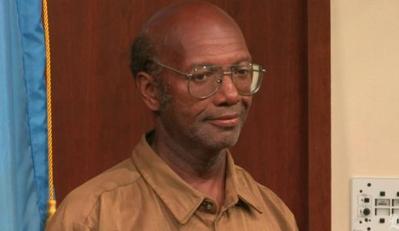
This is straightforward: Glen James, a Boston man who lives in shelters and has no money, found a backpack over the weekend that contained $2,400 in cash, $39,500 in traveler’s checks, passports, and other personal items. James flagged down a passing Boston police officer and gave him the backpack. As is often the case with stories like this, he doesn’t think what he did was a big deal: after all, isn’t this what anyone would do?
Prof. Reynolds, the iconic conservative bloggers who wields considerable influence in the right-leaning blogospehere and beyond, has frequently displayed a dismaying affection for the unethical response of “tit-for-tat.” Has seldom done so as blatantly, however, as in a post yesterday, linking to a National Review article about CUNY students shouting down General David Petraeus, who is now a lecturer there.
“I think right-leaning groups should similarly hound Hillary and other Obama Administration apparatchiks — including Obama himself, when he ventures onto campuses, both now and post-Presidency. The standard of behavior has been established. Let them live with it.”
Even giving Reynolds the benefit of the doubt and assuming that he is speaking tongue-in-cheek or hyperbolically, as he often does, this is an irresponsible statement if he doesn’t mean it, and an unethical one if he does. He is considered a sage and an opinion leader among many conservatives, and for such a prominent figure to expressly approve of the downward behavioral tail-spin that inevitably results when each competitor or adversary re-aligns ethical standards according to the unethical acts of the other is embracing all-out culture war and chaos, with no standards at all.
“They started it, so let’s give them a taste of their own medicine and see how they like it!” is street gang thinking, (Jets:“Well they began it!”Sharks:“Well they began it!”Both: “And w’ere the ones to stop it once and for all…tonight!”— “Quintet” from West Side Story) as far from ethics as one can get, and this is exactly what Professor Reynolds is endorsing. That ethically bankrupt approach, and the fact that our political system has been operating by it at least since 2000, accounts for today’s poisonous culture in Washington D.C. It has crippled both the Bush and Obama administrations, paralyzed the government and divided the public. If political and intellectual leaders embrace this reaction to misconduct in one setting, they are implicitly accepting it as a justifiable strategy, and it is not. It is a brutal, unethical strategy.
Students who interfere with invited speakers’ efforts to challenge or enlighten university audiences should be disciplined; it doesn’t matter whether the speaker is an ex U.S.general or Ilsa, Wolf of Dachau. Interfering with speech isn’t protected speech, nor is it ethical protest. That behavior isn’t a “standard of behavior,” it is a defiance of civilized standards. The President, Hillary Clinton and other targets of the right should be allowed to speak, listened to politely, and then confronted, if they are confronted, with civil and articulate rebuttals on the basis of their words and ideas. For a university professor to advise otherwise is unconscionable. For one who is respected and followed as extensively as Reynolds to write this defies reason.
Ms. Keihanaikukauakahihuliheekahaunaele says this is disrespectful to Hawaiians, which is true, but it’s worse than that. This is government encroachment on individual freedom at its most insidious and objectionable. A citizen ordered by the government to change her name, her public identity, to accommodate an inadequate bureaucratic system? Not in the United States of America. Here the government has to accommodate her. This is not and never can become a one-size fits all nation, where non-conformity is penalized with stares, taxes and the lack of a driver’s license. Today Keihanaikukauakahihuliheekahaunaele , tomorrow, Marshall. How dare they? We are all Keihanaikukauakahihuliheekahaunaeles now!
“It is extremely dangerous to encourage people to see themselves as exceptional, whatever the motivation. There are big countries and small countries, rich and poor, those with long democratic traditions and those still finding their way to democracy. Their policies differ, too. We are all different, but when we ask for the Lord’s blessings, we must not forget that God created us equal.”
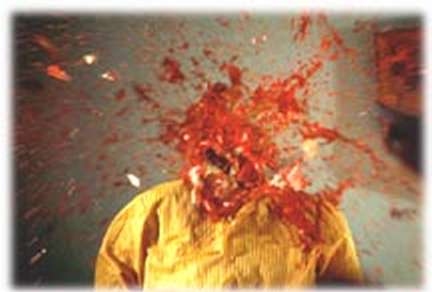
—-Former KGB officer and Russian leader Vladamir Putin, lecturing President Obama and the U.S. public on right, wrong, and human potential,in a New York Times op-ed that neatly exploits the stumbling White House diplomacy efforts regarding Syria. And yes, it made my head explode.
Oh-oh…this was bad one…
John McCain’s tweet in response to Putin’s cheeky op-ed was on target: “Putin’s NYT op-ed is an insult to the intelligence of every American.” [Aside:Of course, so was President Obama’s speech. As always these events give us a chance to gauge which journalists warrant ever regarding seriously again. On one side there are the likes of the Daily Beast’s toadying Michael Tomasky, who pronounced the President’s speech “great.” On the other is the Washington Post’s generally left-leaning Dana Milbank, who decided to be honest, pointing out how the President’s speech arising out of his contradictory and incoherent statement about Syria was…contradictory and incoherent: “The president, in the space of his 16-minute address, was often at odds with himself. He spent the first 12 minutes arguing for the merits of striking Syria — and then delivered the news that he was putting military action on hold. He promised that it would be “a limited strike” without troops on the ground or a long air campaign, yet he argued that it was the sort of blow that “no other nation can deliver.” He argued that “we should not be the world’s policeman” while also saying that because of our “belief in freedom and dignity for all people,” we cannot “look the other way.” He asserted that what Bashar al-Assad did is “a danger to our security” while also saying that “the Assad regime does not have the ability to seriously threaten our military.”In other words, “great.”] It was more than an insult, however. Putin’s screed was ethics poison: dishonest, manipulative, and malign. Continue reading →
Periodically, the same contentious argument breaks out on Ethics Alarms after I assert my position that voters should support the candidate who is the most honest and trustworthy–the one with the most ethical character—regardless of his or her policy positions. My argument is bolstered when someone like Anthony Weiner—and fortunately there aren’t many candidates like him— runs for office on the extreme opposite concept, that even demonstrably horrible character and dubious trustworthiness are irrelevant as long as a candidate holds the right policy views. He was just clobbered in his quest for NY mayor, getting just 5% of the vote, every one of them cast by a lunatic, porn star, mental defective or ethics dunce. I doubt that his wife voted for him. Client #9. Eliot Spitzer, also lost in his race for Controller…and he is like Weiner.
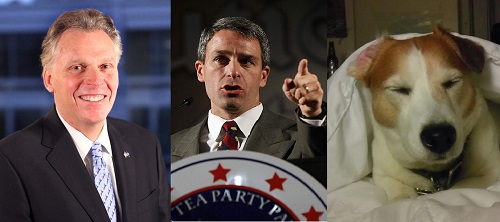
My position is shaken when faced with a fiasco like Virginia governor’s race, where a proven huckster, Terry McAuliffe, is carrying the Democratic banner and Ken Cuccinelli is the Republican choice. (I live in Virginia.) That McAuliffe is corrupt to the core, like his pals, the Clintons, there is no doubt. He is pure Machiavelli, and worse, he is gleeful about it, like his pal Bill, but without the charisma. I learned all I needed to about McAuliffe’s character when I learned that he tried to bribe Ralph Nader to drop out of the 2000 Presidential race, but that was hardly the only evidence. Virginia Democrats disgraced themselves by nominating him. I wrote about his public dissembling here and here; I didn’t even go into his dubious financial dealings andthe strange way —well, if you think cronyism is strange— he got rich investing in Global Crossing—as I said, the sliminess of his character has never been in doubt.
“You know…morons.”— The Waco Kid, “Blazing Saddles.”
This really does explain a lot…
The Waco Kid’s (Gene Wilder) sage description of “the common clay” to Sheriff Bart (Cleavon Little) when the latter was devastated by his treatment at the hands of the good (but racist) citizens of Rock Ridge often comes to mind in times like this, when I see a large portion of the public, pundits and the media taking a position that is not merely ethically indefensible, but suggestive of brain death.
Such a position is the rush to rally around Emilio Chavez III, an understandably enraged father who caught a naked peeping Tom masturbating outside his teenaged daughters’ bedroom window. From media reports:
“Police said Emilio Chavez III, his brother and a family friend beat the alleged peeper, Dylan Maho, 29, so badly that he was hospitalized, a local television station reported. The district attorney wants to charge Mr. Chavez with aggravated battery, a third-degree felony that could land him in jail for three years…Mr. Maho is in stable condition at the hospital and will be charged with voyeurism, a fourth-degree felony that only brings between one and two years of jail time.”
The headlines in the majority of national news sources—all what the mainstream media would call “the conservative media”— that have covered this story, for this is the feature of the incident that they deem makes it “national news,” is the “Believe It or Not!” angle that so backward are the priorities of the U.S. justice system that the father will face harsher punishment for his conduct than the sick pervert will for his! Here’s passage and quote included in most of the reports:
“Community members voiced their outrage and sympathy for their neighbor’s plight. ‘There’s a naked man outside his daughter’s window,” Mr. Chavez’s neighbor Bill Morgang told the station. “I think he was well within his rights chasing him down and beating him.”’
The overwhelming majority of the online comments to these news reports agree with Morgang.
Today, the anniversary of September 11. 2001, American minds should be occupied with thoughts of gratitude for heroes, the often anonymous and unknown people we may pass in the street every day, as well as the justly famous and celebrated, who make our lives and many others better by living their own selflessly and well. They are our salvation, role models and neighbors, and they teach us the lesson that all is never lost, and hope is always thriving, as long as there are good and courageous people who will do the right thing, no matter what the cost, when fate turns to them.
This seems like a propitious time to dedicate the Ethics Alarms Heroes Hall of Honor, the list of the Ethics Heroes Emeritus whose stories have been told here (and on this site’s predecessor, The Ethics Scoreboard.) Every current member of the Hall is now deceased, like the brave men and women who died this day, 12 years ago. Each of them, in a unique way, teaches how human beings can rise above the vicissitudes of mere survival, self-interest, personal benefits and the base desires of the species to live meaningful and virtuous lives. Some accomplished this over decades, some with one brilliant and transforming act of distinction.
There are currently 32 members enshrined in this virtual Hall. Obviously, it is far from complete. They are just symbolic representatives, worthy ones, of millions more who once breathed the same air we do today, and like those who perished twelve years ago, face the prospect of being forgotten over time, as we all go about the consuming task of getting from one day to another. Each one of us, I believe, is capable of emulating their example.
Here are the thirty-two members and their stories, as of this date,
Tipping points are events that establish major shifts in public attitudes and the culture, and what determines a tipping point varies from circumstance to circumstance. When the switch is flipped on public trust, a leader is done for, at least in a democracy. This is why, in a parliamentary system, prime ministers call for elections at such times, or even resign. It’s a tradition the U.S. might do well to consider.
The tipping point on the George W. Bush presidency was glaringly obvious: it was the botched handling of Hurricane Katrina, even though that particular fiasco was mostly an example of effective blame-shifting by New Orleans mayor Ray Nagin. Bush had already accumulated many legitimate reasons to doubt him, but the traditional American eagerness to like and trust whoever holds the same job as Washington, Lincoln and FDR had kept his presidency afloat…until it drowned in Katrina. All was downhill from there.
Now it appears that the Obama proposal/decision/ argument—who knows what it really is?—to engage in a limited missile attack on Syria may be the public tipping point on Obama’s leadership, the moment when the veils fall and the nation reluctantly but decisively admits that the man it elected—twice—as its leader cannot be trusted. If so, it is remarkable this took so long, testimony to how much we all wanted our first African-American President to succeed. The tipping point for me was years ago. Following the Bush experience, I thought that the bungled government handling of the Gulf oil spill would clinch it, but no. Then came the Benghazi mess, with an ambassador and other Americans murdered without any decisive response other than deceptive spin and obfuscation to avoid electoral consequences—the I.R.S. tea party harassment (still being investigated, and looking worse all the time)—the NSA revelations, and the growing evidence that while the Affordable Care Act may not be the cataclysmic socialist disaster conservatives claim it is, it is also far from what the President promised. No tipping point though, until Syria, and the consequences flowing directly from the President’s undisciplined off-the-cuff rhetoric—a constantly repeated flaw in his leadership style.
Now, as tipping points do, this current controversy is resuscitating all of the past incidents, and serving as the catalyst for a reappraisal of Obama’s leadership. The looming conclusion is that he cannot be trusted.
Occasionally am beaten to the punch by a pundit or blogger who delivers an essay that says exactly what I was preparing to write, even as I was almost finished writing it. Such a pundit is Forbes contributor Merrill Mathews, who delivered an article on that publication’s website over the weekend, titled “What Happens When You Can’t Believe A Thing The President Says?” (My title was going to be “When Trust Is Gone”).
I’m certain some will say that it is self-serving, that he made the video to try to minimize his punishment. This could be, and so what? The YouTube confession is still the best, most honest, most ethical, most courageous option that he had, once he had made the tragic and irresponsible decision to drive while intoxicated. Many, indeed most, and arguably all ethical acts have an element of self-serving in them. If they are right, they are right.
Imagine how much better society and the justice system would be if those who committed crimes fulfilled their societal duty to admit them, apologize, and accept their just punishment. Cordle, ironically, is not merely an Ethics Hero, but a role model.
I live in the Washington, D.C. area, and at this moment even the beginning of the NFL season, usually the one thing everyone here (except me) usually cares about, is being over-shadowed by the drama of the looming Congressional vote on Syria. What was assumed—why, I cannot imagine–to be a likely rubber stamp with only an insufficient number of Republicans providing opposition because, as we all have been told repeatedly, they will oppose the President on anything, has materialized as strong bi-partisan opposition. The Washington Post estimated last night that the votes in the House are currently running 3-1 against the symbolic-and-deadly-but-promised-to-be-non-committal missile strikes on pre-announced targets. This is the most encouraging development in the government since President Obama was elected, I am tempted to say. It shows that this is not a nation of lemmings, and that the separation of powers has its virtues after all. Nonetheless, interesting ethical arguments are arising in favor of votes both no and yes.
The no arguments are varied, and reach the same conclusion from different positions, some more ethical than others. The pacifist Left and the isolationist Right, both irresponsible and dedicated to ideology over reality, are on the same path here, and would be on that same path even if the President’s argument for missile strikes was strong. Others, including me, but also those who supported more extensive military action in the Bush administration, fault the plan because of its dubious results, its contradictory logic, and the feckless and troubling way the President brought us to where we are.
I just heard an interview with a Republican House member who announced that he reversed his initial support for the missile strike after hearing Obama’s remarks in Sweden. After hearing Obama appear to deny that he drew the red line—a rhetorical point that was too cute by half and clumsily stated—this Congressman decided that he couldn’t believe anything Obama said or promised regarding Syria, including his assurances that nothing would lead to “boots on the ground.” (I would argue that his assurances that nothing would lead to boots on the ground is, if not dishonest, frighteningly irresponsible.)
The yes arguments are more perplexing. Naturally, there are those who, against all logic, simply adopt the contradictory and militarily nonsensical arguments John Kerry was asked to present to the Senate (apparently because President Obama knows that he appointed an inarticulate—but loyal!!!—dim-bulb, Chuck Hagel, as Secretary of Defense—but that is another, though related, issue). Liberal columnist Eugene Robinson, who has won an Affirmative Action Pulitzer Prize and who has proven that he will cheer whatever his fellow-African American in the White House does, even if he makes a decree like the South American rebel-leader-turned-dictator in Woody Allen’s “Bananas”...
“From this day on, the official language of San Marcos will be Swedish…In addition to that, all citizens will be required to change their underwear every half-hour. Underwear will be worn on the outside so we can check. Furthermore, all children under 16 years old are now… 16 years old!”
made this “argument”…
“The issue can’t be who wins that country’s civil war. It has to be whether the regime of Bashar al-Assad should be punished for using chemical weapons — and, if the answer is yes, whether there is any effective means of punishment other than a U.S. military strike…Let me clarify: I believe that a U.S. strike of the kind being discussed, involving cruise missiles and perhaps other air-power assets, can make it more likely that Assad loses. But I also believe that — absent a major commitment of American forces, which is out of the question — we cannot determine who wins.”
Gee, thanks for clarifying, Eugene!
Other, more coherent voices argue for endorsing Obama’s plan do sent a few missiles—not any that might hit Assad or his weapons, mind you– because they argue, even if the plan is weak, misguided, dangerous or certifiably bats, the President and, by extension, the United States will be dangerously weakened if a call to arms is rejected. This is essentially the argument of rational conservative James Taranto. Here is former Bush speechwriter Michael Gerson, this morning:
“…During the Syrian crisis, the Obama administration has generally waged a war of words and then used those words casually and clumsily. President Obama declared that Assad “must go” when his departure seemed inevitable — without a strategy, or even the intention, to achieve this goal when it became difficult. He drew a chemical-weapons “red line” that became a well-trodden thoroughfare. The Obama administration revealed details of an imminent military operation, which was promptly repudiated by the parliament of our closest ally, then abruptly postponed. The administration seemed to indicate that United Nations support for a military strike was needed — before declaring it unnecessary. It seemed to indicate that a congressional endorsement was superfluous — just before staking everything on securing it. Obama is inviting members of Congress to share responsibility for a Syrian policy that has achieved little to justify their confidence. In fact, he has undermined political support for the legislative outcome he seeks. For more than five years, Obama has argued that America is overcommitted in the Middle East and should refocus on domestic priorities. Now he asks other politicians to incur risks by endorsing an approach he has clearly resisted at every stage…”
Wait…this is how Gerson argues that Congress should vote yes? Indeed it is…
“Legislators are not arguing between preferred policy options, as they would on issues such as health care or welfare. They are deciding if they will send the chief executive into the world with his hands tied behind his back. This would be more than the repudiation of the current president; it would be the dangerous weakening of the presidency….even if this military action were wrong or pointless, it would have to be sufficiently dangerous to justify the gelding of the executive branch on a global stage. A limited military strike may be symbolic. But for Congress to block that strike would be more than symbolic. It would undermine a tangible element of American influence: the perception that the commander in chief is fully in command.”
This is a good time to stop and offer today’s Ethics Alarms Ethics Quiz, based on the reasoning of Gerson and others:
Are members of Congress ethically obligated, by loyalty and responsibility for the image and credibility of the U.S. abroad and to avoid weakening the institution of the presidency, to support the missile strikes on Syria, even if they and their constituents believe that to do so is wrong and misguided?




 Ethics Alarms