Jaffrey, N.H. Motto: “Live Free, or, Well, We Don’t Really Want To Die, Exactly, Maybe Just Play It Safe And Try Not To Make Crazy People Too Angry At Us So They’ll Leave Us Alone”

The Mayor of Jaffrey, New Hampshire.

Every year, Jaffrey, New Hampshire holds a Festival of Fireworks in August that attracts thousands of people to the town and is one of the special pleasures of living there. The festival was scheduled for today, but city officials cancelled it after they received a letter threatening to set off a bomb at the event.

As one non-threatening letter writer commented in a local paper, “So much for “Live Free or Die.” Continue reading

Ethics Dunce: The ACLU

I suppose they just can’t help themselves, sometimes.

So handsome…and so foolish to mess up with partisan politics.

I support the American Civil Liberties Union because of its mission, and because it is on the correct side of issues more often than not. Still, it is stocked with left-wing ideologues, and too often is blatantly political, which damages its reputation, perceived integrity and effectiveness. Every American should be a supporter of a non-profit organization that stands for individual rights and freedoms as defined by the Constitution. Once such a group aligns itself clearly with one side of the political spectrum, however, this is impossible. At very least, the organization should refrain from partisan political attacks, which raises questions of conflict of interest, fairness, and independent judgment. The ACLU is too important to sully with political bias, but since it is run by people full of it, such taint is inevitable.*

Thus we have the embarrassing “report” by ACLU Liberty Watch. I can’t tell what the affiliation with the ACLU is; I assume that the ACLU approves and oversees an entity that leads with its name. This report attacks Mitt Romney’s running mate, Rep. Paul Ryan, as being “anti-civil liberties,” using the most dubious and extreme rationales to do so. My instant reaction: How can I trust an organization that proudly publishes such slanted trash with such obvious partisan intent to be a dispassionate watchdog on my civil liberties?

The answer: I can’t. Neither can you. Continue reading

The Melky Cabrera Affair: When Fair Isn’t Fair

A useful tool, when the government decides that what you did should have been illegal.

Let me bring the non-baseball fans among you up to date, reminding you that while the immediate subject is baseball, the ethical implications of this story are far broader.

Melky Cabrera, until last season, was a standard issue major league outfielder of substantial but undistinguished abilities and accomplishments. Last season, playing with the frequent destination of such players, the Kansas City Royals, Cabrera suddenly and unexpectedly emerged as a star, surpassing all expectations and his previous levels of performance. The Royals traded him, like an over-priced stock, to the San Francisco Giants in the off-season, getting a package of players in exchange for one they probably thought was as valuable as he would ever be.

This season, however, he was even better.  Not only was he selected to the All-Star team for the first time, he was also on the way to leading the Giants to the play-offs and possibly a World Series appearance. Then, this week, a drug test came in positive for testosterone: steroids. By MLB’s rules, Cabrera was suspended from play for 50 games, effectively eliminating him from the Giants season and post season and, not incidentally, marking him as a cheat and an idiot.

And maybe a batting champion. When he was suspended, Cabrera was second in the National League in batting average, and had already amassed the necessary at bats to qualify for the championship (actually, there are some complications with that, but for all intents and purposes, that’s true). He’s only 13 points behind the leader, and averages tend to come down as the season drags on. Not only is Cabrera’s high average a likely product of pharmaceutically-aided cheating, but his suspension for getting caught at cheating may actually help him win the prestigious batting crown, by freezing his average at a lofty .346. Is this fair? Certainly not. Continue reading

Comment of the Day: “How To Raise An Irresponsible and Dangerous Child”

“I know my precious angel crashed her car, but it’s her own fault: she left the keys in it!”

Michael, who is the reigning champ in the Comment of the Day Division, scores another with this comment, a rebuttal of ampersand’s plea that a mother’s efforts to deflect blame from her joy-riding teenager, now in a coma after causing a high speed police chase and an accident that closed down a major highway, shouldn’t be held against her. “The mother’s statement was stupid,” ampersand wrote, “but… if there’s any time when we should refrain from attacking people for saying stupid, regrettable things, it’s right after their 14 year old son has been in a terrible, tragic car accident. I don’t think it’s unreasonable to give this woman the benefit of the doubt, and suppose that how she acts on the worst day of her life might not be a representative sample of how she generally acts.”  I’m generally in favor of the benefit of the doubt, although I personally doubt whether any responsible parent would try to blame joy-riding on the owner of the car her son stole, or would try to minimize the offense by suggesting that “maybe he wanted to go farther than he felt like walking.”  I cannot imagine any tragedy that would have made my parents say something that absurd.  Still, I acknowledged that the context of the mother’s comments should be taken into consideration. Michael was tougher, and makes a powerful case that he should be. Here is his Comment of the Day on the post How To Raise An Irresponsible and Dangerous Child.

“I think ampersand is exactly wrong. So much that is wrong and wasteful is done because of this kind of sentiment. She should be confronted about this, because the alternative is to go along with it. She said it, it was published. It must be refuted. Not refuting it, publicly, leads to this being considered a valid opinion. Considering this a valid opinion means possibly arresting and convicting the owner’s boyfriend. It also means that it is OK to “borrow” someone’s car (however you have to) if you are tired of walking.

“Some examples of what happens when you go along with it because you don’t want to confront someone who has suffered the loss or injury of their child: Continue reading

How To Raise An Irresponsible and Dangerous Child

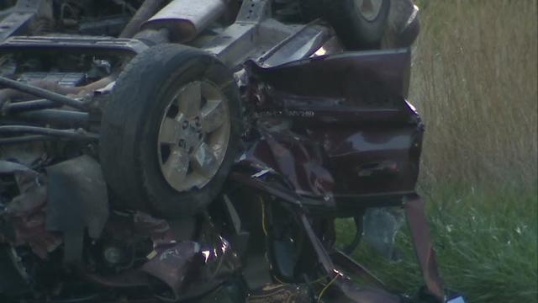
After a 14-year old Pennsylvania lad stole Jeep Grand Cherokee and led police on a high-speed chase that ended with him clipping another vehicle and causing a crash that closed the highway and left the boy in a coma, his mother told reporters that her son wasn’t the only one to blame for the accident.

“I’m not downplaying my son’s role in taking something that didn’t belong to him, but I am saying they actually left their keys in the car and the vehicle could have been taken by anybody,” she said. The mother, who has not been identified in press accounts because, I guess, her son is a minor and some people think that teenagers who steal cars, defy police and endanger lives should have their identities shielded (not me!), also found fault with the Jeep’s owners boyfriend, who followed the vehicle after the kid started driving it away: Continue reading

Movie Ethics: The Disruptive Child, the Weenies, and The Duty To Confront

Over at Consumerist there is a ridiculous post about a woman, “Kelly,” whose recent movie-going experience was ruined by a couple of boorish and irresponsible parents who brought their pre-schooler to the movie and did nothing while he annoyed the woman, talking to her, nudging her, and generally being a nuisance. You can read her account of the whole fiasco here.

Apparently it never occurred to the woman, or her equally passive and impotent brother, who has apparently been writing indignant e-mails to Regal Theaters after the incident, to tell the couple that 1) they have no right to let their child interfere with other audience members trying to enjoy the movie, 2) they either need to control their child or leave, and 3) if they don’t, then she will go make such a fuss in the lobby with the staff that they will be asked to leave. Continue reading

Are “Freak Shows” Unethical? Because They Are Back.

Abigail and Brittany Hensel: Who’s exploiting who?

Circus and carnival sideshows were banned by law and ordinance over half a century ago. Silly me: I remember hearing about that as a child and assuming that it represented human progress, that civilized Americans had decided that it was degrading to both the “human oddities” displaying themselves to gawking onlookers and the gawking onlookers themselves, and that we were better than that. The ethical attitude toward people with deformities, strange maladies and unusual physical characteristics was compassion, acceptance, kindness, and treatment as equals, not voyeuristic ogling. It made sense at the time.

Of course, as a child I had yet to experience the full oppression of political correctness. The sideshows were banned because the people who had no interest in them felt that they could dictate conduct to the people who did, and that it was also somehow virtuous to forbid the human exhibits from making a living—for their own good, of course. It is certainly time to repeal those bans, which were of dubious constitutionality anyway, since the freak shows that were deemed unhealthy and degrading on the carnival circuit are now openly thriving on television, making more money and being seen by more Americans than P.T. Barnum could have imagined in his wildest dreams. The original question remains, however: Are they ethical? Continue reading

Ethics Hero: The American Bar Association


This week, the American Bar Association House of Delegates passed Resolution 100.

The measure reads:

RESOLVED, That the American Bar Association urges all state, territorial, and local legislative bodies and governmental agencies to adopt comprehensive breed-neutral dangerous dog/reckless owner laws that ensure due process protections for owners, encourage responsible pet ownership and focus on the behavior of both dog owners and dogs, and to repeal any breed discriminatory or breed specific provisions.

Translation: stop discriminating against pit bulls and all the dogs that look like pit bulls, might be pit bulls, or that people who don’t know anything about dogs might think are pit bulls, as well as the dogs’ owners. It’s not fair, it’s unethical, and it’s un-American. Or, as Elise Van Kavage, chair of the Animal Law Committee of the Tort, Trial & Insurance Practice Section, put it, “People love their pets, no matter what their appearance,” she said. “This is America. Responsible pet owners should be allowed to own whatever breed they want.” Continue reading

Quest for Fairness: What Will It Take For America To Treat Blacks Like Regular Human Beings?

“Look, a monkey! Must be racist.”

Two recent incidents at the London Olympics—really, really stupid incidents—-caused me to wonder anew what it must be like to be black in this country, and to despair. I’m not referring to discrimination, exactly.  I think a better term would be  “unhealthy obsession.” To be black in America is to be automatically a subject of controversy and conflict, and I assume this is a crushing, almost irreducible burden that makes daily life, happiness and sanity infinitely more difficult for African-Americans than for any other  group. It appears that the culture, the media, the public, interest groups and government just won’t ever leave them alone to just live.

Here is U.S.tennis star Serena Williams, and she has just won a Gold Medal in singles tennis. Williams, whose passion and effervescence is almost as attractive as her athleticism, does a little happy dance. Not too much of one—nobody could accuse her of preening or taunting like NFL players after a touchdown. And yet she is criticized anyway, by Fox Sports among others, because what looked like just a happy dance to me was really a version of the “Crip Walk,” a hip-hop move adopted by the notorious L.A. street gang, the Crips, about 40 years ago. Since Serena is black, some saw this as a poorly-timed reference to drug-dealing killers, or even glorification of gang culture. Three seconds of a little jig, and suddenly the Olympics is the site of a race incident—and this is an ethics alarm that should never have gone off.

Or should it? The “Crip Walk” is considered so provocative in some neighborhoods that schools have banned it. From that perspective, maybe critics have a point; it might have been irresponsible for an African-American athlete from L.A. to do the move.  Williams—I love you, Serena!—brushed off the controversy by saying, simply, “I don’t care.” Still, a pure moment of an athlete’s joy in victory was marred, because the victor happened to be black. Continue reading

Massachusetts: A State Lottery Shows Its Corrupt And Irresponsible Core

“Hey! No fair! Smart people aren’t supposed to play the lottery!”

On one level, I love this story, for it confirms what I have been arguing for over a decade. State lotteries represent an unethical capitulation of governments to laziness, cowardice and greed, as they choose  emulate casinos to entice the poor, desperate and stupid to give away their money rather than do their duty and make hard political choices about taxes. The inherent corruption this engenders was beautifully demonstrated by the lottery scandal recently revealed in Massachusetts.

A group of science and math whizzes, many of whom had MIT credentials, formed a gambling syndicate to beat the lottery, and did, generating almost $8 million in winnings after exploiting a flaw in the lottery rules to execute a system that virtually guaranteed profit. Their domination of the lottery continued over seven years, and was known about by lottery officials, who did nothing. Why? Because the money was coming in, and they didn’t understand that they were facing a net loss. Continue reading