An Important Post At Popehat: “A Year of Blasphemy”

Ban it?

Ken, the witty First Amendment champion who blogs at Popehat, had issued an important and meticulously researched review of how blasphemy has been punished around the world in the past 12 months. He introduces his survey, in part, by writing…

“The incendiary film “”The Innocence of Muslims” was merely an unconvincing pretext for a terrorist attack, not the true cause of the attack. Yet the film has spurred new discussions of American free speech exceptionalism, and led some to question whether we should hew to the First Amendment in the face of worldwide demands for an international ban on blasphemy… We should address such views, not ignore them. But as we consider them — as we evaluate whether anti-blasphemy laws will ever be consistent with the modern American values embodied in our First Amendment precedents — we should examine what the competing values truly are. What are the “other values” which other societies believe outweigh free speech? What sorts of things “inflame” people in those societies? If other societies understand free expression differently than we do, how do they understand it? What “international norms” are emerging on blasphemy?” Continue reading →

The Zumba Instructor’s List and Public Shaming In Maine: Choose Your Ethical System

What those Zumba ads never told you…

Kennebunk, Maine’s popular Zumba dance instructor Alexis Wright and her “business partner” are being charged with solicitation and prostitution. Now the Maine Supreme Judicial Court is about to decide whether  Wright’s substantial client list should go on the public record, as it will unless the court agrees to put it and its names under seal.  Defense attorneys will argue that the harm that will result from allowing Wright’s “johns” to be outed to their families, employers and neighbors is too great. “We think there’s a really important principle at stake here: These people are presumed innocent,” defense attorney Stephen Schwartz said. “Once these names are released, they’re all going to have the mark of a scarlet letter, if you will.” Continue reading →

Ethics Quiz: The Conundrum of the Anti-Gay Marriage Diversity Officer

…But be sure to think about it who will see it before you do!

Ethics, law, fairness and common sense are locked in a complex battle in this story, which comes out of Gallaudet University, the famous Washington D.C. school for the deaf.

Dr. Angela McCaskill, Gallaudet’s chief diversity officer, has been put on administrative leave and may face dismissal because the school learned that she had signed a petition opposing Maryland’s same-sex marriage law.  McCaskill apparently signed the petition at her church after her preacher spoke against gay marriage. A measure is on the Maryland ballot that could overturn the recently-passed state law approving same-sex marriage.

Does she have an absolute right to sign a petition in favor or opposing any political or social policy? Yes. Is this a petition something a university official in charge of promoting diversity is wise to sign? No. Is a university whose diversity officer chooses to sign such a petition behaving fairly and responsibly to decide that it should have someone else in that position?

Hmmmm.

And that’s your weekend Ethics Alarms Quiz:

Is it fair and responsible for a university to fire its diversity chief because she signed a petition opposing gay marriage? Continue reading →

What’s Wrong With The Anti-Jihad Ads?

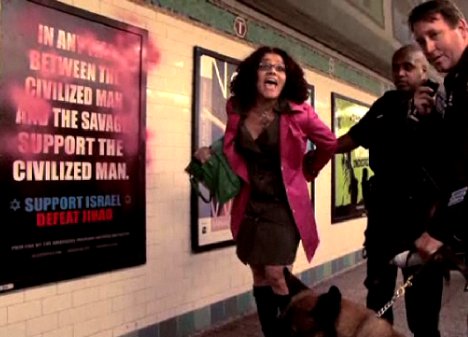
Mona Eltahawy, as police infringe on her exercise of the rarely invoked Eleventeenth Amendment, which protects a citizen’s right to spray any message she doesn’t want others to see with pink. paint.

The controversial ads went up in DC Metro stations today, after efforts by the city to have them blocked were declared, properly, to be unconstitutional by a sane and objective judge. The ads read,

“In any war between the civilized man and the savage, support the civilized man. Support Israel. Defeat Jihad.”

The controversy over the subway ads started heating up in the wake of the “Innocence of Muslims” debacle, when a crude internet trailer for a crude anti-Islam movie was used by extremists and fanatics around the world as an excuse to demonstrate against or attack U.S. embassies. The Obama Administration’s less-than-ringing defense of free speech in its efforts to minimize the violence had the undesired effect of emboldening domestic censors, among them  Mona Eltahawy, a free-lance Egypt-born journalist, who spray-painted one of the anti-jihad ads, the creation of the American Freedom Defense Initiative, in a New York subway station where it had been hung on September 24. She argued, as she sprayed, that censoring someone else’s protected speech was her First Amendment right. No, it’s not. A 2011 naturalized citizen, she needs to bone up on her American Constitution before she speaks at any more college campuses. She was arrested. Good. Continue reading →

Ethics Quiz: Conspiracy Theories and the Disrespect Follies

One of the problems with the hateful, vicious, hyper-partisan politics that now grips the nation is that its most severe sufferers, inevitably the so-called “bases” of the two political parties and their most vocal advocates, end up making themselves look like fools because of it. Their fervor drives out rationality, and by refusing to assign decent and reasonable levels of  respect to their political opponents, they devalue their own credibility, sometimes to the vanishing point. They may not really be fools (though some of them are), but in a real sense, they have been driven insane…by hate, by lack of proportion, and a respect deficit that banishes both fairness and responsible conduct.

Crazy Accusation A: Republicans/Conservatives… Continue reading →

9 Tips For Ethical Debate Watching

The hype and predictions about tomorrow night’s first debate between Mitt Romney and President Obama are already unbearable. Yet the debates will be worth watching, and could do this revolting campaign a lot of good, if we can discipline ourselves to watch it ethically. This is harder than it sounds.

1. The most important aspect to ethical debate watching is resolving to be fair. That means don’t do your own “spin”: force yourself to be equally critical of both candidates. There are no villains in this election, much as it has been framed that way by the two parties. Neither has a nefarious objective; both are dedicated public servants and loyal Americans. If you don’t believe that, you probably shouldn’t watch the debates at all.

2. Look for honesty, and be grateful for it. I will give points to any candidate that admits a mistake, gives credit to his opponent, state that he doesn’t have all the answers, acknowledge that there is merit in some of what the other candidate suggests.

3. Look for dishonesty, and be critical of it. Are his answers evasive? Does he quote false statistics? Is he making promises he can’t keep, or has no control over whether he keeps them or not? Is he trying to mislead the ignorant and gullible in the audience? Do you trust him?

4. Watch for signs of character, good and bad. The debate isn’t scripted, which means that we have a rare chance to see the human beings (maybe) rather than the facades. Are they arrogant? Nervous? Disrespectful? Rude? Dispassionate? Impulsive? Cocky? Are they respectful? Fair? Reasonable?  Gracious?

5. Ignore the practiced zingers and the style points. Don’t be overly impressed with recitations of facts, names and numbers: both candidates are smart and do this well; so can many people you wouldn’t want in the White House on the best day of their lives. This is a crisis for each of them; the stakes are huge. How do they handle it? Are they cautious? Reckless? Unprepared? Impulsive? Brave?

6. Try to ignore whether you like either candidate, but rather examine about whether they can be persuasive to others. Try to adjust for your biases.

7. Be open to having your mind changed. The hardest task of all.

8. After the debate is over, make up your own mind before you listen to any of the partisan analysts. All Republicans will say Romney won; all Democrats will say Obama won, except pundits who want to stand out as the “objective” ones. Most of them are calculating too. Confirmation bias operates in overdrive in such events: the partisans really see it the way they want to. Ignore them. Don’t listen to them. How did you feel about the debate? That’s all that matters. Nobody knows how you should react to it better than you do.

9. Watch it. This is important, and we are lucky to have the system we have, as rotten as it often is.

The “Homeland” Dilemma

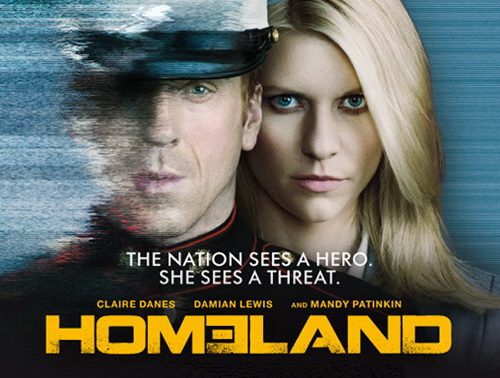
In “Homeland,” Showtime’s excellent Emmy-winning drama starring Claire Danes, a G.I. named Nick Brody imprisoned for years returns to the states a hero, and, secretly, a converted Muslim and terrorist. By Season Two, which premiered last night, Brody has risen to be a member of Congress, where he is working from the inside to benefit the interests of his captors. He has kept his conversion to Islam secret from everyone but his teenage daughter Dana, who accidentally caught him praying to Mecca in the basement in the first season.

Now Brody’s name is being floated as a possible running mate for the current Vice President, who is a presumptive presidential nominee. The Veep tells Congressman Brody that if there are skeletons in his closet that his researchers wouldn’t have found—I’m pretty sure being a secret terrorist would qualify—Brody needs to air them. Brody says there aren’t any. We know better.

Meanwhile, at Sidwell Friends, the tony Quaker private school in D.C. that all the pols send their kids to, Dana is fuming because she has to listen to the  Vice-President’s obnoxious son  go on about how “Muslims aren’t like us” and “don’t respect human life.” Dana, having been admonished for insulting him, blurts out, “Well, my father’s a Muslim!” in class.  Dana’s subsequent position is that she was joking to make a point. At home, however, her outburst causes a domestic crisis, as her mother feels that Brody has been lying to her, which he has.

I’ll leave Rep. Brody out of this ethical dilemma, as he is suffering from an Islamic strain of the Stockholm Syndrome, but what about the family? From their perspective, which is that they don’t suspect for a second that Brody is a traitor, what is their ethical obligation should he announce that the Vice President is going to choose him as a running mate, and that he expects them to keep his secret?

His argument, of course, is that his religion shouldn’t and doesn’t matter. It is true that the “public would want to know,” and also that the public would probably not feel very comfy electing a Muslim these days to be a heartbeat away  from the Presidency, fair or not. The family knows he is a good man (they think) and like the idea of being Second Family; there is no reason to sink his career and their aspirations to celebrity by allowing irrational bigotry to take hold. Is there?

That’s not the whole truth, however. Brody has lied to the Vice President and to his constituents, and they do have a right to know that. In my view, both wife and daughter have an ethical duty as citizens to tell husband and father that if he accepts the nomination, they will be forced to expose him. They should also tell him that he needs to resign from Congress, or, if he’s willing, tell the public about his deception and ask for their forgiveness. I think, in short, that this is a John Edwards situation.

Is that what you would do, in their place?

And my favorite hypothetical of them all, that I refuse to believe wasn’t lurking in the minds of the writers:

Michelle discovers Barack praying to Mecca in the basement.

Tomorrow.

What would be her ethical duty?
Nakoula’s Arrest and Imprisonment: The Big Chill [UPDATED]

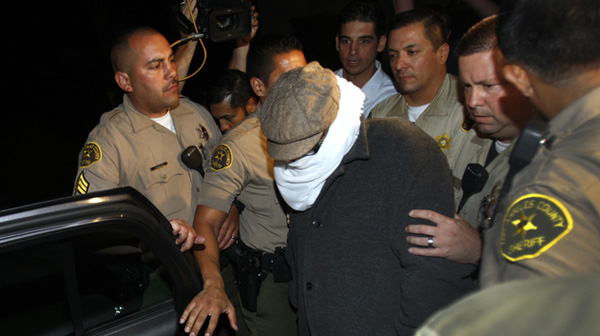
More than a week ago, one of my blogging, legal, ethics idols, Ken at Popehat, took issue with my post stating that the midnight questioning of Nakoula Basseley Nakoula (the alleged producer of “Innocence of Muslims,” the crude anti-Islam film then being blamed by the Obama administration for all the violence that erupted in the Middle East on September 11) would appear both abroad and at home to be in retaliation for his exercise of his free speech rights, and should have been avoided even if it was otherwise justified by his parole violations. Ken wrote:

“…What separates us from the mob is the rule of law. We shouldn’t ignore the rule of law by violating First Amendment principles in what Eugene Volokh correctly points out would be an utterly vain attempt to appease a mob. On the other hand, we shouldn’t hinder the rule of law to avoid the appearance of appeasement, either. That’s still letting the mob dictate our actions and our adherence to our own laws. “We would normally do X, but we mustn’t because it might enrage the mob” is just the flip side of “We would normally do X, but we mustn’t because it might embolden the mob.” Both are a sucker’s game. The mob’s actions are going to be driven by its own culture and by the people manipulating the mob for their own political gain. Jack, and others, seem to be saying that the mob will misunderstand the orderly administration of the law in this instance: but is there really any chance that the mob will ever make an honest attempt to understand, or will care, or that the forces manipulating them will react honestly? Respect the rule of law and fuck ’em if they don’t like it.”

On this blog, commenter tgt was more succinct:

“Jack’s view of law is that if you are enough of a dick, you should be immune from prosecution for any action.” Continue reading →

Policies Don’t Fix Unethical Professors

“Here is your assignment, class: Vote for who I tell you to.”

I saw this story and decided it was too obvious to write about. A community college math professor distributes to her class a pledge to vote for Obama and the Democratic slate, and demands that the students sign it—come on! Is anyone going to defend that as ethical? Then a reader sent me several links to the item (thanks, Michael), and after reading them, I was moved to reconsider.

The professor, Sharon Sweet, was put on unpaid leave pending an investigation; I can’t fault Brevard Community College (in Florida) for not firing her yet. What troubles me is the college’s statements that her conduct is just a breach of policy. BCC Spokesman John Glisch told the press that “The college takes this policy [prohibiting employees from soliciting support for a political candidate during working hours or on college property] extremely seriously. It is very important that all of our faculty and staff act in that manner at work and while they’re on campus.” So college provosts are reminding employees about the policy.

Let’s be clear. Associate Professor Sweet’s conduct was an abuse of power and position, an insult to the autonomy of the students and an attempt to take away their rights as citizens, disrespectful to them and the values of the nation, and an attempt to circumvent election laws and to subvert democracy. It was also, quite possibly, illegal. If a college needs to have a policy to stop teachers from behaving like that, it is hiring the wrong kinds of teachers—individuals whose ethics are those of totalitarian states, and whose respect for individual rights are nil. This was an ethical breach of major proportions, not a policy misunderstanding. No teacher should require a policy to tell her that this conduct is indefensible and wrong. Continue reading →

The Detainment Of Nakoula Basseley Nakoula Is A First Amendment Betrayal, Parole Violation Or Not

No, really, this has nothing to do with the President blaming this guy’s film on the attacks on US embassies; it’s just a parole violation thing. Unrelated. Really. Of course, if violent Muslims think we’re cracking down on him because he insulted their prophet, that’s a bonus, right?

Ken at Popehat applies his experience as  federal prosecutor to make this observation (among others) in the Federal questioning—I regard it as political harassment that happens to have a convenient non-political justification—of the hack ” Innocence of Muslims” film-maker Nakoula Basseley Nakoula:

  “I think the situation bears careful watching. Based on 6 years as a federal prosecutor and 12 as a federal defense lawyer, let me say this: minor use of a computer — like uploading a video to YouTube — is not something that I would usually expect to result in arrest and a revocation proceeding; I think a warning would be more likely unless the defendant had already had warnings or the probation officer was a hardass. But if I had a client with a serious fraud conviction, and his fraud involved aliases, and he had the standard term forbidding him from using aliases during supervised release, and his probation officer found out that he was running a business, producing a movie, soliciting money, and interacting with others using an alias, I would absolutely expect him to be arrested immediately, whatever the content of the movie. Seriously. Nakoula pled guilty to using alias to scam money. Now he’s apparently been producing a film under an alias, dealing with the finances of the film under the alias, and (if his “Sam Bacile” persona is to be believed) soliciting financing under an alias. I would expect him to run into a world of hurt for that even if he were producing a “Coexist” video involving kittens.”

Ken ends up where I do on other aspects of this incident, and I yield to his analysis here as far as it goes. But Nakoula Basseley Nakoula did not produce a “Coexist” video involving kittens. He produced a cheesy film that has provoked foreigners to violence, and also to demand that the creator of the film be punished by the U.S. government because of the film’s content; that voices on the left in this country are arguing should be censored (as well as that its maker be arrested); that the Obama Administration itself has tried to censor by persuading Google to ban it, and that Jay Carney is claiming, absurdly, is the sole target of all the Arab unrest. Continue reading →