The “Your Right To Engage in Ignorant and Dangerous Speech Doesn’t Mean It Isn’t Unethical For Me To Help It Be As Loud As Possible” Dept.: ABC Full Circle and WordPress

Defending free speech doesn't mean you have to put dangerous speech where it will do the most damage...like 100 feet tall in Times Square.

As the New Year dawns, we see two companies in the communications business, and two situations raising the question, is it ethical or unethical to allow someone to use your product or service to broadcast harmful speech?

They took different paths, and both are being criticized. One company is ethical, the other is not.

The ethical company is WordPress.

A few days ago it took down one of its sites, Bare Naked Islam, after The Council on American-Islamic Relations (CAIR) complained that the site promoted violence against Muslims, which it surely did. When Muslims placed comments on the site, Bare Naked Islam published the IP and e-mail addresses of the commenters and suggested reprisals. Nonetheless, because it was CAIR’s complaint that triggered the removal, WordPress was criticized mightily in the conservative blogosphere for doing a Comedy Central—censoring legitimate free speech out of fear of Muslim violence. There is a very large distinction, however, between abandoning free speech in response to threats, as Comedy Central did in the infamous “South Park” incident, and responding responsibly to a legitimate complaint. Continue reading →

A Frightening Figure, Setting Off Ethics Alarms

We don't even know how to play Russian Roulette responsibly.

On Friday, the day before Christmas Eve when much of America was thinking about sugar plums,  lay-away plans, and protesting Christmas pageants, the Federal Accounting Office released its analysis of  the net present value of the nation’s Social Security and Medicare obligations, “net present value” being  the total funds that would have to be set aside today to pay the costs of these programs in the future. Seldom do figures so clearly indict the unethical practices and statements of so many.

In fiscal 2011, the cost of the catching up on the required funding of Medicare and Social Security rose from $30.9 trillion to $33.8 trillion. That $2.9 trillion increase should be regarded as adding to the $1.3 trillion cash deficit for fiscal 2011, making a $4.2 trillion deficit—and this coming in a year in which the rising national debt was supposedly recognized, at last, as a threat to America’s stability, prosperity, and welfare. The costs of Social Security and Medicare are rising at a frightening rate, nearly doubling in the last decade, with little or nothing being done to address the problem. And there is good reason to believe that the Medicare estimates are based on unrealistic assumptions. The GAO report also includes an alternate, less rosy scenario (or perhaps “more putrid” is a better phrase) in which the projected Social Security-Medicare debt is more than $46 trillion. How serious is that? Well, the combined value of the equity in U.S. homes and the value of all publicly-traded companies is less than 20 trillion dollars.

What do these figures tell us about the ethics of the various players on the national scene? Continue reading →

Ethics Quiz: The Case of the Fake But Accurate Social Security Card

A conundrum I have been asked to solve:

A mother is working to get her foreign adopted child a new copy of his Social Security card, which was lost. The child is a citizen since infancy, and a SS number has been assigned to him, but the process for a naturalized alien to get another is long and fraught with red tape, delays and frustration. So far, replacing the card has taken ten months, though it was supposed to take three. Now the son is waiting for the card to be issued. Social Security says it is waiting for final approval from Immigration, and Immigration says that there is a bottle neck, but not to worry.

Meanwhile, the boy has a standing job offer for a job that he is excited about and that would help family finances considerably. He cannot be processed without a Social Security card, however. And the job will not be held open forever.

For $250, a friend of the mother’s can get a counterfeit Social Security card with the son’s real number on it. He can have it in a week,

Your Question, in the last Ethics Quiz of 2011:

Granted that getting such a fake card is illegal, is it unethical?

None of the agencies involved dispute his citizenship, that he is enrolled in Social Security or that his number is valid. He has a document from Social Security that lists his number. The fake card would not assert anything that wasn’t true, except that he actually had the official card. He would be offering fake proof, but fake proof of something that is undisputed and true.

Is this one of the rare cases when conduct would be both illegal and ethical?

I’ll take your responses and update this with commentary later.

Comment of the Day on “Comment of the Day: “Distracted Driving, Pot, and “The Great Debate””

Michael, whom I believe leads the field in 2011 Ethics Alarms Comments of the Day, just weighed in with an epic comment to Neill Franklin’s Comment of the Day from the lively distracted driving/marijuana post.  It restores some balance to what has been largely an Ethics Alarms vs. NORML mugging: I knew there had to be someone out there who agrees with me on the governments ethical obligation to keep drugs from further infecting American society. Here is Michael’s Comment of the Day on both Neill’s COTD and Distracted Driving, Pot, and “The Great Debate”:

“I was just a little horrified by Mr. Franklin’s comment, especially considering the source. I live in a neighborhood rife with drugs and the effects to me are evident. The effects that I see are different from those Mr. Franklin seems to care about, however. I see the wasted lives and wasted generations. If you look at the children around here, you see a generation that grew up without parents, without guidance, and without hope. They have never known adults who worked or who cared about their kids. They only know adults who are on drugs. These adults don’t play with their kids, don’t teach them. They don’t provide food, clothing, or reliable shelter and they subject their children to every form of abuse. These kids have no hope because they haven’t seen anyone like them live any other way. To escape this nightmare existence, they too turn to drugs and the cycle continues. I can’t understand how someone can advocate validating this behavior by legalizing drugs. I understand the self-serving legalization argument of the idle college student drug user and the people who somehow have lucked into good paying jobs that are easy enough to do while high, but I don’t respect them. Continue reading →

Distracted Driving, Pot, and “The Great Debate”

As balm for Christiane Amanpour’s bruises from being kicked off her ABC Sunday show back to CNN, the network honchos let her try a different format this weekend (since nobody was watching anyway.) Styled “the Great Debate,” it pitted conservatives Paul Ryan, the GOP House intellectual, and columnist George Will against soon-to-be-retired Democratic Congressman Barney Frank and Clinton’s former Labor Secretary and perpetual Munchkin Robert Reich for the full hour, exchanging familiar talking points on the usual suspect national issues. The debate wasn’t so great, for several reasons, prime among them being the natural motor-mouth tendencies of Reich and Frank, who, I would guess, took up approximately twice the air time as the conservative pair. The teams were similarly unbalanced in cheer, with Reich as perky as his Lollipop Guild training would suggest, and Frank full of his trademark wisecracks, while Will was dour as ever (when faced with liberal cant, the columnist always looks like my high school Latin teacher did when I was botching the day’s translation) and Ryan radiated the charisma of a certified public accountant.

The most interesting exchange was when George Will derided proposed federal regulations against “distracted driving” as the latest installment of the nanny state encroachment on personal rights, saying that individual freedom should trump the government’s concern for public safety except in the most extreme circumstances. One of the good uses of absolutist reasoning is that it raises a very high bar before breaching a valid principle can even be considered, since it has to be considered as an exception if it is to be contemplated at all. Barring unsafe conduct that increases the likelihood of automobile accidents, however, is not the place for absolutism, but for utilitarianism—rational balancing. Continue reading →

Three Terrible Tales From the Busted Ethics Alarms Files…

An unfortunate side-effect of writing Ethics Alarms is becoming aware of such stunningly unethical conduct in all reaches of American society that it risks sending me into despair. I have no illusions about my level of influence over the problem—virtually nil—and the mounting evidence, often bolstered by the tenor of the comments to some posts, that our society does a poor job installing functioning ethical reflexes is both frightening and intriguing. What percentage of the American public go through their lives without functioning ethics alarms, and how do we tell who they are in time to protect ourselves?

As to the first question, I have no idea, but I suspect it is disturbingly high. The second question is even more difficult. Fear of consequences keeps most unethical people from revealing themselves until they face a crisis or an opportunity too tempting to resist. Then they do things like this: Continue reading →

Voting Reform Ethics

It is interesting that Attorney General Eric Holder would choose to become the point man for a  partisan effort by the Obama administration to demonize new voter qualification measures in 14 states. Holder is an embarrassment, credibly accused of lying to Congress in its efforts to get to the bottom of the Fast and Furious fiasco, and justifiably regarded by objective observers as incompetent even before his claim that the botched and deadly gun-smuggling operation went on under his nose without his cognizance, because, you know, he doesn’t read his e-mails. There are many viable theories why President Obama hasn’t yet asked Holder to leave, all plausible, all disturbing: Obama really thinks he’s doing a good job; Obama is being loyal to a loyal employee to the detriment of the nation; Obama is too passive an executive to fire anybody; Obama is afraid of backlash if he fires his highest-ranking black appointee; and my personal favorite, Holder may be horrible, but he’s not as horrible as the last Attorney General, Alberto Gonzalez, whom Bush refused to fire. Also inexcusably.

It is possible that Holder’s speech equating reasonable reforms to limit the opportunities for voter fraud with voter suppression was calculated as a way to ingratiate himself to left-leaning media critics whose support he will surely need as the Fast and Furious noose tightens. It is possible that his argument that the measures are aimed at minorities and the poor is part of Team Obama’s electoral strategy to divide the country—further—along lines of economic status, race and ethnicity. It is even possible that he is sincere. No matter: it is an unjustifiable argument. Continue reading →

Ethics Alarms Awards: The Sioux City GOP Candidates Debate

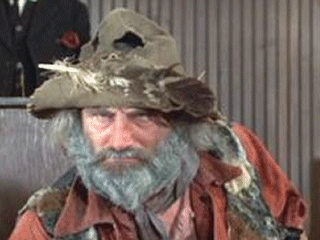
What do Mitt Romney, Ron Paul and Newt Gingrich have in common with "Blazing Saddles'" Gabby Johnson?

There were ethics revelations, lessons and cautionary tales in last night’s final debate before the Iowa Caucuses. The envelopes, please!

The Boy Who Cried Wolf Award

Winner: Rep. Michelle Bachmann

Bachmann  twice protested that she was constantly being accused of not having her facts right, when she really did. This is a hard lesson for people like Bachmann, but she might as well learn it now: when you habitually make factual errors and then deny that you made them, people aren’t going to trust you to be responsible with your claims or to be telling the truth. Nobody has spun as many whoppers and jaw-droppers as Bachmann in the last year, and nobody has more consistently tried to deny the truth when her misrepresentations were brought to her attention. Or to put it another way: once a candidate has claimed that 6th President John Quincy Adams, who was all of 8-years-old when the Declaration of Independence was signed, qualifies as “Founding Father,” nobody is going to credit your representation of “facts” whether they are accurate or not.

The Gabby Johnson Award

Winners (tie): Newt Gingrich, Mitt Romney, Rep. Ron Paul Continue reading →

The Loudon County Courthouse Christmas Display Fiasco: Anatomy of an Ethics Train Wreck

Believe it or not, this is a train wreck.

In Loudon County, Virginia, the county board didn’t want to let Christmas displays on the courthouse lawn go down without a fight. Once upon a time a community could put up Santa and his sleigh without a militant anti-religion or non-Christian group threatening law suits, but no longer, especially in a community so close to Attorney Central, Washington, D.C.  Other communities have gotten away with pan-religious displays—a pretty silly solution, I think, since Christmas is a Christian and secular holiday but has exactly nothing to do with Islam, Buddhism or the others—but again, once atheists organized and pressed the issue that the state supporting all religion was tantamount to promoting a religion, “inclusive” displays must be open to groups actively hostile to the religious displayers. Can we guess what will happen in such an environment? Yes? Well, the Loudon County board couldn’t.

A sensible board-appointed citizen group, the Courthouse Grounds and Facilities Committee, recommended in December 2009 that the county ban courthouse displays. The board rejected the committee’s request.  In July 2010,  the committee again requested a ban be put in place on courthouse lawn displays. The board, in its infinite wisdom, decided that anyone could put up displays on the lawn with ten spots open on a first-come, first-serve basis, pending county approval.

Yes, this was bound to turn out well, pull the community together, and promote the good feelings of the holiday season! Thus we reached Stage One in our ethics train wreck: official incompetence. The board’s actions lit the fuse of a cultural bomb, and only a Christmas miracle could have kept it from detonating.

So the displays were duly allotted thusly:

You can see two nativity scenes, the predictable Flying Spaghetti Monster display ridiculing all religion, the atheist display, and other benign additions. Hmmmm...but what, pray tell, is the “Santa cross?” Oh, just this… Continue reading →

The Twin Cities, Cheating CitizensTo Balance Their Budgets

I'm confused...I thought the police were supposed to arrest con artists, not be con artists!

Municipal governments are having a difficult time balancing budgets in these challenging economic conditions, but the twin cities of Minneapolis and St. Paul, Minnesota have devised a surprisingly effective way to pick up oodles of extra cash.

Steal it.
From its citizens.

I’m not kidding. City records show that St. Paul, for example, has kept nearly a quarter-million dollars from impound lot auctions this year that should have properly gone to vehicle owners. But the law requires the car owners to ask for their money, and both St. Paul and Minneapolis do their level best to keep that information from trickling through all the documentation and red tape. The St. Paul Police Department, which runs the St. Paul impound lot, sends owners of impounded vehicles a certified letter shortly after their car is towed. The letter includes citations to one city ordinance and five state laws that govern the towing, impoundment and auction of vehicles. Car owners  have to look up the fifth state law cited and read that law’s fourth paragraph before learning of the right to a refund. And to do that, they have to know what they should be looking for—which the letter doesn’t tell them.

Cute, eh? Continue reading →