Flashback: “Law, Citizenship, and the Right to be a Jackass”

Wrong country, same gesture.

[The principal in this tale from a post early in Ethics Alarms’ existence just dicsovered it, and sent some additional detail in a comment.  I am fairly certain that almost nobody read the original post, and I had completely forgotten about it myself. Its central point is still valid, however, and since it involves  an ethics conflict that has frequently re-appeared here—the duty to respect law enforcement officials versus the right not to, and the proper handling of a citizen who is rude, abusive, or worse—I thought I’d revive it.

Much thanks is due to David Hackbart for his considerate comment.]

Three springs ago on the streets of Pittsburgh, David Hackbart was starting to parallel park when a car pulled up behind him. Don’t you hate that? Hackbart did too, and presented his flip-off finger to the anonymous driver in silent protest. “Don’t flip him off!” came a shouted edict from someone outside his car, and Hackbart, not in the mood for officious intermeddling, gave the anonymous civility referee The Finger as well. Continue reading →

Slaves, Whales, Humphrey the Hippo, and Captive Animal Ethics

The beginning of the end for this barbaric practice began with the publication of "Uncle Shamu's Cabin"...

Whether or not it is excessively cruel to killer whales to keep them at Sea World and train them to do tricks is an interesting ethical issue that turns on utilitarian principles: are whales as a species better served by the public learning to appreciate them through close contact in zoos than by having them be accessible only in the wild, and does this result justify keeping some whales in captivity, performing like seals? Good question. What isn’t a good question is posed by People for the Ethical Treatment of Animal’s lawsuit against Sea World, suggesting that it violates the Thirteenth Amendment to keep performing whales, because the practice constitutes slavery.

It’s a stupid question. It’s a silly question. It’s an offensive question, equating aquatic mammals with African-Americans. Continue reading →

Judging McQueary: Child Rape Bystander Ethics

You have no excuses, Kal-El. But the rest...

“It was cowardly for a 6′4″ graduate assistant to witness the rape of a child by an older man and not only take no action to stop it but also not even call the police,” writes David French in the National Review.

He is, of course, referring to Mike McQueary, then a 28-year-old graduate student assistant coach for Joe Paterno at Penn State. Others have declared that it was an “absolute moral imperative” that McQueary physically intervene to stop the sexual assault.

It is interesting that the absolute moral imperative is nonetheless linked to qualifiers. French references McQueary’s size and the fact that the alleged assailant, Jerry Sandusky, is older. Some critics have focused on his gender. Still others, making the argument that McQueary failed to intervene because he didn’t take a child rape seriously enough, have suggested that he would have acted differently had Sandusky been beating, rather than raping the child. Of all the ethical debates surrounding the Penn State scandal, the question of how much scorn should be heaped on McQueary for not acting immediately to stop the rape in progress has been the most fascinating, and to my mind, the most disingenuous. It appears that every commentator, male or female, young or old, fat or fit, is convinced that would have charged in and battled the 57-year-old former wide-receiver, pummeling him into wet submission while the child escaped. Maybe. Studies and anecdotal evidence indicate that in fact, most people wouldn’t physically intervene. Perhaps sportswriters and op-ed writers are made of sterner stuff that the rest of the public.

Yes, that must be it.

None of this is to suggest that physically stopping a child rape in progress isn’t the right thing to do; it is. For his part, McQueary reputedly didn’t take any action to stop the assault,* which in order of effectiveness would be… Continue reading →

My 15 Hollywood Cures For A Paterno-Penn State-Sandusky Hangover, Part 2

Part 1 listed the first seven of my 15 cinematic remedies for Penn State-inspired ethics ennui. Part 2 includes the final eight. Please don’t take the order too seriously; I could have shuffled the whole batch. I also tried to include as many genres as possible. When it comes to ethics, good lists can be compiled using all Westerns, all sports movies, all war movies, courtroom drama or science fiction. Here we go…

8. Spartacus (196o)

The raw history is inspiring enough: an escaped gladiator led an army of slaves to multiple victories over the Roman legions in one of the greatest underdog triumphs ever recorded. Stanley Kubrick’s sword-and-sandal classic has many inspiring sequences, none more so than the moment when Spartacus’s defeated army chooses death rather than to allow him to identify himself to their Roman captors (“I am Spartacus!”)

Ethical issues highlighted: Liberty, slavery, sacrifice, trust, politics, courage, determination, the duty to resist abusive power, revolution, love, loyalty.

Favorite quote: “When a free man dies, he loses the pleasure of life. A slave loses his pain. Death is the only freedom a slave knows. That’s why he’s not afraid of it. That’s why we’ll win.” [Spartacus (Kirk Douglas)] Continue reading →

My 15 Hollywood Cures For A Paterno-Penn State-Sandusky Hangover, Part 1

For this hangover, movies work better.

The past week, as much as any week within memory, has caused me to despair about the culture, the state of ethical values in America, and my own futile efforts to try to bring some light to the darkness. My mood was not only ravaged by the Penn State scandal (and Penn State’s students’ scandalous reaction to it), but also the continued drift and incompetence in our government and the lack of any apparent leadership or courage to address the problems of our economic system, other than to complain about them.

In such times—there have been others, though happily not many—my spirit urgently needs an infusion of inspiration and hope, and fast: as Al Pacino reminds us in “Scent of a Woman,” there is no prosthesis for an amputated spirit. This is when I turn to the movies that speak to me of courage, redemption, and ethical virtues validated. They are my lifeline; I can’t write or think about ethics from the bottom of a pit. I’ve got only a few days before Thanksgiving, after all. This is no time to be cynical and dubious about the course of humanity and the United States of America, a nation I love and admire.

Thus I am going to take a brief detour from the usual format of Ethics Alarms, with your leave and forgiveness, and share with you the fifteen movies that I will turn to as I try to recharge my enthusiasm, inspiration, and hope. Here are 1 though 7; the rest will be along shortly:

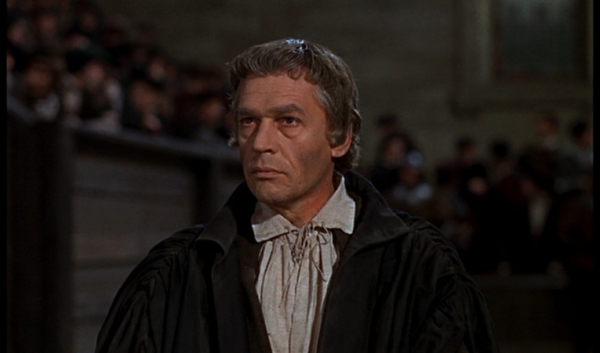
1. A Man For All Seasons (1966)

Hardly the most upbeat film to start the list, but probably the greatest ethics movie ever made.

Ethical issues highlighted: Integrity, honesty, courage, leadership, corruption, abuse of power.

Favorite quote: “Why Richard, it profits a man nothing to give his soul for the whole world… but for Wales?” [Sir Thomas More (Paul Scofield)] Continue reading →

Ethics Hero: Judge Laurence Silberman

Here President Bush attempts to strangle Judge Silberman for being insifficiently loyal to conservative causes.

Judge Laurence H. Silberman, a senior judge on the federal appeals court, cast the deciding vote as the U.S. Court of Appeals for the D.C. Circuit  upheld, 2-1, the constitutionality of the controversial individual mandate. The mandate, which is almost certain to be reviewed by the U.S. Supreme Court, is the linchpin of President Obama’s health-care insurance law that requires most individuals to purchase insurance coverage or be fined.

You can hardly have more impeccable conservative or Republican credentials than Silberman. He served in the Nixon administration, was appointed by President Reagan to the court and is a Federalist Society stalwart as well as a favorite judicial scholar of the political right. An appeals judge shouldn’t be praised for doing his job, which is deciding cases based on the law and the Constitution rather than political loyalties or ideological bias. Unfortunately, political loyalties and ideology is how the press, partisan groups, elected officials and, it must be said, too many judges, do think cases are decided, and that belief  grievously harms faith in the justice system and trust in the rule of law. Continue reading →

Penn State Primer: 15 Ethics Alarms on the Duty to Rescue and the Bystander Problem

Tiring of the smug and remarkably vicious Paterno defenders who have designated Mike McQueary for infamy because he failed to stop the Penn State child rapist in action, and who have accused me of supporting such inaction in rescue situations when my position, record, writings, belief and life experience proves the opposite, I offer these previous Ethics Alarms posts on the topics of rescue and bystander inaction. It is a useful, if sometimes disturbing review of various aspects in a complex issue. I don’t really expect the commenters previously referenced to allow rational thought to interfere with their certitude and vendetta, but most visitors here are not so wired.

A new post, focusing especially on McQueary, will be along soon, but today is Veterans Day, and I have my own duty to attend to: honoring Maj. Jack Marshall, Sr., 1920-2009, WWII veteran, Silver Star, Bronze Star and Purple Heart veteran, a true hero his entire life, in every way imaginable.

I am quite confident that he would not only have stopped Jerry Sandusky from molesting the boy, he might well have shot him.

Here are the 15 selected essays: Continue reading →

Comment of the Day: “Mike McQueary and Me”

Some recent Ethics Alarms commenters

Joseph Edward bought me some time with this superb Comment of the Day, because I am writing a post on the same topic. Mike McQueary’s conduct in the locker room, when he allegedly witnesses Jerry Sandusky raping a boy,  has generated some of the most self-righteous and, I may say, annoying comments I’ve encountered on Ethics Alarms, characterizing my commentary (in “Mike McQueary and Me”) on why McQueary might have acted as he did with excusing his conduct. Most of these, I’m relatively certain, are motivated by those who want to shift responsibility for the Penn State debacle away from Joe Paterno.

One particularly persistent and vociferous commenter has decreed that it was an “absolute moral obligation” for McQueary to physically intervene to stop the assault he witnessed. Joseph touches on that dubious contention; I’ll have more to say about it soon. Meanwhile, here is his Comment of the Day, on “Mike McQueary and Me”: Continue reading →

A Close Call at Integrity Junction


What might have been...

It’s so easy to violate your integrity. It also can become a habit. I just had a close call at Integrity Junction myself, and, of all things, another blogger saved me. In part, this account is to thank him.

It was inevitable that the daily task of highlighting and discussing ethical issues and the ethical choices of others would generate some backlash, and it certainly has. As a lawyer, I know where most of the landmines are, but the danger of a deep-pockets corporation that has been properly chastised budgeting enough money to ruin you with a spurious lawsuit is always a possibility. In eight years of writing online about ethics, I have only been successfully bullied into taking down one post, that one regarding a viatical settlement company that was even more sleazy than the industry generally. The article relied heavily on direct quotes from the company’s own website, yet I received a stern “cease and desist” letter from the company’s toady of a general counsel, accusing me of libel and defamation.

2005 was a tough year at ProEthics, which was just getting established; the mortgage was a monthly challenge, and we had several financial emergencies. It was no time to spit in the wind, especially in defense of a web post that would probably get a total readership approaching the roster of a weekend bowling team. I pulled the article. It has bothered me ever since. But as a remarkable number of commenters on the “Mike McQueary and Me” post seem to be unable to comprehend, real world, pragmatic and yes, selfish considerations do factor into ethical decisions. The trick is to know how to do the factoring, and even more important, to have prepared yourself to do the analysis quickly when the time comes.

I recently received another cease-and-desist letter, demanding that I take down a post I wrote a few months ago, based on an AP story about the mismanagement of several 9-11 charities. One of the operators of the charities mentioned in the story and in my post has hired a reputation-cleaning outfit that is doing all of the dubious tasks such companies do, including complaining, harassing and threatening websites and blogs that include negative opinions or facts about their clients. The hit-group assigned to me has added bogus comments to the post (failing to mention that their opinions were bought and paid for), and repeatedly sent me ominous e-mails hinting at impending legal action. Continue reading →

The Curse of Marion Barry

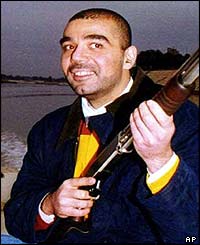
Uday isn't available, but Christopher is

Marion Barry, the former corrupt mayor of Washington, D.C., a convicted crack-user  who was caught a few days after while lecturing D.C. kids on the evils of drugs, a tax-evader, scofflaw and general embarrassment who still serves on the dysfunctional D.C. City Council, is now in his 70’s and thinking about his legacy. Oh, he’s running again in Ward 8, all right, but his long-term plan, not surprisingly, is to turn over his seat to a worthy successor with a record of being arrested for assaulting a police officer and possessing PCP with the intent to distribute.

You know. His son. Continue reading →