The Tears of Keith Ellison

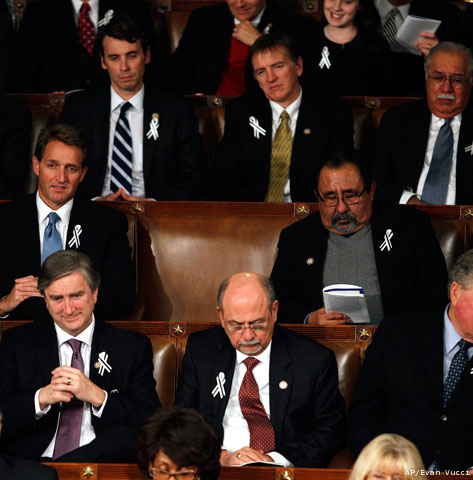
The grand drama at Rep. Peter King’s Congressional hearings investigating the radicalization of American Muslims last week was provided by Rep. Keith Ellison, who broke down crying while telling the story of a Muslim-American hero, Mohammed Salman Hamdani, who rushed to lower Manhattan on the morning of Sept. 11, 2001 to assist in rescue efforts, and died in the collapse of the World Trade Center. Ellison said:

After the tragedy some people tried to smear his character solely because of his Islamic faith. Some people spread false rumors and speculated that he was in league with the attackers only because he was Muslim. It was only when his remains were identified that these lies were fully exposed. Mohammed Salman Hamdani was a fellow American who gave his life for other Americans. His life should not be defined as a member of an ethnic group or a member of a religion, but as an American who gave everything for his fellow citizens.

I found the performance odd and vaguely troubling, and now that I’ve thought about it for a few days, I know why. The statement by Ellison, who converted to Islam, and the tears that accompanied it, raise a few ethical issues, beginning with the Ethics Alarms standard, “What’s going on here?” Continue reading →

Comment of the Day: “Ethics Dunce: Rep. Michele Bachman”

Oh, how I LOVE LOVE LOVE this comment, from “ruralcounsel,” regarding my post about Michele Bachmann embarrassing herself, and not for the first time. Seldom does a commenter employ such shameless rationalizations and staples of intellectual dishonesty, and for his grand finale, he breaches one of the explicit Comment Policies by employing that all-purpose fallacy, “you’re just using ethics to go after political enemies.” I’m especially happy about the latter, because no one has accused me of being biased against the Right since “Ronbo.” I can’t hope for as much entertainment from ruralcounsel, but I am certainly grateful for this (Forgive me. I have to give interlinear commentary. I can’t resist): Continue reading →

Ethics Dunce: Rep. Michele Bachmann

Ah! Historical New Hampshire...

Rep. Michele Bachmann (D-Minn), Tea Party leader and potential presidential candidate, recently told a Manchester, New Hampshire crowd that she was in the state of “the shot heard ’round the world.” Ethics Foul. Minnesota disgrace. Congressional Disgrace. Tea Party disgrace. National disgrace.

U.S. educational system disgrace!

As most grade school children know (Some grade school children? Grade school children in New England, maybe? Please?), the source of that loud shot, the Battle of Concord (the Battle of Lexington was fought on the same day) was fought in Concord, Massachusetts, which, like Lexington, is a next door neighbor of my home town, Arlington, Massachusetts, known as Menotomy on April 18, 1775 —which, as Rep. Bachmann can tell you, was also the date of Phil Sheridan’s ride. Oops! I mean Paul Revere’s ride! Continue reading →

NOW Is It “Too Soon”? Rep. Giffords Needs To Resign

Rep. Giffords' seat should be filled

Today the New York Times reports on grievously wounded Arizona Rep. Gabrielle Giffords’ recovery, which appears to be going remarkably well. Back in January, I was much criticized for suggesting that Rep. Giffords had a responsibility to resign from her seat (“Unavoidable Ethics: Giffords Need To Resign,” 1/17/11), as it was obvious then (though not polite to admit) that her recovery from the bullet hole in her head could not possibly occur quickly enough to allow her to make a meaningful contribution in Congress during her current two-year term. Well, it is still obvious, and the ethical priorities remain clear.

We learn in the Times piece today (or at least I did) that the Congressman is still without half of her skull, which was removed to prevent damage from brain swelling. The skull pieces are in a freezer, and will probably be restored in surgery that is planned for May. The recovery from the surgery, I assume, will extend at least into June, and then she still has to travel the long and arduous road back to whatever her final cognitive and physical abilities will be—and they will not be what they were before the madman started shooting. Continue reading →

Why NPR’s Wrongs Don’t Make James O’Keefe Right

James O'Keefe, Ethics Corrupter

And the NPR Ethics Train Wreck continues…

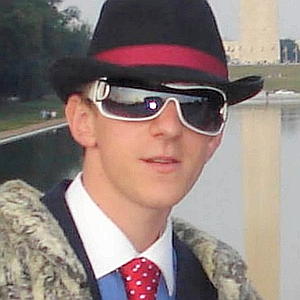
Between union hysteria in Wisconsin, carnage in Libya, and tsunamis, the fact that James O’Keefe’s fake Muslim billionaire act exposed more NPR integrity issues was drowned out by shouting, gun shots and water. In fact, the second victim of O’Keefe’s sting may have taught us more about NPR than the first.

In the surreptitious audiotape of  NPR’s continued encounters with the fake potential big bucks donor, NPR’s director of institutional giving, Betsy Liley, is heard advising the supposedly wealthy Muslim donor how the network could help “shield” his group from a government audit if it accepted the $5 million he was offering. It seems pretty clear from the tape that this was not what the sting was set up to prove: what the “Muslim donor” really wants is to get a promise from NPR that it will slant the news content the his way if the gift is big enough. Liley stood her ground on this core journalistic principle admirably—so much for the claim that George Soros bought NPR’s advocacy with his recent gift—but fell into another trap of her own making.

NPR spokeswoman Dana Davis Rehm said in a statement that Liley’s comments on the tape “regarding the possibility of making an anonymous gift that would remain invisible to tax authorities is factually inaccurate and not reflective of NPR’s gift practices. All donations—anonymous and named—are fully reported to the IRS. NPR complies with all financial, tax, and disclosure regulations.” That’s undoubtedly correct; Liley was not merely ethically wrong but also literally wrong, for what she was suggesting almost certainly couldn’t happen. However, the fact that she would say such a thing believing it could happen, or think it was acceptable if it did happen, or try to acquire a large donation by persuading a donor to believe it could happen, all point to the one conclusion: NPR’s culture is ethically compromised, and the organization’s leadership has failed to meet its obligations to create an ethical culture  there. The sting is more disturbing than the earlier one that caught an outgoing NPR executive taking extreme partisan positions that belied NPR’s position that it is objective and unbiased. The comments of Ron Schiller just confirmed what many, including me, thought was already apparent in the tone of NPR’s work. I had also always assumed, however, that the place was professionally and ethically run (excepting the tendency to fire employees for expressing politically incorrect opinions on Fox News).

So this settles it, right? O’Keefe is a hero?

No, he’s not. James O’Keefe, in fact, is an ethics corrupter, an individual who weakens the public’s ethics by encouraging it to accept his dubious values. Continue reading →

Ethics Dunce: The Delaware State Human Relations Commission, et al.

Justice finally prevailed in a disturbing Delaware case that took hyper-sensitivity to racial bias to absurd extremes. You can read the court opinion here. In essence, the Delaware State Human Relations Commission found that a theater manager who supplemented an on-screen request for patrons to turn off their cell phones, not talk during the film and not mill around in the theater with his personal announcement to the same effect was engaged in racial discrimination, because most of the audience was black and some felt that his tone was condescending. Continue reading →

Quiz: Which Law Enforcement Fiasco Was More Unethical?

It’s Quiz Time!

Chief Wiggum would be an upgrade.

Today’s topic: Why the public doesn’t trust the law enforcement system. Here are two horrible and true, tales of AWOL ethics involving law enforcement in New York and Tennessee. Which is more unforgivable, A or B?

A. Brooklyn, NY: The Perpetual Warrant

What is the fair limit of “the police made  an honest mistake”? Let’s say the police have a warrant to search your house, and come to your door because they got the address wrong—and it’s a mistake. At least they didn’t break down the door in the middle of the night. OK, mistakes happen. Then they come again, because they got your address in error again. Annoying, but they seem embarrassed: they aren’t trying to harass you.

And then they arrive 48 more times. Continue reading →

Don’t Knock “The Code of the West”!

A commenter just nominated the Republicans in the Montana State Legislature for “Incompetent Elected Official” status because they have proposed “The Code of the West” as  Montana’s State Code.

Nomination rejected. I don’t want to argue about whether a state needs a State Code, although it seems a lot more useful and constructive than state birds, state songs and state pies. I also don’t feel like debating the political correctness attacks on the potential use of the Code of the West by Native American activists, who apparently think the Code glorifies cowboys and insults Indians (Oh, all right: the complaint is nonsense. Valid ideals are not sullied by the misdeeds of those who espoused them.) But I like the cowboy codes, all of them. One is already on the site. I might not choose the same ten tenets of the unwritten Code of the West that is being debated in Montana, but the Code of the West is a perfectly good statement of ethical principles, and any state that embraces it should be praised, not embroiled in a lot of political posturing. Continue reading →

Facebook Wars II: More School Abuse of Power and Privacy

"Hello? ACLU? Anybody there?"

In January, Ethics Alarms weighed in on reports from Illinois and New York about students being disciplined by their high schools for postings on Facebook about the sexual proclivities of female students in the community. The ethics verdict: the schools were abusing their power and the students’ privacy:

“When did schools suddenly acquire disciplinary control over what students do when they aren’t at school? There is no question that the websites involved were inappropriate, disrespectful, cruel and hurtful, just as the rumors and insults included in high school graffiti were, in those glorious days before the internet. Students so abused need to complain to parents, and parents need to talk to the parents of the offending students, and if they can’t or won’t address the problem, then the courts or law enforcement may need to become involved.”

The rationale offered by the schools at the time was that the students had violated rules against cyber-bullying, that ever-vague plague, although there is no more legitimate authority for a school to decree what a student can say about another student on a personal website than there is for a school to restrict what a kid can say at the dinner table.

Naturally, when an institution exceeds the natural limit on its authority, there is nothing to keep it from even more egregious abuse. Thus two Georgia students were just suspended and one another was expelled for negative Facebook postings about a teacher. Continue reading →

Ethics Quote of the Week: Ex-Con John Collins

Charlie made a different kind of mistake, too!

“We’re people, we’re not monsters. We’ve just made a different type of mistake than someone else.”

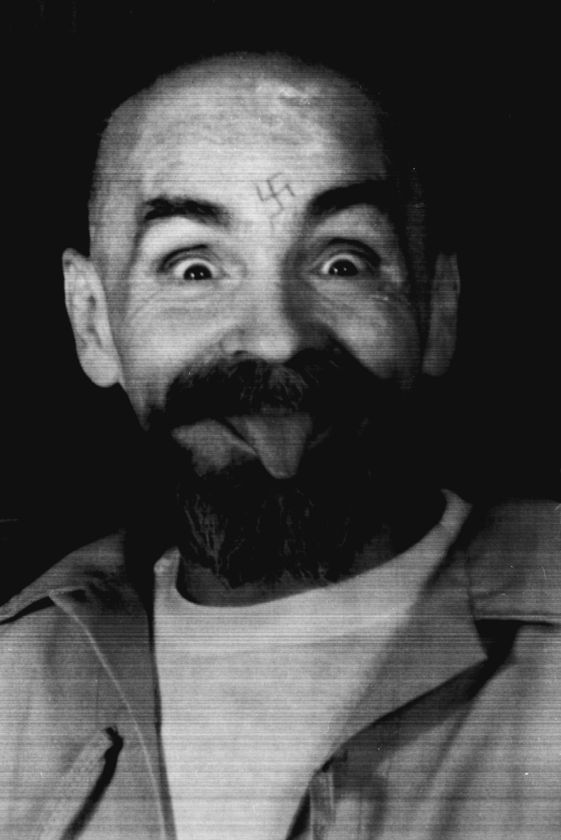
— 34-year-old John Collins, who announced his support for a provision being pushed forward by the Seattle Office For Human Rights, which believes that convicted criminals should be made a protected class.

Collins sure made a different kind of mistake, all right. He served four years in prison for drugging and raping his estranged wife. Continue reading →