Do Good Friends Let Friends Publish Garbage On Social Media? The Duty to Knock Down Irresponsible Opinions

“Stop quoting Maxine Waters!”

I just arrived at Virginia Beach Double Tree after a four hour plus drive in the dead of night. This gave amble time to obsess to the point of madness on Facebook post I saw from a friend. This is a smart, educated person; published in fact. Yet the post was (I am paraphrasing):

“I don’t understand Republicans. They must prefer Pence to Trump: why won’t the join Democrats in impeaching the orange bastard? I don’t get it.”

This post garnered many likes in the Facebook echo chamber, and several theories.

Now, this is not just an uninformed opinion. It is a dangerous opinion. It misinforms everyone who reads it and who has reason to trust and respect the writer. It is written in complete ignorance of the Constitution, and an irresponsible misinterpretation of what American democracy is.

I shouldn’t have to explain this further, but what the hell: if the Founders intended for our system to be a modified parliamentary arrangement where the public can try to elect a President but if Congress decides it prefers someone else, like the Vice-President, it can veto the election with a sufficient majority, then Madison, Mason et al. would have made that clear. Instead they made it clear that an elected President can only be impeached upon a guilty verdict in a Senate trial for “high crimes and misdemeanors,” which means unequivocal, serious and substantive wrongdoing, usually criminal. Yet a frightening number of progressives, driven to fantasy by listening to irresponsible and incompetent elected demagogues like Maxine Waters, actually embrace an imaginary version of our government that, if real, would render democracy a cruel fraud. Continue reading

From The Ethics Alarms Lost Files: The Ballet Dancer, The Man On The Tracks, And The Duty To Rescue

That’s our hero, Gray Davis, in the bottom photo. The top photo is just a suggestion if he decides to go pro…

[This story is several months old, but I missed it.  Luckily my friend, long-time Ethics Alarms reader and commenter Ethics Bob did not, and sent it to me. Then I missed his e-mail. Until today.]

Ethics Alarms often writes about the duty to rescue, but has also often discussed the reasonable limitations on that duty. You are ethically required to do what you can to prevent a tragedy if you have the power to do so, and instant presence of mind to do so. There is no ethical duty to act like Batman, unless, of course, you are Batman.

Gray Davis is Batman.

Well, that’s not quite right.

Let’s call him “Ballet Man,”

In June, a 58-year-old homeless man fell or was pushed onto the subway tracks at the 72nd Street Broadway-Seventh Avenue station in Manhattan. People began screaming and shouting for someone to help. Davis, 31, told reporters that “At first I waited for somebody else to jump down there…. But nobody jumped down. So I jumped down.” Actually he leaped down. Davis is a ballet  dancer with the American Ballet Theater. He had not performed that night, a Saturday, because he was recovering from a herniated disk. He had just watched his wife, soloist Cassandra Trenary, dance in both the matinee and the evening performances of “The Golden Cockerel.”

After Gray’s graceful assemblé from the platform onto the tracks, he lifted up the man, following a temps leve, although the carry itself was not standard and had several technical flaws by ABT standards, forgivable because ballerinas are not typically dead weight, and unconscious homeless men are not typically ballerinas. Gray deposited his temporary partner on the platform, where he was immediately attended to by others.

Then the dancer heard a train in the distance, and for the first time realized how high it was to the platform from the tracks. “Luckily, I’m a ballet dancer,” he said. Luckily for everyone. Lifting his let up over his head is a breeze.

Ballet dancers are much-maligned, and increasingly unappreciated as artists despite the fact that they are among the most skilled athletes in the world. Batman would have to have ballet training; Daredevil too. Unfortunately, they aren’t real. Graey Davis, Ballet Man, is real, and when a life was at stake and everyone else was calling for someone else to he a hero, he was one, because he knew he had the skills to pull it off.

Bravo!

Encore!

_____________________

Pointer: Ethics Bob

Comment Of The Day: “From The ‘Stop Making Me Defend Lawrence O’Donnell!’ Files: The Golden Rule”

A commenter on the post on the studio tantrum thrown by MSNBC host Lawrence O’Donnell going viral on YouTube after it was leaked said that such a leak was “predictable.” I asked,

“Why should it be “predictable”? Why shouldn’t we be able to trust co-workers not to try to hurt us, e-mail correspondents not to send out our messages to strangers and on social media? Was it predictable that Donald Sterling’s mistress/beard would tape his comments in his bedroom to destroy his reputation?”

This prompted Crella’s  Comment of the Day on the post, From The “Stop Making Me Defend Lawrence O’Donnell!” Files: The Golden Rule:

Exactly. It shouldn’t be predictable. However, it seems that for a lot of people, their first instinct with anything they come across is to put it on the net, no matter the consequences. It’s so easy ( and I assume, extremely satisfying to bully types) to shame and humiliate on a scale previously unknown in human history. It’s irresistible to too many.

The ability to find thousands of like-minded people in a relatively short period of time on social media, and the sheer volume of encouraging positive feedback you can receive ( ‘if so many people agree with me, I must be right!’) has brought grade-school level cliques and meanness to the fore in a great deal of adult communication. It’s the same mechanism on a large scale. People rarely step back and see themselves, but I read and just wonder at it daily…the people most stridently against fat shaming, objectification, being leered at, and other ‘lookist’ offenses on social media are routinely ridiculing Trump on his hair, weight, skin color, and posture while playing golf, comments on appearance are very common. Continue reading

Comment Of The Day: “Morning Ethics Warm-Up, 9/12/17: Hurricane Reports, And Poor Charles M. Blow Needs A Vacation”

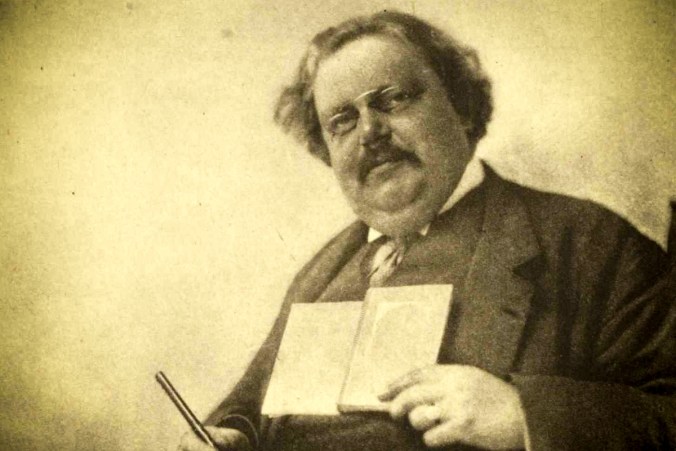
G.K. Chesterton (above), perspective, and most of all, optimism: Ryan Harkins’ Comment of the Day, prompted by the post Morning Ethics Warm-Up, 9/12/17: Hurricane Reports, And Poor Charles M. Blow Needs A Vacation, (about NYT columnist Charles Blow—the idiot– declaring today’s USA “Hell on Earth”)  has all of these, and wisdom too.

Here it is:

Okay, I tried to read the article, and I made it no further than Blow describing Trump’s America as the ninth circle of hell. When one strikes that level of hyperbole, it eradicates any credibility one might have possessed.

One of the greatest counters to depression and despair is an attitude of gratitude, something I truly see lacking in anything coming from the left. We have a great nation. We have great opportunities, and we have a culture that truly seeks – if sometimes in very strange, even damaging ways — to right wrongs and make life as fair as possible. If you look around the world, and if you look at just about any culture that existed since the dawn of history, you won’t find any people who have been so richly blessed as those in our country today. This is especially true when you consider the stability our nation has, and its lack of credible enemies that pose any existential threat to our nation. We can go about life assured that tomorrow will indeed be much like today.

Even in the face of hurricanes, we have much for which to be grateful. We have incredible technology that gives us quite a bit of advanced warning that the storms were coming. We have minimized death tolls in the face of these natural disasters, and we have a government willing to pour billions of dollars into rebuilding communities destroyed by the hurricanes. We have seen an incredible outpouring of generosity from the nation at large to help the hurricane victims (the Knights of Columbus alone raised $1.3 million). Yes, the devastation is traumatic, and yes people have lost livelihoods, all their possessions, and even family members. But this strikes against one very important aspect of life. Continue reading

My Verizon WiFi Ethics Dilemma

ProEthics (and our home, where it resides) is in Alexandria City, in Northern Virginia. We are dependent on the internet, but cannot get the high-speed variety, Fios, from Verizon, our provider. This has significant business and personal consequences: for one thing, it means that I can’t load video commentary on Ethics Alarms as I have wanted to do for years. For another, Verizon’s DSL service, at least mine, sucks. Lately it has been kicking out many times every day, sometimes after only being up for a few minutes.

We have called Verizon many, many times, in various states for fury,  to ask when  Fios will be available. The answers are scripted and vague, made to sound like the service will be available imminently. Nothing changes, however. Alexandria isn’t Hooterville: there are many businesses, and the residents would be a prime market for high-speed internet.

What’s going on here? Continue reading

Comment Of The Day: “Morning Ethics Warm-Up: 8/2/17”

From Emily, a marvelous Comment of the Day so full of wisdom and good advice that it stands on its own:

I’m not from flyover country, but I live on the Eastern Shore of Maryland, red counties that include the poorest counties in the state (the lower shore has Baltimore City beat.) My family of three hovers around the federal poverty line.

However, my husband and I were both raised middle class. And while there are no major economic differences between us and our friends and neighbors, there are a lot of differences in the choices we make, which allow us to use the same amount of money to give our daughter opportunities that other parents in our economic class are unaware of or neglect.

This, more than money, is what affects the opportunities that my daughter has access to (as well as the ones my husband and I have access to.)

Despite the economic hardship, I’m a stay at home mom, which allows me to be dedicated full time to my daughter’s developmental delays. I could go to work and make *slightly* more money for us, after childcare expenses, but that would be a very different level of care for my daughter, and it turns out she needs it. The expert we’ve consulted is almost certain she’ll catch up, and has indicated me being home with her is an important part of that certainty.

I mentioned above that my daughter does have a tablet, a $30 one from Amazon. I found that tablet because I got a $20 Amazon giftcard for Christmas, and I was saving it for something special. I had to dig in the library’s website to find the link to borrow ebooks, but I figured there must be something like that.

We have internet, despite having no long distance for our phone (and no cellphone service where we live.) My husband and I manage to pick up extra money doing work online, despite neither of us having college degrees. This is part of what allows us to get by while still having plenty of time for our daughter.

These are just examples of things *we’ve* figured out. Everyone’s situation is different, especially among the poor. The thing that most people don’t seem to see is that down here social capital (the network of friends and family you have and what they’re willing to help you with,) knowing how to allocate resources carefully, and understanding how to navigate the various systems — both private and government — are more important to the kind of life you have than income, and those are highly individual things. Continue reading

The Unabomber Had A Point. [UPDATED]

FX has a new limited series about the hunt for the Unabomber, Theodore John Kaczynski. I didn’t pay much attention to the story when it was going on; I just thought it was one more Harvard-grad-turns-serial-killer episode, and that was that. I certainly didn’t pay attention to his “manifesto.” The series, however, enlightened me.  As I understand it, Ted believed that technology was destroying society, making us all slaves to it, and taking the joy out of life. I have yet to see how blowing people up addressed this problem, but then he shouldn’t have to be right about everything. The evidence has been mounting since 1995, when he killed his final victim,that  the Unabomber  wasn’t quite as crazy as we thought.

I could bury you in links, but will not.  We are slaves, for example, to passwords. I teach lawyers that their devices containing client confidences should, to be properly protective of them under ethics standards, have passwords of at least 18 random letters, characters and numbers, with the password for every such device being different, and all of them changed every month. Or you can go the John Podesta route, use “password.” and get hacked, and eventually disciplined by your bar association, once they decide to get serious.

[CORRECTION: In the original post, I relayed a link to a site where you can check your password to see if it’s been compromised. I had been forwarded the link by another tech-interested lawyer. But as I was just alerted by a commenter (Than you, Brian!) It’s apotential trap and an unethical site, making you reveal your password to check it. I apologize for posting it. See how dangerous and tricky this stuff is? See? SEE?.I fell for the trap of depending on technology to protect us from technology! Ted warned us about that, too.]

Then there is this feature in The Atlantic. An excerpt: Continue reading

Comment Of The Day: “Comment Of The Day: ‘Ethics Observations On The Florida Teens And The Drowning Man'”

Responding to Pennagain’s comment, now a Comment of the Day, on his own Comment of the Day, Mark wrote in appreciation,

“Pennagain – I am a musician, mostly classical, and I tend to think in musical terms. I love it when I encounter something non-musical that is “symphonic” in its scope. Your response to my post is positively Mahlerian and, like a Gustav Mahler symphony, it must be listened to many times with each hearing offering up new ideas, connections to old ideas, or even bringing to life something completely new.”

This is, I think, Ethics Alarms’ all-time best ever comment by a commenter on another commenter’s comment on his Comment of the Day.

This July has an unfortunate record as the first month in the blog’s history to fall so far short of the previous year’s traffic in the same month. (Last year’s July did have the political conventions pumping up interest.) However, it also has seen the most Comments of the Day for a single month ever, with many more of equal distinction.  I’ll take quality over quantity every time.

Here’s is Pennagain’s Comment of the Day on the post, Comment Of The Day: “Ethics Observations On The Florida Teens And The Drowning Man”

I’m not sure the disconnect began with the hand-held devices, Mark. That was Phase III. I think the first part began with the invention of teenagers (as a group) in the early 50s, still “post-war” time — and “post-war” was barely “post-Depression” time, so it had been at least two decades and a full generation gone since the the good times rolled. The early 50s coincided with the installation of “labor-saving” devices which took over a lot of household chores for youngsters, not just for the housewives the companies advertised to. All of a sudden, I could keep what I earned on my paper route (though I did have to replace my own bicycle once, used, of course, after I carelessly left it in a neighbor’s driveway), mowing lawns, delivering groceries, raking (and burning) leaves, shoveling snow, sitting for the rowdy 7-year-old twins down the block. All of a sudden, we had a refrigerator in place of the ice-box, so I didn’t need to help chop ice; meat came ground so I didn’t have to cut the chunks and push them slooowly through the grinder; . . . I keep forgetting some things and remembering others, like ruining the dessert one night we had guests because I got some rock salt in the motor of the ice cream maker . . . having a clothes washing machine which got rid of most of the water so I didn’t have to help hold up the soaking wet sheets to be pinned on the lines above my head. All of a sudden, I had both privacy (my own telephone), my own music, and “free” time, however much my parents tried to fill it with after school lessons-this and lessons-that. Money and time. Time and money. It was time for friends to bump together with other pairs and bond like atoms in a molecule, becoming a “gang,” having our own things and our own things to do. Choosing our own movies, having sleep-overs, cook-outs, camp-outs, or just standin’ on the corner (“Most Happy Fella’) watchin’ all the girls/boys go by …. choices my mother had as a flapper for a very short time but in her young adulthood, not a teenager, already making the transition from one family to another.

Until I was in my 20s and living outside the US, I didn’t realize that growing away from my family (not spending most of my days with them) had not been a natural shift, and not a gradual one either. Nor was it particularly safe – a lot of new habits were acquired (smoking was mandatory, drinking less available, less so; under-exercised/over-eating — unrecognized for another generation!), and a lot of lessons were never learned properly, like working through emotion-based arguments, and almost everything about sex). By the time I left for college I was, though without realizing it, estranged from my parents — my peers and some self-appointed guides knew better than they did! — and stupid enough socially to be a total jerk. There was a missing link. So what? I let go of the past and caught up with the future. Continue reading

Multiple KABOOMS! From “The Good Illegal Immigrant” Files: The Good, Well, OK, Maybe Not So Good, Illegal Immigrant Driver

One head explosion after another splattered my office with gore as I read the New York Times sad, sad, <sniff> piece about poor, abused, illegal immigrants who drive without licenses. It began:

“Heading to church one evening in late March, a farmworker and her sister were stopped for speeding in the village of Geneseo, N.Y. They were driving with their five children in the back of the minivan. Two were not in car seats, as required. The police officer, trying to cite the driver for the infractions, discovered she had no driver’s license, so he called Border Patrol to review her Guatemalan passport. Both sisters were undocumented immigrants. They were detained and are facing deportation.”

Good.

The Times, however, currently engaged in a full-on “Let’s make illegal immigrants as sympathetic as possible” campaign—how can we  be so mean to people who were just trying to go to church?—makes it clear that such an event is just more cruelty and lack of compassion emanating from the Trump Presidency.

“Under a Trump administration that has taken an aggressive stance on illegal immigration, the moving car has become an easy target. A broken headlight, a seatbelt not worn, a child not in a car seat may be minor traffic violations, but for unauthorized immigrants, they can have life-altering consequences.”

KABOOM! #1. How shameless will the Times’s misrepresentations regarding this issue get? These people are not being deported for “minor traffic violations.” They are being deported because they ahve absolutely no business being in the country at all. The Yorkshire Ripper was caught because of a police stop for a minor traffic violation.  By the Times reasoning, this, and not  the 13 women he murdered, is why he was sentenced to life in prison.

These drivers are also not “undocumented.” Undocumented is what I was when I was stopped for speeding with an expired license. I was, however, still a citizen. “Undocumented” is a Times and illegal immigration lobby cover-word for what illegal immigrants really are: illegal immigrants.

The term deceitfully suggests that the “undocumented” individual was just missing some papers—t could happen to anybody! No, you are not just “missing papers” that you never had the right to have.

KABOOM! #2:

“As many as 12 states, along with the District of Columbia and Puerto Rico, offer driver’s licenses for unauthorized immigrants, up from three in 2010. New York, which has the third-largest immigrant population in the country, is not one of them.”

Three was unconscionable. Twelve is a scandal and a dangerous attack on sovereignty and the Rule of Law.

KABOOM! #3 and #4:

Supporters of efforts to allow those who are undocumented to get driver’s licenses say that public safety would improve because they would be required to pass road tests and obtain insurance. But critics said that licenses represented a privilege that unauthorized immigrants should not hold, because they should not be here in the first place.

The first sentence is a logical disconnect: Let’s make what these people do legal, because they’ll break the law if we don’t. Yes, and the fact that they’ll break the law if they can’t do something legally is why they are here illegally and why they cannot be trusted as citizens. To its credit, the Times at least quotes a Republican lawmaker who is not deceived, though the paper suggests that she has a comprehension problem:

Senator Kathleen A. Marchione, a Republican representing the Upper Hudson Valley…does not understand the argument for giving licenses to those who are undocumented.“Driving without a license should not give you a right to have a driver’s license when you are already breaking the law in two instances,” she said in an interview. “That’s like saying if a kid is drinking at 16 years old, we might as well let him.”

That is exactly what it is like. She “doesn’t understand” the argument because it doesn’t make sense and never has. The Times won’t accept this, as the second sentence in the quote above makes clear. This isn’t merely what “critics” say. It is a fact. There is no “other side” to facts, and the Times is misleading its readers to suggest that this is just a contrarian position.

KABBOOM #5 and #6 came after reading this quote:

Anne Doebler, a private immigration lawyer in Buffalo, said that undocumented immigrants want to follow traffic laws, and that civil law and immigration law should be kept distinct. “Why do we want to use our vehicle and traffic laws to enforce an immigration policy when it’s detrimental to public safety?” she asked. “I don’t want someone to hit me who doesn’t have insurance…I don’t care what their immigration status is.”

“Undocumented” as a cover-word for “illegal” no longer makes my head explode, it just makes me angry. But Doebler’s spin is outrageous. Oh, the illegal immigrants want to obey laws that make it easier for them to live here illegally, do they? Well, isn’t that wonderful! Why don’t they want to obey the immigration laws? Heck, why don’t we just stop enforcing all laws, since avoiding law enforcement often makes criminals and law breakers breach other rules, laws, and ethical obligations?

The Times cites statistics showing that hit and run accidents by illegal immigrants declines significantly when they are allowed to have licenses and insurance. Hey! I just thought of an even better way to reduce hit and run accidents by illegal residents!  Can you guess what that would be?

Would Doebler care what the immigration status of someone who, say, ran down her child was, if that individual had been allowed to stay in the country after a previous traffic infraction? Would she really think, “Illegal, legal, what’s the difference?” I think not. I think she would say, “the driver who killed my kid should not have been on the streets at all,” because that would be obvious and true.

Comment Of The Day: “Ethics Observations On The Florida Teens And The Drowning Man”

My old friend Mark drops in to comment just a few times a year, but always delivers his trademark optimism, fairness, and perception. When he talks, I learned early on in our relationship, attention should be paid.. His was one of several excellent comments on the horrific episode in Cocoa Beach, where five teens stood by watching a handicapped man drown, and seemed to enjoy the sight mightily as they recorded his death on their cell phones. In response to another commenter’s query, “Are “kids” that are so disconnected that they’d do something of that magnitude rehabilitatable?”, Mark leaped k took the discussion to a related topic that I had found myself thinking about a lot while I was trapped in a lobby and two airports yesterday with nothing to do but wait and silently curse. What are electronic devices and social media obsession doing to our social skills and ability to relate to the world? At what point to we start sounding the ethics alarms…or the societal survival alarms? [ I’m going to include the last part of Mark’s earlier comment on the story, because it is a helpful introduction to the rest.]

Here is Mark’s Comment of the Day on the post, Ethics Observations On The Florida Teens And The Drowning Man:

…The natural human reaction to observe has been enhanced by our ability to record, and it now seems to be the first response in almost every situation – the more harrowing the better. I’m sure there is some personal thrill involved in being able to post the result, garnering comments and ego-gratifying oohs and aahs.

The situation in Florida is only the most horrible of them, right up there with the guy who posted pictures of himself with the corpse of his step-father, whom he had just murdered. Like everything else, this is a tiny part of a much bigger picture of who we are becoming as a culture. The 21st century ability to remain safely behind a screen while still feeling a full participant in life (Internet commenting a prime example) frees us of the necessary empathy (or simply humanity) to come from behind that screen to behave in ways that might be heroic or even civil. I have little difficulty seeing that behavior manifesting in children raised viewing life through a cell phone.

The much larger question – at least for me – remains “Am I my brother’s keeper?” It’s a nagging question, versions of which swirl in and around almost all the major political issues of our day and, now, into our personal dealings with one another. It is always there, but we come up with more and novel ways to avoid actually answering or acting on it. Clearly, it never occurred to these boys. Cain didn’t want to answer the question. And, I suspect, neither do we.

***

 I carry two cell phones, absolute wonders of technology, which remain in my briefcase most of the time although I’ll take one of them with me to a picture-taking occasion. My friends grit their teeth at receiving responses to texts that are weeks old. My relationship with my cellphone(s) was cemented when I had the opportunity to whale watch off of Maui. I realized that I was so concerned about my precious iThing getting wet or falling into the water that I wasn’t watching the whales. I put the phone away and decided that watching the real world with both eyes was more interesting and that’s what I try to do. I hope sincerely that that attitude would ensure that I offer whatever aid I can in a dire situation rather than wondering what it will look like on Facebook later on. Continue reading