Comment of the Day: “The Eternal Ethics Conflict: Drawing Lines, Enforcing Them”

speed traps

The post generating texagg04‘s (latest) Comment of the Day dealt with the tricky and common ethics problem of enforcing reasonable rules strictly in the face of situations where compassion and sympathy pull us toward leniency, because the penalty for non-compliance seem out of proportion to the transgression. He correctly identified this as a problem involving the Ethics Incompleteness Theorem (or Principle), which is an ethics analysis concept used frequently here, and one of my favorites. The Theorem, as stated in the Ethics Alarms Concepts and Special Tools, a.k.a. “the Rule Book,” holds that…

The human language is not sufficiently precise to define a rule that will work in every instance. There are always anomalies on the periphery of every normative system, no matter how sound or well articulated. If one responds to an anomaly by trying to amend the rule or system to accommodate it, the integrity of the rule or system is disturbed, and perhaps ruined. Yet if one stubbornly applies the rule or system without amendment to the anomaly anyway, one may reach an absurd conclusion or an unjust result. The Ethics Incompleteness Principle suggests that when a system or rule doesn’t seem to work well when applied to an unexpected or unusual situation, the wise response is to abandon the system or rule—in that one anomalous case only— and use  basic ethics principles and analysis to find the best solution. Then return to the system and rules as they were, without altering them to make the treatment of the anomalous situation “consistent.”

No system or rule is going to work equally well with every possible scenario, which is why committing to a single ethical system is folly, and why it is important to keep basic ethical values in mind in case a pre-determined formula for determining what is right breaks down.

 Tex expands the discussion into such areas as test scores, speed limits, and rule-making itself.  Here is his masterful Comment of the Day on the post, The Eternal Ethics Conflict: Drawing Lines, Enforcing Them:
Continue reading

The Eternal Ethics Conflict: Drawing Lines, Enforcing Them

cross-the-line

Yesterday traffic caused me to arrive a bit later than usual at my monthly gig as the instructor in the legal ethics portion of the D.C. Bar’s mandatory orientation session for new admittees. It was after 9 AM (my segment starts at 9:20), and as I approached the glass doors to the lecture hall lobby, I saw a distraught women angrily berating one of the D.C. Bar staff. I knew instantly what was going on.

You see, the courts approving the program insist that every attendee be there at the start: the doors close at 9, and anyone arriving late, no matter what the reason, is out of luck. They can’t attend the session, can’t get credit for it, and have to return the following month. That rule is on the website and in all communications with the Bar, along with the warning that there are no exceptions, and no effective excuses. Every month, someone misses the deadline; every month, that person goes ballistic. This women, however, was remarkable.

She had flown to D.C. on the redeye, she said. Her cab was stuck in traffic, and when she arrived in the cavernous Reagan Building where the day-long course takes place, she had ten minutes to spare. Unfortunately, the Reagan Building eats people. I have wandered its halls lost many times. I keep expecting to encounter a bearded, Ben Gunn-like figure who grabs my pant leg and jabbers about how he’s been trapped by the bewildering signage, and has been living off of Cub Scouts since 1992. The woman made it to the right hall in just 12 minutes, which is impressive without a GPS. But she was still two minutes late. Continue reading

Advice Malpractice: Good Advice Columnist, Bad Advice Columnist

"Go jump in a lake!"

“Go jump in a lake!”

I cannot imagine being so bereft of wisdom, friends and mentors that I would ever be moved to ask a stranger to advise me regarding an important decision based solely on a letter describing my problem. Nevertheless, a lot of poor souls apparently do, and because they do, many of them probably act on the advice they get from Beth, Abby, The Ethicist and the rest. This means that anyone with the ego and chutzpah to hold themselves out as qualified to give such advice is ethically obligated to be able to do a competent job at it, and at very least to “do no harm.” Yes, unlike the law, advice columnist is one of the professions where the traditional ethical mission of medicine is not just appropriate, but essential.

Most advice columnists in the media are not competent, and some are dangerously reckless. The worst thing an advice columnist can do is to use the trusting and needy stranger as a potential recruit to steer toward the columnist’s ideologically-driven goals. The question being asked by desperate advice seekers, after all, is not “What would you do?” but rather “What should I do?” If the columnist answers the question presuming that the advice-seeker does or should see the world as the advice columnist does, then doing harm is the likely result.

Carolyn Hax ( Washington Post) is a wonderful advice columnist, and Emily Yoffe (“Dear Prudence”) is the other kind. Two recent responses by them illustrate the distinction between competent, skilled and ethical advice, and advice column malpractice. Continue reading

Ethics Reminder To The Episcopal Diocese of Maryland And Bishop Cook: “Hit, Run, Realize You’re Screwed And Come Back 20 Minutes Later To Take Responsibility” Is Still “Hit And Run”

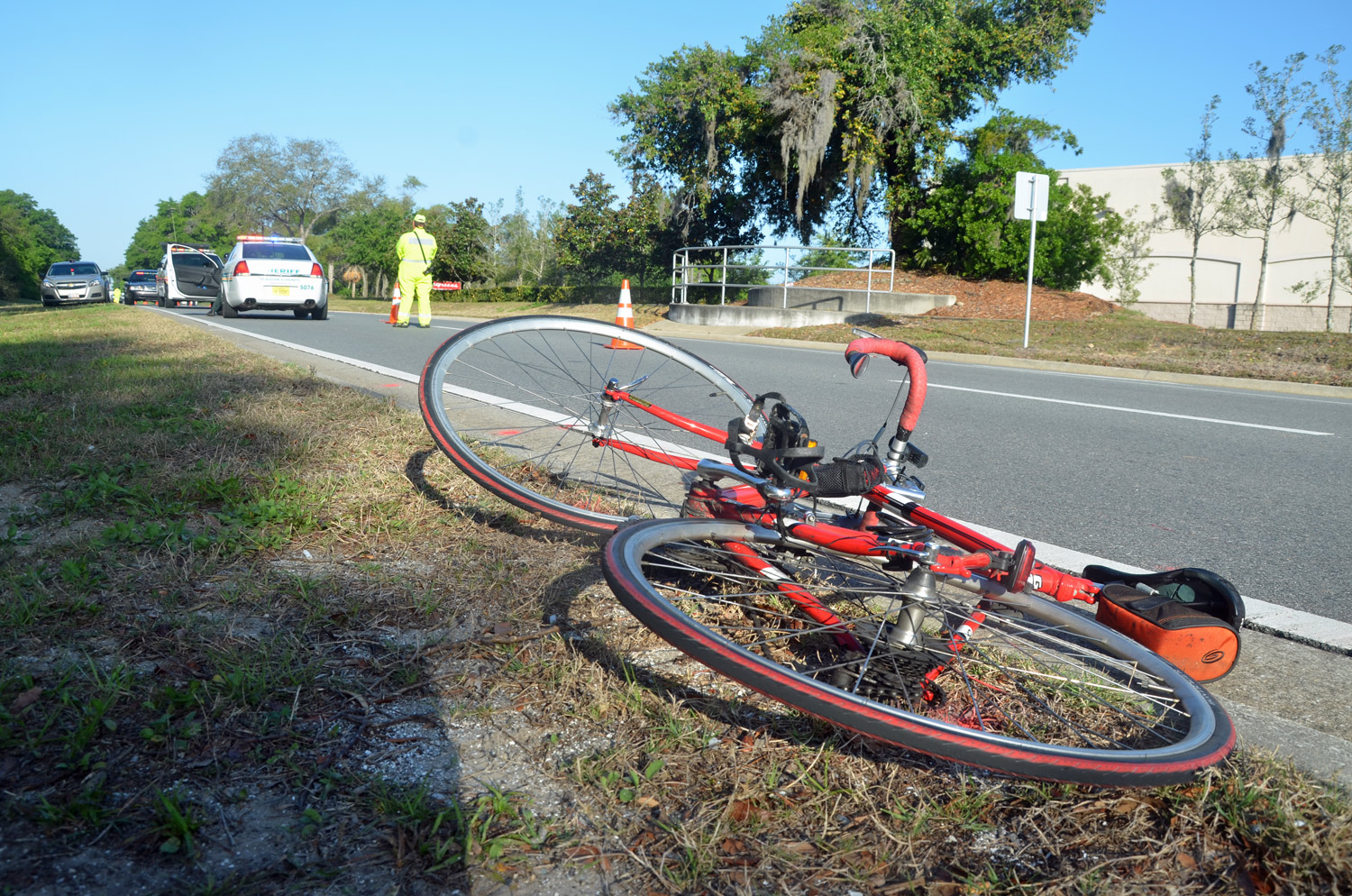
bicycle-hit-and-run

Yesterday, Heather Cook, the No. 2 official in the Episcopal Diocese of Maryland, struck and killed cyclist Thomas Palermo with her vehicle. He later died; she did not stop and drove on, leaving the scene and her victim  badly injured by the side of the road. Another motorist stopped and called 911, and cyclists who set out to find the fleeing car reported seeing a Subaru with a smashed windshield. twenty minutes after the fatal accident Cook returned while investigators were still on the scene.

In an email to the clergy of the Episcopal Diocese of Maryland, the Right Rev. Eugene Taylor Sutton announced that Cook, the first woman to be ordained a bishop in the Maryland diocese had been involved in a fatal accident, and said,

“Several news agencies have reported this as a ‘hit and run.’ Bishop Cook did leave the scene initially, but returned after about 20 minutes to take responsibility for her actions.”

Oh. Well, leaving a man to die on the road is all right, then. Continue reading

Jack and The Christmas Gasoline Can

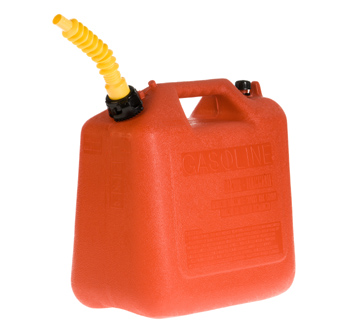
gas-can

OK, it’s not exactly “The Homecoming,” but the way they’re scraping the barrel for cable Christmas movies, you might see this one on LMN yet. I just hope I’m not played by Wallace Shawn

Everything was going swimmingly this Christmas morning. We had opened presents, and now Grace and I were making our contributions to the family dinner later today at my sister’s house. A main feature was Grace’s mother’s recipe for a holiday salad that was part of her family’s Thanksgiving and Christmas meals for decades, and now ours. The recipe:

Two bags of cranberries, chopped

2 chopped navel oranges, with peel

2 chopped Red Delicious apples, also unpeeled

2 cups of chopped walnuts

2 diced celery hearts

1-2 cans of cranberry juice concentrate

Sugar to taste, or not (we leave it out.)

All was well until I cored the apples, bought supposedly fresh yesterday at Harris Teeter. They went “squish,” despite being all shiny and crisp on the outside. This would not do, so I was dispatched to the store to pick up suitably fresh apples, without which grandmother’s famous salad just wouldn’t be right.

I jumped into our car (the one that replaced its predecessor that  had burst into flames for no apparent reason in a mall parking lot—one of the many delightful events of our 2014). The gas-tank-low light was on, as it had been the day before. The gauge now said that I had five miles left, and the nearest station was only a bit more than two away. Well, these things aren’t perfect: my car stopped about 200 yards from the exit to the station, and in the middle of the street.

I called home, and my wife and son prepared to take his car to the station to get enough gas to let me drive the last leg of the journey, but his car, as is its wont, was dead. Meanwhile, I tried to push mine out of the middle of the street on my own, realizing too late that cars in neutral tend to pick up quite a bit of speed going down a grade, and are remarkably hard to steer and brake from outside the vehicle. I was barely able to stop the car from plowing into a parked Volvo by turning it to roll over the curb onto someone’s lawn. I was loath to leave it there untended while I hiked to the gas station, and I didn’t feel like paying fifty bucks or more for roadside assistance, but I was running out of options. Also time, if I was going to find fresh apples while a grocery store remained open.

I hadn’t seen a single car on the road, until an SUV stopped next to me. The driver, a woman in her thirties who was accompanied by her two teenaged sons, asked it I needed help. I explained my plight, and the two young men assisted me in rolling my car off the lawn into something approximating a legal parking space.

“Stay here: we’ll be right back,” the woman said. She was as good as her word, for she soon reappeared, with one of her sons carrying a festive red plastic gas can filled with fuel. The older son helped figure out how to work the damn spout, which had to be assembled. “See, here’s the flaw,” I explained. “The device solving this problem should not require more intelligence to operate than someone getting into this stupid situation is likely to have.” He agreed, politely. Then he poured all the gasoline into my empty tank.

I prepared to reimburse this family of Good Samaritans, but they refused. “Just pay it forward,” the mother said. “We’re glad we could help out.” I shook her sons’ hands, and hers, and wished them all a Merry Christmas. Then I got the apples, and the salad was perfect.

In the Marshall household, this will forever be known the Miracle of the Christmas Gas Can.

Let us sing!

(to the tune of “Good King Wenceslas” :

1. Jack’s wife said “You must go out.
We’ve an apple crisis!”
Never would he dare refuse ;
Better to fight ISIS.
So he set out in his car,
Though t’was low in fuel
Til it sputtered to a stop
(Boy was he a foo-oo-el!)

2. Shifted into neutral then,
It rolled t’ward disaster.
Jack would soon be chasing it,
As the car rolled faster.
Pulling hard with all his might,
He changed its direction
Rested then on somebody’s lawn
Waiting for collection.

3. Up now rolls an SUV
Driven by a stranger
“Trav’ler, tell us, how can we
Help you stave off danger?”
Her sons helped him move the car;
There would be no ticket.
Jack composed a secret wish,
As if he could pick it.

4. “Find a can, and bring me gas
This would be a blessing.
Yet I’d be a total ass
Their Christmas to be messing.”
Suddenly they all drove off,
Telling him to stay there
Still he doubted they’d return
Heeding his mayday there.

5. Damn! The time was running out,
And the stores were closing.
Should he not get gassed up soon
Hope would be foreclosing.
Hark! The SUV returns,
With a gas can brimming
Welcome sight more lovely than
Firs with all their trimming.

6. “Let me pay you,” Jack implored.
For I owe you greatly.”
“No, my friend, just pay it for’d.
That’s what’s right innately”
Therefore learn the lesson well
Be you high or lowly
If we all are ethical
Every day is holy.

Encore: “Ethics Call To Arms: Fight the ‘Fuck You!’ Culture”


kid fu

[This happens sometimes with 5000 posts in the bank: some topic causes me to find one that I can’t even remember writing, and I realize that I still agree with it, and if I forgot about, everyone else probably did too. The previous post led me to link to this one, and I decided that the list of steps I recommended to try to halt the culture’s slide into permanent vulgarity and incivility was worth re-posting, especially since five years ago the blog got less than a fifth of the traffic it does today. Thus I am re-posting this one, slightly edited to remove a few rhetorical excesses and outdated references, from November 18, 2010.]

“Every action done in company ought to be with some sign of respect to those that are present.”

This was the very first edict in the list of civility rules memorized by George Washington as a child, rules that shaped his character and significantly influenced not only his life and career but the fate of America. Like most of Washington’s 11o rules, the first has universal and timeless validity, pointing all of us and our culture toward a society based on mutual respect, caring, empathy, and fairness.

Recently, however, there has been a powerful cultural movement away from George’s rules and the culture of civility that they represent. Rudeness has always been with us, of course, and public decorum has been in steady decline since the Beatniks of the Fifties, to the point where it is unremarkable to see church-goers in flip-flops and airplane passengers in tank-tops. Something else is going on, however. Like the colored dots of paint in a George Seurat painting, isolated incidents and clues have begun to converge into a picture, and it is not one of a pleasant day in the park. I believe we are seeing a dangerous shift away from civility as a cultural value, which means that we are seeing a cultural rejection of ethics. Continue reading

Ethics Alarms Mail Bag: The Cologne Allergy

Perfume allergyEvery now and then readers think I’m Ann Landers. Today I got a “Dear Ethics Alarms: What’s right?” e-mail from a friend, and I thought I’d answer it on the blog because it raises a classic ethics conundrum.

The inquirer belongs to a social group that meets weekly. It is a weekly joy, I am told; the writer has been attending for years. Everyone convenes, on the given day, right after work. Attendance varies, and membership is informal, though individuals have been told, on rare occasions, to come no more.

Of late an infrequent attendee, but a member of long standing, has begun to attend meetings with some regularity. My friend says this is not the happiest of developments, because the two do not get along. It is a breach of long-standing, I am told and is not going to be healed. “She is an asshole,” is how the letter delicately puts it.

Last week, shortly before the end of the 90 minute gathering, the recent interloper stood up and declared that she had developed a serious allergy to colognes, perfumes, aftershave, and all chemical scents. Looking right at my friend, she declared that this allergy made exposure to any sort of commercial scent unbearable, and she asked that in the future no members should wear perfume of any kind.

“I have worn a favorite brand of cologne every day for over thirty years,” the from my acquaintance letter says. “I always get complimented on it; the scent is subtle and nobody would notice it unless they were right next to me. The asshole and I have been separated by the length of the room since she started coming. Personally, I think she made the demand just to make me miserable. She knows, from our previous relationship [NOTE: I think it was more than just a friendship], that I wear the cologne.”

The question: Is she ethically obligated to stop wearing cologne on the day of the meeting (she goes right from work) to accommodate this member’s special problem?

Add to this the broader ethics question that comes up often: Does a group member with special sensitivity have the ethical upper hand allowing such a member to demand that all other members avoid conduct that only bothers that member? Continue reading

The Perils Of Over-Regulating The Police: A Case Study

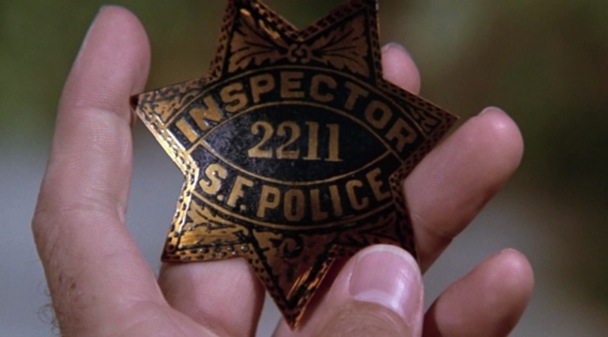
This is Dirt Harry's badge. Seconds later, he throws it into a river. Lots of other police will be doing the same.

This is Harry “Dirty Harry” Callahan’s badge. Seconds later, he throws it into a river. Lots of other police officers will soon be doing the same.

Yesterday, for the third time in my life, I was the first one on the scene after a fellow human being’s death. This time, it was a very close friend and, though it has little to do with this post, a wonderful man. I had headed out to his home because I was worried: an unusually reliable and conscientious individual, he had missed several appointments the last few days and hadn’t been answering e-mails and phone calls. When I was told about this, I immediately suspected the worst, and sadly, I was right.

His car was outside his house, and though it was mid-day and he was supposed to be somewhere else, I could see that the TV was on. In front of his door, getting soaked in the rain,  was a package: it had been delivered there on December 2. I got no response to my bangs on the door. It was time to call 911.

The police responded quickly. I’m not going to name the department, which has an excellent reputation here, and I do not fault the officers, who were diligent and polite, and who set about investigating the scene professionally and quickly. Nonetheless, after a full 90 minutes, after which they could not discern any more than I had before they came, they would not enter the house.

They told me that they could not risk being sued, and that there were elaborate policies and procedures that had to be checked off first. The officers had to track down their supervisor (it was a Saturday), and, they said, more than one official would have to sign off, to protect the department

“He could be drunk; he could be shacked up; he could just want to be alone,” they told me. “The law says his privacy can’t be breached, even by us.”

“But he’s not any of those things,” I said. “He doesn’t do any of those things, and if he were OK, there wouldn’t be a four-day-old package outside.”

“Maybe he took a trip on a whim.”

“He would have called and cancelled those commitments,” I said. “Look, you and I both know that he could be inside, on the brink of death, with every second bringing him closer. The only alternative is that he’s died already. If you won’t do it, let me break in, chase me, and you’ll find him legally as you pursue me. How’s that?”

The police weren’t sold. Finally, after a full 90 minutes, they requisitioned a ladder from a neighbor and were able to see into a second floor window. My friend was visible on the floor, and then they moved quickly, breaking down the door. They were too late by days. They might have been too late by minutes though. All those procedures and policies that forced the police to avoid taking action that in this case, under these circumstances, were prudent and that might have saved a life imperiled.

The lesson is only this: if we cannot trust police to make decisions like this, we obviously are not going to trust them to decide when to fire their weapons. Laws, rules and procedures are rigid, and have to be examined slowly; real life operates in the shadows of uncertainty, among the loopholes, gray areas and ambiguities, and it moves fast. The protests and demands in the wake of the recent police controversies will undoubtedly result in more regulations, policies and laws, but there is good reason to believe that they will also make us less safe rather than more safe, and make it difficult to find reasonable, dedicated, ethical men and women willing to serve as police, a job which, we seem to be deciding, should be subjected to strict liability whether the officer acts too quickly, or not quickly enough—judged, of course, after the results are in. Continue reading

Ethics Quiz: The Beautiful Young Woman In Georgetown

beautiful-face

Late last night, the previous post regarding the video showing a woman being repeatedly shouted at by rude and intrusive males as she silently walked down New York City streets sparked an ancient memory from my past.

The incident before my career shift into ethics, indeed before I was married. I was in Georgetown on a lovely fall day (like this one), and it had been a lousty week. I was feeling lost and depressed. Suddenly I was aware of the young woman walking slightly ahead of me toward the corner of Wisconsin and M streets, Georgetown Central. She wasn’t merely beautiful, but heart-stoppingly beautiful, the kind of rare combination of perfect genetics aesthetic taste who makes one realize how dishonest Hollywood’s representation of humanity is. Maybe this young woman would have blended into the scenery in Tinseltown, but I doubt it very much. Greek myths described how mortals, if they saw a god or goddess in their true form, would be instantly burned to ash, and that was almost the effect this woman had on me.

Yet she did not have the aura of a star or a model who was aware that she was gorgeous and conscious of her effect on those around her—I have seen that many times. Beautiful people generally know they are beautiful and are used to being treated differently because of it; they sometimes have a “leave me alone” force field around them, and this woman didn’t have that either. For some reason, perhaps because the jolt she had given me renewed my flagging enthusiasm for life in general at that moment—I literally never do this, not before and not since—when we reached the corner together, I turned to her and said, as I recall it,

“Excuse me, I don’t want you to take this the wrong way, but your are incredibly lovely, and seeing you today has made me happy, when I was anything but happy before.  I just wanted to say thank you.”

Your Ethics Alarms Ethics Quiz:

Was this wrong?

Continue reading

Matt Williams’ Blues: Consequentialism, Hindsight Bias, And Moral Luck

zimmermann

As I wrote last year about this time, the baseball play-offs make us unethical. Managers make decisions that either work or back-fire, and feed the toxic human tendency toward  consequentialism thusly: when they work, the decisions werecorrect; when they don’t, the manager was an idiot, and the choicee were obviously wrong. As with judging the ethics of an act, what happens after a baseball decision is made is irrelevant to whether it was a good decision when it was made.  This is almost impossible to keep firmly in mind. Our logic rebels at the idea that an ethical act can have horrendous consequences, or that the right tactical decision can result in defeat. But that’s life, as my father was fond of saying.

Hindsight bias further pushes us to confuse the making of a decision with its consequences. It is, not surprisingly, much easier to make a strong case that a decision was the wrong one after all the results are in. This, of course, is unfair to the decision-maker, who didn’t have the data the critics do when he or she acted. On the other hand, sometimes the reason the decision was the wrong one is that it was wrong, and the fact that the results were bad just support that verdict.

This morning, indeed since last night, Washington D.C. baseball fans and sportswriters have been wrestling this conundrum. The Washington Nationals, widely believed to be the strongest National League team in the post season, and quite possibly the favorites to win the World Series, find themselves down 0-2 in the best of five National League Division Series after a grueling, 18 inning loss to the San Francisco Giants, who didn’t even win their own division. The way the game went into extra innings will be debated for months if the Nats fail to rally and win the series. Nats starting pitcher Justin Zimmermann, who had pitched a no-hitter in his last outing, had been almost as good this time, pitching his team within one out of a 1-0 win that would have evened the series. He had dominated Giants hitters in every way, and had not shown any signs of weakening or, as they say in the game, “losing his stuff.” In the old days, that is, as recently as 20 years ago, a pitcher on a run like this would finish the game unless he had a stroke on the mound. Now, MLB managers are trained to be ready to go to their ninth inning specialist, the so-called closer, at any hint of trouble or even without it, and they almost always do.

As a reflex action, it makes no sense a lot of the time, other than “everybody does it.” A pitcher whom you know is pitching well is a known quantity, while a pitcher newly arrived to the game, whatever his skills, is not.  If the choice is between a starter who is not just doing OK but rather mowing down batters like Samson jaw-boning the Philistines, and bringing in a new arm, logic would dictate that the latter is the greater risk.

Nats manager Matt Williams acknowledged that Zimmerman was “in the zone” by not lifting him to begin the ninth, and was rewarded with two quick outs. When he walked his first batter of the game, however, on his magic 100th pitch (they count pitches now, and 100 is the number at which pitchers supposedly turn into pumpkins), and Williams lifted him, calling on closer Drew Storen. Continue reading