Extradimensional Cephalopod was kind enough to post this wise and evocative reflection prompted by my recent post following the sudden, but really not so sudden, death of an old friend over the weekend. His thoughts helped me a great deal, and I am grateful: here, without further comment, is EC’s Comment of the Day on the post, “’Bang The Drum Slowly,’ My Old Friend, and Me”: Continue reading
Daily Life
“Bang The Drum Slowly,” My Old Friend, and Me
I haven’t mentioned it here, but we are ending the 20 year adventure of my intentionally out-of-fashion theater company, The American Century Theater, after next season. One of the things I will miss most about it is that working so closely with the great works of stage literature we produce causes their wisdom and life observations to stick with us. Since I tend to choose works that involve ethical dilemmas, this has had professional as well as personal benefits.
I was thinking about the Mark Harris play (and novel, and movie) “Bang The Drum Slowly” in May, when I wrote about the kindness shown to Pasco High School student Vanessa Garcia, who was dying of cancer, because we were performing it at the time. The story involves a baseball team and how it responds to a third-string catcher who is dying of Hodgkin’s Disease. It is about kindness and the Golden Rule, and the ways the impending death of someone in our life often brings into sharper focus the importance of kindness and our shared obligations on this perplexing journey to oblivion we all must travel together. But I really wasn’t thinking about “Bang The Drum Slowly” yesterday. Yesterday, I was just having a wonderful time talking about baseball, politics and family with my old friend from law school, who happened to be in a hospice. Continue reading
Unethical App of the Year: BuyPartisan
One thing we can be sure of in our capitalistic, entrepreneurial culture: if there’s toxic conduct that somebody can make a buck out of facilitating, someone will.
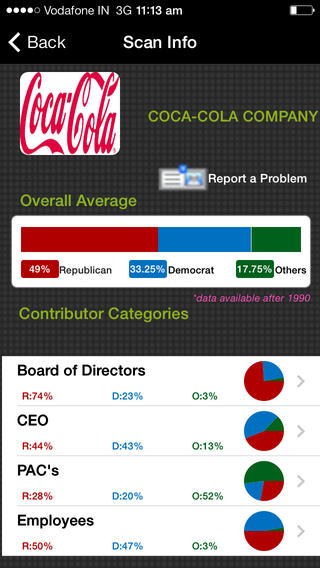
BuyPartisan is a new smartphone app and the inspiration of app developer Spend Consciously. It allows users to receive an instant ideological score on every product, designating the manufacturer or service provider as virtuous or evil, or, as this sick, hyper-partisan, hyper-polarized, disintegrating culture would have it, Republican or Democratic, conservative or liberal. After the self-righteous, hating-the-other-side-of-the-political-spectrum user scans the bar code on products with his or her phone camera, BuyPartisan (Get it???) accesses campaign finance data and analyzes contributions from the company’s board of directors, CEO, employees and PACs. This allows the happy, political aparthied-loving app user to stick it to any company that doesn’t comport with the user’s narrow, but absolutely right beyond question, view of the world.
Yecch. I want an app that tells me who uses this app, so I can avoid them whenever possible. Continue reading
Unethical Website of the Month: Kio’s Asian Stir, Newport, Rhode Island
I hate to pick on a small Chinese restaurant, but this kind of casual incompetence in an electronic age is ridiculous. Besides, I’m tired, hungry, and not in the mood to be tolerant.
I’m in Newport, you see, where I have presented three-hour legal ethics seminars to two large and responsive groups of lawyers, courtesy of AON and the Rhode Island bar. My wife was kind enough to accompany me, and thus instead of returning from a seminar to a lonely hotel room and endless hours surfing cable TV, I am actually enjoying my surroundings for a change, driving around, checking out galleries, walking along the shore. The only persistent problem is meals. By the time I finish the seminar, talk with participants, get back to our bed-and-breakfast in scenic Newport and walk Rugby (he’s here too), it’s invariably 2:30 0r later; by the time we drive to Iggy’s or Flo’s (double yum) for clams, it’s 4:00, meaning that dinner is up against the hard, generally 9 PM deadline most kitchens observe around here, and the fact that I’m as fried as the clams we ate and barely able to move. This makes carry-out mandatory, but time is tight.
By this time we’re sick of pizza and sandwiches, so after perusing the options, and there goes another 20 minutes, we arrive at the perfect solution: the well-regarded Asian restaurant Kio’s, which is close by (everything is close-by; this is Rhode Island), delivers, and, it announces on it’s website, I can order on-line! See…
We are adding Online service to Kio’s Chinese Cuisine in Newport, RI. You can now online order your favorite chinese dishes such as Chicken Chow Mein, Shrimp with Cashew Nuts and Sauteed Mixed Vegetables. Order online is easy and fun. We provide fast Delivery too (minimum order $10). Order Now!
For the special experience of ordering online at Kio’s, try the link. There’s the tantalizing menu, but oddly, clicking on the various options accomplishes nothing. You will search in vain for a form or anything else that suggests “on-line order,” much less “easy and fun” on-line order. Continue reading
I Foment Defiance On My Airplane Trip In The Name Of Ethics
I know I’ve written about this at least once, but it continues to gripe my cookies.
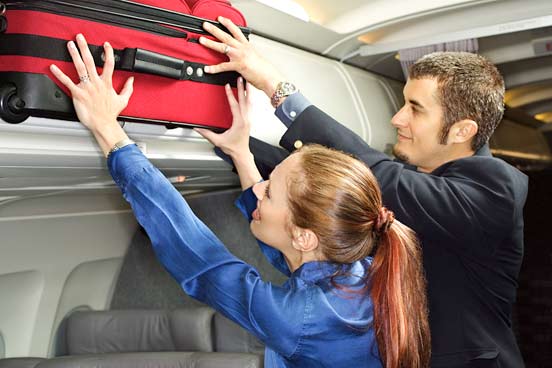
I had settled into my seat on the US Air flight from Boston to Washington when I watched the young woman who was soon sitting in the center seat next to me be curtly informed by a flight attendant that her medium-size bag needed to go under her seat, so passengers with rollerboards and other large pieces of luggage could store them in the bins. She sat down, stuffing the bag under the seat in front of her, and looked uncomfortable.
“I refuse to do that, you know,” I said. “I pay to check my large bag so that I can have leg room and not have to stow my briefcase in front of me. Why can’t I use the overhead bins for the one small bag I have, because other passengers won’t pay the fee–like I have— to check their large bags?”
“Well, the attendant told me I couldn’t put my bag up there,” she said.
“Yeah, and as long as you do what they say, they’ll never change a stupid and unfair policy. Get up, put your bag overhead, and if you are challenged, say, “Look, I paid 50 bucks to check my rollerboard, and for that sum I get to take up my foot space so someone who wouldn’t pay can put a rollerboard in the overhead bins? That’s absurd and wrong, and I’m not doing it.”
That’s exactly what she did. And she even made the speech I scripted, and a few people applauded! Then a late-comer with a huge rollerboard was told that she had to check her bag, because there was no room.
Heh, heh, heh…
The Lone Ethicist strikes again.
A Proposed Guide To Spoiler Ethics
I was just admonished on Facebook by a friend (a real friend, not just the Facebook variety), for referencing the end of the last episode of Season One of “Orange is the New Black.” He hadn’t finished viewing the season yet, and this was a breach of spoiler ethics. Or was it?
Ever since I encountered for real someone who was angry with me for “spoiling” the end of “Thirteen Days,” ( “Yes, World War III started and everybody died”), I have been dubious about spoiler etiquette. The advent of DVDs and Netflix has made this all the more annoying. If I’m in a group of five, and one individual hasn’t kept up with “House of Cards,” are the rest of us obligated to censor our discussion? As a devotee and fanatic devourer of popular culture, I admit that my first instinct is to say, “Keep up, get literate, or pay the price.” If I actually live by that rule, however, I will be a walking, talking, writing, spoiler machine.
Chuck Klosterman, “The Ethicist” in the world of the New York Times, recently pronounced himself an anti-spoiler absolutist:
“I’m an anti-spoiler fascist. I don’t believe that any conversation, review or sardonic tweet about a given TV show is more valuable than protecting an individual’s opportunity to experience the episode itself (and to watch it within the context for which it was designed). I’ve never heard a pro-spoiler argument that wasn’t fundamentally absurd.”
Even Klosterman, however, excepted sporting events (the question posed involved mentioning World Cup scores to a friend who was annoyed that the game had been “spoiled” for him) from his fascism, writing, reasonably:
“I must concede that live, unrehearsed events are not subject to “spoiler” embargoes A live event is a form of breaking news. It’s not just entertainment; it’s the first imprint of living history. …Because this guy is your buddy, you might want to avoid discussing the games’ outcomes out of common courtesy — but not out of any moral obligation. It’s his own responsibility to keep himself in the dark about current events.”
For once I agree with Chuck. But what are reasonable ethics rules for dealing with the other kind of spoiler, involving literature and entertainment?
Luckily, this is not new territory, though it is evolving territory. The underlying ethical principles include fairness, trust, consideration, compassion, and empathy, which means that the Golden Rule is also involved.
Back in 2010, an erudite blogger calling himself The Reading Ape proposed a draft “Guide to Responsible Spoiling.” That blog is defunct; the promised successor is not around, and so far, I haven’t been able to discover who the Ape is. Whoever he is (Oh Aaaaape! Come back, Ape!) , he did a very good job, though some tweeks might improve his work, especially in light of the emergence of Netflix. (I have edited it slightly, not substantively…I hope he doesn’t mind, or if he does, that he’s not a big ape.) His approach is to frame the problem as an ethical conflict, in which two competing ethics principles must be balanced. I think that’s right.
Here is his “draft”—what do you think?
“A Brief Guide to Responsible Spoiling”
by The Reading Ape (2010)
The objective is to balance two ethical principles:
I. The Right to Surprise: The inherent right of any viewer or reader to experience the pleasure of not knowing what’s
going to happen next.
II. The Right to Debate: The inherent right of any viewer or reader to engage in public discourse about the content of
a given work of narrative art.
Part 1: When Spoiling is Fair Game
In the following circumstances, one can discuss crucial plot details and reveal endings with a clear conscience. Continue reading
More Airport Ethics: The TSA, the Bedonkadonk and the Slobs
I’m not sure what to make of this scene, which I witnessed at Washington’s Reagan National airport as I waited to be scanned prior to my flight to Miami. I have some thoughts, though.
The young, zaftig, fascinatingly-shaped African American woman in front of me was wearing one of tightest, most revealing, shape-hugging, leaving-nothing-to-the-imagination knit dresses I or anyone has ever seen, especially in an airport. The garb was obviously chosen to highlight, as in broadcast world-wide, her most prominent and unusual asset: an awe-inspiring derriere, which appeared to be fit, toned, and suitable for showing a drive-in movie. She was attracting side-glances and open-mouths from all around her, male, female, and probably the machinery too, and obviously reveled in the attention.
When she stepped into the imager and was told to raise her hands over her head, she giggled and did a spontaneous bump and grind move, threatening the integrity of the structure. That did it. The young African-American male TSA agent was launched into smiles, winks, and a stream of comments on the women’s super-structure, along the lines of, “Damn, girl! Don’t go distracting me like that! How am I supposed to do my job? And man, I am distracted! Why, some big old terrorist could walk right by me while I’m taking you in, and then where would we be?” Laughs all around from the other agents, giggles and more gyrations from the woman, more banter from her admirer. Continue reading
Of The Great Noodle Ordeal, Sweeney Todd, Stressors, and The Importance Of Ethics In Stopping Mass Killings
I have a theory about mass killings, and it is neither original nor exclusive: in fact, it has been proposed in various forms for at least a century But I think it is worth considering.
I think that the smart, creative, intense, ambitious, restless and entrepreneurial people in this country keep designing an environment, and forcing it on us whether we like or need it or not, that is increasingly, and ultimately unbearably, hostile to those who are not smart, creative, intense, ambitious, restless and entrepreneurial. I think that as life becomes increasingly stressful and confusing for average people—remember, about half of the public is below average intelligence, and even average intelligence is nothing to jump up and down over—they are more likely to reach what the serial killer profilers on “Criminal Minds” call “stressors”—the final straw, the moment when they see red, and deadly fury takes over. On the TV show, of course, the stressor is the death of a child, or a firing, or the onset of an illness, or financial setbacks. But I can see it simply being the realization that life is hopeless…that it is always going to be a miserable, frustrating struggle, and that powerful, rich, meddling people are at work always finding ways to make sure it gets harder and harder, and ultimately futile, for normal human beings to get through the day.
I entertain delusions that I am smarter than the average bear, and I can barely stand it myself. Yesterday, stuck at La Guardia, I wanted to get some food in the a terminal’s food court. The place I chose had just added computerized self-ordering on iPads. I’m not intimidated by iPads; I use one. The woman in front of me, however, stared at the device—there were no readily available employees to guide her through it—as if it were a space alien. She pushed some buttons, sighed, and gave up. Continue reading
Ethical Conflict: The Case Of The Confused Cabbie
Heading to downtown Washington D.C. for an early morning ethics presentation for the Federal Bar (at the GAO building), I encountered an ethical dilemma that got the day off to a challenging start.
Traffic in D.C. is ridiculous, so I arranged to have an Alexandria cab pick me up at 8:15 AM for a 9:30 AM presentation, assuming that I would arrive close to 9:00. I would have too, except that my young, African-accented cab driver had no idea where he, or I was going. I should have foreseen the problem when the cab was ten minutes late (this company knows my address and typically arrives early), but it came into sharp focus when the driver asked “So you know how to get there, right?” (No, I don’t know how to get anywhere, which is why you are the cab driver, and I’m not) and made it startlingly clear that he didn’t know how to read his GPS. As a result, he made multiple wrong turns, even though the screen in front of him was showing him the way, and I ultimately had to interpret the GPS directions for him. I barely arrived on time, and felt like I had done the driving.
My initial instinct was to call the company and complain. I even took down the cab number.
And my thinking went like this: Continue reading
My Friend, Greg
I’m not sure exactly what this post has to do with ethics. Obligation, perhaps. Still, I have to write it.
Yesterday, I learned that Greg Davidson had died. The news thrust me into the heart of some intense and strange hybrid of “Stand By Me,” “Animal House,” “Mister Roberts,” and “The Sandlot.” I hadn’t seen or talked to Greg for 41 years, since the day he sold me my first car, a red Nova that I paid for with cash, using my bank account started for me by my Dad when I was a baby. Wiped it out, too. But that’s not why Greg Davidson was important in my life.
I met Greg in the 7th Grade, when we were both 12. He was the first un-self-consciously cool kid I ever met, and one of the few people I have known had this distinction. (I will embarrass him by saying this, but my son is one of them too.) If you can picture the character of Chris (River Phoenix) in “Stand by Me,” that was Greg—athletic, physically graceful, blond, with a buzz cut, relatively quiet, and a natural leader. He was, essentially, a man in attitude and conduct long before the rest of us (some of us are still working at it)—he won the affections of my 6th grade crush, Margie, and formed a famous, much admired steady couple with her that lasted well into high school.
He was smart, but defiant in a puckish and courageous way: this was the early Sixties, and we all regarded the regimentation of school as an insult. Greg undermined that, regularly, and at considerable personal cost, by waging clever, chaotic war against authority that he considered an affront to human dignity—the equivalent of Mr.Roberts throwing the Captain’s palm tree into the drink. One of my favorites was when he tweaked a pompous high school English teacher who chafed under the nick-name Greg had devised for him—“Tweety Bird”—because it caught on, and because it was so dead-on accurate. Greg went to the trouble of making stationery with a small picture of the Warner Brothers avian in the corner, distributed it, and that week poor Mr. Hendrickson received an assigned essay from every student on Tweety paper. Greg denied that he had anything to do with the plot, but accompanied his denials with Otter’s iconic wink to Dean Wormer, so he left no doubt who Mr. H’s true tormenter was, not there was any doubt.
The teacher did not take it well. Continue reading