Celebrity Encounter Ethics

You're welcome. But now I'll never know what Eddie Murphy is really like!

I run into a lot of celebrities when I travel. I assume everybody does who travels very often; I know that I am better at recognizing them than the average person because my celebrity knowledge spans multiple generations, I have a good memory for faces, and I have always watched way, way too much television. And it happened again today: I was having my usual battles with an airport self-service check-in kiosk, this one in Atlanta, when I realized that the traveler enduring similar annoyances (“We have no record of your itinerary. Please enter the code that we call something other than what it is called on your ticket receipt before you get frustrated and have to wait in line to speak with an agent, because you know that’s what is going to happen.”) was the young actress-singer, Raven-Symone.

She was traveling alone, and it seemed clear that nobody around us had any idea who she was. Strange: doesn’t everyone watch “The Cheetah Girls,” “Dr. Doolittle 2” and re-runs of “That’s So Raven” on the Disney Channel? The encounter immediately sent me into Marshall Celebrity Recognition decision mode: what is the ethical way to treat the rich and famous if you are insignificant and lowly, and close enough to assassinate them? Continue reading


Post-South Carolina Confession

Sunday morning, I am duty bound to play roulette with the talking head shows on the networks, watch “Reliable Sources,” Howard Kurtz’s weekly journalism ethics critique on CNN, and scour the Washington Post, all in search of contentious or interesting ethics topics.

But rather than listen to endless rehashes of the South Carolina Republican primary, endure Newt Gingrich’s gloating, and again hear so-called experts repetitively apply their imaginary expertise to musings about what will happen in the next primary, Florida—-last week’s consensus: Romney had South Carolina wrapped up– I am watching “MVP: Most Valuable Primate” on Encore Family. It’s about a hockey-playing chimp (named Jack, appropriately enough).

It’s not bad.

Screw it. A man can only take so much.

Dear Banks: This Is Why Nobody Trusts You

I know I’ve been hard on the Occupy movement, but I don’t want to let the protesters think that I’m pals with all of their targets. Take the banks, for example.

The “waiting for the check to clear” scam engaged in by banks has always been annoying, but I now realize, thanks to bitter personal experience, that we have been fools to tolerate it. Once upon a time, before electronic transfers and computers, it really did take a check at least “five business days” to go from one bank to another, but the banks have held on to the fiction that nothing has changed, presumably to give them free use of our money while we patiently wait for the completion of transactions that have already been completed. Running a small business with perpetual cash-flow problems, the Marshalls constantly hectored our bank (then Wachovia, which bought it from American Security Trust, and there may have been another one in there somewhere) about speeding up the process, and in fact they did: our checks from clients often had money available to us within a day or two. That’s right—the bank let us use our own money while telling less long-standing, savvy, or persistent customers that the checks they deposited were taking almost a week to clear. Continue reading

Phony Smile Ethics

From David Foster Wallace’s hilarious essay in Harper’s about a luxury cruise that did not (exactly) end in disaster:

This is related to the phenomenon of the Professional Smile, a pandemic in the service industry, and no place in my experience have I been on the receiving end of as many Professional Smiles as I was on the Nadir: maItre d’s, chief stewards, hotel managers’ minions, cruise director-their P.S.’s all come on like switches at my approach. But also back on land: at banks, restaurants, airline ticket counters, and on and on. You know this smile-the one that doesn’t quite reach the smiler’s eyes and signifies nothing more than a calculated attempt to advance the smiler’s own interests by pretending to like the smilee. Why do employers and supervisors force professional service people to broadcast the Professional Smile? Am I the only person who’s sure that the growing number of cases in which normal-looking people open up with automatic weapons in shopping malls and insurance offices and medical complexes is somehow causally related to the fact that these venues are well-known dissemination-loci of the Professional Smile?

I too hate the Professional Smile, which is, at its core, a lie. It is a mask, a fake-friendly message that may of may not have any truth behind it, and that at its worst has the frightening menace of  Sen. John McCain or Nancy Pelosi, both of whom specialize in the obviously false grin that has seething anger behind it, the smile that says, “I’m going to put you at ease and then, if you give me a chance, slit your god damned throat.” Continue reading

Creating Captain Costanzas

Metaphor

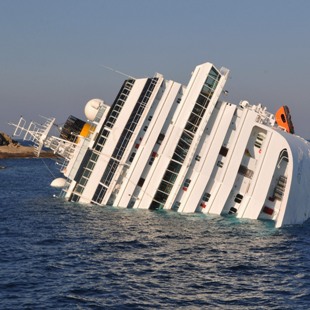
I think I stopped finding George Costanza funny when I saw the “Seinfeld” episode in which he panicked at a kids party after smelling smoke and trampled the children rushing to be the first out the door. (His callous reaction to his fiancée’s death from licking envelopes had paved the way for my inability to laugh at George.) The thought of a real-life George Costanza, the most unethical character on a show about unethical characters, serving as the captain of an imperiled ship full of passengers is horrifying, but that’s basically what befell the unsuspecting tourists on board the cruise ship that tipped over after hitting a rock off the coast of Italy. Having caused the accident, it appears, by irresponsibly changing course, captain Francesco Schettino hit the life boats before most of his passengers, and claimed to be directing the evacuation from the relative safety of a lifeboat as he defied orders from the Italian Coast Guard to return to the ship. Continue reading

Comment of the Day: “Ethics Quiz: The Case of the Fake But Accurate Social Security Card”

My ethics conundrum regarding the fake but accurate Social Security card solution—the Dan Rather approach, if you will— continued to garner a wide range of responses. Rick, as usual, has delivered one of the most thoughtful and provocative, and it is a worthy Comment of the Day.

Here is his comment on “Ethics Quiz: The Case of the Fake But Accurate Social Security Card”:

It strikes me that sometimes—not always, but sometimes—ethics is on a continuum. There’s the truly ethical, the not unethical, and the unethical, with many finer distinctions to be made.

I don’t running screaming into the night at the idea of faking a card, under the circumstances. Still, the truly ethical thing to do in this situation is to tell the prospective employer the truth. And the availability of all those other possible means of identification is indeed relevant. Provide one of the non-Social Security card alternatives and whatever other documentation is available. Importantly, if the employer, for whatever reason, is unwilling to accept this legally sufficient documentation, you don’t want to work for this person, no matter how much you need a job. Continue reading

Ethics Hero: Julio Diaz

[This story, from National Public Radio’s Storycorps, is three years old. But an Ethics Hero is an Ethics Hero whether Ethics Alarms recognizes him or not, and this is a Dickensian tale if there ever was one, about a man whose ethical instinct are so impeccable that they make me feel terribly inadequate. Ethics Alarms reader and commenter Tim LeVier brought it to my attention….thanks, Tim, once again.]

In February of 2008, 31-year-old social worker Julio Diaz, as he often does,  ended his hour-long subway commute to the Bronx one stop early so he could have dinner  at his favorite diner. Diaz was walking toward the subway stairs when a teenage boy with a knife stopped him and demanded his wallet.

“Here you go,” said Diaz.  As the teen walked away, Diaz added, on an impulse, “Hey, wait a minute. You forgot something. If you’re going to be robbing people for the rest of the night, you might as well take my coat to keep you warm.” The mugger was stunned. “He asked me, ‘Why are you doing this?'” Diaz’s reply: “Listen, if you’re willing to risk your freedom for a few dollars,  you must really need the money. I was going to get dinner and if you want to join me,  you’re more than welcome.” Continue reading

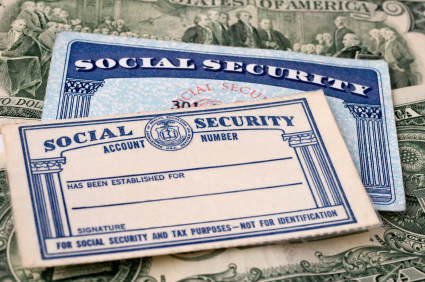
Ethics Quiz: The Case of the Fake But Accurate Social Security Card

A conundrum I have been asked to solve:

A mother is working to get her foreign adopted child a new copy of his Social Security card, which was lost. The child is a citizen since infancy, and a SS number has been assigned to him, but the process for a naturalized alien to get another is long and fraught with red tape, delays and frustration. So far, replacing the card has taken ten months, though it was supposed to take three. Now the son is waiting for the card to be issued. Social Security says it is waiting for final approval from Immigration, and Immigration says that there is a bottle neck, but not to worry.

Meanwhile, the boy has a standing job offer for a job that he is excited about and that would help family finances considerably. He cannot be processed without a Social Security card, however. And the job will not be held open forever.

For $250, a friend of the mother’s can get a counterfeit Social Security card with the son’s real number on it. He can have it in a week,

Your Question, in the last Ethics Quiz of 2011:

Granted that getting such a fake card is illegal, is it unethical?

None of the agencies involved dispute his citizenship, that he is enrolled in Social Security or that his number is valid. He has a document from Social Security that lists his number. The fake card would not assert anything that wasn’t true, except that he actually had the official card. He would be offering fake proof, but fake proof of something that is undisputed and true.

Is this one of the rare cases when conduct would be both illegal and ethical?

I’ll take your responses and update this with commentary later.

A Inconvenient Question About the Death of Walter Vance

"He's everywhere! He's everywhere!"

I have little to add to the tragedy of Walter Vance that can’t be found in the list of 15 Ethics Alarms about failures to rescue that I posted during the recent Penn State discussions. Vance was the shopper who collapsed in a South Charleston, West Virginia Target store during the Black Friday rush and was ignored by dozens of other shoppers, some of whom stepped over his body to seek more bargains. Vance later died.

I do have one little question, though.

I wonder how many of those shoppers who callously reacted to Vance’s peril with indifference told everyone who would listen earlier this month that had they witnessed Jerry Sandusky’s sexual assault on a child in the Penn State showers like Mike McQueary, they would have rushed to the rescue, even if it meant battling Sandusky.

My guess?

Every single one of them.

[More thanks to Rick Jones, who writes about the Vance episode here, and nudged me to comment on it too.]

Ethics Quiz: Apologies For A Sandusky Joke?

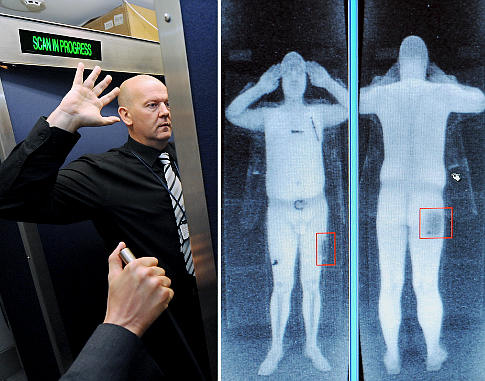
My uneasy relationship with the TSA continues.

Yes, I've sunk so low that I actually seek this out...

Today I was returning home from Atlanta, and its monster of an airport has one the cattle pen systems for going through security–a long, ling, line to all gates that keeps dividing and dividing, ultimately sending you down one of about 20 chutes to be scanned, stripped and yelled at. It is difficult to pick your chute, but in my case, it is crucial: Atlanta doesn’t have the full-body scanning devices in every line, and without it, I get gated, beeped, and sexually molested, thanks to my artificial hip.

It took ducking under a couple of barriers, but I finally got to an x-ray conveyor belt near a scanner, and had removed my laptop (separate bin) belt, jacket and shoes (not allowed in a bin in some cities, allowed in others) and lined them all up with my bag and brief case when an agent (none too politely) told me that they were closing that line, and directed me to another one, two lanes over. I lugged the three bins, bag and brief case over to that line, only to discover that it didn’t have a scanner.

That did it. I erupted at one of the agents, telling her that I did not care to be felt up at 8 in the morning, thanks, and had made a good faith effort to direct myself to a scanner, being foiled by the agent and by the fact that there are no signs warning people like me where a testicle massage is the only option.

“Why aren’t there signs?” I asked.

“I don’t know. There should be,” she said, as she helped me move my stuff to a scanner accessible line. “You should write the TSA and the airport.”

I laughed bitterly. “I’m sure that will do a lot of good. Do you all jsut like feeling up passengers? Is that the reason?”

A woman behind me laughed and said, “It sure seems like it!”

“Well, you know,” I said to her, “I hear Jerry Sandusky is trying to get a job as a screener!”

Her guffaw was interrupted by 7’8″ TSA agent, who said, loudly, “No he’s not, and I’m offended by that statement.”

My response, after a second’s consideration, was this: “I’m sorry I offended you. But I’m not apologizing.”

Your ethics quiz of the day: Should I have apologized? Continue reading