Flashback: “What Hugo Alfredo Tale-Yax Can Teach America”

The Late Hugo Alfredo Tale-Yax

[Not many people were checking in on Ethics Alarms when I wrote this post in response to yet another example of bystanders choosing to do nothing when a human being was in peril. Some of the comments to the Alameda post, those making excuses for the 75 faint-hearted or apathetic citizens in that city who would rather gawk at a tragedy than try to stop it,  caused me to recall the essay, which explores related issues.  I wrote it, but I had nearly forgotten about the story; when I re-read it today, I got upset all over again.Here, for the second time, is “What Hugo Alfredo Tale-Yax Can Teach America.”]

The one with the premium-grade ethics alarms bled to death on the sidewalk. The people who never had theirs installed at all took pictures. Is this the way it’s going to be? Continue reading

Comment of the Day: “Two Mothers, Young Love and Deception”

Lianne Best, who writes a weekly newspaper column about the challenges of a working wife and mother, weighs in with the alternative point of view regarding my post about a friend’s handling of her daughter’s boyfriend’s deception. I was afraid someone was going to write this, because I find the argument persuasive and it makes me doubt the wisdom of my advice. Still, I think I support my friend’s decision not to blow the whistle on the boyfriend, primarily because he’s 17, not 15. By 17, a child is engaged in an ongoing controversy about autonomy, trust and boundaries; the boyfriend is accountable for defying his mother, but it is his life and I would grant him the right to make his own mistakes, if mistakes they are, without my active interference. Lianne is persuasive, however…and she has a teenage daughter and son of her own:

“I like the advice … but because the horse has already left the barn far behind.

“I am actually pretty horrified that Julia is actively participating in and abetting the subterfuge. Even if she doesn’t agree with Ishmael’s mother’s rules (and let’s note they could be his father’s rules too; and maybe his church’s rules, and his culture’s rules), that doesn’t mean she should be actively plotting to subvert them.

“In this instance were it my own daughter, I would NOT take the decisive action of contacting Ishmael’s mother, but NEITHER would I allow him to spend the night there, and help my daughter make up stories and situations to enable the relationship. She’s happy? Please. Teenage female happiness is tenuous and temporary at best. (Has anyone on here LIVED with a 16-year-old girl??) It’s one year, probably less, until Ishmael is 18. So much can (and will) change in that year! Until then, group get-togethers (movie dates and parties) should be fine. Continue reading

Ethics Challenge: Two Mothers, Young Love and Deception

A good friend—call her Julia— with a teenage daughter (she’s 16) recently  asked me for help with an ethical dilemma.

Julia’s daughter is quiet, seemingly conservative, and socially restrained. She has never had a boyfriend, and has been on few dates, until now. She has been seeing a young man—call him Ishmael— her own age (well, he’s 17) who seems to match her to perfection in every respect. He’s sensitive, polite, and witty,  and on top of everything, he’s really cute, the object of every one of her friends’ and rivals’ awe.

Of course, there is a problem. Ishmael’s mother is fanatically protective: he is not supposed to date until he is 18, and has to check in with her every hour when he is out of the house. The relationship with my friend’s daughter only exists through an elaborate subterfuge, involving complicit friends and relayed phone messages. Once, in order to facilitate a special date to go to a concert, Julia allowed the boy to sleep overnight (in the guest room), when he was supposedly staying a male friend’s house.

My friend wanted to know if she should tell the boy’s mother about his web of lies. A parent has a right to have his or her own rules respected, and not undermined by other parents. The Golden Rule, applied to Ishmael’s mother, yields a demand that she be told; Julia would want to be told if her child was systematically defying her.

On the other hand, she firmly believes that the mother’s restriction on her son are excessive, and she has never known her daughter to be so happy.  She is worried that informing the mother will cause a serious rift with her daughter, and perhaps worse. “What is the ethical course?” she asked me. “What should I do?” Continue reading

Comment of the Day: “Schadenfreude, Ethics, and Those Fanatics Inside Us All”

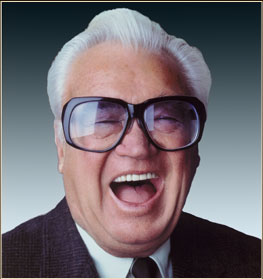
Maybe "The Broadcaster" was all Harry had inside...

Rick elaborates nicely on the theme of my post on handling those fanatic personas that reside in each of us, and in the process takes the ethical measure of an iconic baseball broadcaster whose charms always escaped me…the late Harry Carey.

“It strikes me that there’s another part of the equation, which you only hint at here, but which you have mentioned in other posts. That’s the “ethics alarm” (to coin a phrase) that goes off, or should, when the director or the Red Sox fan or whoever That Guy is says or does something unethical. Part of it is “heat of the moment” stuff: the egoism that slips out in a moment of excitement. No, of course you didn’t want Thurman Munson to die, but yes, he did play for the hated Yankees, and their team just got worse. You’re forgiven the fist-pump. Once. And provided you (Jack, as opposed to Red Sox fan) didn’t mean it.

“I was watching a Cubs game on WGN sometime in the mid-1980s when news came over the wire that Montreal Expos infielder Hubie Brooks had suffered a season-ending injury. Brooks had been a favorite of mine when he’d played for the Mets (“my team”), and I continued to follow his career with some interest, so the news was doubly sad for me: a player had been seriously injured, and that player was Hubie Brooks.

“In contrast, Cubs announcer Harry Carey proclaimed “well, if it helps the Cubs win, it’s OK by me.” I remember the exact words 25 years later. What struck me was not that they were uttered, but that no one—not Carey himself, not his broadcast partner, no one—made the slightest attempt to walk them back. That was the official verdict: a season-ending injury (Brooks was never the same again, by the way) was a good thing if it happened to somebody in a different uniform. I mentioned the incident to a couple of friends—Cubs fans—and they laughed and said “oh, that’s Harry.”

“Everyone understood that Carey was a Cubs fan first and an announcer second. That was, I am told, part of his charm—I never saw it, but others did. Still, I was sort of hoping that there would be a human being in there somewhere. On that particular day, at least, I was disappointed. We lived in WGN country for another seven years. I never watched another Cubs game without turning off the sound.”


Schadenfreude, Ethics, and Those Fanatics Inside Us All

NBC baseball blogger Craig Calcaterra recently raised the sensitive issue of sports fan Schadenfreude*, something that I have been afflicted with from time to time. The occasion was the recent injury to San Francisco Giants catcher Buster Posey in a particularly gruesome collision at home plate. His comments made me think about the obsessed and narrow personas in all of us, and how we should regard their occasional callousness.

Posey was the 2010 National League Rookie of the Year; he is also a cornerstone of the Giants’ recent success: the team is the reigning Major League Baseball World Champion. The collision with Florida Marlins’ Scott Cousins simultaneously broke Posey’s leg, ended his season, jeopardized the career of an exciting young player (players often return from such injuries permanently diminished) and dealt a serious blow to the Giants’ chances of returning to the World Series in 2011.  Reacting to a blogger who suggested that the injury caused most non-Giants fans to  give “a little fist-pump”… because “their team’s chances of dethroning the Giants as World Series champions just got a little bit better,” Calcaterra wrote… Continue reading

More on “The Atheist, the Graduation, and the Prayer”

Damon Fowler, School Adminstrator-In-Training?

Either by design, bias, or because I was not sufficiently clear (always a distinct possibility), a lot of readers seem to have misunderstood the central principle in my post about Damon Fowler, the Louisiana high school senior who singled-handedly bluffed his school out of including a prayer in his graduation ceremonies. Let me clarify.

The post is only incidentally about atheism vs. religion. The ethical issue arose in that context, but it just as easily could have been raised in other circumstances. The ethical values involved here were prudence, tolerance, self-restraint, proportionality, consideration, generosity, and empathy. Fowler’s actions assumed that preventing what he believed was a violation of the Constitution’s prohibition on the government favoring one religious belief over another justified ignoring all of these. They don’t, and the same conclusion applies whether we are discussing a technical legal violation, a breaching of organizational rules, or personal misconduct.

Anyone who reads Ethics Alarms knows that I believe that the culture only becomes and stays ethical if all its participants accept the responsibility of flagging and, when necessary, condemning and stopping harmful societal conduct, as well as unethical personal conduct that will be toxic to society if it becomes the norm. Nevertheless, society becomes oppressive and intolerable if every single misstep, offense, violation, possible violation, arguable violation or mistaken judgment is cause for confrontation, conflict and policing, without regard for context and consequences. Indeed, much of the challenge in ethical analysis involves deciding what kind of misconduct matters, even once the question of whether something is misconduct has been settled. Continue reading

“ARRGHHHHHHHHH!!!!” Is This Wrong?

"I'd be so very appreciative if you resolved not to contact me again!"

Some years ago, a person in my household who shall not be named made the mistake of buying some drugs off the internet. Now, with ever-increasing frequency, we receive calls from illicit on-line pharmacies. all hours of the day, sometimes one after the other. Telling them not to call doesn’t work; telling them we are going to report them doesn’t work. I have warned the callers of dire consequences to future callers, and now have to find some actual consequences to inflict.

My new practice, when they reveal who they are and their purpose, is to  give a blood-curdling, high-pitched scream directly into the phone, as loud as I can make it. I am certain this is startling (I have a great scream), and I hope it is painful. I would not be sorry to learn that it bursts an eardrum or seven.  Plan B…an airhorn.

Is this unethical?

It Has Come to This

…Well, your kids, anyway. But you’re next.

Rundlett Middle School has suspended  a 13-year-old Concord, New Hampshire girl for posting on her Facebook page that she wished Osama bin Laden had killed her math teacher.  Many of the stories published about the incident close with the statement,  “School officials say they can’t comment on the case because of privacy concerns.” While I suppose I should be relieved that they are still concerned about some privacy issues,  their respect for privacy generally leaves a lot to be desired.  So does their respect for basic constitutional rights…but they aren’t the only ones.

The post was stupid, and so what? The teacher was not placed in any jeopardy (Osama is dead, no matter what the school might have heard); no student was bullied (not that this would justify the long arm of the government reaching into the child’s bedroom either); nobody was defamed.    Kimberly Dellisola, the girl’s mother, has told the press the punishment was “too harsh.” Would somebody please tell Kimberly that the school has no business punishing her child at all? That’s Kimberly’s job, or at least was, until schools decided to take over policing what children do, write and say in their own homes. Continue reading

Me, Wrestling With Bias, And Losing

A large part of being ethical involves being aware of your biases and minimizing their impact on your conduct. As I recently was reminded, this sounds easier than it is in practice.

Searching yesterday for an Ethics Alarms topic, I came across an interesting, if not earth-shaking, issue of legal ethics that had obvious applications to other professions. Tracking down the source of the story, I discovered that the original idea was posted by a lawyer-blogger who in the past has gone out of his way to denigrate me professionally and personally on the web. He has also insulted me directly. Outside of that, though, he is by all accounts a terrific lawyer, an astute commentator on the legal profession, and, I’m sure, the salt of the earth.

Still, I don’t feel like sending readers to his site. Not only did the guy, unfairly, set out to harm me professionally, but he probably would do so again. I have no reason to do something that benefits him, nor is there any reason for me to try to curry favor with him: he owes me an apology, and I know I am never getting it.

I could link to one of the blogs and websites that picked up and elaborated on his post, but that would be unfair: I try to link to the originator of a useful ethical discussion as a matter of fairness and recognition. Continue reading

Ethics Hero: Washington Post Columnist Carolyn Hax

I’m breaking some precedent here: I don’t usually pick Ethics Heroes based upon writing alone, and I don’t usually reprint long sections from someone else’s column. But relationship advice columnist Carolyn Hax has long displayed a brilliant feel for ethical analysis, and expresses it sharply and entertainingly to the great benefit of her readers. Good general readership ethical analysis is all too rare, and she deserves accolades.

Today she provided as clear and as deft a lesson in how responsibility, honesty, fairness, bias and accountability work as I can imagine, while chiding a man who wants to rescue a younger woman from the relationship he didn’t have the guts to pursue herself. It shows her at her best, and is impeccable ethics as well. Brava!

Here is the inquiry and Hax’s response: Continue reading