 With all the alcoholics in my life, and there are and have been many (some of whom I undoubtedly never knew qualified), today was the first time I ever actually attended a meeting of Alcoholics Anonymous. Indeed, before yesterday I didn’t know I could attend. Many groups have periodic “open” meetings, however, to which friends and family members of alcoholics as well as “anyone interested in learning about alcoholism” are invited. I know a lot about alcoholism, learned the hard way. Now I know more. More important than that, I realize that Alcoholics Anonymous has a great deal to teach everyone…not just about alcoholism, but about ethics. Continue reading
Daily Life
Ethics Scoreboard Flashback: “Death on Everest”, a Real Life “What Would You Do?”
[ The discussion in the earlier post today regarding ABC’s revolting “What Would You Do?” convinced me that I should re-post this essay about a real-life “What Would You Do?”tragedy, which originally appeared on The Ethics Scoreboard in 2006. Entitled “Death on Everest,” It has been lightly edited to bring it up to date.]
As 34-year-old mountaineer David Sharp lay near death on Mount Everest, over 40 other climbers trudged past him on their march to the peak. All had oxygen with them, and a few even stopped briefly to give Sharp a few breaths. But still they climbed on, and Sharp perished. His demise on May 15, 2006 has gone into ethics lore alongside the infamous death of Kitty Genovese on March 13, 1964. Genovese was murdered outside her apartment building in Queens while thirty-eight neighbors watched and did nothing.
The two incidents stem from very different causes, however. While Genovese’s death was fueled by urban fear and apathy, a mass failure of courage and the willingness to assume responsibility in a crisis, Sharp was the victim of that universal ethics-suppressant, the powerful non-ethical consideration. Continue reading
Unethical CYA Trick Hall Of Infamy Inductee: the Phantom E-mail
Has this happened to you?
My firm submitted materials for a presentation to a client weeks before it was scheduled, sending them to the contact’s assistant, and asking that if there were any problems, to let us know. The day before the presentation, I received an urgent e-mail from the assistant, reading, “I am copying you in on this because I had not heard from your partner. The materials you sent may need revisions, as I informed her in my previous communication, and we were getting concerned because the revisions had not been received by us.” CC’d on the message were the assistant’s supervisor (my contact), and other firm members. Not my partner, however.
Panic ensued at ProEthics. After checking all phone logs, e-mail files and spam-blockers, it became abundantly clear that no such message about revisions was ever sent to my partner. Continue reading
Keith Olbermann: An Ethics Cautionary Tale
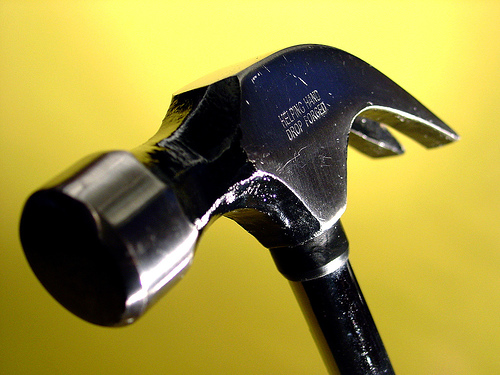 At the risk of being accused of proving the old proverb that when all you have is a hammer, every problem looks like a nail, let me offer the observation that the apparently acrimonious departure of Keith Olbermann from MSNBC, despite being the cable channel’s biggest star, is a cautionary tale about ethics.
The lesson: the absence of respect for the opinions of others, accompanied by a lack of humility and a surplus of contempt for fairness and civility, will doom even intelligent, talented and hard-working individuals to inevitable failure, because they cannot be trusted, not by employers, not by colleagues, not by friends.
This is why ethical values are valued: they are essential to individual success, because they contribute to societal and social success. This is, I believe, the fourth time an Olbermann show has ended like this, and like Bill Murray in “Groundhog Day,” he is doomed to repeat the pattern until he learns how to be a more caring, more trustworthy human being.
I hope he makes it. Keith Olbermann has the ability to help make this a better country, instead of a nastier, meaner, more divided one. I hope he gets another chance, and that this time, he figures out how to use his abundant talents to do it.
The Comment of The Day: Yes, It’s About Tide Commercials, But Read It Anyway
Ethics Alarms reader Lianne Best weighs in on the Tide (with Acti-lift!) ads, with a valuable observation with far broader ethics significance. She aptly describes exactly how norms of appropriate conduct become corrupted and coarsened (or sometimes enlightened and improved!) over time:
“I hope I’m not too late to the Tide with Acti-Lift! party, but for those who say these ads are “just marketing” and don’t have any real impact … the first time I saw each of these ads, I was horrified. With each subsequent viewing I was less and less offended, until they became normal. Participating in unethical behavior starts with it becoming normal, so these seemingly innocuous commercials are actually pushing the snowball down the slippery slope. Those with influence, whoever they may be, must be cautious with its use.”
Comment of the Day: The Tide Mini-skirt Commercial
Ethics Alarms has been getting some excellently written and reasoned comments lately, and it is time to institute a feature I have enjoyed on other blogs, and that is especially appropriate for this one: “The Comment of the Day.”
There won’t be one every day, of course, and the criteria is variable. In general, a Comment of the Day is one that I feel is especially well-stated rather than one I necessarily agree with—like the first entry, in fact. As I have stated elsewhere on the site, I don’t find the Tide mini-skirt commercial unethical, and would not have featured it on Ethics Alarms had readers not brought it into the discussion. I think it is culturally wrong-headed; I think it is obnoxious; I think the choice of song is in poor taste. Still, if Proctor and Gamble thinks it can sell more Tide by attaching its pitch to the assertion that fathers are boobs to question overtly sexual fashion choices by teenagers, and that mothers who encourage underage daughters (Yes, yes, we don’t know that the “daughter” isn’t 25, but the actress sure is doing her best giggly teen impression. We don’t know the “father” isn’t really the next door neighbor, either.) to wear skirts the size of dinner napkins sure to expose the Britney Zone every time the daughter sits down are being responsible parents, I wish them luck. I buy the detergent in our house, by the way; the commercial is sexist by its assumptions.
Here is the comment… Continue reading
Tide Commercial Reflections–with Acti-Lift!
This post isn’t going to have any additional ethical musings on the Tide commercials themselves, for I am sick to death of them, and almost as sick of arguing about them. What I have been thinking about instead is what to glean from the fact that an ethics critique of a 30 second laundry soap commercial has become the most viewed post on Ethics Alarms after fourteen months and about 1,100 posts, and has generated more debate than all but a few other issues.
Not that I much mind becoming the apparent ethics authority on Tide (with Acti-Lift!). It’s a small niche, but at least it’s a niche. If you Google almost anything about the original commercial—“green shirt” and Tide, for example—Ethics Alarms is the first non-Tide site that gets listed. Still, with carefully considered ( and occasionally proofed) posts on politics, immigration, global warming, education, sex, law enforcement competing with it for attention, my ethics review of a TV commercial has attracted far more interest than any one of them.
Why? My thoughts: Continue reading
Lying to Mom
The call was from my mother’s case worker at the hospital.
The night before, my mother, 89, had fallen in her apartment, the seventh fall in ten days and, like the others, a direct result of her stubborn refusal to use a cane or a walker despite her unsteadiness. This time she had not been able to dissuade me from taking her to the emergency room, where we both lingered until nearly 6 AM as she was X-rayed, CAT-scanned, and given a battery of tests. The staff felt she needed to be checked-in to stay for a couple of days, especially since she was hallucinating. I agreed, over Mom’s protests; it would also provide me some more time to figure out how to prepare my home for her to move in, at least temporarily. There is no way I am going to let her fall again.
Now the case worker was calling to tell me that my mother was resisting treatment. She wanted to go home, she said, and was physically resisting efforts to give her an M.R.I. Would I please come over and persuade her?
The hospital was only fifteen minutes away, and as I drove there, I pondered various strategies. With my mother, you get one shot. If your first argument doesn’t persuade her, nothing will. I could explain why the M.R.I. would help the doctors clear her for release, but that one could backfire if the test revealed something that in fact led to a longer stay. One ploy kept pushing itself to the front of the line: Continue reading
Ten Useful Ethics Alarms
It occurred to me, after more than a year, that I’ve never actually posted the basic ethics alarms we all should have installed and in working order, ready to sound when we are in, or about to be placed in, situations that are rife with ethics peril. Here are ten basic ones; there are lots of other useful ethics alarms to have, but these will serve you well. When one starts buzzing, it’s time to step back, thinks, and perhaps most useful of all, talk to someone whose ethical standards and reasoning you trust: Continue reading
Rush, E-Cigarettes and the Niggardly Principle
Rush Limbaugh was enjoying himself hugely yesterday, as he usually does, relating one more way that he has devised to tweak America’s Enemies of Freedom.
The radio talk show king’s topic was electronic cigarettes, those increasingly popular devices that deliver a nicotine jolt while emitting faux “smoke” (it’s only odorless water vapor), all while looking like a real cigarette—the tip even glows red when you puff it. Rush keeps the things handy, he explains, to provide a balm to his nicotine cravings when he is in public places, but even more so, it seems, to annoy anti-smoking zealots. Rush gets a rush when he pulls out the plastic devices and observes reflexive coughs and frowns from those in his vicinity who regard cigarettes as the equivalent of rotting cats. Continue reading
 Ethics Alarms