What Rudyard Kipling Taught My Father

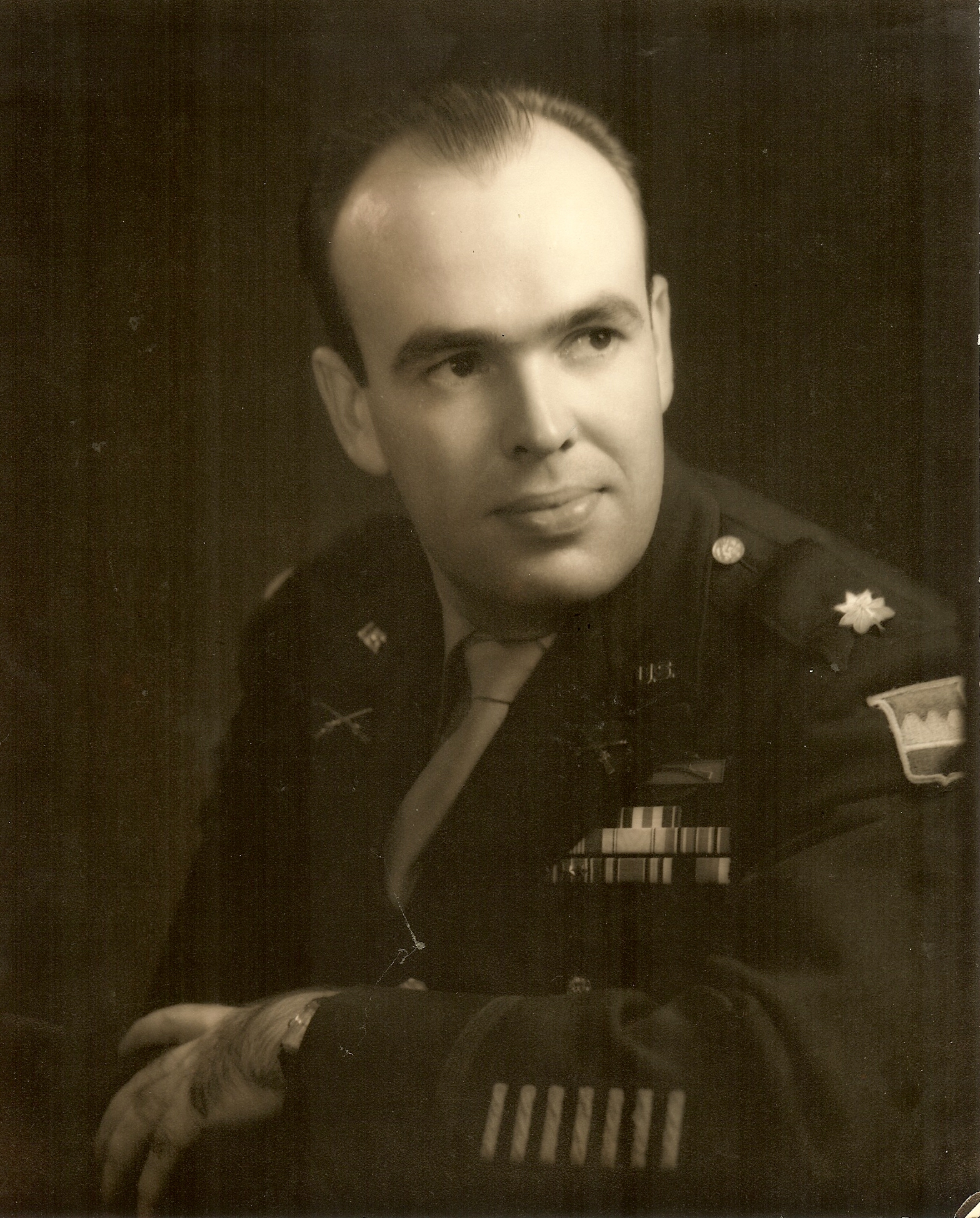
Jack Marshall Sr Army portrait

Today the Army buried my father, Major Jack Marshall, Sr., with full military honors. He had earned them, for he was a hero in World War II. Let me correct that: every soldier who serves in battle is a hero, but my Dad had a few special distinctions, like a Silver Star and a Bronze Star to go with his Purple Heart.  He  sustained a crippling wound to his foot from a hand-grenade, healed enough to jam what was left of it into a boot, and went on to fight in the Battle of the Bulge.

Under the clearest of blue skies, with the cemetery covered in snow, a caisson drawn by black horses, one without a rider, carried my father to a gravesite ceremony where the American flag draping his casket was carefully folded by six soldiers and given to my mother, following a 21-gun salute. My father was a hero off the battlefield as well, a profoundly ethical and courageous man throughout his life, and how he got that way is worth examining. Continue reading

A Nation of Unethical Superheroes

Among some more substantive questions in the current Vanity Fair’s “60 Minutes”/Vanity Fair poll was this one:

“Suppose you could have THE POWER OF A SUPERHERO. Which power would you choose?”

The choices presented were super strength, flying, invisibility, the ability to read minds, and x-ray vision. When the votes were tallied, the largest group, by far, was made up of those who chose mind-reading.

It is just a silly poll based on fantasy. I still find it alarming that 35% chose the ability to read minds, an unequivocally unethical power. Invading anyone’s private thoughts is per se unethical, although it does beat waterboarding. In a distant second place, with 21%  of the votes, was flying, one of the two ethical powers among the options, along with super strength. The unethical powers—mind-reading, invisibility and x-ray vision—attracted 57% of the votes over-all.

There is nothing wrong with having unethical fantasies as long as they stay fantasies. Still, I would feel better about my fellow citizens if I didn’t think so many of them would choose to violate my privacy and learn my confidences if they had the chance. Now that I think about it, I’m not sure I could trust Superman.

“The Ethicist” Strikes Out Again

I’ll make a deal with Randy Cohen,”The Ethicist” of The New York Times Magazine: I’ll stop criticizing his column when he stops justifying dishonesty. Lately, Cohen has not only been advising his correspondents to avoid telling the truth but headlining the questions where he does so.

Lie proud, Randy!

This week’s endorsement of forked tongues surrounded the sensitive issue of designating a guardian for one’s child. Parents had asked their good friends, another married couple, if they would agree to care for their daughter in the event that the parents perished while she was a child. After the couple enthusiastically agreed, the parents learned that their friends were not sufficiently responsible with their finances, and liked to “live large.” They no longer trust the couple with their daughter’s welfare, and want to re-assign the responsibility of being emergency guardians to relatives. This will require the parents to change their wills.

Their question to “The Ethicist”: Do they have to tell their friends? Continue reading

A Brief Note on Leadership Ethics, for Sen. Kirk and Others

Attempting to explain Martha Coakley’s difficulties convincing a Democratic populace in Massachusetts that it should elect a Democratic U.S. Senator, the current place-holder in the seat she is running for, Sen. Paul Kirk, said this: “It comes from the fact that Obama as president has had to deal with all these major crises he inherited: the banks, fiscal stimulus…”

You should not have to be a Republican or an Obama opponent to see the ethics fouls in that statement, which echoes what has been, sadly, something of a default position of the Administration whenever things go sour. Continue reading

The Ethics of Voluntary Mortgage Default

Friend and reader Loren Platzman alerted me to the article, “Walk Away From Your Mortgage!” in the Sunday Times Magazine ( the magazine was, in fact, sitting unopened by my desk at the time. Some days, I just know that reading Randy Cohen’s “The Ethicist” column is going to ruin my weekend.) The thrust of the article, an installment in the “The Way We Live Now” series, is that American cultural tradition has reinforced the belief that there is something unethical and shameful about voluntarily letting the bank foreclose on a property when falling property values have placed the mortgage “under water,” meaning that the home is worth less than the amount still owed on it. Continue reading

The Titanic Principle and the Ethics of Helping the Desperate

A disturbing aspect of the Titanic disaster was that most of the lifeboats refused to pick up survivors in the water, the boat leaders fearing that the desperate swimmers would swamp the boats. I look on this sad incident as illustrating the problem of helping people in desperate need. How much risk and hardship should a potential rescuer be ready and willing to endure? Continue reading

Ethics Alarms and the Brooklyn EMTs

The astounding indifference to both human life and their duties displayed by the EMTs in yesterday’s incident in Brooklyn relates directly to the title of this blog. Why…why…didn’t their ethics alarms go off when they knew that a young, pregnant woman was fighting for her life a few yards away? What could have dulled their senses of duty and humanity, disabled them, to this extent? Continue reading

A Mother Dies as EMTs Munch Bagels: Why?

In Brooklyn, New York, a pregnant woman went into cardiac arrest in front of  two EMT’s having breakfast at a coffee shop. They did nothing to help her, despite entreaties from others at the shop, reportedly because they were “on break.” And she died.

You can bank on hearing a lot more about the horrific incident in the coming days and weeks. Normally an obvious example of miserable human conduct wouldn’t be mentioned here, because there is no ethical controversy to consider. This one, however, raises important questions that have to be answered:

  • What kind of cultural values are lurking beneath the surface of our society that would lead two individuals to be so callous to endangered human life when they had the skill and responsibility to act? One person could be an aberration, but two suggests a much larger problem.
  • How can people capable of such conduct be recruited and employed by any Fire Department, anywhere?
  • It will be easy to heap condemnation on the two EMT’s who preferred to finish their bagels rather than to save a mother’s life. That won’t address the more important question of what we can and must do, not just to prevent anything like this happening again, but to identify and eradicate the toxic values in our society that could allow this to happen even once.

One thing seems certain: New York’s famous Christmas spirit isn’t what it used to be.

Ethics Notes: Santa, the Senate, and Snow

Some random thoughts on ethics matters as I try to simultaneously finish the Ethics Alarms 2009 Best and Worst lists and deal with a series of bad extension cords running up my Christmas tree…

Continue reading

The Legal Ethics Forum’s Top Stories of 2009

It is the time for year-end lists—Ethics Alarms will post its 2009 ethics award winners  soon—and one of the best is out. From the always excellent Legal Ethics Forum comes legal ethics ace John Steele’s list of the Top Legal Ethics Stories of 2009. Even though John left out my personal favorite, it is a thorough and enlightening compendium. Even if you aren’t a lawyer (perhaps especially if you aren’t!), it is worth reading. Something on his list will affect your life sooner or later, if it hasn’t already.