March Madness Morning Ethics Warm-Up, 3-14-2026

A brief “The Unabomber Was Right” update: yesterday I explained how changes to my Apple phone caused me to miss a planned appointment because I couldn’t figure out the new “improved” alarm setting process. Later, the phone creeped me out. I had intentionally not put my email account on my phone because of security concerns, because people scrolling through their messages when I’m with them annoys the hell out of me, and because I didn’t know how to install it even if I wanted to. At exactly 5:47pm, my email inbox appeared on my phone anyway, without any directive from me, at least not a deliberate one. I’m sure there’s a rational explanation, but I don’t think I’ll like it.

Meanwhile…

1. Professor Turley is alarmed at the quality of faculty members elite universities are hiring now. “Welcome to the party, pal!” He writes in part,

“Professor Muhammad Abdou, who until recently taught students at Columbia University, appeared online this week to spread calls for religious-based violence and glorify the murder of Jews. He did so as part of an event at the Union Theological Seminary, an institution associated with Columbia. While the university recently ended Abdou’s teaching, it is important to remember that this unhinged fanatic was previously chosen by Columbia faculty and administrators to teach their students. Those individuals remain at Columbia… The Islamic studies scholar called on students to “be a threat” as part of the event titled “Death to the Akademy: How to be a thorn in their throat amidst snakes in the grass.” …Abdou told the students: “Let us engage in jihad, and there are rules for jihad, and Muslims know that Allah has commanded rules. We don’t engage in wanton violence, but we don’t accept the negative peace either.”…He praised Elias Rodriguez, the man facing multiple charges for the murder of a young Jewish couple. In what Abdou called the “assassination of two Zionists,” Rodriguez is accused of murdering Yaron Lischinsky, 30, and Sarah Lynn Milgrim, 26, the two Israeli employees in 2025 in Washington.

“He then reportedly praised their accused killer: “God bless him. He took action. … Take action. Not only that kind of action, just to be very clear, because there’s also building. We need to destroy. We need to create alternatives.” [His speech] is reminiscent of the speech of other radical faculty like Cornell Professor Russell Rickford, who celebrated the massacre in Israel on Oct. 7th. Their extremism was not a barrier to being hired. It was likely an enhancement.

“They are examples of why faculty members are unlikely to change the overwhelmingly liberal appointments. Conservatives and libertarians have been largely purged from most departments. While even a moderately conservative faculty candidate will often face organized opposition, radicals like Abdou and Rickford find an eager audience on faculties….Abdou offers just pure hate. There is no discernible intellectual content or insight. Just rage masquerading as scholarship.”

Harvard Grade Inflation Ethics and the DEI Train Wreck, Part II: Harvard’s Retort

Back in 2015, in an earlier grade- and recognition-inflation post, I wrote in horror about the growing tendency of high schools to name up to a third of the graduating class “valedictorians.” I observed in part,

“…this atrocious practice is obviously catching on. Integrity is such a chore. Excellence, superiority, achievement…they are all chores too. As for the genuinely superior students, they are out of luck: this is the high school equivalent of all the gladiators standing up and crying “I’m Spartacus!,” except now it’s “I’m the smartest one in the class!” This Maoist denial of the fact that some of us earn more success than others and that there is nothing wrong with doing so is all the rage…”

Clearly, this destructive concept was allowed to expand and flourish in the next decade, resulting in the indignant squeals of indignation from minority students at Harvard as the school resolves to stop lying to them and the world about their diligence, abilities and achievements.

In a cover essay in the current issue of Harvard Magazine, Lindsay Mitchell writes about “The True Cost of Grade Inflation,” focuses not on the costs of deceiving employers and flooding the job market with young sufferers of the Dunning-Kruger syndrome, but on student self-esteem and stress. The former Harvard instructor writes in part,

“…As Amanda Claybaugh, the dean of undergraduate education who authored the October grade inflation report, told me, “One might expect that a world where everyone got A’s would be a very relaxed world, but actually, it’s the most stressed-out world of all.”…The psychology driving this grade-frenzied atmosphere stems from the way A’s flooding the marketplace changes their value as a currency, rendering them both essential and trash at the same time. When you feel that everybody’s got an A, then you must get one, too—every time—or you have failed to keep up with the mainstream. Yet all the A’s in the world will still do zilch to get you ahead…

“…the swelling fear of not keeping up with the perfectly graded masses discourages students from taking academic risks. On campus, stories abound of introductory classes populated by enrollees who don’t need them—many have already taken a version of the same class in high school—but who are willing to repeat the material to have their A outcome in the bag. In those classes, if there’s a curve set by the highest or median score, students taking the class to actually learn the material are often left to claim the lower grades.

“And instead of picking courses that might prove challenging or just exploratory, many students aggressively seek out “gems,” the new Harvard slang for “guts”: easy classes without rigorous grading schemes. Meanwhile, the number of students taking classes pass-fail drifts upward, as students cower before intimidating subjects and elect the route that obviates grading altogether…terrified students would often email me their revised drafts repeatedly to get me to say they were “okay” before I graded them. On occasion, someone emailed me every couple of hours when I didn’t respond immediately. With one abject soul, I was able to track her miserable night by looking at the string of messages she dispatched through the wee hours, while I was sleeping. She had sent me her thesis statement over and over—with each successive iteration showing an almost imperceptible tweak—pleading with me to tell her if it sounded like an A thesis…When students become this obsessed with grades, the student-teacher interaction is reframed in crudely transactional terms…I, as the instructor, acted merely as a giver of A’s, and my willingness (or lack thereof) to grant them in turn defined the value of the student, who would go out into the world and make money or attain status in proportion to her graded value. With this mindset, my students mostly received solid A’s with an attitude of relief rather than joy. Any grade below that, on the other hand, landed as deflating or even ruinous, depending on how GPA-dependent that student’s future plans were…

“In my own classes, I frequently encountered reading comprehension issues serious enough to hamper the putative goal of a writing class—and even seemed to witness students’ reading skills degrading in real time. In my early Expos days, I liked to bring an old Lampoon parody of a Harvard student essay into class to read aloud together—with each person taking the next sentence round robin at the seminar table—as a lighthearted way to kick off a discussion of my students’ own papers. After several years, though, I noticed more and more students seemed unfamiliar with the vocabulary in the parody, with many now stumbling over words like “penchant,” “motif,” and “preponderance.” I finally stopped bringing the Lampoon piece to class, since by then the laughs had turned scarce and the faces had turned red with embarrassment…These students were not puffed up with unjustified praise, like the entitled Harvardian of the grade inflation think pieces. They showed awareness that they were not performing as well as they should…Many students feel the inflated grades they’ve received compose a smooth edifice that surrounds them and could crumble at any moment to reveal the pockmarked reality of their performance. For some, this can become a source of shame, because their inflated A’s suggest their faults are unspeakable and must be hidden, whereas, for all they know, other students’ A’s are entirely deserved. Grade inflation then becomes a dimension of imposter syndrome that reflects other aspects of this generation’s coming-of-age experience. It is similar to looking repeatedly at a friend’s social media posts portraying her life as perfect, while knowing that your own posts were curated to obscure a multitude of flaws…

“Most of the students I talked to about the grade inflation report, even while admitting grades are too high, took a defensive stance. They were already being worked to the point of exhaustion—and now Harvard was talking about making things harder yet? These conversations confirmed how entrenched grade inflation is in the modern educational landscape. To reinstate strict academic standards, Harvard will need to help students see how a world with fewer A’s could be a better one for all involved…”

Harvard Grade Inflation Ethics and the DEI Train Wreck, Part I: A Depressing Protest From Students “Of Color”

[This is a long post, but I urge you to read it all the way through. I cannot imagine a more powerful rebuttal to the advocates of “diversity, equity and inclusion.”]

Last October, in “Harvard’s Self-Indicting Grade Inflation Report,” I wrote about the school’s embarrassing report that revealed that 60% of the grades handed out at the supposedly elite college (my alma matter, and my sister’s, and my father’s, where my mother was Dean of Housing once-upon-a-time) are now As, making Harvard resemble Garrisons Keilor’s imaginary Minnesota community where “all the children” seem to be are “above average” even though that’s impossible.

In a prescient comment (as is often the case), AM Golden wrote in part, taking off from a Dean Amanda Claybaugh’s statement that it was desirable to “ produce a broader distribution of grades,”

That’s the problem. They don’t want to admit they accept unqualified applicants because many of those applicants will be disproportionately minorities. Returning standards to what an elite institution should have will mess with the faculty push for D.E.I. The standards have to stay low if the experiment is to be prioritized over pure academics. They have set too many precedents to easily back away now…

They have created bubbles where remote learning, mask wearing, protesting for the correct causes and making equal outcomes are virtues valued over a solid education. Backing up now will cause mass revolt on campuses. Like the news media, the colleges will be accused of caving to Trump. The asylum has been run by people who should have been inmates for so long that the actual inmates can’t be helped.

Sometimes I think Ethics Alarms is the only online community where clear-eyed vision dependably resides. For right on cue, as Harvard announced a long term effort to start grading seriously again, a coalition of “of color” Harvard students sent this open letter to the campus:

Ethics Hero: Laura Hughes

The widow of high school teacher Jason Hughes, 40, who died during a student prank gone horribly wrong in Gainesville, Georgia, is demonstrating how some human beings can overcome anger, bitterness and the emotional need for retribution, choosing compassion and empathy instead.

Around 11 p.m. on March 6, Jordan Wallace, Elijah Tate Owens, Aiden Hucks, Ana Katherine Luque and Ariana Cruz, all 18-years-old, toilet-papered trees outside the Hughes’ home, a continuation of their school’s tradition of such pranks during exam week. As the group piled into two vehicles to flee, Jason Hughes ran out of his home to confront the teens, but tripped and fell into the road. Wallace, who had already begun speeding away in a pickup truck, accidentally ran over the prone teacher. The teens left their vehicles to render aid, but Hughes perished in the incident.

All five teens were charged with criminal trespassing and littering on private property; Wallace has has been charged with first degree murder as well as reckless driving.

Laura Hughes, who is also a teacher, is pleading with authorities to drop the criminal charges. “We ask that you continue to pray for our family and also for the students involved in the accident along with their families,” she said in a statement to reporters. “Please join us in extending grace and mercy to them as Christ has done for us…This is a terrible tragedy, and our family is determined to prevent a separate tragedy from occurring, ruining the lives of these students.”

The late father of two (above, next to his wife) wasn’t trying to angrily confront the pranksters but “was excited and waiting to catch them in the act,” Laura told the New York Times. Insisting that her husband was not pursuing the students to reprimand them but rather to express comradery with their innocently-intended prank. Hughes said that criminal punishment “would be counter to Jason’s lifelong dedication of investing in the lives of these children.”

First degree murder sounds like extreme over-charging by authorities. The entire episode is a blazing example of the caprices of moral luck. I agree that the students’ punishment should be left to the school if Laura Hughes doesn’t want to press charges. Ethics tells us that it is time to mitigate the damage, not to make the damage worse.

A Quick Ethics Villains Inventory…[Link Fixed]

A lot of unethical junk has been flying around lately, and just to keep my brain clear (and yours) I feel the need to take stock. This isn’t a complete list, of course, just one that includes miscreants whose conduct and/or character I feel need additional attention here…

Apparently A Majority Of Younger Americans Think The U.S. Invented Slavery. I’ll See You At The Wood-Chipper…

A few days ago, I saw a chart showing what U.S. demographics believed that the United States invented slavery. I noted it for a future post, and now I can’t find it, but I found plenty of authority that supports that assertion. Coleman Hughes, a fellow at the Manhattan Institute for Policy Research and a fellow and contributing editor at their City Journal, has been making this point for years. Way back in 2016, The College Fix wrote in part,

For 11 years, Professor Duke Pesta gave quizzes to his students at the beginning of the school year to test their knowledge on basic facts about American history and Western culture.

The most surprising result from his 11-year experiment? Students’ overwhelming belief that slavery began in the United States and was almost exclusively an American phenomenon, he said.

“Most of my students could not tell me anything meaningful about slavery outside of America,” Pesta told The College Fix. “They are convinced that slavery was an American problem that more or less ended with the Civil War, and they are very fuzzy about the history of slavery prior to the Colonial era. Their entire education about slavery was confined to America.”…

The origin of these quizzes, which Pesta calls “cultural literacy markers,” was his increasing discomfort with gaps in his students’ foundational knowledge.

“They came to college without the basic rudiments of American history or Western culture and their reading level was pretty low,” Pesta told The Fix….

Often, more students connected Thomas Jefferson to slavery than could identify him as president, according to Pesta. On one quiz, 29 out of 32 students responding knew that Jefferson owned slaves, but only three out of the 32 correctly identified him as president. Interestingly, more students— six of 32—actually believed Ben Franklin had been president.

Pesta said he believes these students were given an overwhelmingly negative view of American history in high school, perpetuated by scholars such as Howard Zinn in “A People’s History of the United States,” a frequently assigned textbook.

Public Education Report From Wisconsin, or “Yikes!”

Guest post by Cornelius Gotchberg

[From your host: This is one horror tale from a state’s education system. Wisconsin is surely not alone.]

The Wisconsin Institute for Law and Liberty (W.I.L.L.) reported,   In 2024 DPI (State of Wisconsin Department of Public Instruction) lowered the standards and cut scores for proficiency on Wisconsin DPI’s Forward Exam for the most recent academic year. W.I.L.L. also discovered that DPI “lowered school report card points in 2020-21 and changed the labels on the reports in 2023-24.

  Hurley (WI) School District officials, among others, complained that this fist on the scale made their students’ above average achievements suddenly seemmediocre. The Iron County Miner supplied the following December 16, 2024 quote from Hurley School District Administrator Kevin Genisot, who declared (bolding mine),

“It’s important to note this: The state this year, before finalizing their final numbers of the state report card, came up with a set of numbers, They ran them and they said, “Oh, these numbers are allowing too many districts to score well. That won’t look good. Let’s adjust these numbers.’ And that’s right from DPI. telling you what they’re doing as they do the report cards.”

In short, DPI “followed the science,” and didn’t like where it took them, so they pursued policy-based evidence-making rather than evidence-based policy-making.

As Paul Harvey would say, “And now, the rest of the story.” Six months prior, in June of 2024, 88 “expert educators” gathered at the Chula Vista Resort for a four-day, taxpayer-funded shindig. Its alleged purpose: To redefine what constitutes proficiency in math and reading.

After DPI had sandbagged a January 21, 2025 “Daily Sentinel” FOIA request for a full year, the Institute For Reforming Government (IRG) sent a January 22, 2026 follow up. What did they find? Not much! No recordings of the proceedings were made nor were any meeting minutes provided. And participants had to sign non-disclosure agreements! That’s uncommon secrecy for a taxpayer-funded event with mandatory transparency.

The Daily Sentinel wrote: “The agency did not provide receipts for staff time, food, travel, or lodging […] Taxpayers are left to wonder how much of that $368,885 was spent on resort amenities, alcohol, or water park access for the 88 educators and various staff in attendance.”

Even making generous expenditure allowances for three nights single occupancy lodging @$250/night, four day per diem @$150/day, and $50,000 for meeting rooms and incidentals, that would still leave over $200,000 unaccounted for.

The WI Legislature’s Joint Finance Committee has appropriately delayed $2 million in funding as they await an explanation of this spectacularly extravagant profligacy.The state’s over-burdened taxpayers deserve answers.
  

I’m Feeling Hopeless Regarding Whether The Unethical Use of Higher Education As Leftist Indoctrination Can Be Eradicated In Time…[Expanded]

This story is the latest reason for my despair.

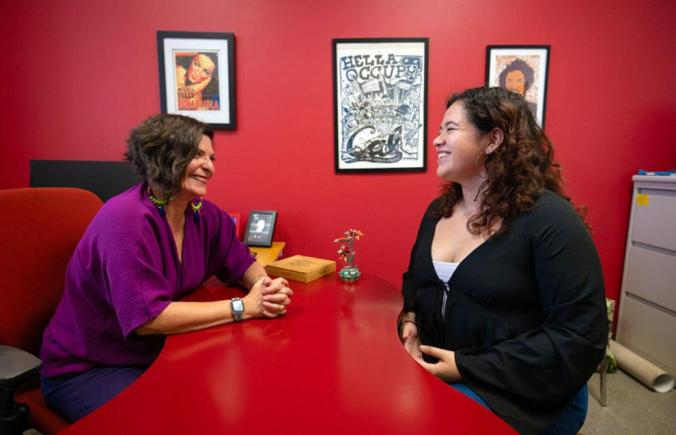
The unethical and diabolical woman on the left, physically and politically,

… is UC Berkeley professor of ethnic studies, gender and women’s studies and performance studies Juana María Rodríguez. Not content to rot the brains and values of her students, she has weaponized her charges to inject Leftist propaganda into the general population through Wikipedia, itself a propagator of biased and left-slanted disinformation.

Beginning in 2016, Rodríguez has assigned her students to create and edit Wikipedia articles about LGBTQ+ people. Her special focus is on gay and transgender “people of color,” of course, because that’s how people like her roll. The manipulating of the online encyclopedia gets credit in three of her classes: “Documenting Marginal Lives,” “Queer of Color Cultural Production” and “Queer of Color Critique.”

I would not hire any job applicant who had taken any of those courses, nor would I send my child to any school that treated those subjects as worthy of academic study.

“I want my students to think of themselves as not just consumers of knowledge but as being able to produce knowledge as well,” Rodríguez explained in a smoking gun email. This is new: a college professor who doesn’t know what “knowledge” means. One doesn’t produce knowledge, (“facts, information, and skills acquired by a person through experience or education; the theoretical or practical understanding of a subject”) one seeks, acquires, conveys, and distributes knowledge. Producing knowledge is called “making stuff up.”

The professor allows students to skip finals in exchange for doing her propaganda work.

Rodríguez integrates Wikipedia into her curricula in collaboration with Wiki Education, a nonprofit organization that encourages faculty in the United States and Canada to assign their students to create content for Wikipedia articles, aiming to fill in “knowledge gaps” on Wikipedia regarding gender, racial and ethnic diversity. Rodríguez’s students alone have added more than 300,000 edits and 3,000 citations to Wikipedia. the professor says she’s “really proud” that her students’ propaganda has been viewed an estimated 96 million times. Isn’t that wonderful?

How many societal termites like this are being paid by institutions of higher learning to distort reality, then education, and finally the culture? I’m beginning to fear that Americans were asleep at the metaphorical switch so long that the progressive body- and mind-snatchers spread their sinister pods so deeply in our comunities’ collective consciousness that the battle was already lost before it was even discovered.

Happy Birthday, George Washington From Ethics Alarms, And Thank Your Dad For Us Too…

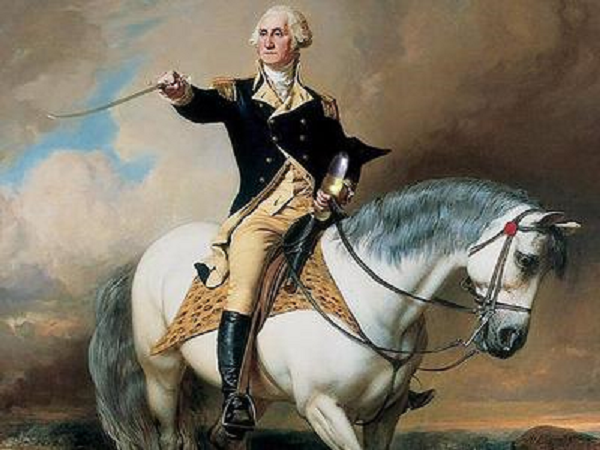
It’s George Washington’s birthday. Nine years ago I wrote, in one of my annual posts on perhaps our most important President (George Will calls him “the Indispensable Man) that something has gone seriously wrong when one’s blog has 287 posts on Donald Trump and only six about Washington. I don’t even want to think about what the count is now, but here is another one in George’s column.

George Washington’s father Augustine had at one time or another run across a list of 110 virtues that young men should adopt and practice in order to be become civil, respectful and honorable members of polite society. He made George, and presumably all his sons (he had six of them) copy them by hand to aid in memorizing the list. George, at least, dutifully committed to memory “110 Rules of Civility & Decent Behavior in Company and Conversation,”  which was  based on a document composed by French Jesuits in 1595; neither the author nor the English translator and adapter are known today. The elder Washington was following the theory of Aristotle, who held that principles and values began as being externally imposed by authority (morals) and eventually became internalized as character.

Those ethics alarms installed by his father stayed in working order throughout George’s remarkable life. It was said that Washington was known to quote the rules when appropriate, and never forgot them. They did not teach him to be the gifted leader he became, but they helped to make him a trustworthy one.

The list has been available on Ethics Alarms under Rule Book since its beginnings in 2009. By all means read the whole list; I have used it often in ethics seminars but haven’t referred to it here for too long. The 90 rules omitted in the list below contain some gems too, and many that raise curiosity about what exactly the author was thinking of. For example, I find #2. “When in company, put not your hands to any part of the body not usually discovered” and #3. “Show nothing to your friend that may affright him” intriguing.

Below are my 20 favorite entries from the list that helped make George George, therefore helped George make America America:

On Lincoln’s Favorite Poem, and the Poems’ We Memorize…

This topic is almost tangential to ethics, but not entirely. I give Althouse credit for raising it: she sometimes comments on crossword puzzles—I hate crossword puzzles and have never finished one in my life—and was set off into one of her tangents by the clue, “8 letters: “Poem so beloved by Abraham Lincoln that he carried it in his pocket and memorized it.” As it happens, I know the answer (Ann did not): it’s Poe’s “The Raven.” No surprise there: Abe was a depressive, and that dark poem about lingering suicidal thoughts fits his character and also his taste in poetry. I think “The Raven” is doggerel, and so were Lincoln’s poems: yes, he wrote poems, and was always puzzling to me that such a poetic writer would write such pedestrian poetry. He’s nt the only one who fits that description: Herman Melville’s poems, save for the one that ends “Billy Budd, ” is also shockingly bad. But I digress…

Ann guessed that the poem was “Invictus,” which would make sense if Abe favored a poem that inspired him, as, I believe, many of us do. That one ends with the famous verse,

“It matters not how strait the gate,

How charged with punishments the scroll,

I am the master of my fate,

I am the captain of my soul.”

Teddy Roosevelt loved that one, as you might guess. The topic got me thinking about how our schools used to teach ethics as well as literature, not to mention mental acuity, by requiring us to memorize poems. I’m sure they don’t do this now, and I’m also confident that the declining ethical instincts as well as literary competence of today’s youth are in part rooted in this sad development.

Poetry is becoming a dead genre. Althouse excluded songs from her musings about what favorite poems say about our values and character, and I find that strange. Song lyrics are poems, at least the best of them. No unscored poem touches me as much as Irving Kahal’s lyrics to Sammy Fain’s haunting melody, one of my late wife’s favorites….

I’ll be seeing you
In all the old familiar places
That this heart of mine embraces
All day through

In that small cafe
The park across the way
The children’s carousel
The chestnut tree, the wishing well 

I’ll be seeing you
In every lovely summer’s day
In everything that’s light and gay
I’ll always think of you that way

I’ll find you in the morning sun
And when the night is new
I’ll be looking at the moon
But I’ll be seeing you

Similarly, the touching Longfellow poem about his depression during the Civil War over the death of his wife, the wounding of his son and the conflict dividing his country was set to music, making it classic Christmas song that has endured in the culture beyond most of his poems. Putting a poem to music shouldn’t disqualify the poem as a poem, though the melody can enhance its power and popularly.

My favorite poems were narrative poems the celebrated heroism, courage, sacrifice, devotion and nobility. I have written several times about my father’s favorite poem, Rudyard Kipling’s “If” : the lines “If you can meet with Triumph and Disaster…And treat those two impostors just the same”; has become my credo over the years, and served me well. This past Halloween I posted my favorite poem, “The Highwayman,” which I memorized when I was 10 and have recited to audiences many times since. It is about a young woman who gives her life to warn her lover. I also memorized Longfellow’s “Paul Revere’s Ride,” an inspiring poem about an American patriot.