Five Ethics Lessons from Jerome Cardano (“Who?”), and One More

Remember his name?

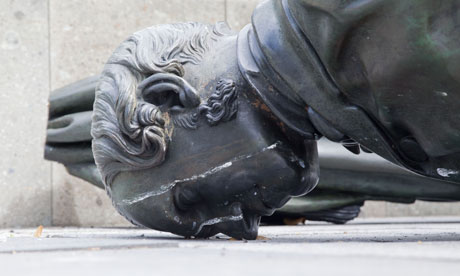
A chance reference in a book I was perusing yesterday reminded me of a fascinating historical figure whom I hadn’t thought about in decades—which still gives me an edge over most people, who have never thought about him at all. He is Jerome Cardano, or, in the Italian version of his name, Gerolamo Cardano, an archetypical Renaissance man from Italy who walked the earth between 1501 and 1576. When I first learned about him those many years ago, his remarkable life didn’t give me any ethical insights because I wasn’t thinking about ethics then. Now, reviewing the facts of his remarkable life, I find that it carries at least five lessons with value for anyone who strives to live in a more ethical culture, and to have his or her own life contribute to making the world a better place.

Lesson 1 : Diligence—Play the hand you are dealt the best you can.

Cardano’s mother attempted to abort him by taking various poisons, but succeeded only in making him unhealthy. He stuttered; he was incapable of sexual relations, and had chronic insomnia, supposedly resulting in an “annual period” where he got little or no sleep for two to three months. He was afflicted at various times with the plague, cancer, dysentery, and many lesser ailments, yet he led a life full of extraordinary accomplishments and adventures, and continued to be active and breathing for 75 years, when most of his class and era died before they reached 45. Continue reading →

Abuse of Government Power+ School Administrator Cowardice = Student Persecution

Enemy of the State.

Emma Sullivan, an 18-year-old high school senior at Fairway, Kansas’s Shawnee Mission East High School,  went with her class on a field trip to the Capitol and heard Gov. Sam Brownback speak. She tweeted her reactions to her Twitter followers, writing, “just made mean comments at gov brownback and told him he sucked, in person #heblowsalot”.

The part about making mean comments to the Governor was a lie, but on a scale of believability and damage done, not an especially momentous one. It was adults who turned this unremarkable student tweet into an ethics train wreck in three neat, unforgivable steps.

1. First, some over-zealous hack on the Brownback’s staff saw the tweet and complained to an administrator in the school district. This is a First Degree Ethics Foul. Nothing in Sullivan’s tweet brings it within his, the governor’s or the government’s legitimate concerns. For the staffer to complain was petty, vindictive and mean-spirited. Every second he spent on his vendetta was a waste of taxpayer dollars. Worst of all, he was bringing the power of the government to bear on a teenager for doing nothing more than expressing her opinion, which is that Governor Brownback sucks. I’m sure there have been foreign dictators who would punish a teen for doing no more than telling friends that she doesn’t like him, but I would have thought that someone who works in one of the United States governments would instinctively know that this kind of bullying mind-control isn’t allowed here. I was wrong. Brownback does suck, at least at picking staff. Continue reading →

A Pre-Thanksgiving Day Ethics Quiz: Young vs. Brinkley

The  following heated exchange occurred yesterday between Rep. Don Young (R-Alaska) and historian Douglas Brinkley, professor of history at Rice University during a Congressional hearing.

Your Pre-Thanksgiving Ethics Quiz:

Who was more uncivil and disrespectful, the professor or the Congressman?

Possible Answers:

A. Rep. Young

B. Prof. Brinkley

C. Both

D. Neither was out of line.

I think it’s a surprisingly close contest. Brinkley is obviously a pompous jerk, as he was outraged at being called by the wrong name and couldn’t wait until the Congressman had finished speaking before he interrupted him with a definite “you’re an idiot” snark to his correction. Young’s barked retort, ordering Brinkley to be silent as if Young were some kind of Medieval Duke talking to an impudent  peasant was an obnoxious over-reaction, and Brinkley’s response to that was appropriate indeed: the Congressman needs to remember who he works for.

With reservations, I’ll choose A. I expect history professors to be full of themselves; that’s part of their charm. Brinkley was out of line and rude to interrupt Young, but Young’s disrespectful attitude toward a member of the public is more offensive than Brinkley’s disrespect for a member of Congress.

They both acted like jerks.

Margaret Ann Haring Would Have Sent Elliot To Guantanamo Bay

Quick...call 911!

Luckily, when Elliot had that weird mind-link thing with E.T. while the little alien was watching “The Quiet Man” on TV, and not only let all the frogs loose in his biology class but planted a major league lipper on a pre-teen classmate played by Erika Eleniak (later to prove Elliot’s exquisite taste by becoming a “Baywatch” pin-up) when the Duke smooched Maureen O’Hara, it was before the days of “no-tolerance” policies, and Ms. Haring wasn’t his teacher.

Not so lucky was the female student in a real life elementary school, who impulsively kissed a boy during a physical education class at Orange River Elementary School in Fort Myers, Florida. Haring saw her student’s vicious sexual assault, and called child welfare officials, who, rather than telling her she was out of her frickin’ mind, directed her to contact the sheriff. The school then reported the pre-teen moment of passion as a possible sex crime, according to the Lee County Sheriff’s Office. Continue reading →

William Aramony and the Fallen Hero Dilemma

As he usually did, the extraterrestrial, mutant, collective or whatever he was William Shakespeare (no human could be that wise) had it exactly right, and a long time ago: “The evil that men do lives after them; The good is oft interred with their bones.” In a dispirited column on the CNN website, obviously inspired by the Paterno debacle, ESPN writer L.Z. Granderson writes that he has become afraid to watch the news, fearing that another of his heroes will be shown to be a fraud:

“And when we find out our gods are not perfect, we’re confused. We don’t know what to do with a storyline where the perceived protagonist is complex. Heroes aren’t supposed to do bad things. That’s what villains are for. So either the good supersedes the bad, or the bad makes it impossible to remember the good. We don’t like it when such duality exists in one person. We don’t want to know our heroes are human.” Continue reading →

Paterno, Hoover, and Jones’s First Law

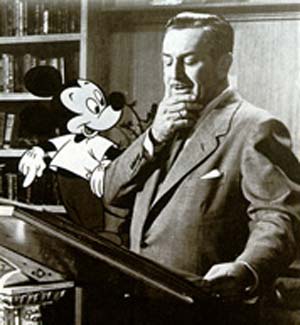
Would Uncle Walt have resisted the curse of Jones's First Law?

Jones’ First Law, one of many useful corollaries to Murphy’s Law (“Anything that can go wrong, will.”) is usually stated:

“Anyone who makes a significant contribution to any field of endeavor, and stays in that field long enough, becomes an obstruction to its progress – in direct proportion to the importance of his original contribution.”

This week was a good one for Jones (whoever he was; I can’t seem to find out) if not for the rest of us, because two classic examples of his principle were on display:  Penn State coach Joe Paterno, who managed to stay coach long enough to unravel his legacy and help lay the groundwork for an ethical, moral, legal, public relations, and financial catastrophe for the institution he had dedicated his life to, and J. Edgar Hoover, the subject of a newly-released Clint Eastwood directed film that shows how he too stayed long enough as the key figure of an institution he built—the FBI—to become an embarrassment to it. Continue reading →

My 15 Hollywood Cures For A Paterno-Penn State-Sandusky Hangover, Part 1

For this hangover, movies work better.

The past week, as much as any week within memory, has caused me to despair about the culture, the state of ethical values in America, and my own futile efforts to try to bring some light to the darkness. My mood was not only ravaged by the Penn State scandal (and Penn State’s students’ scandalous reaction to it), but also the continued drift and incompetence in our government and the lack of any apparent leadership or courage to address the problems of our economic system, other than to complain about them.

In such times—there have been others, though happily not many—my spirit urgently needs an infusion of inspiration and hope, and fast: as Al Pacino reminds us in “Scent of a Woman,” there is no prosthesis for an amputated spirit. This is when I turn to the movies that speak to me of courage, redemption, and ethical virtues validated. They are my lifeline; I can’t write or think about ethics from the bottom of a pit. I’ve got only a few days before Thanksgiving, after all. This is no time to be cynical and dubious about the course of humanity and the United States of America, a nation I love and admire.

Thus I am going to take a brief detour from the usual format of Ethics Alarms, with your leave and forgiveness, and share with you the fifteen movies that I will turn to as I try to recharge my enthusiasm, inspiration, and hope. Here are 1 though 7; the rest will be along shortly:

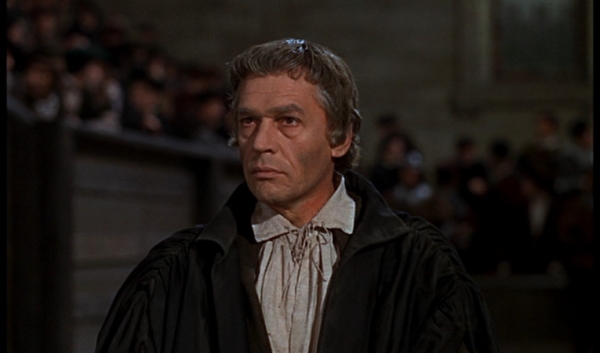
1. A Man For All Seasons (1966)

Hardly the most upbeat film to start the list, but probably the greatest ethics movie ever made.

Ethical issues highlighted: Integrity, honesty, courage, leadership, corruption, abuse of power.

Favorite quote: “Why Richard, it profits a man nothing to give his soul for the whole world… but for Wales?” [Sir Thomas More (Paul Scofield)] Continue reading →

Comment of the Day: “Mike McQueary and Me”

Some recent Ethics Alarms commenters

Joseph Edward bought me some time with this superb Comment of the Day, because I am writing a post on the same topic. Mike McQueary’s conduct in the locker room, when he allegedly witnesses Jerry Sandusky raping a boy,  has generated some of the most self-righteous and, I may say, annoying comments I’ve encountered on Ethics Alarms, characterizing my commentary (in “Mike McQueary and Me”) on why McQueary might have acted as he did with excusing his conduct. Most of these, I’m relatively certain, are motivated by those who want to shift responsibility for the Penn State debacle away from Joe Paterno.

One particularly persistent and vociferous commenter has decreed that it was an “absolute moral obligation” for McQueary to physically intervene to stop the assault he witnessed. Joseph touches on that dubious contention; I’ll have more to say about it soon. Meanwhile, here is his Comment of the Day, on “Mike McQueary and Me”: Continue reading →

Ethics Mystery: How Can Penn State Let McQueary Coach the Team For Saturday’s Game?

WHAT???

It is almost too weird to contemplate. Penn State has fired both its president and football coach Joe Paterno over their failure to take necessary measures to protect young boys who they knew were targets of what appears, and appeared to be, a serial child molester, Jerry Sandusky. Paterno was fired yesterday specifically to eliminate the pall that would be cast over all Penn State activities, including this Saturday’s game, if he were to continue as coach, and to make sure that the university didn’t project a “business as usual” attitude by allowing its community to blithely cheer Paterno’s team as if a child molesting scandal could be brushed aside for a weekend of fun and games.

And yet Penn State plans to have Mike McQueary coach the team on Saturday, rendering all of this incoherent. McQueary was the one who witnessed the act of sexual assault that triggered the whole scandal. He reported it to Paterno, but 1) didn”t stop it when he had the chance, and 2) did nothing to make certain that Sandusky’s criminal conduct was being properly handled afterwards. His presence as coach on Saturday all but eliminates whatever message Penn State intended to send by firing Paterno. The bottom line will be that the team will still be coached by an individual who didn’t do everything he could  and should have done to protect young boys from a predator. Continue reading →

Comment of the Day: “Ethics Dunces: Penn State Students”

“Different Angle,” a college student and victim of child abuse, has, appropriately enough, a different angle on the Paterno/Penn State/ Sandusky scandal, and it provides useful and provocative perspective. I’ll let him have his say, as it is extraordinarily well argued, and save my comments for the end. I think he is compassionate, generous, thorough, thoughtful, and wrong. But first, here is his Comment of the Day on  “Ethics Dunces: Penn State Students.”

“As a current college student, prior victim of child molestation, and generally reasonable person, I feel inclined to give my two cents. Having read the grand jury report personally, I am shaken. Unless you are familiar with the shame and humiliation of a situation like this–even if you are familiar–the sheer quantity of these attacks… beyond words. Had any Penn State staff understood the thoughts running through this man’s mind, this comment would’ve started “As a current toddler…” Anyone who knows that the sexual abuse of children is occurring and acts so callously as to downplay it and sweep it under the rug has no place in modern society. That’s as nicely as I can put that.

“With as much emotion and sympathy as I harbor for the young men who’ve endured through this, it pains me to read the bickering and finger-pointing I’ve encountered in comment threads like this. And while it is normally in my nature to grab my trident for a healthy round of devil’s advocate with the popular and most often intelligent opinion, I cannot help but side with Joe Paterno in this matter. I’m about as far removed from sports as a sociable college male can get; I will not rally for a few chants of WE ARE… at the end of this post. If you’re going to scrutinize the choices he made in reference to the 2002 incident, be thorough enough to consider this: He wasn’t thinking about slandering Sandusky, he wasn’t concerned about his career or standing in the community. The decision of if/when/to whom this should be reported wasn’t calculated with pro’s and con’s. Continue reading →