Our Woke Education Apocalypse Update: The Failure Of The “I Promise” School, And Other Horrors

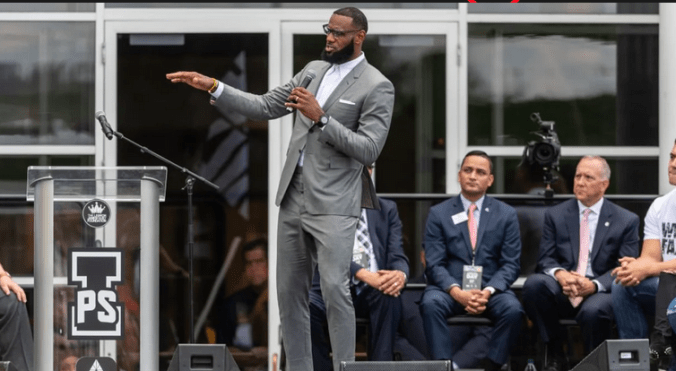
With great fanfare, NBA immortal LeBron James established the “I Promise charter school in 2018 to educate “at-risk” students. The I Promise School, which teaches children from 1st to 8th grade, promises:

With education as the driving force of change, the LeBron James Family Foundation is not only spreading that impact and improving lives of inner-city students and families, but also shifting the course of an entire community. Focusing on his hometown of Akron, the Foundation’s I PROMISE program provides year-round resources, access to opportunities, supportive skill development, constant encouragement and other wraparound supports to more than 1,300 Akron Public School students who have all been guaranteed college scholarships if they do their part. These efforts have culminated in the groundbreaking new public school – the I Promise School – that is taking an innovative approach to providing a challenging, supportive, and life-changing education, creating a new model for urban public education.

Soaring and inspiring words…it’s too bad that the Akron Beacon Journal reported this week that the 2023 “class of eighth graders at the I Promise School hasn’t had a single student pass the state’s basic math test since the group was in the third grade.” Moreover, “The state has also issued its first concern about the school: two of I Promise’s biggest subgroups of students, black students and those with disabilities, are now testing in the bottom 5% in the state, landing the school on the Ohio Department of Education’s list of those requiring targeted intervention.”

The response from those responsible? “Huminahuminahumina…” Stephanie Davis, the new principal of the school this year who was introduced as “the perfect person to lead the I Promise School and all of our families to the success we know they will achieve,” according to the school district, had no immediate explanation.
Continue reading →

Unethical Website Of The Month: American College of Forensic Examiners Institute

This post is juuust a little bit late. The website in question is still up, but has been involved in “website maintenance” for years, though promising to be back in “a few days.” It won’t be: GOOD. However, it is instructive to consider the saga of this epically unethical website in light of the recent revelation that the most famous forensic expert of them all, Dr. Henry Lee, used fake forensic evidence to help send two teenagers to prison for 30 years for a crime they didn’t commit. It is also useful perspective for the current fealty the political Left and the mainstream media wants Americans to pledge to “experts” who will explain why progressive policy cant just “follows the science.”

When it isn’t performing its tax-payer funded role as a progressive propaganda mouthpiece, PBS is still capable of doing valuable investigative journalism. In 2012, a notable example was the Frontline series called “The Real C.S.I.,” blowing the whistle on the forensic science racket then being extolled weekly on network TV as all-but-infallible. There were a lot of head-exploders in the series, among them that fingerprints might not be as unique as we have assumed, but one of the main discoveries in the series was that criminal trials all over the country were being influenced by “graduates” of the American College of Forensic Examiners Institute (ACFEI), an on-line diploma mill founded and operated by a shady entrepreneur named Robert O’Block. ACFEI would certify someone as a forensics expert essentially for cash, though there was an “exam” that had a more than 99% pass rate. PBS interviewed a reporter who took the exam and got her certification despite knowing little more about forensic science than the average “C.S.I Miami” fan. O’Block, meanwhile, had turned fake credentialing into an empire, with 14 separate certification scams. These in turn churned out an estimated 70,000 fake forensic experts who were routinely admitted as legitimate testifying expert witnesses by judges who accepted O’Block’s meaningless certificates as sufficient proof of expertise.

O’Block also sent one certification to a prison inmate and bestowed another on his cat. ACFEI was never recognized by the US Department of Education’s Distance Education/learning Department, or the Federal Trade Commission/FTC, but most of the time neither judges nor defense attorneys took the time to check.

In 2017, O’Block, then 66, fatally shot himself after killing his 27-year-old girlfriend. On the disciples of this pillar of rectitude and ethics did a substantial segment of the American criminal justice system and its juries place their trust as they sent accused American to prison.

Investigative reporter Radley Balko wrote in part upon the occasion of O’Block’s demise,

Continue reading →

Apparently “Bite Me!” In Response To Woke Pseudo-Social Science Research Is Facism

Frequent commenter Other Bill gets credit for the headline as well as the pointer to a telling, if ridiculous, story.

Oregon State University researchers had circulated a survey regarding LGBTQ students in STEM to engineering undergrads. As described in the scholars’ paper, published in the Summer 2023 edition of the “Bulletin of Applied Transgender Studies,” many of the students surveyed resented the questions about their gender as well as the premise of the research, and demonstrated their disapproval by entering gag and satirical responses to request for their gender and ethnicity.

Among the answers:

Continue reading →

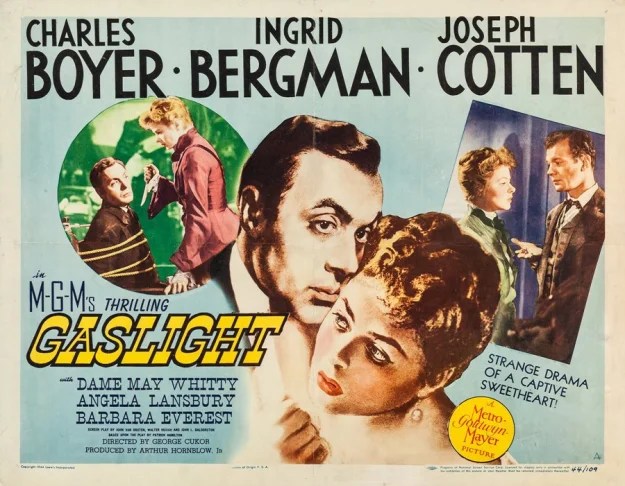
It’s Unethical For Democrats, the News Media And Activists to Gaslight The Public, But On The SCOTUS Affirmative Action Smack-Down, They Did It Anyway

The coverage of the recent rulings in Students for Fair Admissions v. University of North Carolina and Students for Fair Admissions v. Harvard almost universally created the impression that they were further attacks on democracy by a rogue Supreme Court, foiling the will of the people. In particular, these decisions blocking institutionalized institutional racist discrimination, which is what higher education affirmative action is, were assailed as creating disastrous hurdles to black Americans as they strive to succeed in this nation plagued by systemic racism.

Two recent polls show that this narrative was fake news from the news media and misinformation from the Left. A Rasmussen Reports national telephone and online survey found that 65% of “Likely U.S. Voters” approve of the rulings, with 49% approving “strongly”. Just 28% disapprove of the conclusion that the prohibition on discriminating by race means no discrimination by race. You can read how the questions were posed here. Another poll from YouGov/The Economist asked “Do you approve or disapprove of Supreme Court’s ruling on affirmative action?” Both sexes, all races, every age group, and every level of income approved more than not. (See here.)

Yeah, I know: polls. In this case, however, these easily manipulated surveys perform a service. The Supreme Court’s function does not and should not involve following the mob, but appealing to mob emotions has been a central strategy by progressives as they seek to de-legitimize the one branch of the government they don’t control. An accompanying myth is that the Roberts Court is an obstacle to “the will of the people,” even when, as in this case, the will of the people is supported by the Constitution and our laws.

Even after a concerted and ongoing effort to inflict Marxist goals, racial quotas and “good” discrimination on the culture, our core values have stood up to the propaganda siege—so far.

There is hope.

“Curmie’s Conjectures” #3: Confucius and the Fourth Circuit

by Curmie

Twentysomething years ago, a few months after completing my PhD, I got a phone call from my mentor in Asian theatre, who, upon learning job search wasn’t going as well as I might have hoped, asked if I wanted to teach a couple sections of the university’s Eastern Civilizations course.  I asked if I was really qualified to teach such a course.  His response: “You know something, and you can read.” 

Based largely on his recommendation, I got an interview for the position.  I made no attempt to conceal my ignorance of a lot of what I’d be teaching.  But the department had struggled with grad students who had lost control of their classrooms, and I’d taught full-time for ten years before entering the doctoral program; I got the job.  The head of the Eastern Civ program closed the interview with “There are some books in my office you’ll want to read before you start.”  I knew something, and I could read.

That’s relevant to my consideration of the recent ruling of the Fourth Circuit Court of Appeals in Porter v. Board of Trustees of North Carolina State University, in which a tenured faculty member claimed to have been punished for arguing against certain initiatives undertaken by his department.  I’m no lawyer, so there’s some legalese I’m not so sure about, and I have no interest in chasing down all the precedents cited by either the majority or the dissent to see if they really say what these judges say they say.  But I know something and I can read. 

More to the point, one of the texts I taught in that Eastern Civ course was Confucius’s Analects, which I had to get to know a lot better than I did previously in order to teach it to someone else.  One of the central tenets of Confucian thought was his argument against having too many laws, as no one could possibly predict all the various special circumstances surrounding every dispute.  Context matters; timing matters; motives matter.  Confucius’s solution was to turn everything over to a wise counselor (like him) who would weigh all the relevant elements on a case by case basis.  That’s not the way our justice system works, nor would it be practical, but it’s easy to see its appeal… in theory, at least.

Significantly, Confucius’s reservations about laws’ inability to anticipate all the possible combinations of circumstances are the first cousin if not the sibling of what Jack calls the “ethics incompleteness principle” which asserts that there “are always anomalies on the periphery of every normative system, no matter how sound or well articulated.” 

Continue reading →

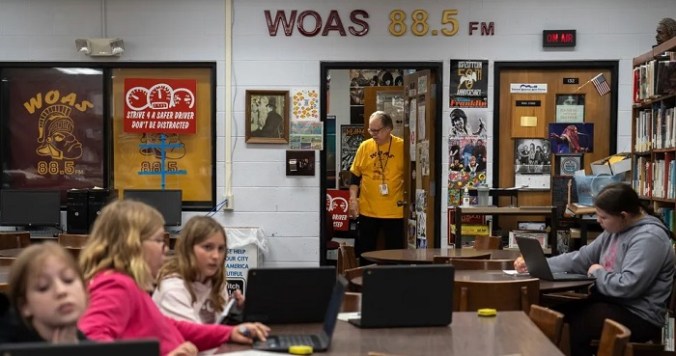
Of Local Radio, Law vs. Ethics, Ruthless Capitalism And “It Is What It Is”: The WOAS Saga

WOAS 88.5-FM is a high school radio station, one of only 200 remaining in the U.S., that has been broadcasting from the Ontonagon High School building in Michigan since 1978. It has only10 watts of broadcasting power, but is still one of only two radio stations in Ontonagon, on Michigan’s western Upper Peninsula. Not only does it provide some listening variety for the town, it also is a valuable educational and recreational vehicle for high school students. Two snack vending machines inside the school largely cover WOAS’s costs, and everyone is a volunteer. After school hours, members of the community volunteer their time as disc jockeys.

WOAS is a Class D station, the lowest FCC classification, covering low-power, noncommercial radio stations. These are considered too weak and disposable to warrant regulatory protection, so when unprotected” from other broadcasters, which can legally overpower its signal or simply apply to take over the station’s place on the dial. WHWL 95.7-FM, with10,000 times the broadcasting power of the school station, applied to the FCC to take over its frequency and place on the radio dial. The FCC said, “Sure! Go ahead!” granting a license for a new station on 88.5 FM, where WOAS lives. The high school radio station now has to find itself a frequency, which costs money, or go gently into that good night.

When the high school asked the radio giant why it chose its place on the radio dial to invade, the answer was classic Bill Clinton: it did it because it could. The big station said it needs to expand and FCC rules allow them to just take over. A consultant looked at available frequencies available to WHWL to add stations, and it deemed 88.5 FM “the best.”

The fact that a high school was currently operating from there was not, apparently, part of the equation, or considered at all.

Continue reading →

A.I. Ethics Updates

1. Apparently Alexa and its ilk are causing heartburn among legal scholars. How should conversations over-heard by virtual assistants be treated when they are offered as evidence in court? Among the analogies that are being run up the metaphorical flagpole is a comparison with …parrots, as an eavesdropper who can accurately repeats information it overheard but was not expected to disclose. Courts have refused to admit testimony by parrots. In one case, a parrot named Max repeatedly cried out, “Richard, no, no, no!” after the murder of his owner. The defense attorney in the case wanted to have this evidence admitted the accused murder’s name was Gary. The attorney argued, unsuccessfully, that the “testimony” was not hearsay, but rather like a recording device. Despite expert testimony that that breed of parrot had the ability to accurately repeat statements, the evidence was excluded.
In another case, Bud the Parrot, began incessantly repeating, “Don’t fucking
shoot!” after one of his owners shot the other.

Continue reading →

“Nah, Colleges Don’t Indoctrinate Students! It’s A Conspiracy Theory!” Brown Replies, “Hold My Beer!”

The Washington Examiner reports that 40% of Brown students now identify as LGTBQ+. The Brown Daily Herald’s 2023 Spring survey revealed that 38% of students, more than five times the national rate, no longer consider themselves “cis.” The gay and lesbian population has increased by 26% and the percentage of students identifying as bisexual has increased by…wait for it!… 232%. Just eleven years ago, in 2010, only 4% of Brown University students said they were not conventionally heterosexual. Now it’s 38%.

Commenting on this phenomenon at the Victory Girls blog, Lisa Carr writes in part,

The new “cool kids” now are changing their names every other day, along with changing their identities to anything contrary to their biological sex. Joe becomes Joelene who is dating Mary who wants to be known as “Mike”. Mary is nominated for Homecoming King while Joe is the Homecoming Queen; both in their gender-fluid and ambiguous outfits. And yes, they are probably still wearing those filthy, ugly masks because society told them to stay scared. (But alas, don’t be scared to cut off your genitalia.) This is the new cult. This is the trend we are seeing in colleges but I would argue that this seed is being planted as early as elementary school….This is no longer about loving and accepting all. This is about subtle conversion by suggestion.

Apparently a Brown professor, Dr. Lisa Littman, argued that campus culture and peer groups were pressuring students into such epiphanies regarding their true sexual identities, and got herself fired for it. Continue reading →

Small Victories: Relentless Ridicule Beats Back Ludicrous Wokeness At Brandeis

There is hope!

Brandeis University in Massachusetts published one of those “Oppressive Language” lists, telling students that phrases and words like “ladies and gentlemen,” “policeman,” “picnic,” “people of color,” “rule of thumb” (don’t ask me!) were offensive to somebody, and should be avoided. Also “Take a stab at it,” “trigger warning,” and “beating a dead horse” (Too violent!), and “African-American,” “long time no see,” “lending a deaf ear,” and “handicapped space”.”” (Identity based!) Other examples include “Homeless person, “powwow,” “picnic,” “freshman,”and “mentally ill.”Once the list was publicized, the mockery sent Brandeis’s way was relentless, as well as deserved, even though the taboo list eventually had a disclaimer that the web page “is not a university expectation, requirement or reflection of policy.”

That didn’t help. Making the university look especially silly as well as hypocritical was Campus Reform’s report in June 2021 that Brandeis was still using many of the phrases and terms on the BadSpeak list. “Freshman” and “picnic,” for example, were still turning up in articles, blogs, and department materials. The Brandeis University Teacher Education Program Handbook also used the term “rule of thumb!”

Campus Reform reported last week that Brandeis quietly took down the list.

In Which Your Host Loses His Oldest CLE Organization Client For Telling The Truth

I and my ethics training company just got cancelled by the Continuing Legal Education organization that was my very first client when we started ProEthics over 20 years ago. Our seminars have always received top evaluations from lawyer attendees; nos small achievement in the legal ethics field. They also have made our long-time partners a lot of money. We had never needed to re-negotiate our arrangement, and my state tour with a new legal ethics program was a yearly occurrence every fall. This year, however, we had heard nothing about future dates or requests for possible program ideas (I have introduced most of my musical legal ethics seminars with Mike Messer with this group), and it was getting a little late. Grace sent an inquiry to the long-time contact who has handled our programs, and got back a stunning, “We have decided not to use you this year” letter. One shocking realization was that it was clear from the letter that the decision had been made long ago. After two decades, the organization did not have the courtesy to let us know about their decision, or to discuss their concerns with me before making it.

Even more shocking was the reason given for our dismissal. Last year, as I faced very small in-person groups with most of the attendees watching via Zoom, I made a point of thanking and congratulating those who made the effort to come in person, and urging those who had not to remember that remote training is not as effective as in-person training, and that ethics in particular was a topic in which interaction and engagement were crucial, features that are difficult to impossible using Zoom. This, we were told in the letter, did “not respect those who work diligently within our own Distance Education Department to provide remote options for attorneys.”

I did not denigrate the staff at all; I didn’t even know the organization had a Distance Education Department. What my comments did do, and appropriately so, was to alert lawyers to something they need to know. CLE isn’t just for getting mandatory credits. It is supposed to make lawyers better. Most data indicates that remote training with Zoom or similar methods don’t do the job: they are convenient, and lawyers like them because they can rack up billable hours and write emails while turning off their video and pretending to pay attention. But just as with children whose learning crashed with the substitution of distance learning for live instruction, lawyers are cheating themselves, their clients and the profession by undergoing CLE Lite when they should be challenged in a classroom.

Continue reading →