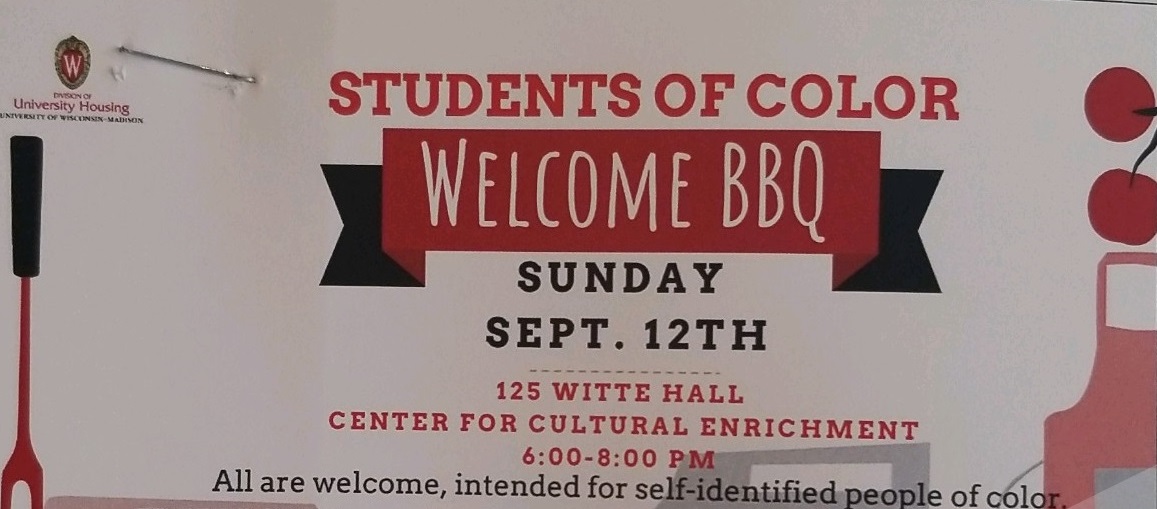
That flyer above may tip-toe through the legal tulips adequately (though I would love to see it challenged), but it stomps its way through the garden of ethics.
The University of Wisconsin-Madison will host a “Welcome BBQ” on September 12, four days after the start of the academic year “intended” only for students of color. White, like everyone else, are “welcome,” of course, but they have been warned that the event isn’t “intended” for them. “We don’t want you white devils to come, but you’re ‘welcome’ if you do.” Boy, I bet the legal staff worked long and hard on that wording. They should have worked harder. If a “welcome barbecue” is only intended for one type of student, how are other students still “welcome”?
“We regret that this happened and have discussed it with Paragon, which secured the matchup and handles the majority of our high school event scheduling. They have ensured us that they will take steps to prevent this kind of situation from happening moving forward.”
What was “this kind of situation”? Oh, just a national sports network televising a high school football game between one of the the top teams in the nation and a fake team fielded by a fake high school. That’s all.
On Sunday, ESPN broadcast a high school football game between featuring Florida’s IMG Academy, one of the top rated teams in the country, and Ohio’s Bishop Sycamore, an obscure high school with a team nobody has written about or paid much attention to. ESPN had been assured by Bishop Sycamore—schools get compensated when their teams’ games are televised– that its football squad was stacked with top players. Uh, no. This was a primetime match-up on ESPN, but nobody there did any due diligence to check on the juggernaut IMG Academy’s competition. IMG won by the heart-pounding score of 58-0. The broadcasters were reduced to telling funny stories and expressing concern that the Bishop Sycamore players were at risk of serious injury.
American University in Washington, D.C. has a course called AUx2 which freshmen must take. Students will learn about “race, social identity, and structures of power.” In the course, students “evaluate how racism intersects with other systems of oppression.”
The campus paper, “The Eagle” reports that the university has all-Black sections in the course, and has since last year. “We’ve definitely heard from Black students and other students of color that the material can be a lot for them because it is part of their lived experiences,” Izzi Stern, the AUx program manager told the student newspaper. “And we wanted to create a space where they could be together in community and have an overall positive experience with the course.”
On the university’s webpage, a former AUx2 student says, “The AUx Program is fundamentally shifting the culture, and students, of American University, while simultaneously fulfilling the institutions’ commitment to social justice and equity. I could not be more enthusiastic about my support for the transformative impact of the AUx2 course.” A sophomore at American University told the paper that “having an all-Black space truly changes the way you interact in that space and the level of comfort you feel.”
Tomorrow at 9 am, I’ll be launching the latest ProEthics musical CLE (Continuing Legal Education) seminar for the New Jersey State Bar. It’s called “Legal Ethics Serenade,” and is being zoomed. As with my other musical presentations, the great Mike Messer accompanies himself on guitar and occasionally other instruments as he belts out parodies of rock and pop classics retooled to raise complex legal ethics issues. Mike has been my muse for more than a decade. This time, he’ll be doing versions of “I’m a Believer,” “Oh Darling,” “Hello Mary Lou!,” “50 Ways to leave Your Lover,” “I’d Like To Teach The World To Sing,” “Why Don’t We Di It in the Road?,” Elvis’s “Are You Lonesome Tonight?,” “You Were Always On My Mind,” and “Take Good Care of My Baby,” all followed by legal ethics musings by me, and, I hope, lively debate.
If any readers are New Jersey lawyers in search of ethics credits, the information is here.
Here I am, always desperately searching for positive ethics stories, and there was a great one sitting for two months in my “Read This” file…
Verda Tetteh, a 17-year-old Fitchburg, Massachusetts high school senior, was already accepted into Harvard (poor kid!) which is going to pay her tuition, room and board. She also had qualified her other scholarships that would cover her college expenses. Her guidance counselor still urged her to go for another one, the $40,000 local award called “The General Excellence Prize.” Every year the prize goes to one male and one female student selected by a committee of teachers, administrators and guidance counselors
Verda applied to shut him up, essentially, assuming she would never win. But she did. She found out at her graduation ceremony on June 4, when the assistant principal of Fitchburg High School announced to the audience that she was the winner. Surprised, she accepted the award, thought hard as she walked away, then turned and walked back to the podium.
“I am so very grateful for this, but I also know that I am not the one who needs this the most,” Verda said, her voice shaky. “I would be so very grateful if administration would consider giving the General Excellence scholarship to someone who is going into community college.”
Her fellow classmates and the crowd rose to give her a standing ovation.
Don Everly has died, and that’s the end of the Everly Brothers (Phil died years ago), one of the most influential and perhaps the most harmonious singing group of all time. The unique sympathetic vibrations that only sibling singers seem to be able to achieve is a marvelous metaphor for the ethical benefits of teamwork and trust.
This date also marks the demise of another famous duo: despite worldwide demonstrations in support of their alleged innocence, Italian-born anarchists Nicola Sacco and Bartolomeo Vanzetti were executed for murder in Massachusetts in 1921 .On April 15, 1920, a paymaster for a shoe company in South Braintree was shot and killed along with his guard. The murderers, who escaped with more than $15,000, were described by witnesses as two “swarthy Italian men.” Sacco and Vanzetti were arrested and charged with the crime. The men carried guns and lied to the police, but neither had a previous criminal record, and they definitely didn’t get a fair trial by modern standards. Prejudice against Italian-Americans was strong, and suspicion of anarchists was stronger. The pair was convicted on July 14, 1921, and sent to the electric chair on August 23.
A TV dramatization of their case, written by Reginald Rose (who authored “Twelve Angry Men”) made a huge impression on me as a child, and sparked the first stirrings of my interest in the law. In 1961, a test of Sacco’s gun using modern forensic techniques proved that it was his gun that killed the guard; he, at least, was guilty, but there was little evidence to implicate Vanzetti in the killing. To make this ethics train wreck complete, Massachusetts Governor Michael Dukakis ignored the evidence of Sacco’s guilt and issued a proclamation exonerating both Sacco and Vanzetti and proclaiming that no stigma should be associated with their names.
Typical of Dukakis.
1. Accountability? What accountability? “Sources”—and I stipulate that un-named “sources” are untrustworthy—tell various news outlets that “President Biden isn’t inclined to fire any senior national security officials over the chaos in Kabul unless the situation drastically deteriorates or there’s significant loss of American life.” That sounds as likely as it is depressing. The reluctance of American Presidents to fire subordinates for gross incompetence has become the norm rather than the exception, and the trend ensures that our government, whoever is the President and whatever party is power, will continue to decline in competence and trustworthiness. Consider President Bush’s refusal to fire any of those responsible for the botched intelligence regarding Iraq’s WMDs, and later Abu Ghraib, or my personal favorite, Barack Obama’s refusal to acknowledge the gross incompetence of Kathleen Sebelius, his Secretary of Health, after her inexcusable reliance on a flawed website to launch the Affordable Care Act.
Dumber still is the qualification “unless the situation drastically deteriorates or there’s significant loss of American life.” Morons. Morons! Whether the situation gets worse or not is pure moral luck; it doesn’t change the utter incompetence of the Afghanistan abandonment. Imagine a babysitter who gives a toddler knives to play with, and a parent whose reaction is, “Well, the kid wasn’t hurt, so there’s no reason to fire her.” That is literally what the reasoning at the White House is…if “sources” are accurate.
[I had to get up extra-early to wrote this, since there’s no point writing a warm-up once the thermometer tops 80.] Amusing historical ethics note: on August 21, 1980, animal rights advocates Ingrid Newkirk and Alex Pacheco launched PETA, People for the Ethical Treatment of Animals. In the intervening 40 years, it has become the preeminent animal rights organization in the world, in part because it will do almost anything for publicity. It is also consistently the most ridiculous animal rights organization in the world, and on Ethics Alarms, in a lively battle with Citizens for Responsibility and Ethics in Washington as the most hypocritical and unethical non-profit with “ethics” in its name. The PETA ethics rap sheet is here. When last discussed on Ethics Alarms, PETA was protesting using animals as metaphorical insults because it perpetuates “speciesism.” Jackasses…
From the suddenly overstuffed “Incompetence” Files…Mike Richards, the executive producer of “Jeopardy!” who made himself one of the show’s new hosts in a breathtaking display of conflict of interest contempt, lasted less than a week in his new job. Controversial comments he made on a podcast from 2013 “resurfaced,” officials at Sony Pictures Television confirmed. That means someone who didn’t want him to have the job did a maniacal search to find something that would force him to resign. This is, essentially, the Hader Gotcha, and a rotten, Golden Rule-breaching thing to do to anyone unless they are running for office and pretending to be someone they are not. At least Richards recognized that his duties as executive producer required that he dump himself once he became an anchor on the show he has a duty to protect.
The allegedly cancel-worthy comments Richards made came when he was trying to imitate Howard Stern—imagine that as a life objective—by hosting a podcast called “The Randumb Show.” Naturally, this involved saying sexist and racially insensitive things like Howard and Don Imus, who not too many years earlier were still considered witty and brave in their political incorrectness. He refered to a woman’s “boobies.” He said that he aspired to be a “white guy host” like Ryan Seacrest. Salon, which is always a barometer of just how nuts the far left has become, pronounced l such sophomoric banter “alarming.” I know I was terrified when I read them.
2. If this doesn’t provethat our news organizations are worthless, nothing will. U.S. District Judge Miranda Du, a federal judge in Nevada, struck down as unconstitutional a longstanding statute that makes it a crime to return to the United States after deportation. Here reasoning is that the law is racist and discriminatory against “Mexican and Latinx individuals.”
“The record before the Court reflects that at no point has Congress confronted the racist, nativist roots of Section 1326,” Du wrote in her ruling.“The amendments to Section 1326 over the past ninety years have not changed its function but have simply made the provision more punitive and broadened its reach,” Du wrote.
Ah, those heady days when the U.S. felt ethically justified in toppling governments it didn’t approve of, and “nation building” was still considered practical and virtuous. Today marks the anniversary of the U.S. overthrowing the government of Premier Mohammad Mosaddeq and reinstalling the Shah of Iran in 1953, The Shah was a torturing, oppressive autocrat, but he was our torturing, oppressive autocrat for 26 years, a dependable anti-Communist ally of the United States until a revolution ended his rule in 1979. You should know the rest. Wonder why Iranians aren’t crazy about the U.S.? Today is one big reason. Also on the ethics regrets list is the release of the West Memphis Three on this date in 2011. I wrote about that one here. An excerpt:
“In an ethical system, prosecutors would have made certain the wrongfully convicted men were freed, without any further adversary action. But this was not an ethical system. Instead, prosecutors insisted on a bizarre plea deal in which the Memphis Three agreed to take an Alford plea, a strange, dishonest and much criticized guilty plea in which a defendant essentially lies to avoid an otherwise unavoidable unjust punishment. With an Alford plea, the prisoner or defendant asserts he or she is innocent, but acknowledges that the prosecution has sufficient evidence to prove guilt beyond a reasonable doubt, and thus acknowledges legal, though not actual, guilt. Prosecutors insisted that all three men plead “guilty” in this fashion in order to agree to release them with time served. The judge accepted the deal. Now Echols, Baldwin and Misskelley are free, their lives all but ruined by 18 lost years, thanks to a rotten system. The news media for the most part didn’t bother to explain why the terms of their release was just one more gratuitous assault on their existence by Arkansas legal hacks.”
I’m sorry today reminded me of this case. It still upsets me to think about it.
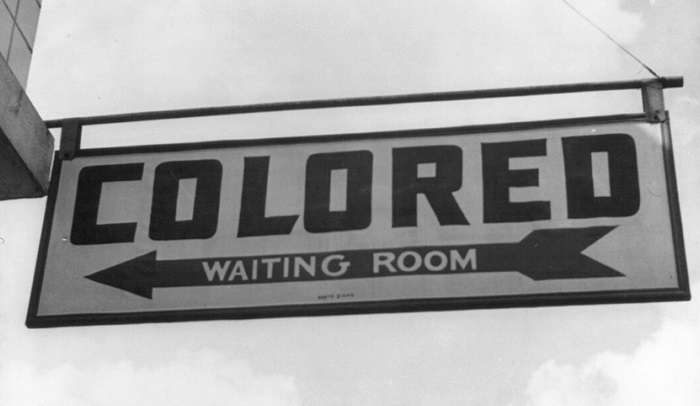
1. Here’s evidence that the current complaints of antiracism propagandists is a crock: Denzel Washington. I’ve been watching a lot of his movies lately, and a comparison with Sidney Poitier is unavoidable. Poitier was the ground-breaker, the black man who became a genuine movie star in a majority white market, and more than that, did it by holding up the racism and discrimination in American culture for all to see. Nonetheless, he was limited by his race. Poitier always played character’s whose race was central to their roles in the plot. He never played a villain: like many stars, like John Wayne, Cary Grant and Clark Gable, he regarded his career as a continuous work exploring a particular archetype in all of its facets. For Poitier, it was that of the outstanding black man as an outsider in American society. In Poitier’s amazing year of 1967, he was in three hit movies: “In the Heat of the Night,” “Guess Who’s Coming to Dinner?,” and “To Sir, With Love.” All three featured Poitier as a black man thrust into a biased white environment, and gradually earning respect and some measure of equality. Today the #1 black star is Denzel, and he doesn’t have to play such sanctimonious roles. Race plays a part in many of his movies; he has even played black civil rights activists, like Malcolm X and Hurricane Carter. Washington, however, in part because of Poitier’s work, often plays parts that were written for white actors, and nobody cares. He isn’t afraid to play flawed characters and even brutal ones, like in “The Equalizer.” Washington’s success, and the versatility and range he is allowed to explore in his movies, would have been impossible in Poitier’s prime years. His body of work is proof of how far American attitudes toward race have advances and how unfair and dishonest the Black Lives Matter/ Critical Race Theory narrative is holding that the Jim Crow culture still rules America.
Denzel is also better than Poitier, although it is fair to say that Poitier never had the option of being as versatile as Washington. If Sidney Poitier is cinema’s Jackie Robinson, Denzel Washington is its Willie Mays.
This is right up there with Robert Ripley’s discovery of “the Lighthouse Man,” a Szechuan eccentric who drilled a hole into his skull so he could carry a lit candle on his head to light the way through dark passages. After all, Ted Lieu (D-Cal) has already proven himself to be unbelievably awful, with a series of unbelievable statements (and I’m sure I’ve missed a lot). In 2018, for example, he told CNN host Brianna Keilar, among other things, “I would love to be able to regulate the content of speech.” Ethics Alarms named him the Incompetent Elected Official of the Month back in 2011, when he was just a humble State Senator. Naturally, by the consistent logic of California voters, this distinction meant he was ready for the big time, and should be sent to Washington. He was, and racked up two more Incompetent Elected Official awards and an Ethics Dunce. Lieu would be a legitimate feature in several Ripley strips: for example, he is not the dumbest member of Congress. Believe it or not!
He’s probably not the most unethical either, despite this news: Lieu contributed $51,046 to his alma mater, Stanford University, shortly before his son was admitted. Not only did he do this while the “Varsity Blues” celebrity college admissions scandal was being roundly condemned, but according to reports, the bribe was came out of Lieu’s campaign funds.
Here is an issue from Julythat I never had time to write about…
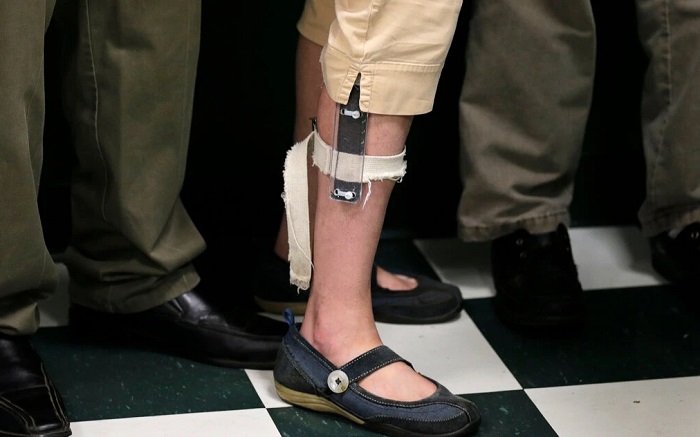
In a 2-1 opinion, the U.S. Court of Appeals for the D.C. Circuit overturned a Federal the ban on the use of electric shock devices to modify destructive or otherwise problematic behavior by students with intellectual disabilities. The Food and Drug Administration sought to prohibit the devices in March 2020, saying that delivering shocks to students presents “an unreasonable and substantial risk of illness or injury.” The court ruled, however that the ban was a regulation of the practice of medicine, which is beyond the FDA’s authority.
The now banned ban only affected a single school, the Judge Rotenberg Educational Center in Canton, Massachusetts. It is the only facility in the United States that employs the shock devices to correct self-harming or aggressive behavior. The center serves and houses both children and adults with intellectual disabilities or behavioral, emotional or psychiatric problems.
What ethics approach do we use to assess such a practice?





 Ethics Alarms