Comment Of The Day (1): “Public Confidence And Trust (1): Observations On Gallup’s Trust In Occupations Poll”

My post on the Gallup poll on public trust in various occupations and professions strayed into Charles Green’s wheelhouse, and the resulting home run comment enlightened us regarding why nurses keep “winning” the poll as the most trusted year after year after year.

Here is Charlie’s Comment of the Day on the post, Public Confidence And Trust (1): Observations On Gallup’s Trust In Occupations Poll:

Speaking just to the nursing angle: my work on trust has involved a diagnostic tool, the TQ (Trust Quotient), a self-assessment of the four components of trustworthiness in the Trust Equation:
(Credibilty + Reliability + Intimacy) / Self-Orientation.

70,000 people have taken it, and three results stand out above all others.

First, women are more trustworthy than men – a finding confirmed by informal polls in 397 out of 400 groups I’ve presented in front of.

Second, the most powerful factor of the four (defined as the highest coefficient in a regression equation) is Intimacy.

Third, the bulk of women’s outscoring men is their higher score on the Intimacy factor (again, intuitively true to the vast majority of groups I ask).

It’s in this context that I note the Gallup work (and other pollsters) finding of nursing at the top of the heap every year but 2002 (which was, not coincidentally, the year after 9/11 – and a year in which firemen, if only for that one year, took over the top spot.

Nursing is an 89% female profession. I ask my audiences, “Which of the four trustworthiness factors do you think nurses most embody: credibility, reliability, intimacy, or low self-orientation?” Most pick intimacy (with low self-orientation a frequent second).

Add ’em up: female, Intimacy, nursing – it’s a trifecta. Continue reading

Morning Ethics Warm-Up, 1/6/2018: The “Too Sick To Come Up With A Good Headline” Edition

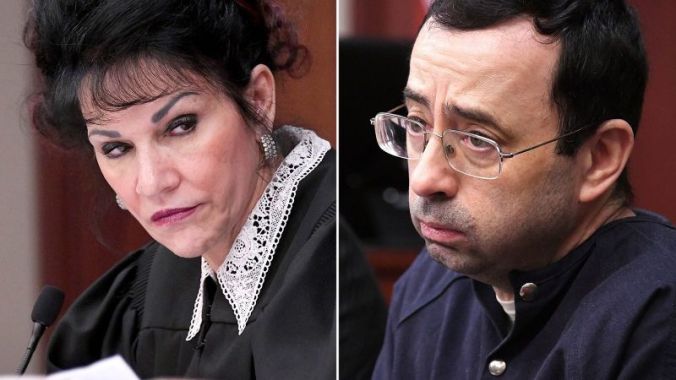
He’s lucky: he has hair...

Good Morning!

1 A solution to a perpetual problem. I do the mandatory introduction to legal ethics for two jurisdictions. Both are early in the morning,and both have courts monitoring them, insisting that to get credit, attendees must be present for every second of the course. The problem: late arrivals. One of my jurisdictions had a tendency to let late-comers in if it’s just a few minutes, but sometimes it gets ridiculous. Once the line is blurred, when does it get hard again? I have sen the administrators tell a lawyer that she is absolutely the last one who will get a break, only to see another late comer burst through the door panicked, upset, and with a doozy of an excuse…and then another, and another. This is especially ironic because lawyers are ethically required to be on time to court, or else.

In my other jurisdiction, they deal with the problem by absolute enforcement. 30 seconds late, and you have to come back next month. It doesn’t matter why, it doesn’t matter where the lawyer came from (one had flown in from Seoul and was two minutes late). If you arrive after the doors are closed at 9 am sharp, you can’t get credit. This, as you might imagine, often sparks tantrums, tears, threats, and “Do you know who I am?” One furious attendee actually cast a curse on every bar employee in sight. I’m talking about a real curse, right out of the movies, pointing and chanting. Some months we have had more than ten latecomers in the lobby, acting like an angry mob, and threatening a riot.

This jurisdiction has solved the problem by recently telling all who need the course on the bar website and  in email messages that the program begins at 8:30 am, when it really doesn’t. In other words, the solution is a lie: if someone arrives at 8:59, there’s no problem.

Is this ethical?

2. Oh, this was obviously going to be an ethics rain wreck long ago. AG Sessions announced that the Justice Department would not be following the Obama Administration’s policy regarding federal anti-pot laws—which is to say, it would not signal that it wouldn’t enforce the law. As a result,  Corey Gardner, Republican Senator from happily stoned Colorado, announced that he would block any appointments to Justice until the Department charged with enforcing laws agrees to stop enforcing laws. What Sessions did is not the draconian reversal it has been represented as by the Angry Trump Hate Mob, Stoner Chapter. Read the order from Sessions here.

Never mind. Following the lead of California, which has officially announced that it will encourage breaches of the immigration laws, now Colorado wants to impede the functioning of national law enforcement to force the federal government to let another state veto drug laws. This is what we call “a dangerous and irresponsible trend.”

3.  The Tragedy of Joanie Cunnningham. The New York Times Magazine ended the year with biographical sketches, including the sad story of Erin Moran, aka Joanie Cunningham on “Happy Days,” who died of cancer in 2017. It’s an all-too-typical story of a child star with a dysfunctional family who grew up on a set without ever receiving the parenting and support she needed to be able to become a functioning adult. I knew about Moran’s problems after the show ended; I did not know that her bitterness about her fellow cast members stemmed from her feelings as a child that her TV family was a substitute her real family, and that they failed her. Of course, the Cunninghams, Fonzie, Ralph and Potsie had no duty to become Moran’s surrogate family, but I am not surprised that a child actor would feel this way, especially one who was  being neglected and mistreated at home the way Erin Moran apparently was. Interestingly, child actor advocate Paul Petersen has said that his TV mom and dad, Donna Reed and Carl Betz, did act as his surrogate parents in important and beneficial ways.

I continue to believe that using child performers before the age of informed consent is unethical. Continue reading

Grace In Disaster: Daniel Bard, Ethics Hero

It’s freezing, and I’m sick, so naturally my thoughts travel to warm summer nights at Fenway Park. Daniel Bard just retired. It gives me something different, and inspiring, to think about.

If you’re not a Red Sox fan or a dedicated baseball follower, you have no idea who Bard is. He was a relief pitcher, a set-up man, who could throw nearly 100 mph in the days, not long ago, when almost no pitchers did. Through August of 2011, his third major league season with Boston, Bard had appeared in 181 games with  a 2.42 ERA, and .186 batting average against him. The Red Sox went 123-58 in the games in which he pitched. In 186 innings, Bard struck out 202 of the batters he faced. A young man in his mid-20s, Daniel Bard could look forward to stardom, glory, celebrity, and millions and millions of dollars.  Then, suddenly in September of that year, he lost it all.

Nobody took special note, even though his ineffectiveness down the stretch was major reason for the epic Red Sox collapse that shook the franchise and led to the exodus of the team’s popular manager Terry Francona (now the very successful manager of the Cleveland Indians) and its boy genius GM, Theo Epstein, now the architect of the suddenly championship caliber Chicago Cubs. Bard was just tired, everyone assumed. There was no apparent injury; nothing had changed. But the next season, Daniel Bard couldn’t throw as hard consistently as before, and more alarming still, he couldn’t get the ball over the plate. Suddenly, he wasn’t a good or even a barely acceptable major league pitcher any more; indeed, he was a dangerous one, hitting a batter or two almost every inning, along with lots of wild pitches and walks.  By June, he was back in the minor leagues. Bard’s control got worse, and he sunk lower and lower into the low minors. Boston papers would report outings with unbelievable line scores: 2 innings, eight walks, four hit batters, five wild pitches, or worse. Bard tried surgery, meditation, mental coaches,, psychologists, changing his delivery.  He was still young, so team after team gambled that they could get him back to his All-Star form–Texas, the Mets, Pittsburgh, St. Louis and the Cubs. Bard kept trying, and failing. Continue reading

The Democratic Leadership Apparently Endorses Beating Up People Whose Opinions They Object To. Good To Know!

Rep. Keith Ellison (D-Minn) posted a photo of himself on Twitter  posing with the book “Antifa: The Anti-Fascist Handbook.” The book calls for violence as a tool of political advocacy. Ellison’s post said the book should “strike fear into the heart” of President Donald Trump. This guy, the only Muslim in Congress,  is the deputy chair of the Democratic National Committee. It drew pushback from Republicans who have criticized the movement’s at-times violent disruptions of speaking engagements and white supremacist rallies. After receiving well-deserved criticism, Ellison’s spokesman Karthik Ganapathy said that Ellison has not read the book, and has espoused nonviolence throughout his career. Do you believe that? Why would he appear to endorse a book he hadn’t read? Surely he knows what the antifa is and what they do.

The CBS outlet in Ellison’s home state wrote that the tweeted endorsement “drew pushback from Republicans who have criticized the movement’s at-times violent disruptions of speaking engagements and white supremacist rallies.” No Democrats think that their party’s leadership endorsing a group that wears masks and acts like brown shirts deserves criticism?

Stop me if you’ve heard this before, but most of the news outlets reporting that a high ranking official of the Democratic Party advocated violence and a domestic terrorist group were among the so-called conservative press. The New York Times, for example,  did not view this as news fit to print, since, I surmise, it might tip off the public prior to the 2018 elections that there is, in John Dean’s words, a cancer growing on the Democratic Party. One of many, in fact. Continue reading

Great, Now I Have To Defend Bill Maher…

Bill Maher (that’s alleged comic Bob Saget as his “victim”) tweeted out a perfect parody of the infamous photo that triggered the demise of Al Franken, because his own party was fully committed to a sexual misconduct witch hunt, and they thought it might even lead to a successful execution of Plan J, to cancel out the election of President Trump.

Surely you remember the photo…

If there ever was a photograph and a situation begging for satire, this was it. The original photo was a gag that unethically used a sleeping young woman as a prop. Franken handled his apology badly. Then he set himself up as fair game for mockery by weasel-wording his way through the subsequent accusations of sexual harassment and groping, some of which occurred while he was Senator. Finally, he capitulated to a due-process-defying mob led by feminist vigilante Kirsten Gillibrand, and resigned his Senate seat in a snit. Later, Democratic Senators expressed doubts about their knee-jerk attack on Franken, but it was too late. The whole scenario was ludicrous. Ludicrous public events deserve mockery. [ The original version of this sentence read “pubic.” It was a typo, I swear. Thanks to reader crella for the heads up.]

Yet Maher’s tweeted gag is being widely condemned on social media, on a variety of theories, all bad. It’s “too soon,” some say.  Maher is a current events satirist: it’s never too soon. It’s wrong to joke about sexual harassment, others say. Who makes these rules? If the target is President Trump, about seven TV comics feel that they can joke about harassment, senility, nuclear war and incest. Then the ultimate declaration: It’s not funny. No, it’s not funny to those who don’t think it’s funny. It IS funny to those who do think it’s funny, and that’s all a comic cares about. For the record, and I loathe Bill Maher, I laughed out loud. Continue reading

A Vermont State’s Attorney Prosecuted A College Student For An Overheard Phone Call. Why Is She Still Employed?

In October of last year, police charged Wesley Richter, a University of Vermont continuing education student, with disorderly conduct after university officials said he used “explicitly racist and threatening language” against black students and diversity initiatives on campus. Richter was overheard in a phone call with his mother, though exactly what Richter allegedly said has not been made public.unknown. Of course, what he said doesn’t matter, unless he was planning a crime, which he was not. He was talking to his mother, and a student who overheard the discussion took offense at what was said. Richter, through his lawyer, denied saying anything racist, but again, it doesn’t matter. Saying racist things in a phone conversation cannot be a crime. It’s bad manners. It’s disrespectful to those listening. A school may be able to justly find some kind of violation to a reasonable and neutral civility code involving words but not content. But an overheard phone conversation cannot be a crime. It is mere words.

Nevertheless, the University of Vermont, the University of Vermont Police Department and the Chittenden (County) state’s attorney’s office in the person of Sarah George, the State’s Attorney, prosecuted the case against Richter. George is a graduate of the University of Vermont Law School, where presumably they taught constitutional law. There is no excuse for this.

Richter’s lawyer, Ben Luna, argued that George didn’t have probable cause to bring the misdemeanor charge, and Superior Court Judge David Fenster agreed. In a statement, Luna called the dismissal a victory for free speech and the First Amendment. “The court’s ruling reinforces my opinion that this matter should never have been brought,” he said.

The court’s ruling also reinforces my opinion that Sarah George should be disciplined by the bar and fired.

Right at the start, Vermont’s Rule 3.8, as in every other state, makes it clear that prosecutors must not charge anyone with a crime without probable cause:

Rule 3.8. SPECIAL RESPONSIBILITIES OF A PROSECUTOR

The prosecutor in a criminal case shall:

(a) refrain from prosecuting a charge that the prosecutor knows is not supported by probable cause;

The Comments to the rule say in part,

[1] A prosecutor has the responsibility of a minister of justice and not simply that of an advocate. This responsibility carries with it specific obligations to see that the defendant is accorded procedural justice and that guilt is decided upon the basis of sufficient evidence.

The First Amendment makes it beyond argument that the government may not punish or seek to punish citizens for the content of their speech. Since the only evidence that George had that a misdemeanor had been committed was a third party complaint about the content of Richter’s speech in a conversation over the phone with his mother, she did not have legal or sufficient evidence to charge or prosecute Richter. As a lawyer and a prosecutor she had to know that. If she knew it, she was knowingly abusing her power, and should be suspended from the practice of law.

If she didn’t know it, then she is incompetent and not fit to practice. She should be fired.

Incredibly, George said she thought the case was strong, but that it was also “a learning experience.” “It’s disappointing, but it’s also good for us to know. It’s a really great decision for us in terms of case law and reasoning, so we know now what this court expects of us,” George said.

Yeah, the court expects you to follow the Constitution. If you have to learn that at this late stage in your legal career, Sarah, you need to go back to the drawing board. Maybe you can sell maple syrup.

She wasn’t through. “What we allege he did, we still allege he did,” she continued.  “It just didn’t rise to the level of a hate crime.”

A phone conversation cannot be a “hate crime.” Speech cannot be a hate crime. “Hate speech” is not a legal designation.

Why is this woman a state prosecutor? Fire her.

If she is not fired, then this totalitarian, illegal, abusive and intimidating prosecution chills free speech, not just on the University of Vermont campus, but in the whole state. A citizen should not have to wait two months, as Richter did, for a judge to declare that the state cannot persecute him for what he is overheard saying, whatever it is.

Fire

Her. Continue reading

Wait, WHAT? NOW They Tell There Are “Two Big Flaws” in Every Computer?

(That’s Meltdown on the left, Spectre on the right.)

From the New York Times:

Computer security experts have discovered two major security flaws in the microprocessors inside nearly all of the world’s computers. The two problems, called Meltdown and Spectre, could allow hackers to steal the entire memory contents of computers, including mobile devices, personal computers and servers running in so-called cloud computer networks.

There is no easy fix for Spectre, which could require redesigning the processors, according to researchers. As for Meltdown, the software patch needed to fix the issue could slow down computers by as much as 30 percent — an ugly situation for people used to fast downloads from their favorite online services. “What actually happens with these flaws is different and what you do about them is different,” said Paul Kocher, a researcher who was an integral member of a team of researchers at big tech companies like Google and Rambus and in academia that discovered the flaws.

Meltdown is a particular problem for the cloud computing services run by the likes of Amazon, Google and Microsoft. By Wednesday evening, Google and Microsoft said they had updated their systems to deal with the flaw.

Here’s the best part:

“Amazon told customers of its Amazon Web Services cloud service that the vulnerability “has existed for more than 20 years in modern processor architectures.”

We trust the tech giants and computer manufacturers to give us secure devices. We then entrust our businesses and lives to these devices.

That there were such massive “flaws” in every computer, and that it took 20 years for those whom we trusted to discover them, is an unprecedented breach of competence, trust and and responsibility. Imagine auto manufacturers announcing that every car in the world had a “flaw” that might cause a fatal crash. I see no difference ethically.

And why is this story buried in the Times’ Business Section, and not on the front page, not just of the Times, but of every newspaper?


Morning Ethics Warm-Up, 1/4/2018: A Frivolous Lawsuit, An Unscripted Actress, A Lesson In Assuming, And Fake News

Good Morning!

1 On feminist integrity. The reader poll on the post about the interesting silence of US women’s rights organizations and their component feminists as their Iranian sisters protest oppression in Iran has already had more participation that the last four Ethics Alarms polls combined. Why is that? In more news related to that post, some determined spinners here claimed that the feminists have been burning up the blogs and websites with supportive essays and blog posts, so the radio silence is a myth. No, THAT was a myth: there is nothing on those sites, or if there is, it didn’t surface when I checked Ms., Jezebel, NOW and four prominent blogs. (Update: Reader Humble Talent has checked two more. Also nothing.)

Please don’t make up stuff or assume facts you haven’t checked when you don’t want to accept reality, friends. It’s not fair, and it’s not ethical debating practice. Because I trust and respect the commenter in question, I just assumed she was right, because I assumed she had checked. No, it appears she had assumed, and was not right.  And you know what Felix Unger proved happens when you assume..

2. This is why they give actors scripts. I enjoy actress Meryl Streep as an artist, but for me she is fast entering Alec Baldwin territory, a performer whose personal character deficits are becoming so overpowering that even her undeniable talent can’t make watching the performer on screen endurable. Streep is in a deep hole she keeps digging. Being a Harvey Weinstein acolyte and beneficiary for years (and a Roman Polanski apologist), she is denying culpability as an enabler of his serial sexual predation because, she says, she didn’t know. Almost nobody finds her denial credible. Yesterday the Times published a joint interview with Streep and her “The Post” co-star, Tom Hanks. Told by the interviewer that in light of the doubts about what she knew, the public wants to hear more from her, she responded,

“I don’t want to hear about the silence of me. I want to hear about the silence of Melania Trump. I want to hear from her. She has so much that’s valuable to say. And so does Ivanka. I want her to speak now.”

Streep locks up the 2018 Whataboutism of the Year title with that one, along with adding a ridiculous sentence into my personal collection of statements that deserve note because they had never been said before in the history of the English language. I started my collection decades ago at a family Thanksgiving dinner, when my sister said, “You know, the fish looks so good, I think I’ll wear my bra on my head.” And a collection was born.

“I don’t want to hear about the silence of me” has an elegant simplicity about it. In addition to being a strange sentiment, Streep also misses the whole concept of an interview—surprising, since she has done so many of them. See, Meryl, these questions are about what the public wants to hear about, not what you want to hear about. Was that really unclear to you until now? This was not an open invitation to announce all the things you’d like to hear about that have absolutely nothing to do with Harvey Weinstein. This is “Look! Squirrel!” carried to a demented extreme. Streep revealed herself as seriously Trump Deranged, as she thinks that the way out of every personal crisis is to declare, “But what about TRUMP????”

Looks like I won’t be watching “The River Wild” again. Pity. (I won’t watch “The Dear Hunter” again either, but then you never could have made me watch that thing a second time, not under torture or extortion.)

3. Now THIS is a frivolous law suit.  From CNN:
Continue reading

Comment Of The Day (8): “An Ethics Alarms Holiday Challenge! Identify The Rationalizations, Logical Fallacies…”

All good things must come to an end. This is the 8th and final COTD that arrived in response to my post about Noah Berlatsky’s disturbing call to gut the First Amendment because Nazis BAD. That idiot gets national publicity on an NBC sub-page called “THINK.” All eight of the authors of the Comments of the Day could squish Noah in Jeopardy, Scrabble, or a moderated debate, and all they got was a post on Ethics Alarms. Not even a lousy T-shirt. There is no justice.

Here is Steve-O-in NJ’s Comment of the Day on the post, An Ethics Alarms Holiday Challenge! Identify The Rationalizations, Logical Fallacies, Falsehoods And Outright Errors In This Essay Advocating Limits On Speech…

The upside and the downside of the internet is that almost nothing disappears once it’s posted, a lesson I myself should probably grasp before I post in anger. That said, I’m not angry right now, just disgusted with this article and the two I linked to above. (Here and here.) I’m not going to say that all of the left is like this, but it’s clear that a healthy core of the elite at the top of the left and their supporters are interesting in two things before all else: power and control. Some of these may actually believe that they are doing the right thing and helping people, but many, and I think both our last president and his chosen successor belong to this category, simply believe that they know best, and anyone who disagrees is simply wrong and not worthy of a hearing.

The fact is that this country was founded, indeed settled, with the idea in mind that everyone was entitled to be heard and no one’s opinion, no matter how wrong it might be, would be silenced by the heavy hand of government. We threw off the British yoke in part because they had resorted to trying to silence dissenting opinions and trying to arrest those who dared express them. In essence the British had failed to “co-opt” the colonies back into their way of doing things and tried to turn to the mailed fist when the velvet glove had failed.

Since then the U.S. has usually been strong on freedom of speech, even when it’s been odious. We’ve typically only slipped in time of war or national security emergency, with things like the Smith Act in WWI and HUAC during the early Cold War. With the publishing of the Pentagon Papers and the conversion of the journalism industry from a valuable service to unofficial watchdogs of government honesty, even clamping down a bit on freedom of speech in time of war or protecting certain important truths with Churchill’s proverbial “bodyguard of lies” has gone by the boards. Continue reading

Ethics Observations On The Steve Bannon-President Trump Blow-Up

Excerpts from his new book revealed that journalist Michael Wolff extracted some highly inflammatory quotes from ex-White House aide Steve Bannon, who criticized his former boss, members of his family, and White House colleagues. In an unusually well-written, if unrestrained, response, the President used a rhetorical blowtorch on his former ally, writing,

“Steve Bannon has nothing to do with me or my Presidency. When he was fired, he not only lost his job, he lost his mind. Steve pretends to be at war with the media, which he calls the opposition party, yet he spent his time at the White House leaking false information to the media to make himself seem far more important than he was. It is the only thing he does well. Steve was rarely in a one-on-one meeting with me and only pretends to have had influence to fool a few people with no access and no clue, whom he helped write phony books.”

Observations:

  • Once again, we have the unforgivable spectacle of a once highly placed member of an administration team betraying trust to vent, to get publicity, to settle scores, or to cash in. It’s not whistle-blowing, and its not in the public interest. It hurts the current President and future Presidents, by making a breach of loyalty and confidentiality that was once unimaginable routine. David Stockman, Reagan’s bitter budget director, started this trend with a tell-all book after his star fell to earth, and now every Presidential appointee is a potential Judas. If any of these creeps were ethical, professionals or patriots, they would wait until the administration they had worked for were out of power and in the rear-view mirror, and ideally, way, way in the rear view mirror, like a decade or more. Better yet, they would take the secrets they were entrusted with to the grave.

But what’s the fun in that? More to the point, where’s the money in it? Ten years from now, Steve Bannon will be the answer to a trivia question. Continue reading