Polls show that as citizens consider the horrors of Clinton and Trump, Obama’s approval numbers are going up. This makes sense, of course: competence and virtue are relative. I haven’t seen a poll but it would not surprise me if, after almost 8 years of Obama, Jimmy Carter’s poll numbers have risen too, as well as Herbert Hoover’s and, across the pond, maybe even Neville Chamberlain’s.
Just so we don’t get carried away with nostalgia for an arrogant and incompetent leader as we anticipate his corrupt or unhinged successor, I feel obligated to use Bon Jovi’s “turn back time” device to return to last weekend, when Obama gave us perhaps the most damning evidence yet of how cynical, dishonest, contemptuous and inept his”transparent” leadership has become. Mea culpa: I passed over it last week in my concentration on the mad flare-up of anti-gun hysteria.
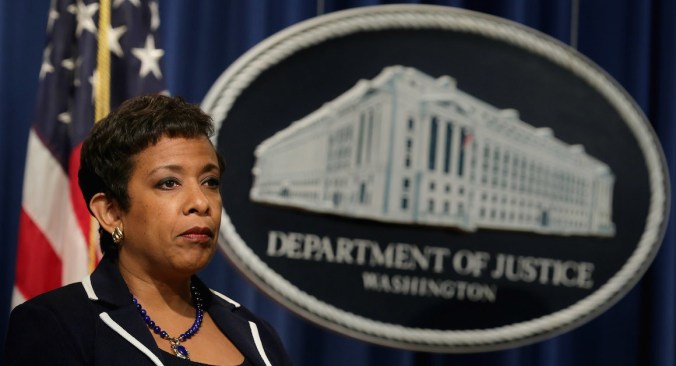
As all but the most denial prone Democrats will acknowledge, President Obama has gone to ridiculous and dangerous lengths to avoid formally citing radical Islam as a terror threat, because it requires acknowledging that a large (okay, large enough) component of the Muslim population abroad and maybe here as well wants to kill us. Truth is the enemy to liars, frauds, totalitarians and the deluded: take your pick here. Either way, for Attorney General Loretta Lynch to say of Omar Mateen in a press conference, as she did Tuesday, that “I cannot tell you definitively that we will ever narrow it down to one motivation. People often act out of more than one motivation,” is an insult. This is blatant equivocation. Yes, I’m sure Mateen may have gotten up on the wrong side of the bed, and maybe there were some people among the hundred or so he shot that he didn’t like, but he was a Muslim, his father was an anti-American, pro-Taliban zealot, he had pledged himself to ISIS, he launched a one -man terrorist attack, and his religion persecutes gays. Gee, what could his motive have been? I’m stumped. Are you stumped? Loretta is stumped.
No, Loretta has been told to be officially stumped.
Just two days before her transparently dishonest statement (Maybe this was the kind of transparency Obama promised in 2008?), Lynch toured all five Sunday talking head shows (ABC, Fox, CBS, NBC, CNN) to lie about the transcripts of Orlando terrorist Omar Mateen’s calls. This is known at Ethics Alarms and elsewhere as “doing a Susan Rice.” [It’s fun to go back to that 2012 post and read the comments from the denial brigade, like now-self exiled far-left blogger Ampersand, who defended Rice and the administration. “For your statements to make sense,” Barry wrote, “we’d have to believe that US Intelligence had determined with certainty what had happened either while the attack was ongoing or within hours afterward, neither of which is true.” We now know both are true. Thus Hillary told her daughter shortly after the attack that it was an organized terrorist plan. Later, with the election in mind, the YouTube video cover-story was concocted, and Rice was dispatched to spread it.]
President Obama wanted to make the Orlando massacre about gun control rather than Islamic terrorism. His post attack speech did not mention ISIS or Islamic terrorism at all, but quickly pivoted into exploiting the tragedy to call for gun controls, knowing that his lap-dog, gun-hating allies in the mainstream media would let him get away with it. There was a problem, however: Mateen’s phone calls made it clear to anyone paying attention that this was an ISIS-related terrorist attack (not just an “act of terror”—the same equivocation used after Benghazi.)
Here were the redactions:
Mateen: “I pledge of allegiance to [omitted]. “I pledge allegiance to [omitted] may God protect him [in Arabic], on behalf of [omitted].”
The dumbest Wheel of Fortune contestant in the world could fill in those blanks, especially after many of the news reports.
Nevertheless, our Attorney General was willing to humiliate herself trying to justify the withholding of facts from the public, saying on ABC’s “This Week”: “What we’re not going to do is further proclaim this man’s pledges of allegiance to terrorist groups, and further his propaganda.” How lame is THAT? Not as lame as the excuse she gave the same day on CNN’s State of the Union, where Lynch said:“The reason why we’re going to limit these transcripts is to avoid re-victimizing those people that went through this horror.” What? I’m sure that blatantly censoring information that the public has a right to know will make the victims’ families feel much better. How do the facts that our government thinks the public is made up of gullible idiots, that the President is in denial over Islamic terrorism, that the Attorney General is willing to lie repeatedly on national television and act as a political tool, and that the administration is as transparent as slate make the victims’ families feel? It sure scares the hell out of me.
Occasionally the news media declares, as a friend of mine is fond of saying, “There is some shit I won’t eat,” or at least eat and say “Yum-yum!,” so the censorship of the obvious was roundly mocked and condemned by both the media and Republican leadership. (Oddly, no Democrats stood up for transparency. Democrats: please explain, and explain why this is fine with you.)
So the Obama Administration and the Justice Department caved the next day, and released a full, uncensored transcript of tMateen’s 911 call on the night of the massacre, and referred to the controversy over omissions in the document “an unnecessary distraction.” (And whose fault was that?)
Omar Mateen made the 50-second 911 call in which he claimed responsibility for the terror attack and pledged allegiance to the Islamic State’s leader at 2:35 a.m., about a half hour into the June 12 murder spree. Now, with the blanks filled in, the transcript read…
“I pledge allegiance to Abu Bakr al-Baghdadi may God protect him [in Arabic], on behalf of the Islamic State.”
Continue reading →