Bret Stephens has been criticized on this site for regularly failing his alleged assignment of bringing a principled conservative voice to the New York Times op-ed pages, and seeming to yield to the strongly biased culture of the uenthical paper that employs him.
In his most recent column, however Stephens courageously and unblinkingly calls out the New York Times’ controversial “1619 Project” for what it is—dishonest, misleading, falsified—oh, let’s not mince words— crap. [Ethics Alarms discussed the “1619 Project” and its unethical creator, Times reporter and race activist Nikole Hannah-Jones, here] Josh Blackmon, for example, writing at Reason, thinks that the columnist metaphorically biting the hand that feeds him will mark the beginning of the end of Stephens at the Times. After all, a Times editor recently resigned after the paper’s Jacobins called for his head for daring to allow a Republican Senator to voice an opinion that went against the Times’ view of the world. Stephens has gone far, far beyond that.
He knows it, too. At the end of his dissection of the bad history and unethical journalism that disgracefully won the Times a Pulitzer Prize, the columnist writes,
For obvious reasons, I’ve thought long and hard about the ethics of writing this essay. On the one hand, outside of exceptional circumstances, it’s bad practice to openly criticize the work of one’s colleagues. We bat for the same team and owe one another collegial respect.On the other, the 1619 Project has become, partly by its design and partly because of avoidable mistakes, a focal point of the kind of intense national debate that columnists are supposed to cover, and that is being widely written about outside The Times.
To avoid writing about it on account of the first scruple is to be derelict in our responsibility toward the second.All the more so as journalists, in the United States and abroad, come under relentless political assault from critics who accuse us of being fake, biased, partisan and an arm of the radical left. Many of these attacks are baseless. Some of them are not. Through its overreach, the 1619 Project has given critics of The Times a gift.
1 . Boy, the Pope must hate the U.S. media. ‘Did you hear that four people say the President called our soldiers “losers”? It’s true! They really say that!’
Pope Francis called gossiping a “plague worse than COVID” and risks dividing the Catholic Church. The devil, he says, is the “biggest gossiper.” who is seeking to divide the church with his lies.
Francis was discussing a Gospel passage about the need to correct others privately when they do something wrong. The Catholic hierarchy calls this the “fraternal correction” of priests and bishops to correct them when they err without airing problems in public. You know; like when they sexually abuse children. “Gossip” apparently means “talking about things the Church is trying to cover-up.”
Got it, Your Holiness!
2. Proposition: It’s unethical to buy your dog’s food at the Dollar Store. Sunshine Mills Inc., an Alabama-based pet food company, issued a recall of its dog food this week due to the levels of Aflatoxin, a toxic mold by-product with the potential of making dogs sick, according to a Food and Drug Administration news release. The products recalled are FAMILY PET Meaty Cuts, Beef Chicken & Cheese Flavors; HEARTLAND FARMS Grilled Favorites Beef Chicken & Cheese Flavor; and HAPPY LIFE Butcher’s Choice Dog Food. All are sold exclusively at Dollar General and Family Dollar stores.
1. Let’s start with some good news! In April of last year, I wrote about Massachusetts judge Shelley M. Richmond Joseph, who was charged with obstruction of justice, along with another court officer, for helping an illegal immigrant (and criminal) elude arrest by the ICE. The story is here. It looks like the judge is going to trial.
U.S. District Judge Leo Sorokin has now denied the judge’s lawyers’ motions to dismiss in a July ruling. “After careful consideration, the motions to dismiss are DENIED because the Indictment alleges the elements of the offenses and sufficient supporting factual detail,” he wrote . Joseph’s attorneys are claiming was that she is protected by judicial immunity, though that should only apply to actions a judge engages in under judicial authority and in the course of her duties. Instructing a court employee to help an illegal immigrant evade being taken into custody by ICE agents after his hearing on criminal charges, including drug possession, is not known as “being a judge.” It is known as “obstructing justice.” Even if the judge avoids punishment, her days as a judge are over.
Good.
2. What’s this? MORE good news? I have been looking for cracks in the monolithic mainstream media, with defections by individuals in the midst of the journalism’s abandonment of its duties to democracy in favor of news manipulation and partisanship. Less than a month ago, New York Timed editor Bari Weiss called out the oppressive culture of partisanship and conformity at the her paper, earning her Ethics Hero status.
Last month MSNBC producer Ariana Pekary quit the network, arguably the most unethical of all the broadcast news outlets, and yesterday she published a blog post explaining why. “I simply couldn’t stay there anymore.” She wrote:
“My colleagues are very smart people with good intentions. The problem is the job itself. It forces skilled journalists to make bad decisions on a daily basis….It’s possible that I’m more sensitive to the editorial process due to my background in public radio, where no decision I ever witnessed was predicated on how a topic or guest would ‘rate,’ The longer I was at MSNBC, the more I saw such choices — it’s practically baked in to the editorial process – and those decisions affect news content every day. Likewise, it’s taboo to discuss how the ratings scheme distorts content, or it’s simply taken for granted, because everyone in the commercial broadcast news industry is doing the exact same thing. But behind closed doors, industry leaders will admit the damage that’s being done…I understand that the journalistic process is largely subjective and any group of individuals may justify a different set of priorities on any given day. Therefore, it’s particularly notable to me, for one, that nearly every rundown at the network basically is the same, hour after hour. And two, they use this subjective nature of the news to justify economically beneficial decisions. I’ve even heard producers deny their role as journalists. A very capable senior producer once said: “Our viewers don’t really consider us the news. They come to us for comfort.”
She claims to want to be part of a solution to this dire situation. We shall see. I reached out to her in an email yesterday, offering my guidance and expertise, gratis of course.
3. On the theory that transparency is good news, it was nice to see Democratic Rep. Karen Bass, supposedly one of the top contenders to be Joe Biden’s running mate, demonstrate how dim-witted she is and unqualified to be President, though at this point even she could probably beat poor Joe Biden in a spelling bee. Over and over, on several Sunday news shows, she repeated her previous explanation for praising Fidel Castro , telling Chuck Todd on “Meet the Press,” for example, regarding calling the brutal dictator’s death a “great loss to the people of Cuba,” that she “wouldn’t do that again. Talked immediately to my colleagues from Florida and realized that that was something that just shouldn’t have been said.”
Astounding. She wouldn’t say that what she said was wrong, outrageous for a member of Congress and demonstrated inexcusable ignorance, but that she should have kept the opinion to herself. Todd, of course, being one of the worst hacks in captivity, didn’t bother to press her on the point for the benefit of members of his audience who can’t recognize signature significance when it’s right in front of them.
Biden, or whoever his ventriloquist is, is officially trapped in ethics zugzwang. The only reason Bass is even being considered is that Biden has to select a black (George Floyd!) woman (#MeToo!) as his VP, and all of his remaining options are horrible by any objective standard. This will be a flaming lesson in the foolishness of placing physical characteristics over ability, experience and character, a perfect example of why affirmative action doesn’t work and will never work. Bass is a light-weight, but Biden’s two other options are Kamala Harris ( whose ugly Ethics Alarms dossier is here), and <ack! choke! yecch! barf! gag!> the even more horrible Susan Rice, Barack Obama’s ethics-free acolyte. Her dossier is here. She would be the most sinister Vice-President candidate since Aaron Burr.
I have to poll this: Who is Joe’s best choice among this unethical trio?
I’m not going to allow “None of the above,” because I don’t think he has that option, or at least doesn’t have the integrity to insist on choosing a qualified candidate who has the wrong tint or chromosomes.
4. Finally, to end on a downer, the Unethical Non-Trump Tweet of the week. Orlando Magic forward Jonathan Isaac was the only NBA player not to kneel during the National Anthem, and also refused to wear a “Black Lives Matter” warm-up like the rest of his teammates. In Sunday’s game, he tore his ACL, a season-ending and career threatening injury. ESPN radio host Dan Le Batard then ran a poll on Twitter asking, “Is it funny the guy who refused to kneel immediately blew out his knee?”
When the poll was pulled, about 45% of respondents said that it was funny, which tells you all you need to know about NBA fans and Black Lives Matter supporters—the genuine kind, not the grovelers. Le Batard issued a phony apology, Level 10 on the Apology Scale.
“We apologize for this poll question,” he wrote. “I said on the front and back end of the on-air conversation that I didn’t think it was funny. Regardless of the context, we missed the mark. We took the tweet down when we realized our mistake in how we posed the question to the audience.”
Lies and more lies. They took the tweet down when it was clear they were getting slammed for it. If he didn’t think a young athlete getting injured was funny because he dared to oppose the BLM mob, why would he think anyone else would? When is someone getting hurt who has done nothing wrong and who did not do something foolish to cause the injury ever funny?
I just brought The Ethics Alarms Heroes’ Hall of Honor up to date. There are 44 men and women whose inspiring stories reside there, and I know who #45 will be: John Marshall “Jack” Slaton (December 25, 1866 – January 11, 1955),the 60th Governor of Georgia.
This won’t be the official entry for John Slaton; I want to do him justice, and the story of his moment of principle and sacrifice is not only complicated, but I am having a hard time settling the facts. The short version is this:
Mary Phagan, 13, an employee at Atlanta’s National Pencil Company where Leo Frank was the manager, died of strangulation on April 26, 1913. Her body was discovered in the factory’s cellar the next morning. Over the course of their investigation, Atlanta police arrested several men, including the night watchman Newt Lee, Frank, and Jim Conley, a janitor at the factory. Lee and Conley were black; Frank was Jewish. Though this was the height of Jim Crow in the South, prejudice against Jews was as strong in Atlanta as racism.
On May 24, 1913, Frank was indicted on a charge of murder and the case was tried at Fulton County Superior Court beginning on July 28. The prosecution’s key witness was Conley, who described himself as an accomplice, assisting Frank in disposing the girl’s body. Frank’s defense lawyer argued that Conley was the real killer.
The jury pronounced Leo Frank guilty verdict on August 25, 1913. Then followed a series of unsuccessful appeals, the last being before the U.S. Supreme Court, which rejected it in April of 1915. Georgia Governor John M. Slaton was a popular figure about to leave office, and considered a rising political star whose ascension to the U.S. Senate was likely, if not a forgone conclusion. It was assumed that he would quickly reject Frank’s request for a pardon, given the extensive appeals and the overwhelming public outrage regarding Mary Phagan’s murder.
Those assumptions were wrong. A trial lawyer before entering politics, the Governor reviewed the evidence, acquired some evidence that had not been presented at trial , and interviewed some of the witnesses, including Conley. who had changed his story several times. Slaton also heard arguments from both the prosecution and defense.
Although he knew, and had been warned, that taking any action favorable to Leo Frank would not only end his political career in Georgia but also place him and his wife in mortal peril, Slaton commuted Frank’s sentence from capital punishment to life imprisonment. In his official statement, he wrote,
I can endure misconstruction, abuse and condemnation, but I cannot stand the constant companionship of an accusing conscience, which would remind me in every thought that I, as a Governor of Georgia, failed to do what I thought to be right.
“Scratch” is a New York Times cartoon feature in the Sunday Business section. This was the most recent installment. I’ll save my (disgusted) comments for the end…
The breathtaking leap of logic in the introduction represents such flawed logic that the Times Business Section destroys its credibility, such as it is, by permitting such an illogical statement on its pages. ‘Since companies have been foolishly pandering to hyper-woke complaints about, for example, the picture on a box of rice and the artwork on a package of butter, and statues of important and influential historical figures who were honored in their times are being vandalized and toppled by people who barely know who they are, it’s a ‘perfect time’ time to consider dishonoring the Founders and others without whom we would have no nation at all.’
Jim Acosta is the epitome of a CNN anti-Trump hack, one of many. Jake Tapper, once a reliable oasis of integrity in the expanding desert of corrupt and biased mainstream media reporting, has understandably rotted on the CNN vine since joining the network, but now and then Good Jake surfaces.
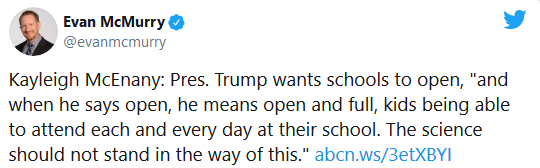
In a White House briefing last week, press secretary Kayleigh McEnany discussed President Trump’s call for children to go back to school in the fall.
“The science should not stand in the way of this, but as Dr. Scott Atlas said — I thought this was a good quote, ‘Of course, we can do it. Everyone else in the Western world, our peer nations are doing it. We are the outlier here.’ The science is very clear on this. For example, you look at the JAMA pediatric study of 46 pediatric hospitals in North America that said the risk of critical illness from COVID is far less for children than the seasonal flu. The science is on our side here. We encourage localities and states to just simply follow the science. Open our schools.”
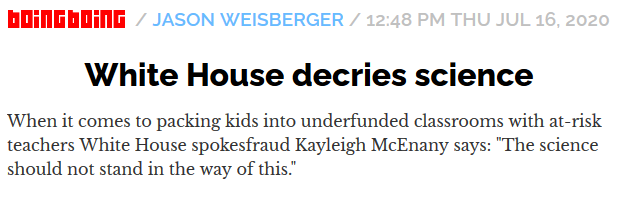
Acosta, who was there, deliberately redacted her words to make it appear that McEnany was dismissing the relevance of science, thus confirming a persistent mainstream media narrative about the Administration being science-deniers.
Other sources and websites followed the same course; here, for example, is ABC social media editor Evan McMurry:
And the shameless Trump-hating site Boing Boing…
I’ve been tempted to see how many of my Trump Deranged, biased media-enabling Facebook friends have passed on the lie to the acclaim of many “likes,” but I have enough aggravation.
Whether Acosta was Liar Zero or whether he got the idea from another reporter doesn’t matter. He circulated deliberate fake news, and could have no innocent justification. Later, after being called out on social media, Acosta added the missing context, but the fact is, he was caught.
He should be suspended at the very least for this, and probably fired. A news source with any journalism integrity at all would immediately discipline him. Of course CNN has said nothing and done nothing.
Georgetown has apparently programmed its victims of a liberal education to not only believe in the suppression of free speech and dissent from the majority, but to engage in it. Nice.
By the way, Georgetown, the backs of Harvard’s diplomas are much more attractive than the backs of yours.
Georgetown University junior Billy Torgerson received a formal condemnation from the Georgetown University Student Association as well as a call for the college to investigate him for “bias” based on a column, “A Nation Of Virtuous Individuals,” that he authored and posted on his own website.
Torgerson’s primary “crime” seems to be that he opposes another recent SCOTUS ruling, Bostock v. Clayton County, which extended protections under Title VII of the Civil Rights Act of 1964 to transgender individuals. I think he’s wrong, but Torgerson’s position is similar to that of the three dissenting judges and many conservative analysts. And it doesn’t matter if he’s wrong. He has every right to state his opinion without being punished. Continue reading →
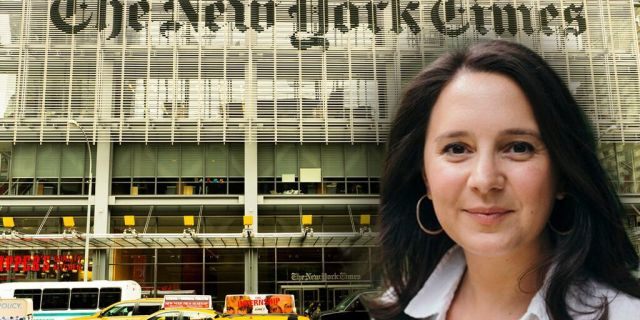
I supposed that should have read “former New York Times editor Bari Weiss.” Until her resignation today, from 2017 to 2020, Weiss was the staff editor for the opinion section of the The New York Times.
Her letter of resignation to the Times publisher is here. It is beyond excellent, beyond brave, beyond important. It is breathtaking.
She writes in part,
I joined the paper with gratitude and optimism three years ago. I was hired with the goal of bringing in voices that would not otherwise appear in your pages: first-time writers, centrists, conservatives and others who would not naturally think of The Times as their home. The reason for this effort was clear: The paper’s failure to anticipate the outcome of the 2016 election meant that it didn’t have a firm grasp of the country it covers…
But the lessons that ought to have followed the election—lessons about the importance of understanding other Americans, the necessity of resisting tribalism, and the centrality of the free exchange of ideas to a democratic society—have not been learned. Instead, a new consensus has emerged in the press, but perhaps especially at this paper: that truth isn’t a process of collective discovery, but an orthodoxy already known to an enlightened few whose job is to inform everyone else…
Stories are chosen and told in a way to satisfy the narrowest of audiences, rather than to allow a curious public to read about the world and then draw their own conclusions. I was always taught that journalists were charged with writing the first rough draft of history. Now, history itself is one more ephemeral thing molded to fit the needs of a predetermined narrative. Continue reading →
[Introduction: Ethics Alarms opined that the President’s proposed “Garden of American Heroes” was badly conceived, and his initial nominations for inclusion proved the point. Mercurial commenter Valkygrrl took the initiative to devise a process for Ethics Alarms readers to compile a better list, and also to organize the results, which I found fascinating. Any further reactions will be confined to the comments.]
The Rules:
1: No presidents, always some controversy, we have other ways of honoring them.
2: Any person who held office must be chosen for something they did outside of said office, no honoring for using the mechanisms of the state no matter how beneficial to society.
3: No Confederates (obvious divisiveness.)
4: You may have only one living person on your list.
5: Your list must be made in good faith. You may not choose anyone you believe will upset or anger me; no “owning the libs”. Honest mistakes accepted.
6: Do not remove someone from your list because they were mentioned by someone else. I want to see if we can find some consensus. That means people Trump or Jack mentioned are allowed.
Here’s the list of nominees as submitted by participants (editorial descriptions mine);
Marian Anderson: Singer, Civil rights activist, Medal of Freedom recipient.
Neil Armstrong: Aviator, Astronaut, First human to set foot on Luna
Isaac Asimov: Teacher, Author of the Foundation series; Seven-time Hugo Award winner (Plus one Retro-Hugo awarded in 2016), Democratic party activist, serial sexual harasser
Irving Berlin: Composer of famous patriotic music
John Brown: Hero, undaunted, true and brave, And Kansas knows his valor when he fought her rights to save; Now, tho the grass grows green above his grave. Popular legend holds that his soul continues to march.
John Moses Browning: Industrialist, Firearms designer.
George Carlin: Humorist, Mentor to time-traveling Gen-Xers.
Andrew Carnegie: Industrialist, Philanthropist, Union buster.
Joshua L. Chamberlain: Union General, Medal of Honor recipient.
Meriwether Lewis and William Clark: Explorers, Naturalists. Two very different people presumably nominated for a single achievement alone. Clark was a bit of a bastard.
Samuel Colt: Firearms manufacturer, used assembly line principals before Henry Ford.
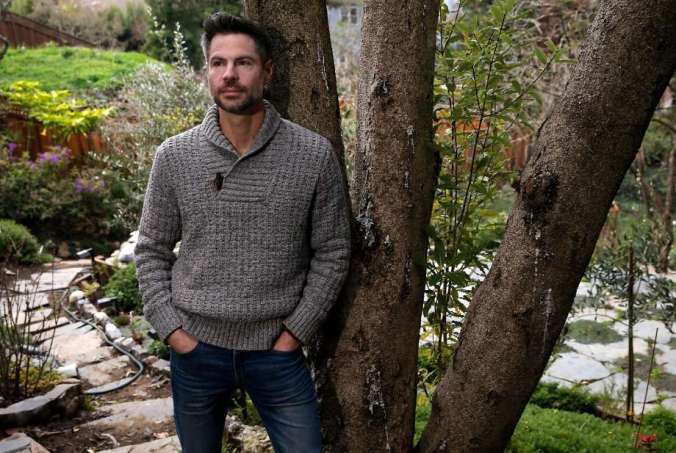
Michael Shellenberger was a Time Magazine“Hero of the Environment,” and he was and is the founder and president of Environmental Progress. Now he has a best-selling book, Apocalypse Never, published at the end of last month. I haven’t read it, and I wouldn’t have the expertise to know whether it was right or wrong. It could be that he is violently rejecting the official climate change hysterics line to fill a profitable contrarian niche, though that would be out of character based on his reputation. It may just be that he is telling the truth, and exposing what was, or should have been, pretty evident for a long time. As he puts it his article,
On behalf of environmentalists everywhere, I would like to formally apologize for the climate scare we created over the last 30 years. Climate change is happening, it’s just not the end of the world. It’s not even our most serious environmental problem. I have been a climate activist for 20 years and an environmentalist for 30, so I may seem like a strange person to be saying this.
But as an energy expert asked by the US Congress to provide objective expert testimony and invited by the Intergovernmental Panel on Climate Change (IPCC) to serve as an Expert Reviewer of its next Assessment Report, I feel an obligation to apologize for how badly we environmentalists have misled the public.
Well, we knew that, didn’t we? The usual people denied it, but was so, so obvious that from Al Gore on, this was science weaponized for political and partisan purposes, by scientists seeking grants and peer approval. One doomsday prediction after another came and went, one model after another failed, and yet the refrain persisted. Climate scientists who were tempted to break ranks were intmidated: as galileo demonstarted, it is not a field often distinguished by courage and sacrifice. Shellenberger writes,
“[U]ntil last year, I mostly avoided speaking out against the climate scare. Partly because I was embarrassed. After all, I am as guilty of alarmism as any other environmentalist. For years, I referred to climate change as an ‘existential’ threat to human civilization and called it a ‘crisis.’ But mostly, I was scared. I remained quiet about the climate disinformation campaign because I was afraid of losing friends and funding. The few times I summoned the courage to defend climate science from those who misrepresent it I suffered harsh consequences. And so I mostly stood by and did next to nothing as my fellow environmentalists terrified the public.”
The cancel culture is after Shellenberger even as I write this, for he’s perceived as a traitor. Forbes, which initially published his mea culpa, pulled it down after being bombarded with social media protests, then gave no substantive explanation for why. Well, they really didn’t have to, I suppose.
Shellenberger lists “some facts few people know,” such as,
Humans are not causing a ‘sixth mass extinction’
The Amazon is not ‘the lungs of the world’
Climate change is not definitively making natural disasters worse
Fires have declined 25% around the world since 2003
The amount of land we use for meat — humankind’s biggest use of land — has declined by an area nearly as large as Alaska
Carbon emissions are declining in most rich nations and have declined in Britain, Germany, and France from the mid-1970s
Netherlands is becoming richer, not poorer while adapting to life below sea level
We produce 25 per cent more food than we need and food surpluses will continue to rise as the world gets hotter
…and more, then later lists some of the conclusions from his book, among them:
Factories and modern farming are key to human liberation and environmental progress
The most important thing for saving the environment is producing more food, particularly meat, on less land
The most important thing for reducing air pollution and carbon emissions is moving from wood to coal to petroleum to natural gas to uranium
100 per cent renewables would require increasing the land used for energy from today’s 0.5 pc to 50 pc
‘Free-range’ beef would require 20 times more land and produce 300 pc more emissions
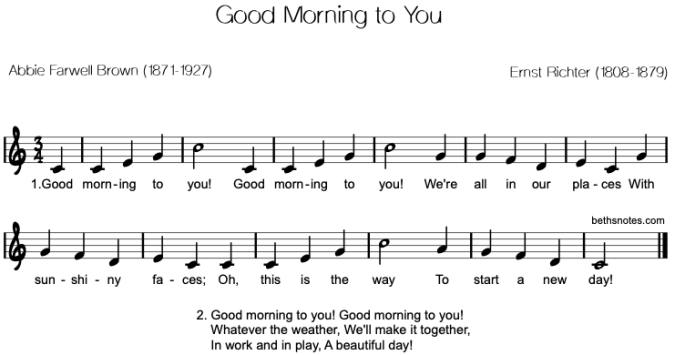

 The breathtaking leap of logic in the introduction represents such flawed logic that the Times Business Section destroys its credibility, such as it is, by permitting such an illogical statement on its pages. ‘Since companies have been foolishly pandering to hyper-woke complaints about, for example, the picture on a box of rice and the artwork on a package of butter, and statues of important and influential historical figures who were honored in their times are being vandalized and toppled by people who barely know who they are, it’s a ‘perfect time’ time to consider dishonoring the Founders and others without whom we would have no nation at all.’

 Ethics Alarms