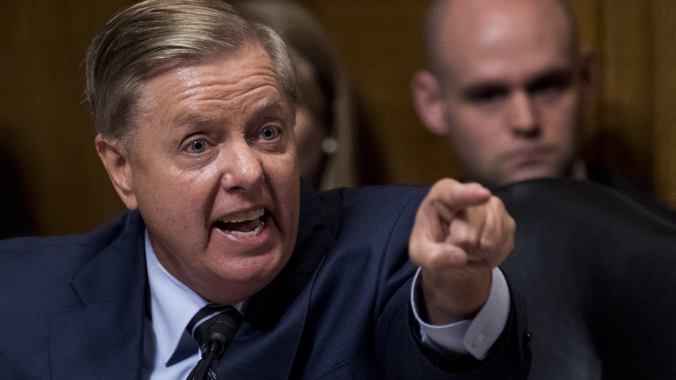
Ethics Morning Sickness, 9/29/2018: The Ford-Kavanaugh Hearing Hangover

According to several sources, Republicans not only have the votes to confirm Brett Kananaugh,  a couple of Democrats may even join their ranks. If true, that’s amazing, and also the most encouraging piece of news I’ve heard since Aaron Judge went on the Disabled List.

I don’t have any special fondness for Brett Kavanaugh, and I have no stake in his confirmation. All I have ever cared about is having outstanding, smart, analytical judges on the Supreme Court. I was thrilled when President Obama nominated Elena Kagan, who fits that description; depressed when he appointed touchy-feely mediocrity Sotamayor, lowering the quality of judicial talent so he could check off a diversity box, but then, that’s Obama. Justices like Blackmun, Souter and Kennedy, all appointed to skirt controversy rather than to ensure a competent Court, do subtle, long-lasting damage to our laws. Aggressive, thoughtful, brilliant jurists like Scalia and Ginsberg keep the third branch of government strong. Kavanaugh is undeniably the kind of qualified, experienced judge who has always been routinely confirmed by the Senate regardless of the President nominating him or his party affiliation. What the Democrats and their allies among activist and the news media have done to Brett Kavanaugh is more than wrong; it is very dangerous, and threatens further the basic comity and respect without which no democracy can function. The treatment of Kavanaugh, which I have discussed in detail elsewhere—the demonizing, the fear-mongering, the character assassination, based purely on an unremarkable judicial philosophy—continues down a slippery slope, already greased by “the resistance,”  that ends in civil war.  The Democrats will only turn away from this disastrous path when they conclude that it won’t work, that the American public rejects “the ends justify the means” as an operating strategy. There are signs that the Democratic Senators televised conduct during the Kavanaugh hearings may be a tipping point. I hope so. I’ll believe it when I see it.

Nothing much has changed in my assessment since I wrote this post ten days ago. I still don’t believe or disbelieve Ford or Kavanaugh. There is no basis on which to believe either of them, but the accuser has the burden of proof, and as was true ten days ago, she can’t meet it and didn’t meet it. Nobody confirms her account. She cannot provide specifics, even as to where the alleged attack occurred, who held the party where it allegedly occurred, or an exact date, making investigation nearly impossible. Her parents, who are alive, have not confirmed her account; apparently she didn’t even tell them about the incident. Her testimony was convincing. So was Kavanaugh’s. Those who say “they believe” either party might as well have a “Bias has made me stupid” sign on top of their head. In yesterday’s New York Times, a full page ad listed thousands of names of men proclaiming “We believe Anita Hill. We also believe Charistine Blasey Ford.” All they are doing is virtue signaling for their pals, proclaiming their partisan affiliation (believing Ford is required to save abortion, and depending on which hysterical activist or pundit you listen to, female suffrage, gay marriage and the continued abolition of slavery), and or proving that they lack the power of critical thought.

I’ll have to sort through all of the logical fallacies used against Kavanaugh later: I’m sure a new rationalization for the list or twelve is in there. For example, I have been told and read that women believe Ford because they know other victims of sexual assault who never reported it. But that doesn’t justify believing Ford! It indicates that the fact that she waited all this time, until evidence was gone and memories faded, to suddenly make her accusation when it was most politically useful to her party doesn’t prove she isn’t telling the truth, but it doesn’t make it any more likely that she is, either. A commenter yesterday suggested that there should be more sympathy and accommodation for victims who are afraid to come forward soon after a sexual assault. “I would like to remind you that women often are not able to speak out against harassment until long after the fact because they are afraid and unable,” she wrote. I replied,

Then they lose their chance. There are a lot of things in life like that. If I’m reluctant to speak up and challenge a mob harassing a US Senator while he’s dining with my family, I can’t wait 20 years and do it then, can I? If you are afraid to report a community criminal when you have evidence against him because you’re afraid to snitch, it’s no mitigation to report the evidence after more people have been hurt because of your delay. How about women who don’t stop their boyfriends from sexually molesting their children because they are afraid? Is it acceptable that they wait until the Statute of Limitations has run, the damage has been done, and the kids are grown and molesting children themselves before they speak up?

You don’t have to remind me of the dilemma. I’m sorry, but I am really sick of this argument…It’s an excuse and a rationalization. It makes fairness and due process impossible, and it allows false accusers to manipulate others. Three decades? Holding a complaint until the exact moment when it can’t be defended against AND will do the most damage?

It’s explainable, perhaps, but it isn’t ethically excusable.
Continue reading

Ethics Hero: Kwame Anthony Appiah, a.k.a. “The Ethicist”

In the past, I mostly visited the New York Times Magazine “The Ethicist” column to take issue with the succession of ethics amateurs and ethicist wannabes the Times employed as its ethics advice columnist. Once Kwame Anthony Appiah took over, this wasn’t as much fun, and I admit I don’t even check the column that often. Appiah is a real ethicist, and knows what he’s doing. I sometimes disagree with his conclusions, but he reaches them using valid ethical analysis, and seldom employs bias or rationalizations.

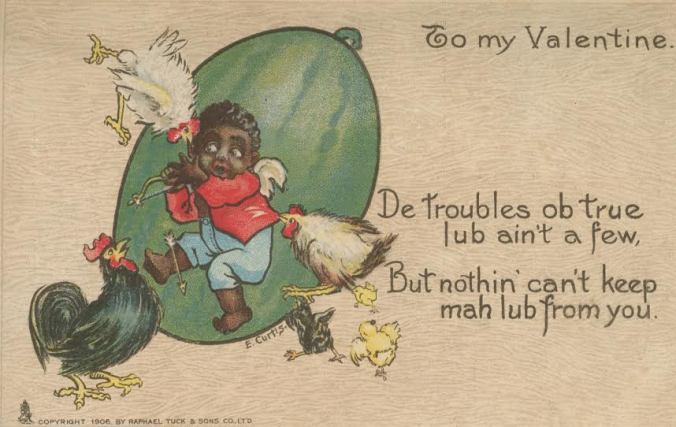
A recent column, however, deserves special praise. The inquirer asked what the ethical course would be to handle historical artifacts that reflected racist attitudes and artwork, like the card pictured above. The writer concluded her question…

I offered it to the National Museum of African American History and Culture in Washington. I never heard from them, so it moved with us. My husband thinks I should throw it away, but that feels wrong. I feel it is history that we should acknowledge, however painful and wrong. Your thoughts?

“The Ethicist’s” response is note-perfect, even with my intentional omission of its best and most surprising section. I’m doing this so you will hit the link and read the full column. Appiah wrote in part,

I am not a fan of the intentional destruction of historical artifacts….It’s a familiar thought that we need to understand our past, not least in order to help us avoid repeating the worst aspects of it. So your impulse to offer this souvenir card to a museum seems right. Of course, the sort of document you describe is well represented in collections already, and this may be why you didn’t hear back. But who knows whether there isn’t something about it that a historian might find useful in unpacking some detail of the history of American racial attitudes?

So if you think this card does have historical value, and you can’t readily find an interested archive or scholar, you could just put it up for sale on eBay, say, where it will join a large assemblage of racist artifacts. You can’t guarantee that you’ll approve of the motives of the buyer, but someone who is willing to pay for it is most likely to preserve it.

Given that your motives are honorable, I don’t share your worry about profiting from the sale. Selling an image isn’t endorsing its message. And my guess is that most contemporary collectors of such items aren’t motivated by racism. Still, if you want to avoid profiting, there’s an easy solution. Just send the proceeds to the National Museum of African American History and Culture. That’s an offer they won’t turn down. Continue reading

Morning Ethics Warm-Up, 9/25/18: Kavanaugh-Free Zone

Good morning!

Regrettably, I’ll have to be writing about the Brett Kavanaugh Nomination Ethics Train Wreck at length,  since it is deteriorating further has clearly merged with the  Harvey Weinstein Ethics Train Wreck AND the 2016 Post Election Ethics Train Wreck (the most dangerous of them all). To begin this day without a primal scream , however, let’s speak of other things, of shoes and ships and sealing wax, of cabbages and kings, and why the sea is boiling hot, and whether pigs have wings.

You know. Ethics.

1.Sentencing ethics and the Coz. The judge in the Bill Cosby case signaled that the comic-turned-serial rapist would probably get less than three years behind bars for raping Andrea Costand in 2004, by announcing that the defense and prosecution had come to an agreement to merge the counts. Looking at the state sentencing guidelines, the judge said,  and that the actor has no prior history (heads exploding all over the courtroom, but though 60 or so of Bill’s other victims have come forward, in the eys of Lady Justice, they don’t exist), he declared that once Dr. Huxtable was looking at a total jail time of 22 to 36 months.

Ah, the things lawyers have to say while defending their horrible clients! Defense team leader Joseph Green argued that Cosby’s poor upbringing and battles against discrimination in his climb to success should be mitigating factors in sentencing him. This is an old Sixties argument that was dumb then and dumb now, a non sequitur. Millions of men who grew up poor and who experienced discrimination don’t take up drugging women and molesting them as a hobby. “Eighty-one year old blind men are not dangerous,” he added, apparently forgetting the fact that Bill has the assets and the enablers—like his complicit wife, Camille–do continue his avocation should he choose.

Countering all of these desperate arguments was this observation, from D.A. Kevin Steele:  “He seemingly doesn’t think he has done anything wrong. No remorse.”

Cosby deserves to die in prison, and any less of a sentence is just one more unethical nod to “The King’s Pass.”

2. Oh, great, Murphy Brown is back. Don’t these two look like fun folks to spend some light-hearted family TV time with?

That’s Candace Bergen, aka Murphy Brown, and series creator Diane English. As the New York Times explains it, the show’s creator and star feels the resurrection of the insufferably smug, liberal  broadcast media-cheering sitcom from the 90’s was needed, so someone could be bashing President Trump on TV. After all, nobody else is…just all Saturday Night Live, the late night shows, about six cable shows, and the real news media.  And there are all those shows that mock the senile House Minority leader, the pathetic angry Presidential election loser, the socialist documentary-maker who abuses his employees, the Senator who claims to be Spartacus, the other Senator who says she’s a Native American, and people who wear pussy hats. Wait–there aren’t any of those, are there? Never mind: English says that the “resistance” needs more support on TV. As for the other half of the country, “They’re not going to watch us anyway,” she says, referring to American who think an elected President has the right to govern. “I don’t think we’re looking to bring them into the tent.”

Yes. let’s divide the nation further. That should be fun. Here is my favorite quote, from the show’s producer: “If Hillary Clinton was elected there’d be no artistic reason for this show to be on the air.” Discuss, if you like. Personally, I think that one is too easy.

The hypocrisy and dishonesty of the original show seems like it will be intact. Oh, goody. My wife and I bailed permanently on “Murphy Brown” after the star “bravely” had her  fatherless baby (thus encouraging non-millionaire, real single women to do so), and the child literally disappeared except for brief moments when Murphy returned home to check in with her live-in male nanny. Amazingly, being a single mother didn’t affect Murphy’s schedule or career at all!

In the new show, we are told, Murphy will embrace #MeToo. Meanwhile, Bergen is defending Les Moonves, who was just jettisoned from CBS after many women revealed that he had Weinsteined them. Says Bergen, “I think Les’s behavior was — it was a different time. He was a different man. Is it behavior unbecoming? Yeah. But I go back with CBS, with the first ‘Murphy.’ I have great respect for Les. I would really hate to see Les go.”

Oddly, I have no respect at all for men who abuse their power and position to harm women, yet I was called a misogynist a couple of days ago, and Candace is a feminist hero.

“Murphy Brown” deserves to bomb. Where’s Charlie McCarthy when you need him? Continue reading

Tennis Ethics: Spectacular Ethics Train Wreck At The U.S. Open


Wow.

And tennis is supposedly one of the most ethical sports.

This weekend’s U.S. Open women’s final opened up so many cans of ethics worms that they should be squiggling for weeks.

Here is the New York Times report in part:

Anger, boos, tears and an accusation of sexism overshadowed a remarkable victory by Naomi Osaka, a rising star who became the first tennis player born in Japan to win a Grand Slam championship.

Osaka soundly defeated her childhood idol, Serena Williams, 6-2, 6-4, in the women’s final of the United States Open on Saturday, blocking Williams from winning a record-tying 24th major singles title. But the match will long be remembered for a series of confrontations between Williams and Carlos Ramos, the match’s chair umpire, who issued three penalties against Williams in the second set, after Osaka had established her dominance.

The first was a warning after Ramos felt Williams was receiving instructions from her coach, Patrick Mouratoglou, from the stands, which is against the rules. Williams was offended by the implication that she was cheating, and she demanded an apology. Later, after losing a game, she smashed her racket on the court, incurring a second penalty and the loss of a point. Finally, after she called Ramos a “thief” for taking the point from her, Ramos cited Williams a third time, resulting in the loss of a game. Williams’s anger intensified, and she pleaded for help from the tournament referee, Brian Earley, and the Grand Slam supervisor, Donna Kelso….

But what should have been a moment of uninhibited joy for Osaka turned into tears of sadness. The postmatch celebration was tarnished by the angry booing from fans upset over what they perceived as Ramos’s unfair treatment of Williams, and amid the cacophony, amplified by the closed roof because of rain, Osaka pulled her visor down over her face and cried….

In the second game, Ramos spotted Mouratoglou urging Williams to move up, and Mouratoglou conceded that he was, in fact, coaching. But he argued that it is done by every coach in every match and that the warning was the cause of what followed. He said Ramos should have quietly told Williams to inform him to cut it out. “That’s what umpires do all year,” the coach said, “and it would have ended there, and we would have avoided a drama that was totally avoidable.”

Williams approached the chair to tell Ramos that it was a “thumbs-up” gesture and that she would never accept coaching on court, which is against the rules of Grand Slam events. “I don’t cheat to win,” she said in a stern tone. “I’d rather lose.”

During the next changeover, tensions seemed to simmer down during a civil exchange when Williams explained to Ramos that she understood he might have interpreted some coaching, but that none actually existed.

Williams went back on court, held her serve in that game, and then broke Osaka’s serve to take a 3-1 lead in the second set. If she could have consolidated that break, it might have turned the flow of the match. But Osaka broke right back, and after the game ended, Williams destroyed her racket by throwing it to the court in anger. That resulted in a racket abuse penalty, a second code violation, for which the penalty is a point. Osaka would start the next game ahead by 15-0. When Williams realized that, she argued more and demanded that Ramos apologize to her and make an announcement to the crowd that she was not receiving any coaching. Ramos, known for his no-nonsense approach, did not relent.

“You owe me an apology,” Williams said. “I have never cheated in my life. I have a daughter and I stand for what’s right for her and I have never cheated.”

When the next changeover came, with Osaka leading, 4-3, Williams, still visibly distraught over what she perceived as unfair treatment, told Ramos that he had stolen a point from her and called him “a thief.” For that, Ramos gave Williams a third code violation, which meant she lost a game. Without swinging her racket, Osaka was now ahead, 5-3, and one game from the championship. Williams did not appear to realize that Osaka had been given the game until she reached the baseline again. Now fuming, she returned to the chair and demanded to speak to Earley and Kelso. Fighting back tears as the crowd yelled, hooted and booed, Williams pleaded her case. She said the treatment was unfair and argued that male players routinely behave in the same manner without facing penalties.

“There are men out here that do a lot worse, but because I’m a woman, because I’m a woman, you’re going to take this away from me? That is not right,” Williams told one official. Later, at a post match news conference, she accused Ramos of sexism for issuing a code violation for her “thief” accusation….

As the players stood next to each other, fans booed and Williams, seeing how upset Osaka was, moved over and put her arm around the new champion and then pleaded with the fans not to boo.

Osaka, in her speech, apologized to the fans, acknowledging that most of the fans were rooting for Williams in her quest to set a career record.

Now this, from the Sporting News:

Patrick Mouratoglou admitted to coaching Serena Williams during the U.S. Open final, but believes she never received his message….Mouratoglou said he had attempted to help Williams, but added coaching was common in almost every match.”I’m honest, I was coaching. I don’t think she looked at me so that’s why she didn’t even think I was,” he told ESPN.

“But I was, like 100 percent of the coaches in 100 percent of the matches so we have to stop this hypocritical thing. Sascha (Bajin, Osaka’s coach) was coaching every point, too. “It’s strange that this chair umpire (Carlos Ramos) was the chair umpire of most of the finals of Rafa (Nadal) and (his uncle) Toni’s coaching every single point and he never gave a warning so I don’t really get it.”

If you read Ethics Alarms with any regularity at all, you should be able to predict some of the commentary here, if not all of it.

Observations: Continue reading

Apology Of The Year (So Far): Patterico

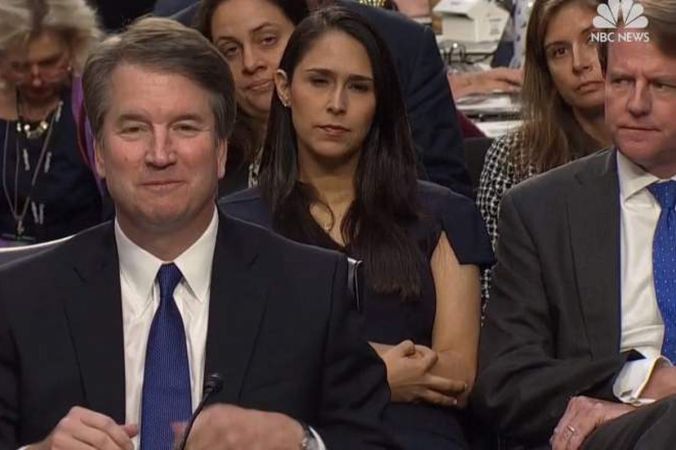
I’m not a fan of the blog Patterico’s Pontifications for a lot of reasons, beginning with the fact that he doesn’t supply his real name. He appears to be a generally conservative blogger whose assessment of mainstream media bias comports with my own. He also has been a vocal Never Trumper, and since November of 2016, that way madness lies, as we can see from some of the hysterical commentary from the likes of Bill Kristol, George Will, Jennifer Rubin and others. Patterico’s brain jumped the shark with his ratification of the absurd Angry Left and “resistance” conspiracy theory that a former aide to Judge Kavanaugh, Zina Bush, was flashing a white supremacy signal behind him during the first day of the Senate hearings on Kavanaugh’s nomination to the Supreme Court. I wrote about it here; the controversy was beyond stupid, and in my opinion, so stupid that I did not feel it was worthy of a stand-alone post. I considered checking my Facebook friends’ posts to see how many of them were swallowing this idiocy, but chickened out.

The furious anti-Trump warriors become even more infuriated when you call them deranged, but the Zina Bush uproar is an excellent example of why it is not only fair to do so, but essential. They need to know. There is no reasonable justification for assuming or concluding that Zina Bush. or Brett Kavanaugh, or Donald Trump are white supremacists any more than there is justification for assuming or concluding that they are cocker spaniels or invaders from the Planet Zontar. If you think any of these people are really white supremacists with a white supremacy agenda, then you have slipped a cog somewhere, and need help.

I think what has happened to such sufferers is that they heard too many repetitions of certain dishonest and divisive parts of the Democratic party’s disinformation campaign to seed their coup, and at some point began to believe them, The white supremacy delusion seems to arise from the repeated smear, a standard one since Trump entered the Presidential race in 2015 by a frontal assault on the nation’s policy of encouraging and romanticizing illegal immigration, that opposing illegal immigration was the same as opposing immigration itself—hence xenophobia, hence “nativism,” hence racism, hence “white supremacy.” In fact, nothing in Donald Trump’s vast history of dubious conduct and ill-considered statements suggest a white supremicist agenda or beliefs in any way. Continue reading

Ethics Quote Of The Month: Barbara Harris (1935-2018)

“Everyone gets acting mixed up with the desire to be famous, but some of us really just stumbled into the fame part, while we were really just interested in the process of acting.”

—Actress Barbara Harris, who died last month at the age of 83.  The statement was quoted in he New York Times obituary from an interview she gave in 2002.

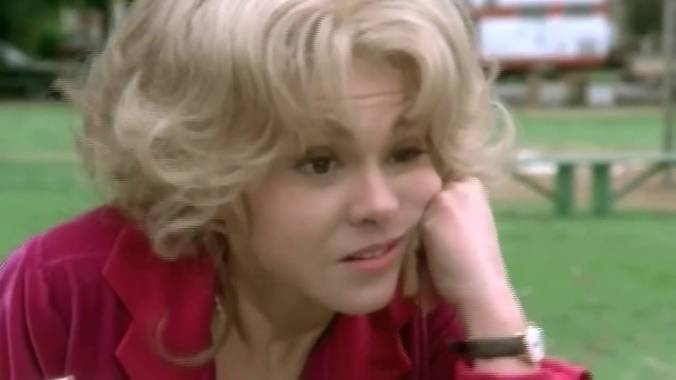
If you didn’t know Barbara Harris had died—indeed, if you didn’t know who Barbara Harris was—it is a measure of her integrity that she would have been pleased. I knew Harris’s work well (though I found out she had died just recently), but only because I have long been dedicated to show business history. Indeed, she was one of my favorite actresses who was a welcome accent to any movie she deigned to appear in, striking, but not beautiful, versatile, but not flashy, funny when the role required it, powerful when the challenge was dramatic or tragic, always a bit off-center, always surprising, never predictable.

She was an off-center ethics hero too, by rejecting the malady not only of her era but of her chosen profession as well. Barbara Harris rejected celebrity as a career goal or a life value, sneered at fame, and believed that it was what you accomplished in life that mattered, not how well-known or admired you became by accomplishing it. Harris often chose her projects according to how obscure she thought they would be, and actively avoided recognition. What a marvelous obsession! In her case, it was also an ironic one, because the most quirky and unpromising projects often became viable because she elevated them.

Her entire career was proof of the wisdom of Harry Truman’s great observation, “It is amazing what you can accomplish if you do not care who gets the credit.” Harris did not care about the credit, but she accomplished a great deal. As a young teenaged actress who loved the process of improvisation, she was a founding member of the Second City improvisational theater in 1959, planting the seeds that gave our culture too many comic geniuses to count, along with Saturday Night Live and everything it spawned as well. Harris was the very first performer to appear on stage for Second City, in fact.  From there it was stardom on Broadway, often with her more famous Second City pals Alan Alda and Alan Arkin. She starred in a the musical  “On a Clear Day You Can See Forever” (Harris could sing, too); “Oh Dad Poor Dad Mama’s Hung You In The Closet And I’m Feeling So Sad”; and “The Apple Tree” (and won a Tony Award in 1967). Her movies included a classic Harris turn in A Thousand Clowns (1965), Who Is Harry Kellerman and Why Is He Saying Those Terrible Things About Me? (which got her an Oscar nomination in 1971), Nashville (1975),the first Freaky Friday (1976) opposite Jody Foster, Hitchcock’s last film, Family Plot (1976), the cool, clever nostalgic spoof  Movie Movie (1978) that I bet you have never seen, a seering performance as the betrayed wife of a Senator in The Seduction of Joe Tynan (1979), and her final film, Grosse Pointe Blank  in 1997. Then she retired from performing to teach acting.

During Harris’s career, she did none of the things actors typically do to keep their name before the public—no talk shows, few guest appearances on TV, no celebrity cameos on “Murder She Wrote” or “The Love Boat.” Somehow she instinctively understood that it wasn’t popularity or fame that defined her worth, or any human bieng’s worth, and refused to allow our society’s corrupting elebrity obsession of  warp her values or dictate her needs.

For me, Barbara Harris’s defining moment occurs at the end of the perfect movie for her, Robert Altman’s rambling, improvisational film “Nashville,” which is, among other things, about the sick obsession with fame and fortune that Barbara Harris rejected. Harris has few lines, and plays a runaway middle-aged wife who is determined to be a Country Western star. Her efforts are desperate, pathetic, and darkly comic, but at the film’s climax, when a famous singer is shot at a political rally for a renegade Presidential candidate, she grabs the suddenly open microphone of the fallen star she envies, and begins to sing in the chaos.

Let’s watch it now, and remember a woman and an artist of unshakable integrity and dedication to her art, and only her art.

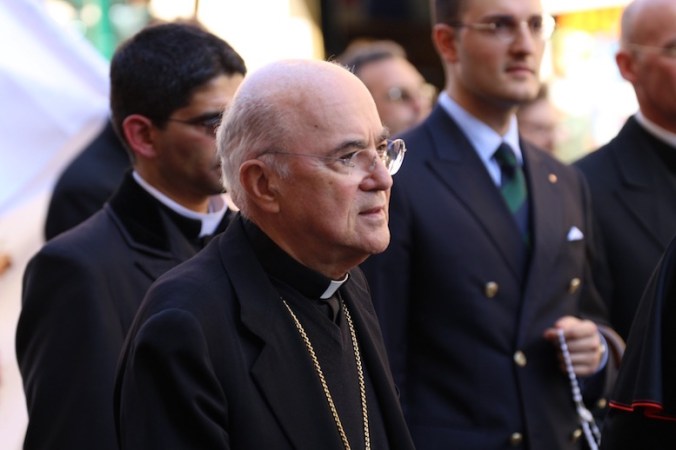
Ethics Hero: Archbishop Carlo Maria Viganò

From the National Catholic Register:

In an extraordinary 11-page written testament, a former apostolic nuncio to the United States has accused several senior prelates of complicity in covering up Archbishop Theodore McCarrick’s allegations of sexual abuse, and has claimed that Pope Francis knew about sanctions imposed on then-Cardinal McCarrick by Pope Benedict XVI but chose to repeal them.

Archbishop Carlo Maria Viganò, 77, who served as apostolic nuncio in Washington D.C. from 2011 to 2016, said that in the late 2000s, Benedict had “imposed on Cardinal McCarrick sanctions similar to those now imposed on him by Pope Francis” and that Viganò personally told Pope Francis about those sanctions in 2013.

Archbishop Viganò said in his written statement, simultaneously released to the Register and other media, (see full text below) that Pope Francis “continued to cover” for McCarrick and not only did he “not take into account the sanctions that Pope Benedict had imposed on him” but also made McCarrick “his trusted counselor.” Viganò said that the former archbishop of Washington advised the Pope to appoint a number of bishops in the United States, including Cardinals Blase Cupich of Chicago and Joseph Tobin of Newark.

Archbishop Viganò, who said his “conscience dictates” that the truth be known as “the corruption has reached the very top of the Church’s hierarchy,” ended his testimony by calling on Pope Francis and all of those implicated in the cover up of Archbishop McCarrick’s abuse to resign.

His full testimony can be read here.

Well, let’s see if the Pope and the Roman Catholic Church can duck its responsibility one more time. This particular giant, nasty ethics chicken has been trying to roost for decades, while whoever was Pope continued to lecture the rest of the world, and the United States particularly, about its moral failings. Funny thing with me: I don’t take well to lectures on morality from self-anointed authorities who habitually facilitate their pals’ child-molesting hobby.  It is telling—damning is a better word—that Pope Francis, who seldom hesitates to comment on the evils of war, capitalism and climate change cannot find words to comment on this accusation. As we discussed here last week, he did issue some Authentic Frontier Gibbersh about the re-emerging child abuse scandal as if he was just an innocent bystander.

Archbishop Viganò is a model whistleblower, although his call for the Pope and the others to resign is inadequate. The entire culture of the Church is corrupt to the core, and aa few, or many, resignations will not cure the problem.

Morning Ethics Warm-Up, 8/17/18: Dead Singers, Honorable Magicians, Untrustworthy Ex-Employees, Volunteer Pitchers, And Little Horses

Goooood Morning, Pennsylvania!

(That’s where I going for the next four days, on a rural Pennsylvania ethics CLE speaking tour!)

1. Aretha Franklin Ethics If I can say right now without question that I will never voluntarily listen to an Aretha Franklin record, does that make me a racist? Her death triggers the “recognition but not admiration” impulse I reserve for artists whose skill and importance to the culture I acknowledge and honor, but whose art I never enjoyed and won’t miss. ( Ella Fitzgerald, Peggy Lee, Barbra Streisand and Joni Mitchell are in the same category for me, restricting the list to pop female singers.) However…

  • It certainly is incompetent for Fox News to mix up Aretha and Patti Labelle, walking right into the “all black folks look the same to them” canard.
  • Since the news media/resistance collective has decreed that anything the President does of says is proof of a depraved soul, we had this yesterday: a White House press pool member for Buzzfeed told another reporter—she didn’t even tweet it!— that the President’s reaction to Franklin’s death was that he”Described her as a person he knew well and who worked for him.” This became more proof that President Trump is a racist: his immediate reaction to the death of a black woman was to think of her as a subordinate.

Will the sane and fair members of the public, which I assume is, if not a majority, a large group, ever turn on such people? A. The statement was hearsay, and not even a quote. B. Franklin did work for him, signing a contract to sing at at a Trump casino. C. What does “knew well” even mean in this context? He didn’t say that he knew her personally, or that they were pals, though who knows? I know her well too: she’s that famous soul singer I couldn’t stand listening to.

2. A spontaneous outburst of integrity...from the unlikely source of professional magician/loudmouth Penn Jillette. Jillette is an asshole, an assessment that I doubt he would dispute himself, but when the vocally-progressive entertainer (aren’t they all?) was asked in a recent Vulture interview to weigh in on Omarosa’s claims about the kind of language Donald Trump used behind closed doors, he responded,

“If Donald Trump had not become president, I would tell you all the stories. But the stakes are now high and I am an unreliable narrator. What I do, as much as anything, is I’m a storyteller. And storytellers are liars. So I can emotionally tell you things that happened racially, sexually, and that showed stupidity and lack of compassion when I was in the room with Donald Trump and I guarantee you that I will get details wrong. I would not feel comfortable talking about what I felt I saw in that room….

I will tell you things, but I will very conscientiously not give you quotations because I believe that would be morally wrong. I’m not trying to protect myself. This really is a moral thing.”

Good for Penn. He’s also a very creative and entertaining magician, as is his mute sidekick, Teller. Continue reading

Ethics Hero: Patriots Quarterback Tom Brady

Hear me out, for I am, as regular readers here know, far from a Brady fan, despite my Boston bona fides. In fact, I think he shares the atrocious ethics values of his coach, which can be fairly summed up as “the ends justify the means” and “it ain’t cheating if you can get away with it.”

This, however, is a completely different area,  the toxic, values-rotting narcissism and obsession with surface beauty and impossible ideals in appearance that has made the nation sillier, more trivial, meaner, neurotic, insecure and less productive.

After the above photo of the 40 year-old quarterback with his model wife, Gisele Bundchen, surfaced online last week, the Patriots super-star was beset with social media snark attacking his “dad bod” and declaring him out of shape.

Whether it is intentional or not, Brady is to be thanked, admired and praised for appearing in public absent ripped abs and bulging muscles, and even some healthy fat visible in moderation, and doing so without shame. This is how normal people look, and should be allowed to look without comment or criticism. Once upon a time, not so long ago, before Nautilus and health club chains, celebrity athletes and he-men were judged on what they did, and not how chiselled and bulked-up they looked off the field or between films. This now extinct attitude was known as rationality and proportionality. Thus Joe Louis, the greatest heavyweight boxer of all time.. Continue reading

When The Anti-Liberty Mobs Attack, Courage And Character Are Paramount, Part II: “Slav”

Betty Bonifassi in “Slav”

Fortunately, not every artist has the jelly-spine of Scarlett Johansson when the political correctness, anti-liberty mobs attack.

In Montreal,the Montreal International Jazz Festival immediately did its best imitation of the artist bowing out of her planned role as a transgender male when it cancelled  the show “Slav,” by the acclaimed Quebec theater director Robert Lepage. The production called itself a a “theatrical odyssey” inspired by “traditional African-American slave and work songs,” but–oh-oh!–it also features a nearly all-white cast performing “black” music. Silly me, I never realized music was colored.  Lepage, is white, as is “Slav’s” star Betty Bonifassi.  Only two of the seven cast members are black.

The show was immediately attacked for its “cultural appropriation” and by black activists for “stealing” “their” songs.

The jazz festival , emulating most organizations that ironically tend to have even fewer spinal columns than individual people, canceled the show after only two performances, even though the production had sold more than 8,000 tickets for its scheduled for 16 performances. The craven festival organizers said it had been “shaken” by the criticism, and grovelled, saying.in a statement, “We would like to apologize to those who were hurt. It was not our intention at all.”

Yecchhh.

As I wrote in the Part I, as Johansson essentially killed a film project because she didn’t have the wit or the guts to stand up to unethical bullying by transgender activists, “What is desperately needed when groups misbehave this way and abuse their influence and power is for their target to say no. Unfortunately, doing so requires unusual levels of principal, character, responsibility, intelligence and courage.”

Scarlett obviously doesn’t have them. Roger Lepage, however, does, especially after several leading theater directors in Quebec rallied behind Lepage this week, pointing out that closing the production could have a chilling effect on artistic expression in Canada. At least four theaters are now proceeding with productions of “Slav,” and preparing to metaphorically spit in the protesters’ eyes. Continue reading