The Seventh Annual Ethics Alarms Awards: The Best of Ethics 2015, Part I

Sweet Briar montage

Welcome to the Seventh Annual Ethics Alarms Awards, our blog’s retrospective of the best and worst in ethics over the past year, 2015.

It was a rotten year in ethics again, it’s fair to say, and Ethics Alarms, which by its nature and mission must concentrate on episodes that have lessons to convey and cautionary tales to consider probably made it seem even more rotten that it was. Even with that admission, I didn’t come close to covering the field. My scouts, who I will honor anon, sent me many more wonderfully disturbing news stories than I could post on, and there were many more beyond them. I did not write about the drug company CEO, for example, who suddenly raised the price of an anti-AIDS drug to obscene levels, in part, it seems, to keep an investment fraud scheme afloat. (He’ll get his prize anyway.)

What was really best about 2o15 on Ethics Alarms was the commentary. I always envisioned the site as a cyber-symposium where interested, articulate and analytical readers could discuss current events and issues in an ethics context. Every year since the blog was launched has brought us closer to that goal. Commenters come and go, unfortunately (I take it personally when they go, which is silly), but the quality of commentary continues to be outstanding. It is also gratifying to check posts from 2010 and see such stalwarts who check in still, like Tim Levier, Neil Dorr, Julian Hung, Michael R, and King Kool.  There are a few blogs that have as consistently substantive, passionate and informative commenters as Ethics Alarms, but not many. Very frequently the comments materially enhance and expand on the original post. That was my hope and objective. Thank you.

The Best of Ethics 2015 is going to be a bit more self-congratulatory this year, beginning with the very first category. Among other virtues, this approach has the advantage of closing the gap in volume between the Best and the Worst, which last year was depressing. I’m also going to post the awards in more installments, to help me get them out faster. With that said….

Here are the 2015 Ethics Alarms Awards

For the Best in Ethics:

Most Encouraging Sign That Enough People Pay Attention For Ethics Alarms To Occasionally Have Some Impact…

The Sweet Briar College Rescue. In March, I read the shocking story of how Sweet Briar College, a remarkable and storied all-women’s college in Virginia, had been closed by a craven and duplicitous board that never informed alums or students that such action was imminent. I responded with a tough post titled “The Sweet Briar Betrayal,” and some passionate alumnae determined to fight for the school’s survival used it to inform others about the issues involved and to build support. Through the ensuing months before the school’s ultimate reversal of the closing and the triumph of its supporters, I was honored to exchange many e-mails with Sweet Briar grads, and gratified by their insistence that Ethics Alarms played a significant role in turning the tide. You can follow the saga in my posts, here.

Ethics Heroes Of The Year

Dog Train

Eugene and Corky Bostick, Dog Train Proprietors. OK, maybe this is just my favorite Ethics Hero story of the year, about two retired seniors who decided to adopt old  dogs abandoned on their property to die, and came up with the wacky idea of giving them regular rides on a ‘dog train” of their own design.

Ethical Mayor Of The Year

Thomas F. Williams. When the Ferguson-driven attacks on police as racist killers was at its peak (though it’s not far from that peak now) the mayor of Norwood, Ohio, Thomas F. Williams, did exactly the opposite of New York Mayor Bill de Blasio in response to activist attacks on the integrity of his police department. He released a letter supporting his police department without qualification. At the time, I criticized him for his simultaneously attacking activists as “race-baiters.” In the perspective of the year past, I hereby withdraw that criticism.

Most Ethical Celebrity

Actor Tom Selleck. In a terrible year for this category, Selleck wins for bravely pushing his TV show “Blue Bloods” into politically incorrect territory, examining issues like racial profiling and police shootings with surprising even-handedness. The show also has maintained its openly Catholic, pro-religion perspective. Yes, this is a redundant award, as “Blue Bloods” is also a winner, but the alternative in this horrific year when an unethical celebrity is threatening to be a major party’s nominee for the presidency is not to give the award at all.

Most Ethical Talk Show Host

Stephen Colbert, who, while maintaining most of his progressive bias from his previous Comedy Central show as the successor to David Letterman, set a high standard of fairness and civility, notably when he admonished his knee-jerk liberal audience for booing  Senator Ted Cruz

Sportsman of the Year

CC Sabathia

New York Yankee pitcher C.C. Sabathia, who courageously checked himself into rehab for alcohol abuse just as baseball’s play-offs were beginning, saying in part,

“Being an adult means being accountable. Being a baseball player means that others look up to you. I want my kids — and others who may have become fans of mine over the years — to know that I am not too big of a man to ask for help. I want to hold my head up high, have a full heart and be the type of person again that I can be proud of. And that’s exactly what I am going to do.”

Runner-up: MLB Commissioner Rob Manfred, who dismissed the ethically-addled arguments of Pete Rose fans to reject his appeal to be have his lifetime ban for gambling lifted.  For those who wonder why football never seems to figure in this category: You’ve got to be kidding.

Ethics Movie of the Year

SpotlightTIFF2015

“Spotlight”

Runner-up: “Concussion”

Most Ethical Corporation

Tesla Motors, the anti-GM, which recalled all of its models with a particular seatbelt because one belt had failed and they couldn’t determine why. Continue reading

Remembering The President Whose Dedication To Ethics Made The U.S. Possible

george_washington_death

We no longer honor George Washington on his birthday to the extent his importance to our nation warrants. George Washington died on this date, in his Mount Vernon Home, at the age of 67. Let’s think about him now, specifically his character.

Washington is still something of a mysterious man, but there is no question that he was one who was possessed of natural and remarkable leadership abilities, unusual instincts of common sense and justice, astounding courage, striking charisma and most of all, the rare ability, especially in one so celebrated and successful, to change his attitudes and beliefs over time. He was chosen, among the most outstanding collection of leaders this nation ever had at a single point in history, to lead them  all, and the primary reason was that while few of our Founding Fathers trusted each other, they all trusted him. George Will calls him “the indispensable man,” and the assessment is apt.

One formative experience that created that indispensable man was his lifetime dedication to civility, respect, conscience, kindness and ethics as they were taught to him by his father. The elder Washington made young George copy a list 110 rules of civility and deportment into his school notebook when the President-to-be was about sixteen-years old. Scholars have determined that the list originated in the late sixteenth century in France, and had been in use there and in England before the elder Washington ever imbued his son with them. Biographers of George have been struck by the extent to which these maxims accurately describe his behavior, habits and ethical conduct throughout his life. He was quick to quote them;  it has been said that if you awoke George from his slumber prior to breathing his last on that December 14, and asked him, “What’s Rule #7?,” he would have recited it on the spot. (“Put not off your clothes in the presence of others, nor go out of your chamber half dressed.”) The Library of Congress owns the original manuscript for the Rules of Civility.

Washington’s 110 Rules have been on the Ethics Alarms home page in the left margin under “Rule Book” almost from the beginning of the blog, and I posted them back in 2009. It’s time to look at them again, as we remember, and are properly grateful for, this special man. Many are funny, in retrospect, in their dated reflection on earlier times, but the ethics principles sounded still resonate, especially the last:

110. Labor to keep alive in your breast that little spark of celestial fire called conscience.

That one alone is worth a lifetime.

George Washington’s 110 Rules

The Rules of Civility & Decent Behavior in Company and Conversation
(As memorized by George Washington as a youth. Authorship unknown)

Continue reading

Ethics Heroes: The Community of Middlesborough, England.

COX_funeral_3524163b

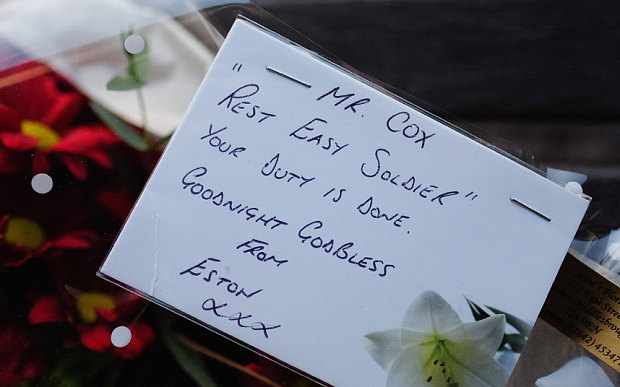
Thomas Cox, a British World War Two vet who served in the Royal Pioneer Corps, died at the age of 90 with no known surviving relatives.

Hoping to give Cox the final salute he deserved, the Royal Pioneer Corps Association  posted an appeal on its Facebook page asking for people to attend his funeral. The plea was shared among veteran groups, military groups and others, and when the day came, hundreds of strangers to Cox were on hand to say farewell and thanks to the old soldier. Many of the mourners at the service in Middelborough, Teaside sent flowers and wreaths as well.

They didn’t do this for the family, for there was none, and Cox was beyond caring. They came out of respect for a generation, a pivotal moment in human history, and to assert that we are all part of a larger family, though we usually don’t behave that way.

There’s not a lot more to say, is there?

Mission accomplished.

Heroes, Villains And Fools In The Latest “Donald Trump Candidacy Ethics Train Wreck” Disaster

Circus Train wreck

In a single post I can’t possibly cover all of the heroes, villains and fools who have emerged in the aftermath of the explosion of Trump’s latest hand-grenade tossed into the Presidential campaign. I have to start somewhere, though.

At the outset, I want to officially designate Trump’s campaign as an ethics train wreck, neatly paired with the Hillary Clinton Campaign Ethics Train Wreck (more from that later.) Do you sense that the number of Ethics Train Wrecks are proliferating? You are correct, and it is both a direct result and an indirect result of the Obama Administration Ethics Train Wreck. When leadership is feckless, weak, dishonest, unethical and ineffective, a society’s ethical standards start to unravel.

Now on to the initial designations regarding Trump’s declaration that Muslims should be banned from entering the country.

Hero, Villain, AND Fool: Donald Trump. Trump is a hero in his own mind; in ethics terms, the status is accidental, an example of doing a good and courageous thing for all the wrong reasons. In his typical, bully-in-a china-shop  way, Trump has forced the national debate to focus on nasty realities rather than operate from President Obama’s fantasy world, where radical Islamic terrorists somehow are not Islamic, and Hillary Clinton’s delusion/lie that terrorism has “nothing to do with Muslims, whatsoever” even after two Muslims, because they were Muslims, killed 14 citizens in a terrorist attack. Muslims who have been radicalized or who have ties to terror groups are a real and existential problem that requires a coherent policy addressed at the problem. Chanted nostrums like “This isn’t who we are” don’t get the job done. A frank debate is mandatory, and sometimes only a boor, a maniac or a boob with less than acute intellectual skills will have the guts to force such a debate. Clarence Darrow regarded nut-case John Brown as such a hero, arguing that some problems require someone whose disregard for conventional societal standards to “cut the Gordian Knot.” By Darrow’s definition, then, Trump is a hero. Continue reading

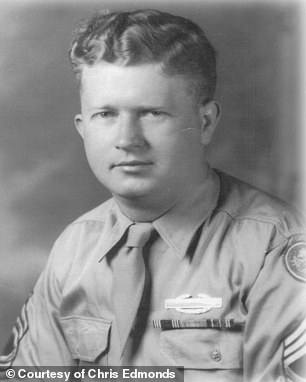
Ethics Hero Emeritus: Roddie W. Edmonds (1919-1985)

All these years later, and we are still learning about heroic acts of World War II that missed the pages of history.

Roddie W. Edmonds of Knoxville, Tennessee just became the first U.S. soldier to be named Righteous Among the Nations, an honor bestowed by Israel’s Holocaust Remembrance and Research Center to  non-Jews who risked their lives to save Jews during the Holocaust.

Edmonds, who died 30 years ago, never even told his son about the dramatic episode that earned him the posthumous honor, and his story only came to light in the past few years when two men who he saved came forward to tell a tale that could have been crafted in Hollywood. ( As you will see, long after the true event, it was.). He had been captured during the Battle of the Bulge, and was one of about a thousand U.S. soldiers taken to the Stalag IXA camp in Ziegenhain, Germany in 1945. There were 200 Jewish soldiers in the group, and the Nazi officers in charge of the camp announced that the Jewish soldiers were to assemble outside their barracks to be taken to labor camps, and probably killed. Continue reading

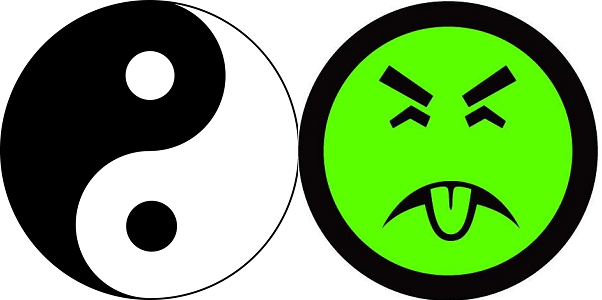
Campus Protest Ethics Yin, Yang and Yecchh: Unethical Website Of The Month “The Demands,”Ethics Hero Dr. Everett Piper, And Ethics Dunces, The Occidental Faculty

yin-and-yang-yuck

It’s an interesting question: is a website that approvingly lists nothing but unethical and outrageous demands from student protesters in this current round of progressive campus thuggery itself unethical, or is calling it so a case of killing the messenger? The Demands is certainly a useful website, as it displays the full kaleidoscopic display of where indoctrination on campus and the elevation of victim-mongering as a successful political strategy (Go Redskins!) off campus has brought us. Since the site’s stated objective is to support these pro-apartheid, anti-speech, anti-education totalitarian tots, however, I think unethical is a fair description. Some may disagree.

The loony is powerful here. For example…

...Guilford College students demand that the college must prioritize recruitment and retention of undocumented students. Guilford also takes the prize for the most the most deranged “suggestion” among the lists, which is that  “every week a faculty member come forward and publicly admit their participation in racism inside the classroom via a letter to the editor in the Guilfordian.” 

…Every Dartmouth student “must be taught and made aware that the land they reside on is Abenaki homeland” especially at all major ceremonies, and  the school must “incorporate into each department at least one queer studies class.”

SMU students demand that all students considering initiation into a fraternity or sorority must be subjected to mandatory cultural intelligence and sensitivity training, a.k.a. brainwashing.

University of North Carolina student activists go full Orwell, demanding “mandatory programming [on] ways in which racial capitalism, settler colonialism, & cisheteropatriarchy structure our world.”  They also demand that“White professors must be discouraged from leading and teaching departments” studying colonized/enslaved people/societies,” and this gem: “We DEMAND that campus police participate in the University-wide political education….Policing as an institution must be abolished.”

Vanderbilt students want the university to eliminate its policy against “obstruction or disruption of teaching, administration, & University procedures & activities.”

There is so much more, if you have the stomach for it. Please, please make sure some debate moderator makes a list of the most outrageous demands and asks Bernie and Hillary what they think about them, as well as the campus culture and political cant that gestated this virus. Continue reading

Ethics Hero: The World Anti-Doping Agency (WADA)

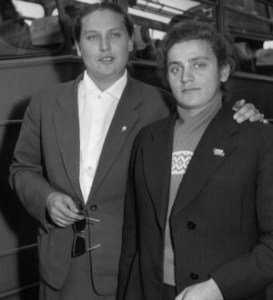
Meet the Press sisters.

Meet the Press sisters!

About a week ago, The World Anti-Doping Agency (WADA)  issued an unexpectedly tough report calling for Russia to be banned from international athletics at all levels for flagrant doping violations and a “deeply rooted culture of cheating at all levels” within Russian athletics. WADA also urged the International Association of Athletics Federations to ban five Russian athletes and five coaches for life. Why the Draconian measures?

The verdict was doubtless bolstered by considering the repeated examples of Russian cheating going back to the bad old Soviet Union days, when the gargantuan Press sisters were winning gold medals over female athletes half their size and East German female swimmers had shoulders as wide as Volkswagon buses, often because they had been dosed with testosterone without their knowledge. More recently, WADA found that Russia “intentionally and maliciously” destroyed 1,400 urine and blood samples of its athletes and, WADA says, the Russian government was directly involved.

WADA President Dick Pound’s report conceded that “corruption and bribery practices at the highest levels of international athletics” were rampant, but that Russia was in a league of its own. “For the 2016 Olympics our recommendation is that the Russian Federation is suspended. One of our hopes is that they will volunteer that so they can undertake the remedial work needed.”

Then he told another funny joke about a horse, a rabbi and an octopus walking into a bar. Continue reading

Ethics Hero: CNN’s Jake Tapper

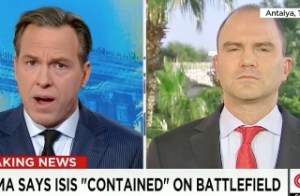
tapper-rhodesIt is tragic that it takes bloody murder to raise the press out of its journalism ethics torpor, and force it to ask tough questions of the administration it helped put in power and  has pampered,  pimpeda nd covered for ever since.  Still, progress is progress. CNN’s Jake Tapper, probably the closest thing to an objective journalist in captivity, has obviously had enough of the seven-year pattern of pretending that all Obama policies are working just marvelously thank-you, even as the stench of fakery, dishonesty and incompetence fills the air.

Over the weekend, Tapper was having none of the spin offered by Deputy National Security Adviser Ben Rhodes and Rep. Adam Schiff (D-CA), both sent out by the White House for damage control, after the President’s statement that “ISIS has been contained” was rendered ludicrous by the deaths in Paris.“If this is what ISIS looks like contained, I shudder to think what ISIS looks like uncontained,” Tapper told Rhodes.

Bazinga!

President Obama ended the war on terror, put tepid measures in place in Syria, dismissed ISIS as “the junior varsity, ” and in the aftermath of the Benghazi attack, coordinated a campaign of media disinformation to blame it on a YouTube video rather than admit that Al Qaeda was not “decimated” as he had puffed, all while taking unseemly personal credit for the killing of bin Laden and feeding the public what has been called a “narrative of success.”

Maybe the news media will finally insist that he accept accountability for his inept and feckless terrorism strategies. I doubt it, but at least Tapper gave us a reminder of what unbiased journalism looks like, lest we forget.

Ethics Hero: 11th U.S. Circuit Court of Appeals

blog_credit_card_swipe

It’s a small victory to be sure, but those of us who want to protect free speech must take our hope from whatever sources we can.

In the case of Dana’s Railroad Supply v. Florida, the sharp-eyed Atlanta-based 11th U.S. Circuit Court of Appeals  struck down a Florida law barring merchants from imposing a surcharge on customers for credit card use.

The law allowed merchants to give discounts for cash, but would not permit surcharges for using credit cards. “Ah HA!” realized the court, This violates the First Amendment, because it penalizes businesses that want to call price differences based on credit card use a surcharge rather than a cash discount, and they are the exact same thing. “You can penalize credit card users,” the dumb law said, “but you have to call it what we tell you to call it.”

“Tautologically speaking,” the opinion said, “surcharges and discounts are nothing more than two sides of the same coin; a surcharge is simply a ‘negative’ discount, and a discount is a ‘negative’ surcharge. As a result, a merchant who offers the same product at two prices—a lower price for customers paying cash and a higher price for those using credit cards—is allowed to offer a discount for cash while a simple slip of the tongue calling the same price difference a surcharge runs the risk of being fined and imprisoned.”

“The First Amendment prevents staking citizens’ liberty on such distinctions in search of a difference.”

Love it.

___________________

Pointer and Facts: ABA Journal.