Ethics Hero: Sergio Consuegra

Hero!

Hero!

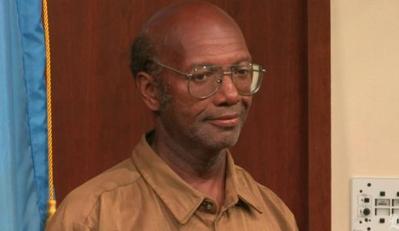
The violent confrontation between a group of aggrieved bikers and the driver of a sports utility vehicle (with his family on-board) in Manhattan turned into an ugly incident that left both the driver and one of the cyclists seriously injured.  You can see the disturbing video of the attack—captured on one of the cyclist’s helmetcam—-here. Who precipitated the incident will have to be sorted out in court, but the there is little question that only the intervention of bystanders stopped further injury to the driver and perhaps his family—an inspiring example of witnesses to a wrong stepping in at personal risk to themselves and making a difference. One of the rescuers—there were others, not yet named—was Sergio Consuera. Continue reading

From Oklahoma, A Remarkable Ethics Lesson

hartmanparkinglot_610x458

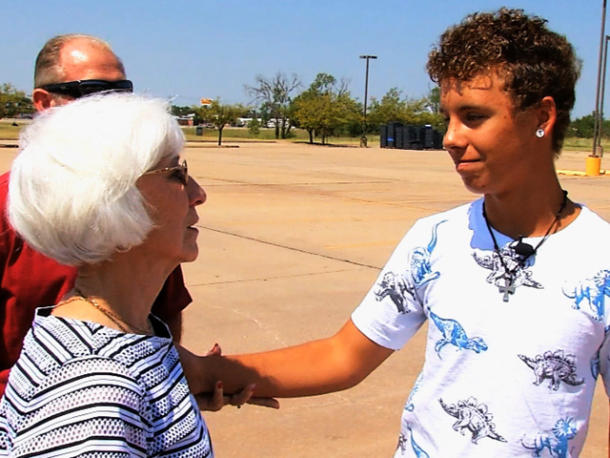
Young Christian Lunsford was disgusted when he saw the TV report about the mugging of seventy-eight-year-old Tona Herndon of Bethany, Oklahoma, robbed while visiting the gravesite of her husband of 60 years, who had died just two weeks earlier. It wasn’t merely that the mugger took a purse and $700 from a vulnerable and grieving woman, but that the culprit was Christian’s father. He had been quickly arrested, and his mug shot, shown on TV, was all-too-familiar to his fifteen-year-old son. Christian’s parents divorced when he was two, and his contact with his father had been minimal as the elder Lunsford kept ending up in jail. The teen had recently heard from his dad, however, when he sent Christian $250 to pay for his participation in a school band trip.

The latest crime, however, moved Christian to do something exemplary. He contacted Tona Herndon and asked her to meet him in a church parking lot. When she did, he mugged her too, as a tribute to his father.

No, that’s not what happened: I was just messing with you. Continue reading

Ethics Hero: Sid Bream

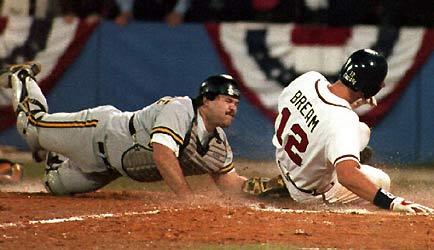
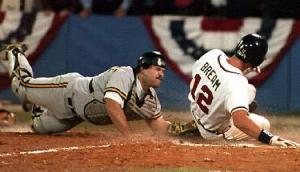
sid_breamYou all remember Sid Bream, don’t you? Well, probably not: he was a mediocre first baseman about 20 years ago who played for the Pittsburgh Pirates and the Atlanta Braves. He hasn’t been heard from in a long time, being quietly retired, but the Braves may be hosting the Pirates in an upcoming National League Division Playoff Series as the baseball post season gets underway, and they invited Bream to throw out the first pitch in Game #1 if that is the case—-Pittsburgh has to win a wildcard play-off game with Cincinnati first. You see, the one thing in his career that Bream is remembered for, at least in Atlanta, is scoring the run that won the National League Championship Series over the Pirates in 1992, in a close play that also lives in Pirates’ fans nightmares.

Throwing out the first pitch is fun: the team flies you in and pays for your hotel, gives you a prime ticket, and then announces your name as you trot on the field to cheers. If you have kept your arm in shape, you might even get off a throw to the catcher from the pitcher’s mound that doesn’t embarrass you, and that will acquire more cheers. from the packed stadium. Wait…this is Atlanta, not Boston. OK, from the two-thirds filled stadium. Even then, what’s not to like?

But Sid Bream turned the Braves down. Remember that I began by saying that he played for both the Braves and the Pirates. He said,

“Whatever their motive (for the invite) was, I don’t want to be involved. I wasn’t surprised (by the offer). Whether their motive was to rub it in the Pirates’ faces, I don’t know. I think it was just more of a gesture to commemorate those two teams getting back together in the postseason. But I’ll stay neutral. I’m not going to do anything to tell the fans in Atlanta or Pittsburgh that I’m (rooting) one way or the other.”

Oh, I think it’s fair to say that rubbing the Pirates’ faces in their last loss to the Braves in a postseason game was exactly what the Braves had in mind. This kind of voodoo has been a standard part of baseball gamesmanship for a long time: nobody believes that the Yankees had Bucky Dent throw out the first pitch when the Yankees had a crucial playoff game against Boston (which they lost) in 2004 “to commemorate those two teams getting back together in the postseason.” It’s psychological warfare, and more or less good-natured; there’s nothing wrong with it, and there would have been nothing wrong with Bream agreeing to play along.

But Sid Bream is, it seems, loyal. He was a Pittsburgh Pirate for a long time, a Brave only for a couple of years, and he doesn’t feel like being part of one of his former teams’ effort to unsettle the other one, even though its’ no big deal, and even though his old team won’t hold it against him. It just would feel right to him.

This is called integrity.

Good for Sid Bream.

_______________________

Pointer, Graphic and Facts: NBC Sports


Ethics Hero: Minneapolis Dairy Queen Manager Joey Prusak

"Good job, Joey!You made Dairy Queen proud and brought honor to the store, Here's 40 dollars."

“Good job, Joey!You made Dairy Queen proud and brought honor to the store, Here’s 40 dollars.”

It’s a simple story, trivial in a way, but with an important ethics lesson.

Joey Prusak, the 19-year-old store manager at a suburban Minneapolis Dairy Queen, watched as a female customer with a heart of ice saw a vision-impaired man drop a $20 bill, picked it up, and instead of returning the money to the unaware customer, slipped it into her own purse. When the certifiably awful woman got up to the counter to order, Prusak told her what he had seen and demanded that she return the bill as a condition of service. The woman, as one might expect from someone who would take money under such circumstances, refused, so Prusek reimbursed the visually impaired customer with $20 of his own.

A customer who saw the incident e-mailed Dairy Queen in praise, and now Prusak has become something of a folk hero.

The important ethics lesson is “Fix the problem.” If you are in a position to right a wrong or prevent one, it has become your obligation to do it. Don’t adopt  any of many rationalizations available to persuade you to do nothing— “It’s not my job,” “Mind your own business,” “Who am I to judge?”, “It’s not my fault”, “What if I’m wrong?”—or, in a case like this one, manufacture excuses for the vile miscreant who took the money—–“Maybe she’s desperate,” “Finders keepers”-–and just act. Fix the problem. Continue reading

Ethics Hero: Glen James

Glen James, role model.

Glen James, role model.

This is straightforward: Glen James, a Boston man who lives in shelters and has no money, found a backpack over the weekend that contained $2,400 in cash, $39,500 in traveler’s checks, passports, and other personal items. James flagged down a passing Boston police officer and gave him the backpack.  As is often the case with stories like this, he doesn’t think what he did was a big deal: after all, isn’t this what anyone would do?

We all know the answer to that question. Continue reading

Ethics Hero: Miss America Contestant Theresa Vail

theresa-vailMiss Kansas, also known as Theresa Vail, would be a standout in current 2014 Miss America pageant just based on her unusual set of experiences and talents: the 22-year-old student at Kansas State is a member of the Kansas Army National Guard’s Medical Detachment, a serious bowhunter, a former motorcycle racer, an  M16 marksman, a boxer, an auto mechanic, and an opera singer.* What is ethically of interest, however, is that she wore a bathing suit that  revealed her two tattoos.

This just isn’t done in beauty pageants, not that many contestants are the tatooing sort. Tatoos have traditionally been regarded as ruining a contestant’s “perfection,” and aesthetically, I have to agree: a beautiful woman is still beautiful with something scribbled on her side, but it is hardy an enhancement. But Vial, in announcing her decision on her blog, made a compelling ethical argument for letting her tats show:

“What a hypocrite I would be if I covered the ink. With my platform, how could I tell other women to be fearless and be true to themselves if I can’t do the same?…But I am who I am, tattoos and all.”

That is as good a definition of integrity as you will find. Brava.  Where integrity lies, you can usually find honesty, trustworthiness and courage as well. Continue reading

Presenting the Ethics Alarms Heroes’ Hall Of Honor

remember

Today, the anniversary of September 11. 2001, American minds should be occupied with thoughts of gratitude for heroes, the often anonymous and unknown people we may pass in the street every day, as well as the justly famous and celebrated, who make our lives and many others better by living their own selflessly and well. They are our salvation, role models and neighbors, and they teach us the lesson that all is never lost, and hope is always thriving, as long as there are good and courageous people who will do the right thing, no matter what the cost, when fate turns to them.

This seems like a propitious time to dedicate the Ethics Alarms Heroes Hall of Honor, the list of the Ethics Heroes Emeritus whose stories have been told here (and on this site’s predecessor, The Ethics Scoreboard.) Every current member of the Hall is now deceased, like the brave men and women who died this day, 12 years ago. Each of them, in a unique way, teaches how human beings can rise above the vicissitudes of mere survival, self-interest, personal benefits and the base desires of the species  to live  meaningful and virtuous lives. Some accomplished this over decades, some with one brilliant and transforming act of distinction.

There are currently 32 members enshrined in this virtual Hall. Obviously, it is far from complete. They are just symbolic representatives, worthy ones, of millions more who once breathed the same air we do today, and like those who perished twelve years ago, face the prospect of being forgotten over time, as we all go about the consuming task of getting from one day to another. Each one of us, I believe, is capable of emulating their example.

Here are the thirty-two members and their stories, as of this date,

September 11, 2013... Continue reading

Ethics Hero: John Dryden, High School Teacher

DrydenIt took a couple of months to determine whether John Dryden, would be best described as a high school social studies teacher in Batavia, Illinois, or as an ex- high school social studies teacher in Batavia, Illinois.  That part had a happy ending: he was not fired, as appeared at one point to be likely, for his act of ethical heroism.

In April, he was directed by the school board to distribute a survey on so-called “emotional learning” to his students. The results of the test, created and scored by Multi-Health Systems, were to be evaluated by comparing them to statistical data obtained from a large sample of students of similar ages given the same test. The MHS test included thirty-four questions regarding the use of drugs, alcohol, and the students’ emotions. Though Dryden was supposed to assure his students that their responses would be confidential, they were not. Any student whose answers raised concerns was to be sent to the school’s  counselors.

After the teacher picked up the survey forms from his mailbox shortly before his first class of the day, he noticed that each survey form had a student’s name on it  and that the questions involved under-age drinking and drug use. He had just finished teaching a unit on the Bill of Rights, and recognized a looming Fifth Amendment violation while fearing that his students, who were used to following orders, would not be aware that their rights were in peril. The survey, he correctly surmised, was state-compelled self-incrimination, and a breach of his students’ right to refuse to incriminate themselves.There was no time to confer with administrators, so he told  his students that they did not have to complete the forms if doing so involved admitting illegal behavior. Continue reading

Ethics Hero: Millikin University

This story sounds like it was dreamed up for joint production of the Lifetime Movie Network and Chiller.

Above: The scene of Wolcott's mothers shooting; below, his father.

Above: The scene of Wolcott’s mothers shooting; below, his father.

Millikin University is a private institution in Decatur, Illinois with approximately 2400 students. It has been thrust into local headlines with the discovery that one of its psychology professors, James St. James, who heads the schools Department of Behavioral Sciences, murdered his parents and his older sister when he was 15. Then he was called James Gordon Wolcott.

He changed his name after being treated in a mental institution, where he was sent after being found not guilty of the crime because he was legally insane at the time of the killings. High from sniffing glue, the brilliant but emotionally disturbed teen grabbed a .22-caliber rifle, walked into the living room and shot his father, then shot his sister and his mother.

Six years after being sent to Rusk State Hospital,  Wolcott emerged apparent cured, and ready to lead a productive life. Ironically, his patricide and his insanity  had greased the way for his rehabilitation: he inherited his parents’ estate and was able to draw a monthly stipend from his father’s pension fund. Changing his name to St. James, he earned a bachelor’s degree, a master’s degree and a PhD, and became an award-winning professor at Millikin. Professor St. James’ secret was undiscovered until this year. He is now 61. Continue reading

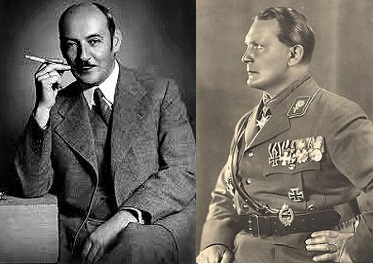
The Strange, Seldom Told Story of Ethics Hero Emeritus, Albert Göring (1895-1966)

Good brother, Bad brother.

Good brother, Bad brother.

The German and Israeli news media have recounted the exploits of Albert Göring recently , because he is under posthumous consideration for the highest honorary title conferred by the State of Israel, the “Righteous Among the Nations.” These are the heroes of the Holocaust, the brave individuals who risked their lives to foil Hitler’s Ultimate Solution. Since it was created in 1953, the title has been awarded to 24,356 people from 47 countries.

Göring is a strong candidate to join their ranks, for he saved many Jews from extermination during World War II. Honoring him would not be a difficult decision, except for one thing: he was the younger brother of one of Hitler’s vilest henchman, the architect of the death camps and master of the Gestapo, Hermann Göring.

Albert became disillusioned with the Nazis early in their rise to power and moved to Austria, where he frequently spoke out against Hitler and the Third Reich. He would have ended up in prison when the Germans took over Austria, but brother Hermann Goering, Hitler’s designated successor, believed that blood was thicker than genocide: he kept Albert out of the hands of the Gestapo, even though he knew his little brother was an enemy of the state.

Nobody knows exactly how many Jews and non-Jews Albert saved from his brother’s death camps, because Albert Göring himself didn’t know how many the people he helped. Continue reading