Ethics Hero: Minneapolis Dairy Queen Manager Joey Prusak

"Good job, Joey!You made Dairy Queen proud and brought honor to the store, Here's 40 dollars."

“Good job, Joey!You made Dairy Queen proud and brought honor to the store, Here’s 40 dollars.”

It’s a simple story, trivial in a way, but with an important ethics lesson.

Joey Prusak, the 19-year-old store manager at a suburban Minneapolis Dairy Queen, watched as a female customer with a heart of ice saw a vision-impaired man drop a $20 bill, picked it up, and instead of returning the money to the unaware customer, slipped it into her own purse. When the certifiably awful woman got up to the counter to order, Prusak told her what he had seen and demanded that she return the bill as a condition of service. The woman, as one might expect from someone who would take money under such circumstances, refused, so Prusek reimbursed the visually impaired customer with $20 of his own.

A customer who saw the incident e-mailed Dairy Queen in praise, and now Prusak has become something of a folk hero.

The important ethics lesson is “Fix the problem.” If you are in a position to right a wrong or prevent one, it has become your obligation to do it. Don’t adopt  any of many rationalizations available to persuade you to do nothing— “It’s not my job,” “Mind your own business,” “Who am I to judge?”, “It’s not my fault”, “What if I’m wrong?”—or, in a case like this one, manufacture excuses for the vile miscreant who took the money—–“Maybe she’s desperate,” “Finders keepers”-–and just act. Fix the problem. Continue reading →
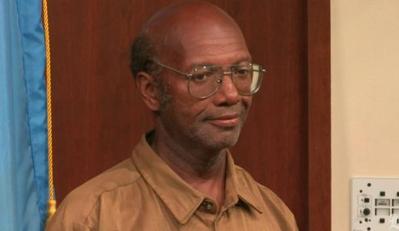
Ethics Hero: Glen James

Glen James, role model.

Glen James, role model.

This is straightforward: Glen James, a Boston man who lives in shelters and has no money, found a backpack over the weekend that contained $2,400 in cash, $39,500 in traveler’s checks, passports, and other personal items. James flagged down a passing Boston police officer and gave him the backpack.  As is often the case with stories like this, he doesn’t think what he did was a big deal: after all, isn’t this what anyone would do?

We all know the answer to that question. Continue reading →

Ethics Hero: Miss America Contestant Theresa Vail

theresa-vailMiss Kansas, also known as Theresa Vail, would be a standout in current 2014 Miss America pageant just based on her unusual set of experiences and talents: the 22-year-old student at Kansas State is a member of the Kansas Army National Guard’s Medical Detachment, a serious bowhunter, a former motorcycle racer, an  M16 marksman, a boxer, an auto mechanic, and an opera singer.* What is ethically of interest, however, is that she wore a bathing suit that  revealed her two tattoos.

This just isn’t done in beauty pageants, not that many contestants are the tatooing sort. Tatoos have traditionally been regarded as ruining a contestant’s “perfection,” and aesthetically, I have to agree: a beautiful woman is still beautiful with something scribbled on her side, but it is hardy an enhancement. But Vial, in announcing her decision on her blog, made a compelling ethical argument for letting her tats show:

“What a hypocrite I would be if I covered the ink. With my platform, how could I tell other women to be fearless and be true to themselves if I can’t do the same?…But I am who I am, tattoos and all.”

That is as good a definition of integrity as you will find. Brava.  Where integrity lies, you can usually find honesty, trustworthiness and courage as well. Continue reading →

Presenting the Ethics Alarms Heroes’ Hall Of Honor

remember

Today, the anniversary of September 11. 2001, American minds should be occupied with thoughts of gratitude for heroes, the often anonymous and unknown people we may pass in the street every day, as well as the justly famous and celebrated, who make our lives and many others better by living their own selflessly and well. They are our salvation, role models and neighbors, and they teach us the lesson that all is never lost, and hope is always thriving, as long as there are good and courageous people who will do the right thing, no matter what the cost, when fate turns to them.

This seems like a propitious time to dedicate the Ethics Alarms Heroes Hall of Honor, the list of the Ethics Heroes Emeritus whose stories have been told here (and on this site’s predecessor, The Ethics Scoreboard.) Every current member of the Hall is now deceased, like the brave men and women who died this day, 12 years ago. Each of them, in a unique way, teaches how human beings can rise above the vicissitudes of mere survival, self-interest, personal benefits and the base desires of the species  to live  meaningful and virtuous lives. Some accomplished this over decades, some with one brilliant and transforming act of distinction.

There are currently 32 members enshrined in this virtual Hall. Obviously, it is far from complete. They are just symbolic representatives, worthy ones, of millions more who once breathed the same air we do today, and like those who perished twelve years ago, face the prospect of being forgotten over time, as we all go about the consuming task of getting from one day to another. Each one of us, I believe, is capable of emulating their example.

Here are the thirty-two members and their stories, as of this date,

September 11, 2013... Continue reading →

Ethics Hero: John Dryden, High School Teacher

DrydenIt took a couple of months to determine whether John Dryden, would be best described as a high school social studies teacher in Batavia, Illinois, or as an ex- high school social studies teacher in Batavia, Illinois.  That part had a happy ending: he was not fired, as appeared at one point to be likely, for his act of ethical heroism.

In April, he was directed by the school board to distribute a survey on so-called “emotional learning” to his students. The results of the test, created and scored by Multi-Health Systems, were to be evaluated by comparing them to statistical data obtained from a large sample of students of similar ages given the same test. The MHS test included thirty-four questions regarding the use of drugs, alcohol, and the students’ emotions. Though Dryden was supposed to assure his students that their responses would be confidential, they were not. Any student whose answers raised concerns was to be sent to the school’s  counselors.

After the teacher picked up the survey forms from his mailbox shortly before his first class of the day, he noticed that each survey form had a student’s name on it  and that the questions involved under-age drinking and drug use. He had just finished teaching a unit on the Bill of Rights, and recognized a looming Fifth Amendment violation while fearing that his students, who were used to following orders, would not be aware that their rights were in peril. The survey, he correctly surmised, was state-compelled self-incrimination, and a breach of his students’ right to refuse to incriminate themselves.There was no time to confer with administrators, so he told  his students that they did not have to complete the forms if doing so involved admitting illegal behavior. Continue reading →

Ethics Hero: Millikin University

This story sounds like it was dreamed up for joint production of the Lifetime Movie Network and Chiller.

Above: The scene of Wolcott's mothers shooting; below, his father.

Above: The scene of Wolcott’s mothers shooting; below, his father.

Millikin University is a private institution in Decatur, Illinois with approximately 2400 students. It has been thrust into local headlines with the discovery that one of its psychology professors, James St. James, who heads the schools Department of Behavioral Sciences, murdered his parents and his older sister when he was 15. Then he was called James Gordon Wolcott.

He changed his name after being treated in a mental institution, where he was sent after being found not guilty of the crime because he was legally insane at the time of the killings. High from sniffing glue, the brilliant but emotionally disturbed teen grabbed a .22-caliber rifle, walked into the living room and shot his father, then shot his sister and his mother.

Six years after being sent to Rusk State Hospital,  Wolcott emerged apparent cured, and ready to lead a productive life. Ironically, his patricide and his insanity  had greased the way for his rehabilitation: he inherited his parents’ estate and was able to draw a monthly stipend from his father’s pension fund. Changing his name to St. James, he earned a bachelor’s degree, a master’s degree and a PhD, and became an award-winning professor at Millikin. Professor St. James’ secret was undiscovered until this year. He is now 61. Continue reading →

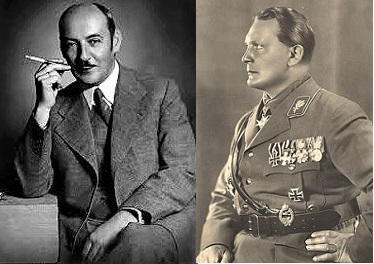
The Strange, Seldom Told Story of Ethics Hero Emeritus, Albert Göring (1895-1966)

Good brother, Bad brother.

Good brother, Bad brother.

The German and Israeli news media have recounted the exploits of Albert Göring recently , because he is under posthumous consideration for the highest honorary title conferred by the State of Israel, the “Righteous Among the Nations.” These are the heroes of the Holocaust, the brave individuals who risked their lives to foil Hitler’s Ultimate Solution. Since it was created in 1953, the title has been awarded to 24,356 people from 47 countries.

Göring is a strong candidate to join their ranks, for he saved many Jews from extermination during World War II. Honoring him would not be a difficult decision, except for one thing: he was the younger brother of one of Hitler’s vilest henchman, the architect of the death camps and master of the Gestapo, Hermann Göring.

Albert became disillusioned with the Nazis early in their rise to power and moved to Austria, where he frequently spoke out against Hitler and the Third Reich. He would have ended up in prison when the Germans took over Austria, but brother Hermann Goering, Hitler’s designated successor, believed that blood was thicker than genocide: he kept Albert out of the hands of the Gestapo, even though he knew his little brother was an enemy of the state.

Nobody knows exactly how many Jews and non-Jews Albert saved from his brother’s death camps, because Albert Göring himself didn’t know how many the people he helped. Continue reading →

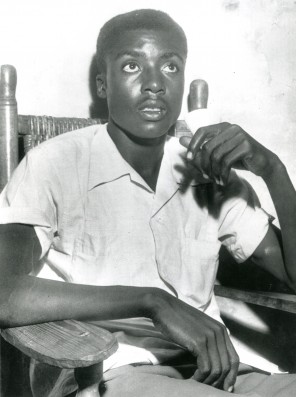
Ethics Hero Emeritus: Willie Reed ( 1937-2013)

Willie Reed

I began the day, to my surprise, with tears in my eyes from reading an obituary on the front page of today’s Washington Post.

The story announced the death of Willie Reed, who as an African American teenager in 1955, risked his life by testifying in a Mississippi court against the white men who had tortured and murdered Emmet Till, another black teenager, for the Jim Crow “crime” of allegedly whistling at a white woman.

The intensity of my emotional reaction surprised me. I think it was the product of being reminded of the horrific tragedy that befell Till and other black citizens at the height of segregation, and being slapped in the face with the reality, known to me but kept deep in the place in my brain where the ugliest things are sealed away to keep me from incurable despair, of the deranged hate that festered so long—and destroyed so many— in the country I love. I was also overcome with admiration and wonder at the almost unimaginable courage of Reed, who knew that by testifying in open court he was simultaneously  guaranteeing that he would be marked for Till’s fate for the rest of his life. Maybe most of all, I wept out of anger at my ignorance and the warped priorities of our culture and educational system, which ensures that we know the names and life stories of insignificant narcissists like Kim Kardashian, embarrassing political leaders like Michele Bachman, greedy athletes like Lance Armstrong, and cynical demagogues like Al Sharpton, but know nothing of the lives and deeds of unglamorous American heroes like Willis Reed. I consider myself an educated man, but I had never heard of him, which means I am not educated enough. I wish I could apologize to Reed. I wish I could shake his hand. I wish I could say, “thank you.” Continue reading →

Ethics Hero: The ACLU Jumps Off The Train Wreck…

And not a moment too soon...

And not a moment too soon…

It appeared that the American Civil Liberty Union would continue its descent from its original role of non-partisan Bill of Rights watchdog and defender to its evolving position as a liberal/progressive advocacy group when it called for Eric Holder’s Justice Department to pursue a civil rights prosecution against George Zimmerman. In a post on the group’s website following the verdict, ACLU executive director Anthony Romero wrote…

Today, our thoughts are with Tracy Martin and Sybrina Fulton, whose young son was taken from them far too soon. Last night’s verdict casts serious doubt on whether the legal system truly provides equal protection of the laws to everyone regardless of race or ethnicity.This case reminds us that it is imperative that the Department of Justice thoroughly examine whether the Martin shooting was a federal civil rights violation or hate crime. We call on Attorney General Eric Holder to release strengthened guidance on the use of race in federal law enforcement. We also urge Congress to pass the End Racial Profiling Act. These specific actions would go a long way to ameliorate the widespread problem of racial profiling. We need solutions not only in Trayvon Martin’s case, but also systemic reform. Continue reading →

Ethics Hero: Thomas McGregor

"Just paying off my student loans..."

“Just paying off my student loans…”

One of the criteria for admission to the practice of law is proof of good character, and what is considered proof of bad character will keep even a stellar law grad out of the courtroom. Bad character can be inferred from many kinds of conduct—criminal convictions, lies under oath, and failing to meet financial obligations, among others. The latter has occasionally blocked an otherwise qualified young lawyer from entering the profession when unpaid debts get out of hand, and that means that the most prominent unpaid debts in recent headlines, student loans, can sometimes foil a legal career. New York law grad Robert Bowman, last I checked, was still trying to convince the New York Bar that being over $400,000 in debt on his student loans didn’t mean he wasn’t fit to practice law. So far, he hasn’t succeeded.

Maybe he should follow the lead of Thomas McGregor.  Continue reading →