Ethics Hero Emeritus: Eric Lomax, 1919-2012

Eric Lomax was a hero of forgiveness.

Eric Lomax, his book, the Bridge on the River Kwai,, and his friend, the man who tortured him.

In 1942, Eric Lomax, was a 19 year old  member of the British Royal Corps of Signals stationed in Singapore when he joined thousands of British soldiers in surrendering to the Japanese. It was 1942. He was one of those shipped to Thailand and became one of the slaves laboring to build the Burma Railway, also known as the Death Railway. The building of the railroad and the brutal treatment of the English prisoners by their Japanese captors  formed the plot of the classic 1957 David Lean film, “The Bridge on the River Kwai,”

After Lomax was discovered to have built a radio receiver from spare parts, he was mercilessly tortured and interrogated by his captors.  After his release, fantasies about murdering his main torturer, a man named Nagase Takashi, obsessed him. Lomax spent the early years of his retirement in the 1980s looking for Takashi, and eventually learned that he had become an interpreter for the Allies after the war. In 1992, he stumbled across an article profiling Nagase and noting that he was haunted by guilt over his mistreatment of one British soldier. That soldier, Lomax realized, had been him. He arranged to meet the man who tortured him, and whom he had spent the rest of his life dreaming of murdering.

Torturer and victim met in 1993, on the infamous bridge Lomax had been forced to help construct (and which was not blown up, the film ending notwithstanding). Continue reading

Ethics Hero: Christina Aguilera

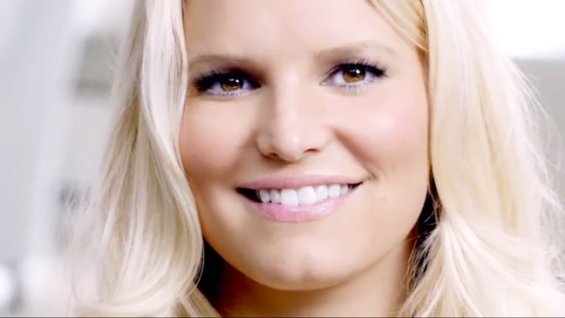
In Jessica Simpson’s Weight Watcher’s TV ad, the former “Daisy Duke” appears only as a giant head, as if the spot was directed by Francis Ford Coppola and Jessica was a last minute stand-in for Marlon Brando.

“the horror…the horror…”

It is clear that Jess is not willing to show America her post-pregnancy body, even though she is telling the public to buy what she’s using to slim it. She is ashamed, in other words, and if a beautiful young woman like her believes that not being able to fit into Daisy’s cut-offs makes her hideous, just imagine how that makes the average woman feel.

Then there is Christina Aguilera. The former waifish “pop tart” who sang “Genie in a Bottle” is now an established pop music diva, and posed for photographers as she announced the American Music Awards Nominations in a throbbingly purple form-fitting dress that didn’t hide a single pound or curve, and showed that she has an abundance of both.

“We’re gonna need a bigger bottle…”

Christina’s not ashamed, nor should she be, and her willingness to look happy and confident regardless of her expanding figure is a boon to a culture that has been working overtime to make women of all ages feel unattractive unless they look like super-models. Continue reading

Ethics Heroes: President Obama and Mitt Romney

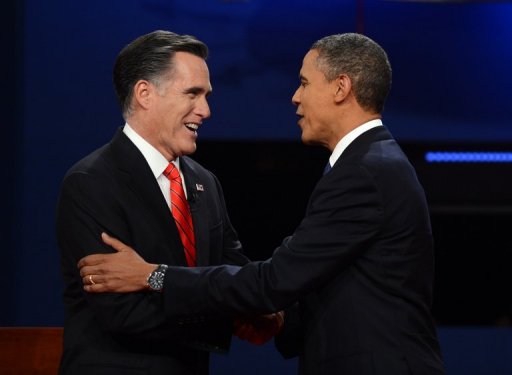
Congratulations to President Obama and Mitt Romney for being respectful, civil, dignified, good-natured, articulate and presidential in tonight’s debate.

I was proud of both of them.

Thanks. We needed that.

Ethics Heroes: Papa Roach

Ethics Alarms’ 2011 Commenter of the Year tgt, who found this story and passed it on, asks,

“How is a horrible stoner rock band more ethical than everyone in politics?”

It’s a great, if sorrowful, question.

A.V. Club has a feature (which could be called “Start a Feud”) in which it asks a rock performer what song he or she hates, and why.  Jenn Wasner, one half of the Baltimore indie-folk duo Wye Oak (“a blend of Southern culture and Northern sensibilities…”) submitted to this invitation to get in trouble, and fingered the song in the video above, “Scars,” by Papa Roach.

Criticizing the work of other artists in the same field is unprofessional at best, gratuitously unkind and disrespectful. Papa Roach’s members would have been within their rights to fire back something less than complimentary in defense, at very least the observation that ethical musicians don’t take gratuitous shots at one another. What the band did however, was this: it sent Wasner flowers. Wasner was convinced it was some kind of diabolical trap, and tweeted as much. The band tweeted back: Continue reading

Ethics Hero: Minnesota Vikings Punter Chris Kluwe

Chris Kluwe is the kicker. Emmett Burns is the football.

I can’t highlight Maryland state delegate Emmett C. Burns’ effort to use his position and power to stifle free speech and political discourse without honoring NFL player Chris Kluwe, who put Burns in his place with an online open letter of remarkable clarity, passion and venom. Yes, it was not civil; it was, in fact, frequently obscene. Nonetheless, his indignation, expressed in a colorful upgrade of the language of the locker room, was well-earned. When an elected official in a supposed democracy starts trying to use his power to shut up citizens who disagree with him, maximum shaming is paramount. In this case, a little obscenity helped get the word out (and made it fun to read, too). Highlights of Kluwe’s polemic: Continue reading

Another Ethics Hero For CNN’s Anderson Cooper, and a Jumbo for Debbie Wasserman Schultz

“Discord? What discord?”

Anderson Cooper seems to have decided to single-handedly  stand for objective journalism in the midst of Democratic cheer-leading from most of his colleagues in the broadcast media. Of course, he chose the lowest-hanging fruit imaginable as a target: the Democratic National Committee’s ridiculous, abrasive, shamelessly dishonest chairwoman, Rep. Debbie Wasserman Schultz, who earned a Jumbo for persisting in a falsehood that nobody could possibly believe.

The Democrats walked into a controversy of their own making when they approved a platform that removed any mention of God (since God is not, presumably, a Democrat, I don’t know why anyone cares) and an assertion that Jerusalem is the proper capital of Israel. Both of these apparently were also approved by the candidate, President Obama, and conservative blogs and the Republican campaign had a field day with the supposed implications of both. [This was a classic “tit for tat,” because the Democrats had loudly insisted that anything appearing in the GOP platform was attributable to Mitt Romney.] Someone, maybe the President, then concluded that God and Jerusalem needed to go back into the language to stem the bleeding, and what followed was a raucous, and, depending on your orientation, embarrassing or ugly display on the convention floor, with some delegates booing the return of God and Jerusalem and with a repeated voice vote that allowed them back sounding much more like a tie than the required two-third ayes. Continue reading

Discovered: An Ethics Hero and a Theater Code of Ethics—From 1945!

The ethicist in “Singing in the Rain”

For many years, I have been attempting to persuade the local professional theater community in Washington, D.C. to develop and adopt an official Code of Ethics. I have not been successful, and it’s not surprising. Theater, indeed professional show business of all kinds, has been almost ethics-free for centuries. These are tough pursuits, and tough pursuits easily gravitate toward the Law of the Jungle—“Kill or be killed”—unless the culture makes a concerted effort to evolve in a different direction. Theater certainly has not. There a few unwritten rules in theater that could form the backbone of a useful code, such as “The show must go on!”, and there have certainly been members of the profession who are thoroughly ethical, they tend to be very successful individuals who have taken on high ideals once the need to back-stab has lessened, people who are so talented and fortunate that the need to lie and cheat never arises, or, a special category, marginally talented but hard-working and versatile professionals whose trustworthiness is their primary asset. (This last group usually fares poorly in the end.)

Not only have I been unable to interest anyone in developing a code for the theater, I have never heard of one being developed anywhere else. Until now, that is. I recently learned that Kathleen Freeman, a great character actress* who died in 2001, wrote and adopted an ethics code for a small theater company, the Circle Players, that she established in Los Angeles when she was 24 years old. Continue reading

Ethics Hero: Kent Anthony Clemens, Bank Robber

With bank robbers, the bank alarms go off, but the ethics alarms don’t. This is the exception.

Proving that it’s never too late to do the right thing (well, almost never), Kent Anthony Clemens successfully robbed a bank in a small North Dakota town and escaped to Topeka, Kansas, where he gave much of the money to his sister. Then he felt bad about it and called 911, telling the police to come and arrest him.

Admittedly, this is a case in which the ethics alarms sounded a bit late, but they sounded nonetheless. The temptation is to minimize the virtue of Clemens’ conduct in turning himself in, because it just speeded up the inevitable, but that may not be the case. The news story notes that Williston, like many towns in North Dakota that have been victimized by vastly increased crime in the wake of the state’s oil boom, is strapped for law enforcement personnel and overwhelmed with unsolved cases. The amount Clemens stole wasn’t much ($700), and it’s not unlikely that he would have gotten away with his heist. But there he was when police arrived in response to his call, sitting on his front porch wearing the same outfit that surveillance cameras showed him in when he knocked over the Gates City Bank. Continue reading

Ethics Hero: Rick Warren

Sorry, no civility this year…

Rick Warren, Saddleback Church’s popular and nationally famous conservative pastor, has announced that his church’s civil forum planned with President Barack Obama and Mitt Romney at the church this week has been canceled as a result of the relentlessly negative, mean-spirited and uncivil campaigns being waged by both parties.

The forum was to have been two hours long, with each candidate speaking with Warren for 50 minutes. Warren hosted the first presidential campaign forum in 2008 between Obama and his Republican opponent Sen. John McCain. Despite that forum’s success and the notoriety it brought him and the church, Warren decided that to host a “civil forum” with such uncivil candidates would be hypocritical, saying, Continue reading

Ethics Heroes: Doug Wilder and Artur Davis


Like everyone else, Doug Wilder knows what ““they’re going to put y’all back in chains” meant. Unlike most Democrats, he has the integrity to admit it.

Democratic flacks and media mouthpieces for the Obama campaign have thoroughly disgraced themselves and insulted the intelligence of the American public by twisting words and logic to argue that Joe Biden’s “put y’all back in chains” rhetoric was something other than the divisive race-baiting it was. Eventually, in such episodes of lock-step partisan dissembling, there are a noble and courageous few who refuse to go along, and black leaders Artur Davis, a co-chair of President Obama’s 2008 campaign, and Doug Wilder, the first African-American governor (of Virginia, where Biden made his comments) have stepped to the fore. Continue reading