Discovered: An Ethics Hero and a Theater Code of Ethics—From 1945!

The ethicist in “Singing in the Rain”

For many years, I have been attempting to persuade the local professional theater community in Washington, D.C. to develop and adopt an official Code of Ethics. I have not been successful, and it’s not surprising. Theater, indeed professional show business of all kinds, has been almost ethics-free for centuries. These are tough pursuits, and tough pursuits easily gravitate toward the Law of the Jungle—“Kill or be killed”—unless the culture makes a concerted effort to evolve in a different direction. Theater certainly has not. There a few unwritten rules in theater that could form the backbone of a useful code, such as “The show must go on!”, and there have certainly been members of the profession who are thoroughly ethical, they tend to be very successful individuals who have taken on high ideals once the need to back-stab has lessened, people who are so talented and fortunate that the need to lie and cheat never arises, or, a special category, marginally talented but hard-working and versatile professionals whose trustworthiness is their primary asset. (This last group usually fares poorly in the end.)

Not only have I been unable to interest anyone in developing a code for the theater, I have never heard of one being developed anywhere else. Until now, that is. I recently learned that Kathleen Freeman, a great character actress* who died in 2001, wrote and adopted an ethics code for a small theater company, the Circle Players, that she established in Los Angeles when she was 24 years old. Continue reading

Ethics Hero: Kent Anthony Clemens, Bank Robber

With bank robbers, the bank alarms go off, but the ethics alarms don’t. This is the exception.

Proving that it’s never too late to do the right thing (well, almost never), Kent Anthony Clemens successfully robbed a bank in a small North Dakota town and escaped to Topeka, Kansas, where he gave much of the money to his sister. Then he felt bad about it and called 911, telling the police to come and arrest him.

Admittedly, this is a case in which the ethics alarms sounded a bit late, but they sounded nonetheless. The temptation is to minimize the virtue of Clemens’ conduct in turning himself in, because it just speeded up the inevitable, but that may not be the case. The news story notes that Williston, like many towns in North Dakota that have been victimized by vastly increased crime in the wake of the state’s oil boom, is strapped for law enforcement personnel and overwhelmed with unsolved cases. The amount Clemens stole wasn’t much ($700), and it’s not unlikely that he would have gotten away with his heist. But there he was when police arrived in response to his call, sitting on his front porch wearing the same outfit that surveillance cameras showed him in when he knocked over the Gates City Bank. Continue reading

Ethics Hero: Rick Warren

Sorry, no civility this year…

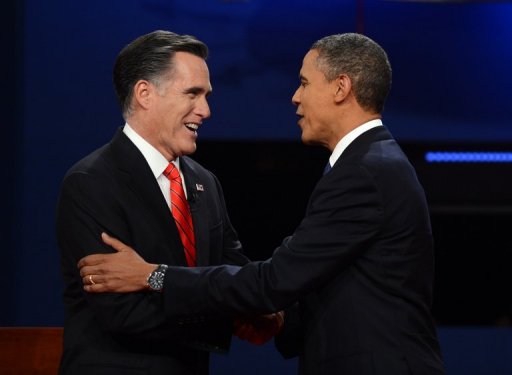
Rick Warren, Saddleback Church’s popular and nationally famous conservative pastor, has announced that his church’s civil forum planned with President Barack Obama and Mitt Romney at the church this week has been canceled as a result of the relentlessly negative, mean-spirited and uncivil campaigns being waged by both parties.

The forum was to have been two hours long, with each candidate speaking with Warren for 50 minutes. Warren hosted the first presidential campaign forum in 2008 between Obama and his Republican opponent Sen. John McCain. Despite that forum’s success and the notoriety it brought him and the church, Warren decided that to host a “civil forum” with such uncivil candidates would be hypocritical, saying, Continue reading

Ethics Heroes: Doug Wilder and Artur Davis


Like everyone else, Doug Wilder knows what ““they’re going to put y’all back in chains” meant. Unlike most Democrats, he has the integrity to admit it.

Democratic flacks and media mouthpieces for the Obama campaign have thoroughly disgraced themselves and insulted the intelligence of the American public by twisting words and logic to argue that Joe Biden’s “put y’all back in chains” rhetoric was something other than the divisive race-baiting it was. Eventually, in such episodes of lock-step partisan dissembling, there are a noble and courageous few who refuse to go along, and black leaders Artur Davis, a co-chair of President Obama’s 2008 campaign, and Doug Wilder, the first African-American governor (of Virginia, where Biden made his comments) have stepped to the fore. Continue reading

Ethics Hero: The American Bar Association


This week, the American Bar Association House of Delegates passed Resolution 100.

The measure reads:

RESOLVED, That the American Bar Association urges all state, territorial, and local legislative bodies and governmental agencies to adopt comprehensive breed-neutral dangerous dog/reckless owner laws that ensure due process protections for owners, encourage responsible pet ownership and focus on the behavior of both dog owners and dogs, and to repeal any breed discriminatory or breed specific provisions.

Translation: stop discriminating against pit bulls and all the dogs that look like pit bulls, might be pit bulls, or that people who don’t know anything about dogs might think are pit bulls, as well as the dogs’ owners. It’s not fair, it’s unethical, and it’s un-American. Or, as Elise Van Kavage, chair of the Animal Law Committee of the Tort, Trial & Insurance Practice Section, put it, “People love their pets, no matter what their appearance,” she said. “This is America. Responsible pet owners should be allowed to own whatever breed they want.” Continue reading

Ethics Hero: Richard Cohen

It’s more effective to compare Harry Reid to “Godfather II’s” Sen Pat Geary than to claim he’s a pederast. It takes some wit to do that, however…

I used to find Richard Cohen to be the most infuriating of knee-jerk liberal columnists, until the Washington Post added writers like Eugene Robinson and E.J. Dionne who make Cohen seem fair and balanced by comparison. And he, unlike them, also is occasionally capable of a noble bi-partisan moment, such as today’s column calling Harry Reid what he is for his Mitt Romney smear, claiming that an anonymous source from Bain Capital told him that Mitt Romney was a tax cheat.

This, sad little right-wing warriors, is how dirty politicians like Reid get their just desserts, not by mass name-calling and scrawling “Harry Reid is a poo-poo head” on your blogs. Pundits and other prominent voices on Reid’s own side don’t want to associate with him, and suddenly exhibit rare candor and honesty. A liberal writer like Cohen wounds Reid more than a million vindictive posts about his fictional pederasty. This is the system working properly, as it occasionally does. What a shame for conservatives that so many of their number exposed themselves as enthusiastic gutter-dwellers because they wouldn’t wait for a truth-telling liberal like Cohen to get to his keyboard.

Some highlights of Cohen’s terrific take-down of the Senate Majority Leader, nicely titled, “Harry Reid’s Gutter Politics”..

  • “In “The Godfather Part II,” a senator from Nevada is portrayed as corrupt. His name is Pat Geary. In real life, a senator from Nevada is a jerk. His name is Harry Reid.”
  • “Whether such a source exists, really, is beside the point. It could be that someone did indeed tell Reid that Romney paid no taxes for 10 years. Journalists get that sort of tip all the time, and their responsibility is (1) to check it out and (2) identify the source. Reid has not done the latter and apparently has not done the former, either. The truth is that Reid doesn’t really care if the charge is true or not.”
  • “He contributes to bad feelings, gridlock and the sense — nay, the reality — that everything is done for political advantage.”
  • “He is the face of the Democratic Party in the Senate and the ally of President Obama. Yet, not a single Democrat has had the spine to rebuke Reid.”
  • “…Reid has managed to draw both his party and his president into the gutter with him. When Reid accuses the Republicans of being overly partisan, he now lacks all credibility. For a long time it’s been difficult to believe anything he says. Now, it’s impossible.”
  • “As for Obama, he is tarnished by this episode. The fresh new face that promised us all a different kind of politics is suddenly looking cheesy. The soaring rhetoric that Obama used in his first campaign has come to ground in the mud of Harry Reid’s latter-day McCarthyism.”

That’s showing how it’s done, Mr. Cohen.

Bravo.

_________________________________________

Source: Richard Cohen


Ethics Hero: Sen. John McCain

It’s good to have the old maverick doing what he does best.

“Bachmann!”

Rep. Michele Bachmann, Minnesota’s shame, used her oxymoronic presence on the House Intelligence Committee to argue in a June letter to the State Department and a letter this week to fellow Minnesota Representative Keith Ellison, that  Huma Abedin, the top aide of Secretary of State Hillary Clinton, may be a security risk  because Abedin’s late father, mother, and brother had or have connections to the Muslim Brotherhood.  Abedin’s position, Bachmann suggested  ominously, ‘‘affords her routine access to the secretary and policy-making.’’ Her letter to Ellison was signed by  five other Republicans: Reps. Trent Franks of Arizona, Louie Gohmert of Texas, Thomas Rooney of Florida and Lynn Westmoreland of Georgia.

Sen McCain angrily took to the Senate floor to call this example of ethnic profiling and Muslim bigotry what it is: Continue reading

Ethics Quote of the Month: Chief Justice John Roberts

“We do not consider whether the Act embodies sound policies. That judgment is entrusted to the Nation’s elected leaders. We ask only whether Congress has the power under the Constitution to enact the challenged provisions…Members of this Court are vested with the authority to interpret the law; we possess neither the expertise nor the prerogative to make policy judgments. Those decisions are entrusted to our Nation’s elected leaders, who can be thrown out of office if the people disagree with them. It is not our job to protect the people from the consequences of their political choices.”

—-Chief Justice John Roberts, in the introduction to his majority opinion in the case of National Federation of Independent Business et al. v. Sebelius, which upheld the Affordable Care Act on the grounds that the so-called “individual mandate” was a tax, not  government-mandated commercial conduct.

The Chief Justice’s statement is what is called dicta, commentary in a Supreme Court opinion that is neither binding on future courts nor a substantive part of the decision. Dicta, however, often has great influence in shaping future cultural consensus, and we can only hope that the Chief Justice’s wise and ethical words stick.

He is talking about process and accountability, and what is necessary for our democratic republic to work, and, frankly, survive. Reading letters to the editor and web site comments about yesterday’s decision, I find the overwhelming civic ignorance and “the ends justify the means” obsession of the vast majority of the writers more than depressing. The Supreme Court decision did not “vindicate” the Democrats and President Obama—only positive outcomes from the law they rammed through the system using every obfuscation and trick in the book could begin to do that, and even then it might be impossible, at least from an ethical standpoint. The Supreme Court’s decision raised the serious question of whether the law was passed under false pretenses, a tax disguised as something else so as not to call attention to its violation of the President’s promise not to raise taxes on the middle class. Once the Affordable Care Act began traveling through the courts, the Administration began suddenly calling the individual mandate a tax—a term that was not used in the 2500 page law itself—because it recognized that its Commerce Clause rationale for the individual mandate was shaky. Some courts found the bait-and-switch cynical and offensive, and refused to consider it. The bait-and-switch was offensive, or should be to citizens who believe that the public should know the truth about the laws Congress passes, but Roberts properly held that it isn’t up to the Supreme Court to protect the public from the curs, liars and knaves they regularly elect to high office because “character doesn’t matter.” In a democracy, this is the public’s job. We are accountable. The Supreme Court doesn’t exist to protect us from our own laziness, lack of principles and stupidity. It exists to make sure that if our elected officials pass lousy, ill-considered and un-read laws that roll the nation ever closer to a national diet of moussaka, at least they did it within the bounds of the Constitution. If We the People decide to tolerate cynical, dishonest, incompetent leaders and representatives and the nation ends up like Stockton, California, well, at least one branch of government did its job to make democracy work.

In the end, it will have been the people who failed to uphold their part of the experiment. That’s what the Chief Justice was saying.

I wonder if anyone is paying attention.

______________________________

Source: National Federation of Independent Business et al. v. Sebelius

Graphic: Linda Life

Ethics Alarms attempts to give proper attribution and credit to all sources of facts, analysis and other assistance that go into its blog posts. If you are aware of one I missed, or believe your own work was used in any way without proper attribution, please contact me, Jack Marshall, at  jamproethics@verizon.net.

Ethics Hero: Florida Governor Rick Scott

Less worthy of integrity than cashing a check or renting a car, according to the Justice Department.

I should add to the heroes list the governors of the states that are challenging the Justice Department over blocking their voter ID requirements as well, but Scott is a worthy representative. His law suit is a little different than theirs, but the principle is the same, the target—Eric Holder’s politicized and incompetent Justice Department—is the same, and the objective, ensuring the integrity of elections, is also the same.

The Department of Justice, of all institutions, shouldn’t be adopting the sadly popular phisosophy, growing like mold on a large segment of progressive America, that it is wrong to enforce legitimate laws if doing so risks having disparate impact on particular groups. It certainly shouldn’t be using its power to join in the desperate race-baiting that seems to be part of the desperate Democratic game plan for President Obama’s re-election. Attorney General Holder has been making the rounds of African-American groups, rattling the civil rights sabers and proclaiming that requiring voters to show proof of identity and citizenship is a racist plot. This is either cynical politics or proof of intellectual deficiency, and since it is Holder, telling which is difficult. Holder, after all, requires identification to get into his building, his office, and his public appearances, but presumably nobody would accuse the first black and most race-conscious Attorney General in the nation’s history of being anti-black. Yet I  submit that the importance of ensuring the integrity of  elections in a democracy is rather more important than ensuring that only citizens get to hear Holder make speeches accusing states of racism and voter-suppression for attempting to enforce the law. Continue reading

Ethics Hero Emeritus: Harry Philo (1925-2012)

Harry Philo: Champion, Lawyer, Inspiration

A great man died last week, and yet unless you are member of his family or law firm, a trial lawyer, or one of the many people he helped over his long career, you probably never heard of him. There is barely a trace of Harry Philo on the Internet; Wikipedia has no page devoted to him, and a Google search turns up next to nothing. (It shows over 22 million links for a search on Kendall Jenner, who is Kim Kardashian’s little sister). Yet Harry Philo was a great man, and one of the things that was great about him was that he didn’t waste a lot of time seeking glory for himself. Continue reading