Ethics Heroes: The U.S. Supreme Court

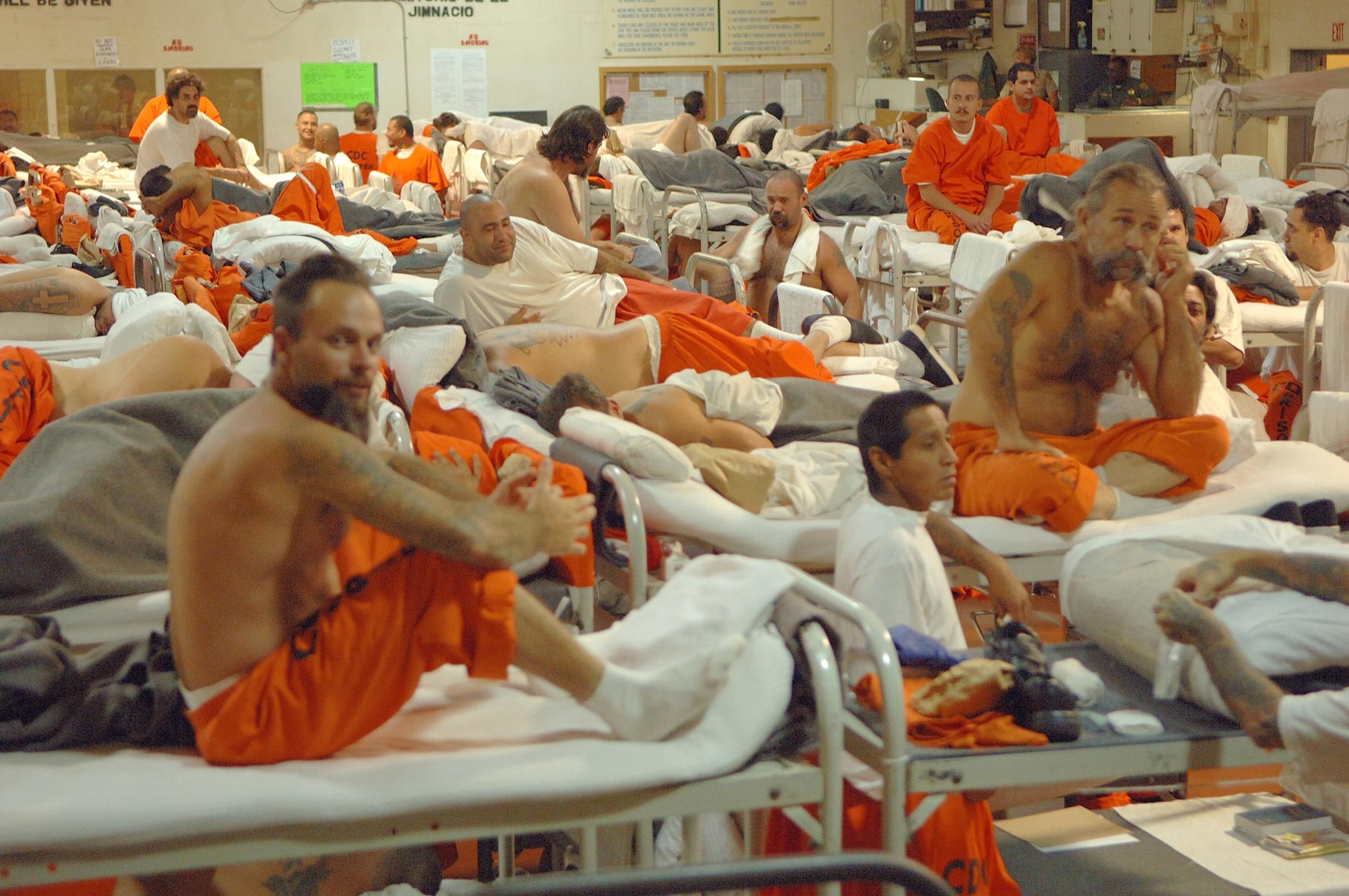
To be more accurate, the heroic component in this instance is the liberal wing of SCOTUS ( Justices Sotomayor, Kagan, Ginsberg, and Breyer) plus the swing vote, Justice Kennedy, who wrote the majority opinion in Brown v. Plata.  The decision upheld a court order requiring California to release a staggering 46, 000 inmates of its prisons, more than a fourth of the those sentenced there. The majority concurred with the lower court’s assessment that California prisons were so obscenely over-crowed that conditions amount to a human rights violation and a breach of the constitutional prohibition on “cruel and unusual punishment.”

Some Supreme Court decisions come down to ethics as much as law, and this was certainly one of those times. At issue from a legal standpoint was  whether federal judges had the power to order the release of state prisoners as a necessary means of curing a constitutional violation. But the brilliant legal minds on the conservative side of the Court’s divide had no problem answering that question in the negative, and persuasively too.  The dilemma is that California’s least sympathetic citizens, its residents of the state’s penal institutions, are being kept in conditions that violate their constitutional rights, and despite many years of knowing about the problem, the state hasn’t found a way to rectify it. Continue reading

Ethics Hero: Jerry Lewis

Great comedians are usually, as Sid Caesar once memorably told Larry King, “miserable sons of bitches,” and few fit that description better than Jerry Lewis. As a result, he also stands as a classic example of how not-so-nice people can still do wonderful, heroic deeds. In Lewis’s case, the deed is the  Jerry Lewis Muscular Dystrophy Association Telethon. Lewis has announced that because of his failing health and advanced age (he is 86), the 2011 version will be his final telethon, and the show itself is being drastically scaled back from over 20 hours in its heyday to about 6 hours. The decline of his Labor Day telethon tradition is as good a time as ever to give Lewis—arrogant, loutish, egomaniacal, tough old bastard that he is—his due. Jerry Lewis is an Ethics Hero. There’s just no way getting around it.

For decades I thought that Jerry Lewis’s involvement with MDA was a stunt cooked up by his publicist during his decline in popularity, to ensure that he would have public visibility after studios stopped offering him movie roles. That was wrong: Lewis started doing telethons for muscular dystrophy in 1952, when his stardom was just blooming and he was still teamed with Dean Martin. his fundraising for medical research began as a series of local broadcasts and went national in 1966. By then Lewis’s career was indeed on the wane (his last hit movie had been “The Nutty Professor” in 1963), but the telethon had already been a constant in his life for 14 years. Jerry wasn’t doing it for himself. He really was doing it for “the kids.” Continue reading

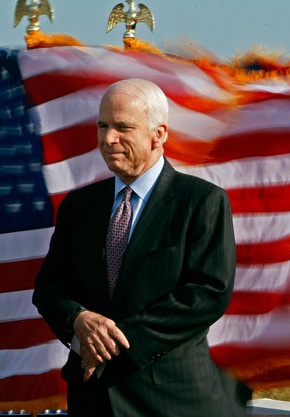
Ethics Hero: Sen. John McCain

Arizona Senator John McCain has seriously tarnished his reputation for integrity  since losing the Presidential election in 2008, particularly during his last campaign for re-election to the Senate. The best of McCain was on display this week, however, as he delivered a strong and eloquent denouncement of torture (a.k.a “enhanced interrogation techniques”) on the Senate floor, in response to the ethically offensive arguments being put forth by many conservatives that the successful elimination of Osama bin Laden somehow magically transformed the evil practice of torture into a respectable tactic of national security. It is an important, courageous and persuasive statement from a U.S. Senator with special qualifications to make it, as one who had been tortured himself, and as fine a legacy as McCain, or any Senator, could aspire to.

Sen. McCain said, in part (you can read the entire text of his speech here)…

“Mr. President, the successful end of the ten-year manhunt to bring Osama bin Laden to justice has appropriately heightened the nation’s appreciation for the diligence, patriotism and courage of our armed forces and our intelligence community.  They are a great credit and inspiration to the country that has asked so much of them, and like all Americans, I am in their debt.

“But their success has also reignited debate over whether the so-called, ‘enhanced interrogation techniques’ of enemy prisoners, including waterboarding, were instrumental in locating bin Laden, and whether they are necessary and justifiable means for securing valuable information that might help prevent future terrorist attacks against us and our allies and lead to the capture or killing of those who would perpetrate them.  Or are they, and should they be, prohibited by our conscience and laws as torture or cruel, inhuman and degrading treatment. Continue reading

Ethics Hero: Washington Post Columnist Carolyn Hax

I’m breaking some precedent here: I don’t usually pick Ethics Heroes based upon writing alone, and I don’t usually reprint long sections from someone else’s column. But relationship advice columnist Carolyn Hax has long displayed a brilliant feel for ethical analysis, and expresses it sharply and entertainingly to the great benefit of her readers. Good general readership ethical analysis is all too rare, and she deserves accolades.

Today she provided as clear and as deft a lesson in how responsibility, honesty, fairness, bias and accountability work as I can imagine, while chiding a man who wants to rescue a younger woman from the relationship he didn’t have the guts to pursue herself. It shows her at her best, and is impeccable ethics as well. Brava!

Here is the inquiry and Hax’s response: Continue reading

Ethics Hero Emeritus: Marlene Dietrich (1901-1992)

The great Marlene Dietrich, Ethics Hero

It was on this date in 1992 that the magnificent Marlene Dietrich died, in her sleep, in her Paris apartment at age of 91. She had hidden her face from the world since she had stopped performing over a decade before, saying that the public should remember her as she had been. Sadly, Dietrich is one of those former icons of Hollywood whom the public is slowly failing to remember anything about at all; most are more familiar with Madeleine Kahn’s send-up of her in the Western spoof “Blazing Saddles” than they are with Marlene herself. That is wrong, for she deserves better. Not only was Marlene Dietrich a unique performer and important cultural figure, she was also an Ethics Hero.

She was a rising German stage and screen actress when director Josef von Sternberg cast her as Lola-Lola, the beautiful, cynical leading character in “Der blaue Engel,” (The Blue Angel), Germany’s first talking film. The movie made Dietrich a star. Von Sternberg took her with him when Hollywood beckoned and signed her with Paramount Pictures. There Dietrich built her image and legend by perfecting her femme fatale film persona in a series of classic films directed by her mentor: “Morocco” (1930), “Dishonored” (1931), “Shanghai Express” (1932), “Blonde Venus” (1932), “The Scarlet Empress” (1934), and “The Devil Is a Woman” (1935).

Meanwhile, she had already begun fighting Hitler’s regime. Continue reading

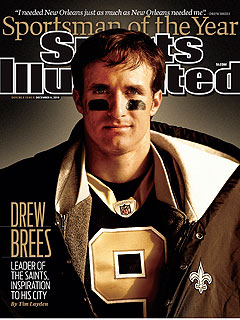
Ethics Hero: New Orleans Saints QB Drew Brees

Drew Brees is one professional athlete—yes, there are others—who sees the riches he acquires in his high-paid trade as a star NFL quarterback as tools to achieve good ends. He has established an impressive foundation to assist children in New Orleans, and now he is using his wealth to keep his team together and get them ready for the coming season.

As NFL training camps remain in limbo while the courts decide the legality of the owners’ lock-out, Brees’s Saints are training anyway, because he is picking up the bill, paying Tulane staff to help out during practices and flying in his personal trainer to oversee the team’s conditioning program, even arranging for the Tulane Institute of Sports Medicine to provide insurance for players who need it. Brees has also arranged for lodging for some of the younger players on the team.

Quarterbacks are always team leaders in name and reputation, but Drew Brees is exhibiting exemplary leadership and character by acknowledging his special resources and using them for the benefit of his colleagues during a crisis. Wealth and influence can accomplish wonderful things if the individual who is wealthy and influential has the ethical character to make it so. Drew Brees is such an individual, and a magnificent example of leadership as well.

____________________________

Note: Ethics Bob posted on Drees right about the same time I did. You can read his comments here.

Ethics Heroes: World Journalists

Chris Hondros (left) and colleagues

I know Ethics Alarms is critical of the media and journalists for breaches of objectivity and fair reporting. Nevertheless, there are few professions more inherently heroic than journalism, especially when it requires on-the-scene reportage under dangerous conditions. This was demonstrated, once again, by the recent death of Chris Hondros, a distinguished photo-journalist who was killed last week in Libya.

May 3 is World Journalist Day, and an excellent time to honor the tough and dedicated professionals who bring us important and hard-to acquire news, often risking their lives in the process. To that end, there is no better on-line destination than the website of New York-based non-profit Committee to Protect Journalists, dedicated to making it possible for journalists to do their jobs without fear of reprisals.  There you can learn about the perils faced by media personnel all over the globe, and read about the journalists killed since January 2010 while trying to let us know what is going on in the world.

Ethics Hero Emeritus: Phoebe Snow 1950-2011

She sang a little too.

I thought Phoebe Snow had died long ago, when she was really just being an Ethics Hero.

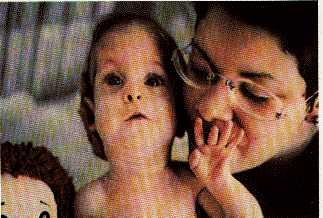
In the mid-1970’s, the strong-voiced writer and singer of “Poetry Man” had two gold records at the young age of 26. She was hailed by critics as one of the most interesting and versatile singers in the pop world. “She appeared on ‘Saturday Night Live’ and recorded duets with Paul Simon and Jackson Browne. She made the cover of Rolling Stone magazine, which pronounced her voice ‘a natural wonder,’” recalled the Washington Post in her obituary today. Phoebe Snow was an entertainer and an artist, and had reached the place where all artists strive to reach but few ever do: being paid a fortune to do what she loved and was talented at doing.

In December 1975, she had given birth to a daughter, Valerie Rose, with severe brain damage and other disabilities. Most recording stars of her stature, as well as actors and those in other intense, lucrative and competitive fields in the arts and out of them, would have placed Valerie in an institution. (Arthur Miller, the moralist playwright, not only institutionalized his Down Syndrome son during his Broadway career but hid his existence from the public.) Snow, however, put her show business success on hold to care for her daughter. Continue reading

Ethics Hero: Attorney Paul Clement

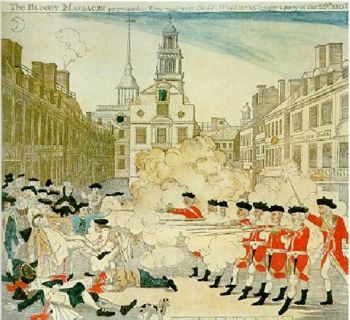
John Adams defended the guys in red, and Paul Clement understands why.

Law firm King & Spalding announced Monday that it would no longer represent congressional Republicans regarding the constitutionality of the Defense of Marriage Act (DOMA), the controversial 1996 legislation that defines marriage as being only between a man and a woman.. In response, the firm’s chief appellate lawyer, Paul Clement, who was handling the case, resigned from the firm.

In February, the Obama administration announced that its Justice Department would refuse to defend DOMA in a number of lawsuits, an unusual, controversial and troubling decision. It doesn’t take a lot of imagination to conceive of other federal laws another administration might decide to render dead letters by non-defense despite being duly passed by the people’s representatives. A government has an obligation to duly execute its laws or repeal them. The policy of the Administration regarding DOMA raised issues of governmental integrity quite separate from the provisions of the law itself. Continue reading

Flashback: “Ethics Test at McDonald’s”

Background: The McDonald’s beating and video story reminded me of another ethics essay arising out of a McDonald’s incident, one that I was personally involved in. This post first appeared on The Ethics Scoreboard in 2006, and reading it again, I realized it was one of the first times that I used the ethics alarms imagery that became the basis for this blog. The incident that inspired the essay still troubles me. I wish I could blame McDonald’s for the callousness that my 2006 experience and last week’s incident in Maryland exposed, but unfortunately, our problem relates to the Golden Rule, not the Golden Arches. Here is “Ethics Test at McDonald’s”:

Life gives ethics tests like pop quizzes. You often get no warning, and if you’re thinking about something else, you might not even realize the test is going on. Continue reading