David Foster Wallace (1962-2008) On Being An Ethical Adult

David_Foster_Wallace

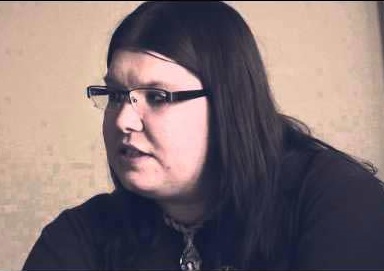
The late author David Foster Wallace—who committed suicide in 2008, the victim of depression— gave a wise, inspiring, ethically-astute  commencement address to the graduating class at Kenyon College in 2005. The speech was later published as a book in 2009 under the title “This Is Water.” It was recently made into a vivid video, and has been viral on the internet. You can see it here, at least for a while.

If the video sends anyone to Wallace’s other works, it has done good; if it causes people to ponder what ethics really means, for that is what Wallace was talking about, it had done better. Apparently the David Foster Wallace Literary Trust is in the process of ordering that this video be taken down as copyright infringement, which if his words belong to the Trust, is their right. I wish they wouldn’t; I think letting Wallace’s eloquent life lesson reach as many people as possible, especially young people, would be both ethical and consistent with the values and aspirations of Wallace himself, but it is not my decision to make. I am a little conflicted about sending you to the link, in fact, if the piece was, in effect, stolen. I am applying utilitarian balancing here.

You can also read his speech, presumably legally, here, where it was republished upon his death. The essence of it is in this passage:

“The really important kind of freedom involves attention, and awareness, and discipline, and effort, and being able truly to care about other people and to sacrifice for them, over and over, in myriad petty little unsexy ways, every day. That is real freedom. The alternative is unconsciousness, the default setting, the “rat race” – the constant gnawing sense of having had and lost some infinite thing.”

__________________________

Pointer: Tim LeVier

Sources: Upworthy, The Guardian

Ethics Alarms attempts to give proper attribution and credit to all sources of facts, analysis and other assistance that go into its blog posts. If you are aware of one I missed, or believe your own work was used in any way without proper attribution, please contact me, Jack Marshall, at  jamproethics@verizon.net.

Unethical Quote of the Week: White House Spokesman Jay Carney

“We could go down the list of questions–we could say ‘What about the president’s birth certificate? Was that legitimate?’”

—–Jay Carney, in yesterday’s news media briefing, apparently suggesting that public concern with at least four episodes raising legitimate questions regarding  serious misconduct at high levels of the Obama Administration was the equivalent of “birtherism.”

Welcome to the club, Jay!

Welcome to the club, Jay!

At this point, it is fair to say that Jay Carney can no longer be expected to be honest, responsible or professional, and thus can be included among the elite class of public figures, like Donald Trump, Bill Clinton, Bill Maher and Newt Gingrich, to whom absurd and unethical utterances are like breathing in and out, are shameless, and barely noteworthy on an ethics blog. Unethical people say and do unethical things. That pretty much covers it.

Carney, however, is not like the others in that he speaks for the White House, and Barack Obama. Continue reading

Ethics Quote of the Week: Bob Woodward

“You’re talking about government not working, but who’s in charge of the Executive Branch? You go to the Constitution, and the President has sole responsibility for the Executive Branch. This rests on him.

You were talking earlier about kind of dismissing the Benghazi issue as one that’s just political, and the President recently said it’s ‘a sideshow.’ But if you read through all these emails, you see that everyone in the government is saying, ‘Oh, let’s not tell the public that terrorists were involved, people connected to al-Qaida. Let’s not tell the public that there were warnings…’  One of the documents with the editing [shows] that one of the people in the State Department said, ‘Oh, let’s not let these things out.’ And I have to go back 40 years to Watergate, when Nixon put out his edited transcripts of the conversations, and he personally went through them and said ‘Let’s not tell this,’ ‘Let’s not show this.’

“I would not dismiss Benghazi. It’s a very serious issue. As people keep saying, four people were killed. You look at the hydraulic pressure that was in the system to not tell the truth, and, you know, we use this term and the government uses this term ‘talking points.’ Talking points, as we know, are like legal briefs. They’re an argument on one side. What we need to do is get rid of talking point, and they need to put out statements or papers that are truth documents. ‘OK, this is all we know.’”

—Bob Woodward, Watergate legend, on MSNBC, making the case that the altering of the Benghazi “talking points” and subsequent use of misleading statements about the origins of the attack is not, as the President has said, ” a side-show,” but rather a serious and disturbing event worthy of criticism and attention.

truth-graphic

“Quick! Let’s hide it!”

One reason I like this quote is that I feel that in the long run the Benghazi talking points scandal—for that’s what it is, a scandal—may be the most significant, if not the most egregious, of the three scandals now rocking the Obama Administration. For the reason this is true, we only have to consult Jay Carney, who incredibly told Piers Morgan yesterday that in referring to the I.R.S. targeting of conservative groups for obstructive treatment, the Justice Department’s intrusion on AP phone records and the false “anti-Muslim video” narrative,  the CNN host was “concocting scandals that don’t exist…especially with regard to the Benghazi affair that was contrived by Republicans and, I think, has fallen apart largely this week.”

Wow. Continue reading

Ethics Quote Of The Day: Ken at Popehat

“If you practice as a lawyer, you owe it to your clients only to do the things you are competent to do. Embarking on the defense of a man accused of murder as your first trial is a moral and ethical outrage. Regrettably, the profession is barraged with eager voices telling us that attracting clients with puffery and keywords and Twitter accounts is the way to build a practice. Nobody’s reminding us that you have an obligation to know what you’re doing before you accept the client. Somebody should.”

—-Ken, the lead blogger/attorney/libertarian/ wit/ First Amendment champion at Popehat, summarizing the lessons of the Joseph Rakofsky saga. Rakofsky was a green D.C. lawyer ( he is still a lawyer, less green but sadder and wiser) who indeed did take a murder defense as his first trial, made an epic botch of it, and then launched a desperate defamation lawsuit at legal bloggers, like Ken, who had told his cautionary tale to the world with appropriate ire. The law suit was dismissed last week.

What's next for Joseph Radofsky? Maybe he'll run for President....

What’s next for Joseph Radofsky? Maybe he’ll run for President….

Competence is an ethical value, especially in the professions, but also in most pursuits. Taking on the responsibility of accomplishing a task creates a duty, and doing so without being justifiably certain that you will have the skills to do it is reckless and irresponsible.

Ken, an experienced and accomplished attorney whom I have consulted for his professional advice in the past, also knows that inexperience does have to be eradicated with experience, and a strict application of his statement in all cases would lead to a frustrating Catch 22. Every pilot has to take that first solo flight; every head surgeon has his first major operation; and Clarence Darrow had to take on that first murder trial before he could say with complete confidence that he knew exactly what to do. On a more basic level, any lawyer taking on a representation in a type of matter she has never handled before, such as drafting a will, will be, in  a sense, accepting a client before she knows what she is doing, because she hasn’t done it before. That’s okay, however: the ethics rules, as expressed in the American Bar Association’s Rules of Professional Conduct (in Rule 1.1) say its okay, as long as, by the time the task is underway, the lawyer is sufficiently competent: Continue reading

Of Hero Ethics, Credit, Fame, And Angel Cordero

Angel Cordero, unsung hero. And in good company.

Angel Cordero, unsung hero. And in good company.

Apparently a Cleveland man named Angel Cordero is every bit as deserving of accolades in the rescue of the three kidnapping victims of Ariel Castro [of alleged kidnapper and rapist Ariel Castro, that is. Reflect on this case the next time someone puffs themselves up to reprimand you for a missing “alleged” and lectures you about how the accused are “innocent until proven guilty.” Yes, we know—and that means we can’t lock them up and throw away the key until they have had a fair trial and been officially proven guilty beyond a reasonable doubt in the judgment of a jury. It does not mean,  in a situation where there is literally no possible interpretation of the facts that would not end with the conclusion that the man who owns the house where three women have been kept prisoner for ten years and who have told interviewers that he beat them, starved them and raped them, that to state the obvious is some kind of human rights violation. By the way, O.J. is guilty too.] as the more colorful, more publicized–and more ridiculed—Charles Ramsey.

I want Cordero to receive the credit and admiration he deserves. I don’t want him to feel bitter and unappreciated. If the media, public and popular culture is inclined to bestow its goodies on the heroes of this horrible story, I hope he gets his fair share. Still, I also hope that he would be sufficiently large of soul and solid of values to adopt the attitude that what is important is that the women were rescued, and not who gets credit for it, now or in the future. Continue reading

Unethical Quote of the Week: Lauryn Hill

“I was put into a system I didn’t know the nature of…. I’m a child of former slaves. I got into an economic paradigm and had that imposed on me. I sold 50 million units…Someone did the math, and it came to around $600 million. And I sit here before you trying to figure out how to pay a tax debt? If that’s not like enough to slavery, I don’t know what is.”

Singer-songwriter, actress, rapper and hip-hop artist Lauryn Hill, complaining to the judge as she was sentenced to three months in prison and a $60,000 fine for failing to pay taxes on her earnings of approximately $1.8 million between 2005 and 2008.

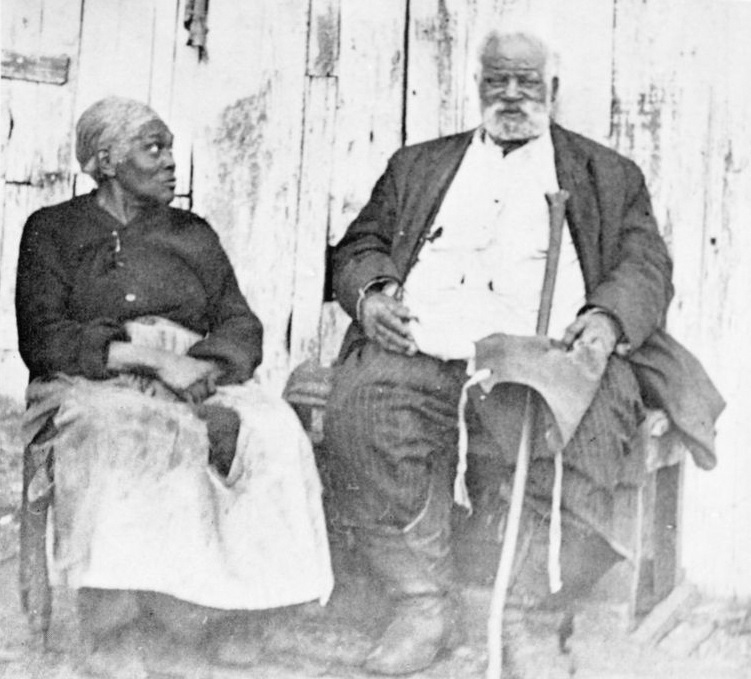
slave couple

Lauryn Hill’s parents. OK, not really. Metaphorically, perhaps. You better ask Lauryn.

Now let’s see…Hill’s statement is…

  • An abdication of responsibility. Hill has been in the entertainment business, and wonderfully successful at it, since she was 18 and landed a continuing role on the soap opera, “As the World Turns.” Few “know the nature of” the strange world of stardom, agents, performing contracts and the rest that goes with the highest levels of American show business when they enter it, but most manage to learn the basics, and most also manage to pay their taxes. Hill has had plenty of time to learn “the system,” whichever one she was referring to. She is also a native-born natural citizen, and I’m sure the reality of income taxes didn’t escape her notice for all these years. Continue reading

Ethics Quote of the Day: “Emily Webb”

“Goodbye to clocks ticking — and my butternut tree! And Mama’s sunflowers — and food and coffee — and new-ironed dresses and hot baths — and sleeping and waking up! Oh, earth, you’re too wonderful for anyone to realize you! Do any human beings ever realize life while they live it — every, every minute?”

—- Emily Webb, the heroine of Thornton Wilder’s 1938 drama “Our Town,” in her climactic speech in Act 3, cutting short the one day in her life she has been permitted to relive after dying in childbirth.

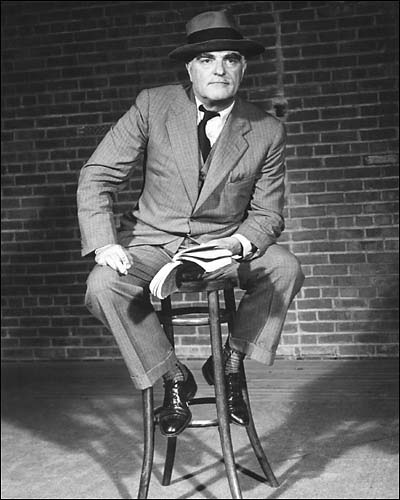
Thornton Wilder

Thornton Wilder

It’s a gorgeous spring Sunday in Northern Virginia, and by happenstance Garrison Keillor chose today’s installment of his “Prairie Home Companion” to allude to Emily’s famous,  heart-breaking speech at the end of “Our Town.” The speech is so familiar to many of us that we tend to forget how perfect and right it is, one of those remarkable, inexplicable times when a writer manages to express the important thought that is beyond expression.

Emily’s speech reminds us that the ultimate unethical act is wasting the remarkable opportunity that is a human life, and, at the same time, failing to appreciate the wonder that passes by our senses in the process. The answer to Emily’s question is, of course, no—nobody, not poets, not geniuses, not heroes nor saints—realize life every minute. Wilder’s, and Emily’s immortal words, however, spur us to try.

On this beautiful day, in this beautiful country, Emily’s speech is an excellent catalyst for calm, resolve, perspective, and hope.


Unethical Quote of the Week: “Meg Lanker-Simons is Innocent” Facebook Page

“Meg Lanker-Simons is innocent we believe what she did was justified and deserves not to be held accountable for her accusations we stand behind you sister.”

—-The Facebook page dedicated to the plight of University of Wyoming student, progressive blogger and campus radio host Meg Lanker-Simons, who apparently sent an obscene and threatening message to herself online under the guise of an anonymous male conservative, one of her sworn foes. She has been charged with a misdemeanor by campus police.*

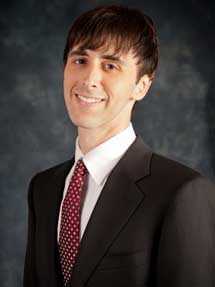
I confess, there were more flattering photos of Meg I could use, but she doesn't deserve them. What she deserves, really, would be for me to dress up in drag, take my own photo, and not only label it as meg, but then riff on how ugly she is in the picture, when it's really me. Meg would approve of that. She'd have to.

I confess, there were more flattering photos of Meg I could use, but she doesn’t deserve to have me use them. What she deserves, really, would be for me to dress up in drag, blacken my teeth and take my own photo, and then not only label it as Meg, but then riff on how ugly she is in the picture, when it’s really me. Meg would approve of that. She’d have to.

Let us stipulate that the title of the Facebook page may well be correct, as James Taranto persuasively argues: threatening yourself, even with rape, which is what Lanker-Simons did, is unlikely to be anything but protected speech.

Beyond that, however, this kind of stunt is low-wattage Tawana Brawleyism,  and thus ethically revolting. That 38 Facebook fans and the semi-literate clod who authored the quote above argue that it is “justified” shows that ethics rot has some new and virulent strains.

Continue reading

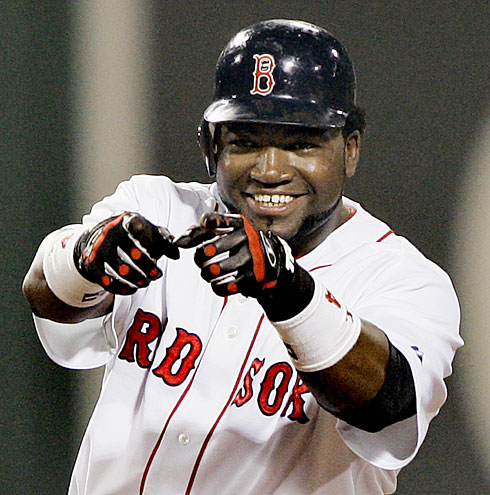
Unethical Quote Of The Week: Boston Red Sox Star David “Big Papi” Ortiz

“This is our fucking city!”

—Boston Red Sox designated hitter and icon David Ortiz, aka “Big Papi”, representing the team in a pre-game ceremony at Fenway Park honoring Boston in the wake of the past week’s violence, heroism and travails.

"Big Potty-Mouth"

“Big Potty-Mouth”

I love you, David, and you got us past the Yankees in 2004, but your choice of words  was classless, crude and unnecessary.

There were children in that crowd and watching on TV, as I was. You are a role model, and locker room language belongs in the locker room, not in public events. Your obviously calculated incivility moves the culture one more step away from public manners and toward obscenity as standard expression.

I’m disappointed in you, and you also embarrassed your sorority sisters at Delta Gamma.

Ethics Quote of the Week: Tom Hawking

“It’s not the role of our media and our journalists to shield us from truth; it’s their job to confront us with it. In this respect, the plurality of imagery is both a blessing and a curse, because in the sort of panic that follows an event like yesterday’s bombing, anything could be real. But equally, it’s also the volume of images and coverage — graphic and otherwise — that help us get a clearer picture of reality than we ever did in the days when our opinion was shaped by one journalist and a few photographs.”

—- Tom Hawking in his essay “The Ethics of Disaster Photography in the Age of Social Media,” discussing the controversy over whether graphic images from catastrophes like the Boston Marathon bombing ought to be published by the mainstream media, or should be toned down, edited, or withheld altogether.

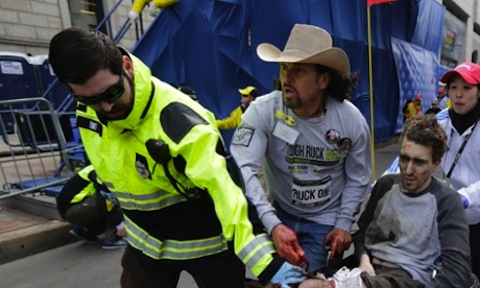
Boston Marathon ExplosionHawking’s conclusions are spot-on, and you should read the entire essay here. Obviously horrendous photographs shouldn’t be thrust in readers’ and viewers’ faces; we should all have the opportunity to avoid seeing images we know would upset us. ( I have not looked at any of the graphic images from Boston. The text descriptions are plenty for me, thanks.) Leaving it to editors and journalists to decide how much realism we can stand, however, is folly. To be blunt, there is no reason to trust them. One of the blessings of the web and social media is that the traditional media no longer have the power to withhold information based on their biased and paternalistic judgement, which they are thoroughly unqualified by intellect, education  to render.

______________________________

Source and Graphic: Flavorwire (Tom Hawking)

Ethics Alarms attempts to give proper attribution and credit to all sources of facts, analysis and other assistance that go into its blog posts. If you are aware of one I missed, or believe your own work was used in any way without proper attribution, please contact me, Jack Marshall, at  jamproethics@verizon.net.