Comment Of The Day: “Comment Of The Day: ‘Unethical Tweet Of The Month: The Portland Police Bureau'”

Police Trust

Woke up with a bang this morning at 4:45 remembering that I hadn’t posted this Comment of the Day on this Comment of the Day, (by Extradimensional Cephalopod ) regarding the Ethics Alarms commentary about the Portland police staving off another police shooting riot with a tweet saying, in essence, “It’s OK, the guy we shot was white!”

Here it is, by Humble Talent, who included a wistful nod to departed but not forgotten EA commenter Charles Green. This is, I believe, Humble Talent’s 35th Comment of the Day.

***

“The urge to do violence without having first gathered all relevant facts comes from fear, which comes from mistrust. In order to build trust, you first have to set mutual expectations, and then demonstrate you will fulfill them even when it’s costly.”

This is a great way to look at it. It’s kind of unfortunate that Charles Green left the site, because as stubbornly, blindingly, partisan as he is, he is literally in the business of building trust, and I think it would have been interesting to hear his take on what the first steps towards establishing trust would look like.

Continue reading

Down The Slippery Slope To Lawyer Censorship: First Giuliani, And Now This

silence

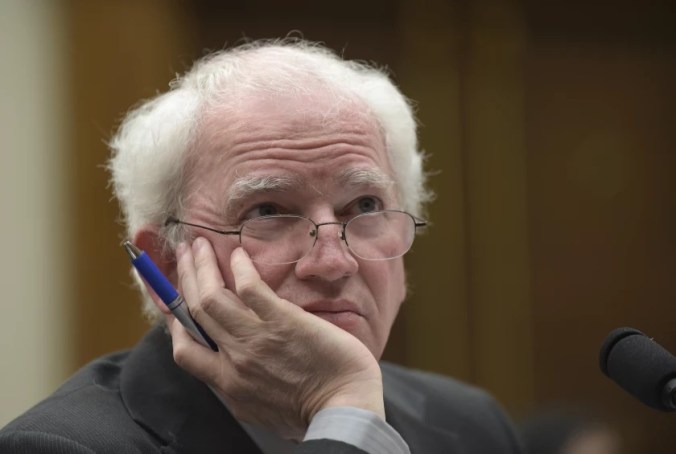
Rudy Giuliani, as discussed here, was just suspended from the practice of law on the basis of out of courts statements that the New York bar disagrees with, while representing a client they hate (Donald Trump), using a standard that has never been applied to a lawyer before.

Yet what was just done to South Carolina lawyer David Paul Traywick by the state Supreme Court was even worse, and more ominous. The Court ordered his suspension from the practice of law based on social media posts that were pure opinion, and that had no connection to the practice of law at all. Traywick lost his license for six months. He will also have to complete at least one hour of diversity education, undergo an anger management assessment, submit to an evaluation through the South Carolina Bar program Lawyers Helping Lawyers, and comply for one year with any treatment recommended by “re-education” authorities.

The Court felt justified punishing him after the South Carolina Office of Disciplinary Counsel received complaints from 46 people about Traywick’s Facebook posts. The posts were accessible to the public, and his profile identified himself as a lawyer while mentioning his law firm his law firm.

The Court found twelve posts by Traywick “troubling.”I will interject here that an individual’s statement on social media are none of a court’s business, indeed none of its damn business, unless they are libelous or criminal, or evidence in a case before it. None of the posts fit into those categories. Two of the posts nonetheless triggered the suspension:

  • On April 5, 2020, Traywick posted what the Court calls “an offensive comment regarding tattoos,” apparently so offensive the the opinion won’t even enlighten us to what it was. After whatever it was he was saying about tattoos, which could have only been an opinion, he  challenged his readers, “Prove me wrong. Pro tip: you can’t.” In a subsequent post in response to a comment, he wrote, “The general statement has exceptions, such as for bikers, sailors, convicts or infantry. But these college educated, liberal suburbanites. No, the rule was written for these boring mother fuckers. And they are everywhere. Fuck em. Especially these females, Jesus Christ!”
  • On June 3, 2020, at the peak of the George Floyd Freakout, they lawyer posted, also on Facebook,  “Here’s how much that shitstain’s life actually mattered: Stock futures up. Markets moved higher Monday and Tuesday. Fuck you. Unfriend me.

By no stretch of the imagination or the Rules of Professional Conduct do those statements justify suspending a lawyer’s right to practice law. It is protected speech under the First Amendment. It does not involve the practice of law. The comments are profane, but profanity is not grounds for discipline out of a legal context. They are vulgar, but the same hold with those. They may offend readers, but nobody is forcing readers to follow this jerk. The lawyer appears, based on his comments, to be an asshole, but being an asshole is not a disqualification for practicing law. It is often an asset, some might say. He may have been lying, but not in any way that could be linked to his trustworthiness as a lawyer, and lies are also protected speech unless they constitute fraud or perjury.

Yet the Court wrote,

Continue reading

Re Rudy Giuliani’s “Interim Suspension”

rudy_giuliani_ap

New York’s Supreme Court took the draconian step of suspending Rudy Giuliani, former federal prosecutor, former mayor of New York City, and counsel to former President Trump, from practicing law based on his statements, allegation and, in some cases, presentations in court and court documents, regarding the 2020 election and his clients claims that it had been “stolen.” From the opinion:

“For the reasons that follow, we conclude that there is uncontroverted evidence
that respondent communicated demonstrably false and misleading statements to courts, lawmakers and the public at large in his capacity as lawyer for former President Donald J. Trump and the Trump campaign in connection with Trump’s failed effort at reelection in 2020. These false statements were made to improperly bolster respondent’s narrative that due to widespread voter fraud, victory in the 2020 United States presidential election was stolen from his client. We conclude that respondent’s conduct immediately threatens the public interest and warrants interim suspension from the practice of law, pending further proceedings before the Attorney Grievance Committee (sometimes AGC
or Committee).”

Note that Giuliani has been suspended before the completion of an investigation of the claims against him, or a hearing, based on a conclusion that the public is literally endangered by the possibility of his continuing to make the same claims that former President Trump and many others are making in public every day. The stated justification for the extremely rare interim suspension is never explicitly made clear: exactly what is the danger to the public that justifies this? The Supreme Court of the State of New York is simply continuing the false narrative that there was a “violent insurrection” by misguided members of the public on January 6 caused by the insistence bythe President and others that the election was “stolen” by the Democrats, and Trump was really elected. Indeed, the Court writes,

“One only has to look at the ongoing present public discord over the 2020 election, which erupted into violence, insurrection and death on January 6, 2021, at the U.S. Capitol, to understand the extent of the damage that can be done when the public is misled by false information about the elections. The AGC [Attorney Grievance Committee] contends that respondent’s misconduct directly inflamed tensions that bubbled over into the events of January 6, 2021 in this nation’s Capitol.”

I shouldn’t have to point out that neither Trump nor any non-lawyers making the “stolen election” claim have been or can be punished by the the Courts or the government, but the New York Bar’s Rules of Professional Conduct can be used to do just that to Giuliani for serving a client the judges don’t like (they are all Democrats). To justify this, the opinion uses the fact that a lawyers’ speech is more subject to regulation than normal citizens because of their “persuasiveness,” and supposed trustworthiness as members of a profession that is forbidden from lying. It bootstraps its argument by noting that the real purpose of the Rules is not to punish lawyers, but to protect the public. That is true, but the purpose is to protect the public from being represented by bad and untrustworthy lawyers, or substantively harmed by lawyers assisting criminal or predatory clients. It is not to muzzle lawyers from making controversial statements in the public square.

This case has been the subject of much debate by my legal ethicist colleagues of late, with a depressing near-consensus that Rudy is getting what he deserves. This is because, I detect, the vast majority of lawyers cannot see through their political biases and Trump hate. At the most simple level, the ruling is premature because contrary to the Court’s certitude, all of the evidence is not in, though the claim that there was widespread election fraud and that the election was “stolen” has for many months been pronounced “a lie” by Democrats and the mainstream media with suspicious vigor.

While the Giuliani opinion makes a convincing case that many of Giuliani’s statements, including some made to courts and government bodies, were careless, sloppy, badly sourced, unprofessional and wrong, it cannot be known at this point that his (or Trump’s) general claim is false. If it is not false, then raising doubts among the public cannot be called dangerous to the public. It is more dangerous to keep opinions, arguments and ideas from the public’s awareness “for their own good.”

Thus this is a First Amendment problem. Except for one assertion about the status of a complaint, which he later corrected, Giuliani is not accused of improprieties in court proceedings where he functioned as an advocate. The Court’s focus is almost entirely on Giuliani’s public statements on the radio, in podcasts, on TV shows and news interviews. Alan Dershowitz, along with Jonathan Turley among the very few well-known lawyers (and Democrats) who have managed to maintain their integrity during the nearly five-year attack on Donald Trump, reacted to the interim suspension by telling Breitbart (which I will not link to after being burned to many times),

“I taught legal ethics for, I don’t know, 35 years at Harvard Law school. I think of myself as a leading expert on legal ethics. I’ve never ever seen a case where a lawyer was essentially disbarred … without a hearing. The most basic concept of due process is you don’t deprive somebody of his living, of his freedom, of his ability to work without a hearing. And then the criteria under which they suspended his law license is so vague. It says in the course of representing a client, a lawyer shall not knowingly make a false statement of fact or law to a third person. In other words, if he goes on your show, or he goes on my podcast, or he goes on Fox or anywhere else, and he makes a statement which turns out to be false, and he had reason to believe it was false, he could be disbarred. Do you know how many lawyers we’d have left if we applied that standard across the board? … We have case after case after case where prosecutors, defense attorneys, lawyers of every kind, have made statements … which turn out to be untrue, and they’re never disbarred. And certainly not without a hearing. And so, this is a first. …The atmosphere is such today that if you defended President Trump in any way, they’re out to get you. And they’re certainly out to get Rudy Giuliani.

In other words, the suspension is a politically motivated silencing. I strongly suspect that anti-Trump bias was at the heart of this slap at Giuliani, as Dershowitz says. Turley, in a piece for The Hill, expressed similar concerns:

Continue reading

Unethical Tweet Of The Month: The Portland Police Bureau

Portland tweet

There are many Ethics Alarms categories the tweet above would fit neatly into, like Ethics Dunce, Unethical Quote of the Week, evidence of The rampages of the Great Stupid, res ipsa loquitur, signature significance and others. I wonder if it is something else as well, like coherent civilization’s death rattle.

The Portland police felt constrained to issue that announcement after a police officer in Portland opened fire at a deranged man who charged him with a screwdriver. The man was shot dead in what all reports indicate was self-defense. This was apparently a “suicide by cop.” Quickly, at least 50 protesters converged at the Motel 6 where the episode occurred, and what looked like it could quickly turn into a violent riot was looming. The mob “began yelling, throwing items at officers, and attempting to interfere with the investigation,” Portland Police Bureau said. Videos showed many black-clad protesters chanting the anti-police phrase “Fuck 12.” A officer’s baton was grabbed as she was pulled toward the crowd; another protester sprayed an officer with pepper spray. One police car had its tires punctured and a window broken. Meanwhile, the Antifa distributed flyers calling the incident another example of racist police brutality against the black community.

So, acting quickly, the Portland police issued the tweet, assuring everyone that it was a white man who was killed. No worries! The nation was made just a little bit better and less racist. one more whitey down!

Naturally, the mob dispersed, and there was no more threatened violence.

The officer involved in the shooting was black. “Our officer encountered a very difficult and dynamic situation that no officer wants to face,” Police Chief Chuck Lovell said at the scene.“I want to assure the community that we’re committed to a full, thorough and complete investigation.”

Hey, never mind, Chuck! The guy was white! Nobody cares.

When an officer shot a black teen preparing to stab another young woman with a knife, there was a riot. When police shot an accused black rapist who was armed with a knife and preparing to drive off with his alleged victim’s children, there were riots. When a black man resisting arrest was shot after trying to fire a taser at an officer, there were riots. When a black man who had tried to take an officer’s weapon away while resisting arrest was fatally shot as he rushed the much smaller officer, there were riots. When a black woman was accidentally shot in the cross-fire between police and her boyfriend began the exchange of bullets, there were riots.

But once the crack Portland Police made it clear that it was only some sick white dude who was killed, all was well.

Rueful observations:

Continue reading

“Systemic Racism” Update

I need a graphic for “The Great Stupid,” but until I get one, that clip above from Ed Wood’s masterpiece, “Plan Nine From Outer Space,” will have to do. I have to check back and find out which generous reader sent me this after I asked if there was a “Stupid, stupid!” equivalent of the “Madness! Madness!” clip from “Bridge Over The River Kwai.” That’s the immortal Dudley Manlove uttering those words, by the way. And that was his real name!

Update: Commenter Wallphone found the “Plan Nine” clip, and has my enduring gratitude.

Here are some especially annoying recent developments on the incoherent “systemic racism” front.

1. Philonase Floyd, the brother of the late, great,George Floyd, said, following the sentencing of Derek Chauvin, “I just want to reiterate: not just black lives matter, all lives matter.” Strangely, he was not immediately condemned as a racist or racially insensitive and forced to apologize like so many others who were hounded mercilessly for saying “all lives matter.” Of course, the explanation is that Floyd’s skin shade gives him license to say “all lives matter.”

I only want to know the rules, that’s all. That seems like a reasonable request. But the systemic racism scam is truly Calvinball.The rules are made up and changed according to whatever is expedient at the time. Incidentally, there is a politician named Calvin Ball who is the county executive of Howard County, Maryland. Guess his party and race. [Hint: He’s allowed to say “All lives matter.”]

2. There has to be some designation for the cowards and enablers of rising totalitarianism that accurately describes sniveling traitors to democracy like Charlette LeFevre and Philip Lipson, the directors of Capitol Hill Pride in Seattle. I was considering the “Winston Smith Award,” but that seems unfair to Orwell’s tragic hero.

The two sent a letter to the Seattle Human Rights Commission that said,

“It has come to our attention that an event called ‘Take B(l)ack Pride’ at the Jimi Hendrix public park June 26th is charging Whites only admission as reparations. We consider this reverse discrimination in its worse form and we feel we are being attacked for not supporting due to disparaging and hostile e-mails. We will never charge admission over the color of a person’s skin and we resent being attacked for standing in those values.”

Continue reading

More Terrifying Tales Of The Great Stupid, Academic Division

The predictable appeal of racist “antiracism” cant to the world of scholarship and academia in the wake of the fraudulent George Floyd Freakout is producing amusing or frightening results, depending on one’s regard for higher education and resistance to despair.

Today’s sample of Authentic Frontier Gibberish, for example, comes from “Confronting “White Feminism” in the Victorian Literature Classroom,” recently published in the scholarly journal, “Nineteenth Century Gender Studies.” The author is University of California Professor Lana Dalley, who complains that Victorian feminists are “problematic” [There’s that word again!] because they promote “white feminism.” In other words, social commentators and writers of over a hundred years ago don’t seem to reflect the current approved woke perspective of 2021. This is, apparently, a surprise. Here’s her first paragraph, an AFG classic:

The transition to virtual learning in Spring and Fall 2020 intersected with international protests for racial justice and, more locally, Ronjaunee Chatterjee, Alicia Mireles Christoff, and Amy R. Wong’s call to “undiscipline Victorian Studies” by “interrogat[ing] and challeng[ing] our field’s marked resistance to centering racial logic” (370).(1) More specifically, they call for “illuminat[ing] how race and racial difference subtend our [Victorianists’] most cherished objects of study, our most familiar historical and theoretical frameworks, our most engrained scholarly protocols, and the very demographics of our field” (370). Since then, numerous virtual roundtables and panels have convened to discuss critical approaches to race within Victorian studies and to ponder the relevance of contemporary social justice movements to a field whose borders are historically drawn. This essay emerged from one such panel and offers practical suggestions for reframing pedagogical approaches to Victorian feminist discourses in order to “center[] racial logic” and “illuminate how race and racial difference subtend” those discourses.(2) Its suggestions are certainly not meant to be exhaustive, but simply to offer one set of practices for making the Victorian literature classroom more responsive to contemporary conversations about race and gender.”

Now who can argue with that?

Continue reading

Law vs. Ethics #2: The Supreme Court Unanimously Says Colleges Can Use Tuition To Run A Professional Sports Business

In NCAA v. Alston, handed down yesterday, a unanimous Supreme Court ruled that the National Collegiate Athletic Association (NCAA) violated the rights of student athletes and the Sherman Antitrust Act by restraining colleges from compensating student athletes. Justice Gorsuch wrote the opinion, upholding the U.S. Court of Appeals for the 9th Circuit. Justice Brett Kavanaugh wrote a concurrence.

The decision was a slam dunk for the players. Gorsuch vivisected the NCAA argument that its compensation rules should not be subject to a “rule of reason” analysis because it is a joint venture to offer consumers the unique product of intercollegiate athletic competition. The NCAA has monopoly power in the market, Gorsuch explained, so it deserves no such deference. The NCAA’s argument that it should be exempt because it offers societally important non-commercial benefits is ridiculous on its face, and Gorsuch explained why.

Justice Kavanaugh’s concurring opinion went further:

Continue reading

In Iowa, An Unattributed Shout Of “Let Him Hang” Becomes A National Race Incident…

I missed this story; luckily a reader, whom I am not certain whether he wants his name posted, didn’t. He sent it to me, writing in part, “So the catcher [Yes, it’s a baseball story] clapped and the word hang was heard. Both could be explained by the way teams talk to each other to cheer the team on. But it’s presented as if a MAJOR racial incident occurred. A half page article in a major news publication designed to stir animosity.”

That’s exactly what happened, though it wasn’t just the news media, it was all triggered by a mixed-race high school baseball player’s mother who has been conditioned to see racism whether it is in evidence or not. This is another success of the progressive racial outrage project.

Here is what happened, courtesy of the Des Moines Register yesterday. I’m going to interject my analysis as we go along to save time:

“Norwalk Warriors baseball player Ryan Wood was up to bat with three balls and two strikes in a doubleheader against Dallas Center-Grimes on Friday as his mother, Lisa Wood, watched from a seat in the stands. Wood said the DCG pitcher threw a ball into the opposite batter box, “practically in the dirt,” and Ryan, who recently graduated from Norwalk, went to walk to first base. He was halfway there when the umpire called a strike.”

Comment: Typical parent: Ryan’s mom was well up the third base line, but she was certain that she saw the pitch better than the umpire, who was behind the plate and inches away. Baseball players are coached to sometime try to steal a ball four call by starting to walk to first base. Once in a blue moon, it works.

“While Ryan, who is of mixed race, walked back to the plate, Lisa Wood said that DCG’s catcher clapped in her son’s face. “My son strikes out and the catcher yells at him ‘Go sit down,’ …And then somebody — whether it was the catcher or another in the dugout … somebody said, ‘Let him hang.’” Wood said the racial jeer was so loud that all of the parents near the outfield heard it, adding that she was “so shocked” that she turned to her 14-yearold daughter, who was sitting next to her in the stands to confirm what she’d heard.”

Continue reading

Baseball Has A Cheating Problem That Is Old, Was Supposedly Addressed Decades Ago, And Is Strangling The Game. It Is Relevant To More Than Baseball (Part 3: The Crackdown)

Before the 2021 season started, Major League Baseball claimed that it was about to start enforcing the rule against applying foreign substances to the baseball. Why. one might wonder. As Part I described, baseball has been casual about this rule for a long time, and the pattern goes back even longer than when Ethics Alarms first discussed it. In 1920, the game, trying to clean up its tarnished image in the wake of 1919 Black Sox scandal, banned the spitball as well as other “trick pitches” that involved altering the ball itself a few pitchers who were regarded as “spitball specialists” were “grandfathered” meaning that they were allowed to keep throwing the otherwise illegal pitch while others were not. This is not the way to make a rule against cheating, and the ambivalence about the spitball continued well into the 1980s. Baseball, and especially sportswriters, seemed to think this particular kind of cheating was cute. Only a few pitchers could throw a spitball, and those who did, notably Gaylord Perry, now in the Hall of Fame, were only occasionally caught and punished. Baseball finally made a rule that a pitcher couldn’t bring his fingers to his mouth; if he did, an automatic ball was called. Meanwhile, umpire searches of a suspected pitcher using other substances like K-Y jelly, usually hidden in a cap, became the stuff of comedy, as in the famous sequence from “The Naked Gun” above.

MLB became lax about enforcement, and predictably, some pitchers, and eventually most pitchers, took what was accepted as a “little” pine tar to get a better grip on the ball and, aided by modern chemistry, began using so-called “sticky stuff” to get higher rates of spin on the ball than they could with their natural talents. This development accelerated after 2018, when home runs became more common than ever before. When the rate of homers reached absurd levels in 2019, breaking the rules against putting foreign substances on the ball was viewed as a matter of professional survival. Pitchers experimented, trying Tyrus Sticky Grip, Firm Grip spray, Pelican Grip Dip stick and Spider Tack, a glue intended for use in World’s Strongest Man competitions and whose advertisements show someone using it to lift a cinder block with his palm. Some combined several of those products to create their own personal “sticky stuff.” Their clubs used Edgertronic high-speed cameras and TrackMan and Rapsodo pitch-tracking devices to see which version of the glue worked best.

Continue reading

Baseball Has A Cheating Problem That Is Old, Was Supposedly Addressed Decades Ago, And Is Strangling The Game. It Is Relevant To More Than Baseball (Part 1: Introduction)

Baseball sticky

Since about four other readers pay any attention to my baseball ethics posts, let me say right up front why this a mistake. Baseball’s current pitchers using foreign substances on the ball problem is, ethically, exactly the same as our nation’s election cheating scandal, or the illegal immigration crisis. It arises from the same dead-headed rationalizations, intellectual laziness, and self-serving deception. We can and should learn from it. But we won’t.

If you want to ignore the latest baseball ethics scandal as a niche problem unrelated to greater ethics principles, be my guest. You will be missing an important and still developing lesson.

Baseball’s hitting is way down this year, and pitching is more dominant than it has been since the mid-1960s. There is a reason: almost every pitcher is using some kind of sticky substance on the ball. This increases “spin rate,” which before computers and other technology was impossible to see, much less measure. The faster a pitcher can make a ball spin, the more it moves, curves and dives at higher speeds. Sticky substances allow a pitcher to do that. Using them is against the rules; it’s cheating. But for years now, the same kind of ethics-addled fools who allowed Barry Bonds and other cheats to use illegal steroids and wreck the game’s home run records as long as they lied about it have let pitchers illegally doctor the ball.

This week, the whole, completely avoidable ethics train wreck became an engine of destruction for the National Pastime.

Unfortunately, one has to understand the context to comprehend what is going on now, and that means looking backwards, in this case, to 2014. Here, with some edits, are two Ethics Alarms essays that provide the context. The first was titled “The Abysmal Quality of Ethical Reasoning in Baseball: A Depressing Case Study.” The second, Pineda-Pine Tar, Part II: Baseball Clarifies Its Bizarro Ethics Culture, appeared 13 days later. Yes, what is happening now was foretold by conditions that were evident seven years ago. The remaining parts of this series will bring you, and the train wreck, up to date.

***

What happened was this: During last night’s Red Sox-Yankee game in Yankee Stadium, the Boston broadcasting team of Don Orsillo and Jerry Remy noticed a glossy brown substance on New York starting pitcher Michael Pineda’s pitching hand. It was very obvious, especially once the NESN cameras started zooming in on it.   “There’s that substance, that absolutely looks like pine tar,” play-by-play man Don Orsillo said. “Yeah, that’s not legal,” color commentator and former player Jerry Remy replied.

Indeed it isn’t.  According to rule 8.02(a)(2), (4) and (5), the pitcher shall not expectorate on the ball, either hand or his glove; apply a foreign substance of any kind to the ball; [or]  deface the ball in any manner.

The Red Sox, who probably knew about the gunk on Pineda’s hand, didn’t complain to the umpires, and just went about their merry way, losing the game. Asked about the stuff on his hand, Pineda demonstrated the full range of body language indicating that he was lying his head off. “It was dirt,’ he said. Later, when the ick appeared to be gone,  Pineda explained, he had just sweated his hand clean. Right. Whatever was on his hand—beef gravy, crankcase oil, chocolate syrup…the majority of pundits think pine tar—it wasn’t “dirt.” Pineda’s manager, Joe Girardi, was brazenly evasive.

The Yankee pitcher was cheating. This isn’t a major scandal, but cheating is cheating: sports shouldn’t allow cheating of any kind, because if a sport allows some cheating, however minor, it will encourage cynical, unscrupulous and unethical individuals on the field, in the stands, and behind keyboard to excuse all other forms of cheating, from corked bats to performance enhancing drugs. Cheating is wrong. Cheating unfairly warps the results of games, and rewards dishonesty rather than skill. Cheating undermines the enjoyment of any game among serious fans who devote energy and passion to it. Any cheating is a form of rigging, a variety of lying.

And yet, this clear instance of cheating, caught on video, primarily sparked the sports commentariat, including most fans, to cite one rationalization and logical fallacy after another to justify doing nothing, and not just doing nothing, but accepting the form of cheating as “part of the game.” I’ve been reading columns and listening to the MLB channel on Sirius-XM and watch the MLB channel on Direct TV since this episode occurred. Here are the reactions:

Continue reading