Morning Ethics Warm-Up, 2/8/2018: Tolstoy And The News [UPDATED!]

Good Morning!

1  Thanks, Leo! I think.. Althouse reminded me of a Tolstoi quote that offers the perfect explanation of why bias makes you stupid:

“The most difficult subjects can be explained to the most slow-witted man if he has not formed any idea of them already; but the simplest thing cannot be made clear to the most intelligent man if he is firmly persuaded that he knows already, without a shadow of a doubt, what is laid before him.”

Researching this one led me to another quote from the Peasant Count:

“I know that most men, including those at ease with problems of the greatest complexity, can seldom accept the simplest and most obvious truth if it be such as would oblige them to admit the falsity of conclusions which they have proudly taught to others, and which they have woven, thread by thread, into the fabrics of their life”.

The quotes explain more of what is going on in the culture, journalism and politics right now than I am comfortable thinking about…which means that I am perpetually uncomfortable.

2. Someone please explain why we have not had this made crystal clear to us...This morning I heard Senator Lindsay Graham, a Republican Senator whom I regard as an honorable and ethical public servant, note while talking about the unfolding FISA scandal that Christopher Steele, the author of the so-called Russian dossier, was paid in part by the DNC and the Clinton campaign to assemble the material, for which he visited Russia and engaged with sources there. Wait…what? This made Steele an agent of the Clinton campaign by definition, and means, therefore, that the Clinton campaign was “colluding” with Russia during the Presidential 2016 campaign, to “meddle” with U.S. elections.

[UPDATE and Correction: This is what the honorable and ethical Senator said. In fact, since Steele was a former spy, he couldn’t go to Russia. He did, however, engage sources who did, and who made contacts with Russians. Legally, this makes little difference. An agent who uses an agent to do the work of the principle is still responsible for what THAT agent does. ]

But the statement above is inaccurate. ] This constitutes more evidence of Clinton “collusion” than Mueller’s year-long investigation has uncovered regarding the Trump campaign, since, as far as we know, it has uncovered no such evidence at all. Is Mueller investigating Democratic “collusion”? If not, why not? The argument that Clinton was engaged in exactly the kind of activities Trump’s campaign is being accused of has been brushed off as crazy Fox News talking points by the mainstream media. It seems pretty clear now that this is a false and deliberately misleading representation, even before we arrive at the problematical use of the document by the FBI and the Justice Department. Continue reading →

Morning Ethics Warm-Up, 2/5/18: Churchill, Philly, Trump, Uma, And The FBI

Good Morning, Philadelphia!

Now sober up and clean up the mess…

1 This has little to do with ethics, except that it proves I wasn’t watching the Super Bowl, but…Here’s my report on “The Darkest Hour,” which my family saw last night in an almost empty theater. Apparently most people would rather see young men risk future dementia than celebrate a great man who may have saved civilization.

[ Aside: On that question, this article in the Federalist says in part, “Super Bowl Sunday seems the appropriate day to bring you the cheerful news that football is doomed. The sport is dying and cannot be saved, at least not in America, its traditional home. The cause of death is science. Simply put, football is a sport in which the audience entertains itself by watching men violently turn each other’s brains to mush…What happens if football becomes a game where white middle-class people pay millions to watch poor and minority kids bang up each other’s brains? I don’t think that’s going to be tenable….That means it’s only a matter of time before participation rates drop off precipitously and it no longer seems like the cool thing to do.The science has turned against football, and it can’t last. So enjoy today’s game, while you still can.” ]

You can skip to the next item if you don’t like your ethics polluted by film reviews.

The film is very good; not “Best Picture” great, I think, but very good. It did a better job making clear what was going on and the stakes at Dunkirk than “Dunkirk,” for which I’m grateful; maybe thay should show the two movies as a double feature. The last fade-out shot was “The Natural”-style over-the-top, out of whack with the style of the rest of the film and it left a sour taste, I thought. Artistic integrity would be nice. It reminded me of ET’s spacecraft leaving a rainbow trail

I’ve now seen four Churchill portrayals recently: Albert Finney’s in the 2002 HBO film “The Gathering Storm,” Brian Cox in “Churchill,” Gary Oldman, and John Lithgow in “The Crown.” My ranking: would also be in that order: Finney, Cox, Oldman and Lithgow lagging far behind. I’m a big Lithgow fan, but he looks and sounds so little like Winston (and so much like himself) that he just can’t measure up to the other three..

Finney, Cox and Oldman were all excellent: it’s very close. Oldman has by far the best part of the story to work with (the chronological order is Finney, Oldman, Cox and Lithgow) and the best screenplay, though “The Gathering Storm” is also strong. Oldman’s scene in the “Tube” is the best scene in any of the productions. It probably didn’t happen, but Churchill was known to wander around London talking to Londoners during the Blitz, so it COULD have happened.

All of the top three Winstons had moments when I forgot the actor and really believed I was watching the historical figure, my test in biographical films. This was something Lithgow couldn’t pull off for a second.  (Actors who could in other historical movies: Paul Scofield as Thomas More, Daniel Day Lewis as Lincoln.) Finney’s big advantage over Cox and Oldman, I think, is that he is a star as well as a great actor, and Churchill, as a Great Man, needs to radiate that presence and star quality too. Oldman feels small physically (though he’s actually taller than Churchill was, and no shorter than Finney), and his voice is light; there’s nothing he can do about that. I could make a strong argument that Brian Cox, who is one of the most under-rated actors around, was the best Winston, but the film itself was unforgivably careless and ahistorical.

If you haven’t seen Finney’s performance, which won him several awards, you should. It was probably his final great turn, since he’s in his 80s now and hasn’t made a movie since “Skyfall” in 2012.

Finney’s Clementine, Vanessa Redgrave, wins the award for that role, though her daughter, Miranda Richardson, was also fine in the same role with Cox. Apparently every actor who plays King George is great, but “Churchill”‘s King, James Purefoy, was wonderful (he’s another under-rated actor) and in a fair world, would be looking at an Academy Award nomination for Supporting Actor. The acting in that film is so excellent; it’s a shame its history is so messed up.

2. From the “When Ethics Fail, the Law Must Step In” file: Continue reading →

Comment Of The Day: “Ten Ethics Observations On The Nunes Memo”

I think this is the shortest Comment of the Day yet, a single sentence with an introduction, but it is a brilliant one. I am abashed that I didn’t think of it, but no one else has either, as far as I can determine. Circulate it widely, especially to your Facebook friends who are horrified that anyone would try to impugn a spotless American Institution like the FBI.

Here is Chris Marschner’s Comment of the Day on the post, Ten Ethics Observations On The Nunes Memo

You may have missed one glaring observation…

Comey, pundits, and Democats decry the Nunes memo as a smear on the FBI, attempts to sully the reputations of our premier agencies but have no problem casting doubt on our electoral process, smearing a bothersome but duly elected person to the high office of president, and telling the world of his transgressions.

Morning Ethics Warm-Up, 2/3/18: On The Nunes Memo, The Times Flunks (Another) Integrity Check.

Cold Morning! I mean, Good Morning!

Anne Frank would still read The New York Times, I guess…

(Anne Frank belongs in the Ethics Alarms Heroes Hall of Honor. I will fix that with a post this month–she probably dies in February, 1945. Don’t let me forget.)

1 “But you know what I sometimes think? I think the world may be going through a phase… It’ll pass. – I still believe, in spite of everything, that people are really good at heart.” Or maybe not. I gathered up all my idealism and hope, and thought that maybe, just maybe, after the ugly and destructive lynch mob it has constituted for over a year to try to destroy the elected President, the mainstream news media, faced with incontrovertible evidence of frightening lawlessness and an attack on democracy by the previous administration in the midst of a Presidential campaign, would finally show some integrity and do its duty.

Then I read today’s New York Times.

The headline: GOP MEMO LEADS TO FRESH JOUSTING ON RUSSIA INQUIRY.

Unbelievable. That’s the news? That there is “fresh jousting”? The memo, as I accurately explained in the previous post, shows that the Obama administration’s Justice Department knowingly used opposition research, funded by Obama’s party and its Presidential candidate, that has substantially been discredited  by the FBI, the same agency that represented it to the court, as evidence justifying a FISA warrant against an American citizen and a member of the opposing party’s Presidential campaign and the Republican Presidential campaign itself.

I don’t see any mention of the Russian collusion investigation in that sentence, but that sentence still suggests a serious scandal involving abuse of civil rights and tampering with the election by law enforcement and a partisan Justice Department. If the so-called “newspaper of record” was objective and trustworthy, some version of that sentence would have been its headline, not an intentionally misleading headline stating that the “news” just is more political “jousting.”

Think about it: the Times is using a less interesting and provocative headline that the one that is justified by the facts. The only reason it would do this is misdirection born of a political agenda. No, Hanlon’s Razon does not apply here. This is not incompetence. This is malice.

2. “It’s really a wonder that I haven’t dropped all my ideals, because they seem so absurd and impossible to carry out. ” Then there the Times editorials. Two days ago, the Times editors wrote this:

“In a demonstration of unbridled self-interest and bottomless bad faith, the Trump White House and its Republican minions in Congress are on the cusp of releasing a “memo” that purports to document the biggest political scandal since Watergate. To pull it off, they are undermining the credibility of the law enforcement community that Republicans once defended so ardently, on the noble-sounding claim that the American public must know the truth.”

Again, unbelievable and yet too believable. Let’s parse this one:

“In a demonstration of unbridled self-interest and bottomless bad faith,”

The Times thinks it is bad faith to inform the American public of undeniable misconduct by the FBI and the Justice Department regarding civil rights and the Presidential election. Sure.

“…the Trump White House and its Republican minions in Congress are on the cusp of releasing a ‘memo'”

An ad hominem attack (“minions”), a partisan bias-based innuendo of dishonesty ( “purports to document”) and a dishonest use of scare quotes around “memo,” as if this wasn’t a memo. It is a memo.

“…the biggest political scandal since Watergate.”

A straw man trick, exploding an assertion into its most extreme form to knock it down. The facts are the facts, and how they are characterized by some is irrelevant to what the facts show. it may not be  “the biggest political scandal since Watergate” when a Democratic administration uses opposition research its party paid to have done to defeat a Republican Presidential candidate  to get court authorization to spy on that campaign during the campaign. You have to admit, though, that at least sounds a little like Watergate—Presidential campaign, administration interfering with the opposition campaign, dirt tricks, misuse of government power—no? Even a little bit like Watergate is bad enough, when government and law enforcement interference with Presidential campaigns is the issue.

“To pull it off, they are undermining the credibility of the law enforcement community that Republicans once defended so ardently, on the noble-sounding claim that the American public must know the truth.”

Pull what off? That’s another bit of rhetorical dishonesty implying wrongdoing by transparency, when  transparency is not wrongdoing unless it is illegal (Wikileaks, James Snowden). Then we have the cynical tack I just wrote about:

“The argument against the memo and the issues it raises, that the public revelations demoralizes our intelligence community and undermines the public’s support and trust is the same invalid logic being used to condemn criticism of the biased news media. If these institutions are not trustworthy and acting against the interests they are pledged to protect, then the public must know. If the conduct of the intelligence community shows that it isn’t trustworthy, there is nothing wrong, and everything right, about exposing it.”

How does the fact that the Republicans once defended the law enforcement community “ardently” change the appropriateness and necessity of  revealing wrongdoing they were not previously aware of? Finally, did I really read the New York Times editors mocking the proposition (“noble-sounding”) that “the American public must know the truth”?

What a disgraceful, shocking, self-indicting paragraph. Continue reading →

Ten Ethics Observations On The Nunes Memo

The controversial Devon Nunes memo was released. You can read it here.

Observations:

1 The most important thing to keep in mind is that the information and conclusions in the memo are incomplete. Claims from the Right that it describes a Watergate level scandal are. at best, premature. However, the immediate and furious protests from the Left that it is a “nothingburger”—you know, like Obama IRS scandal that passed another stage today—is pretty damning. What the memo suggests is deeply disturbing, and possibly—too early to tell–frightening. For any American, and certainly for any journalist, to try to brush it off at this point as insignificant  is proof of corruption by hyper-partisanship.

2. The resistance to releasing the memo from the FBI as a danger to “national security” appears deliberately misleading, in light of the memo itself. This, in turn, unavoidably makes , or should make, any objective reader suspicious. In retrospect, the warning sure looks like a false characterization as a desperate effort to keep an unethical episode covered up. The furious FBI attacks on the memo have to be regarded in this light: if the memo was fair and accurate, would the FBI react this way? Yes. If it was unfair and inaccurate, would it react the exact same way? Yes.

3. Rep. Trey Gowdy said today that the memo in no way undermines the Mueller investigation. I don’t see how he could say that, or why. Of course it does; the memo gives credence to the accusation that the entire Russian collusion theory was nurtured by anti-Trump figures in the Justice Department and the FBI before and after the election.

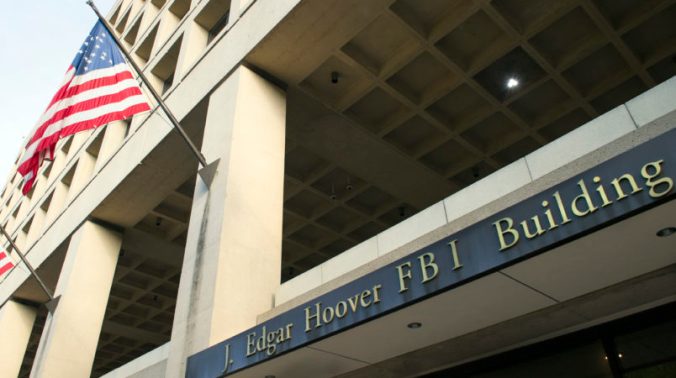
4. To reduce the memo to its simplest form: The infamous Steele dossier—the one James Comey described to Congress, under oath, as “salacious and unverified”— was included as l part of the initial and all three renewal FISA applications against Carter Page. Andrew McCabe, the Deputy Director of the Federal Bureau of Investigation who just resigned under fire, testified that no FISA warrant would have been sought from the FISA Court without the Steele dossier information. Yet The initial application and the renewal applications did not disclose the role of the Democratic National Committee and the  Clinton campaign in generating the dossier by paying $160,000 to Christopher Steel to compile it,  nor did the applications show that Steele was working for Fusion GPS and Glenn Simpson, who was paid by the law firm representing the DNC. In other words, part of the evidence presented to the court to justify surveillance of a member of the Trump campaign, and by extension the campaign itself, was created by someone   working on behalf of  the DNC and Clinton campaign. Continue reading →

Morning Ethics Warm-Up, 1/31/18: The State Of The Union Speech Didn’t Stink Edition

Good Morning.

1 About the President’s speech. In yesterday’s Warm-up, I yearned for the honesty of Gerald Ford, who had the courage to by-pass the usual State of the Union happy talk and admit that the nation was not in a good place. Now that President Trump has delivered his first State of the Union message, I have to admit that being positive, or as my late father would have said, quoting his favorite poem, keeping your head when all about you are losing theirs and blaming it on you, is a good approach too.

The President has managed to find an excellent speechwriter. That is an admirable and responsible thing. These were not, unlike his Inaugural speech was, Trump’s own words, but he gets credit for them, or should, just as much as Ronald Reagan got credit for Peggy Noonan’s soaring rhetoric and  Jack Kennedy deserved the accolades he received for Ted Sorenson’s justly famous scripting. [The full text of last night’s speech is here.] The SOTU was also well-delivered. I know a lot of people would say that any speech this President delivers was horrible and he looked like an ass even if it was the equivalent of Lincoln’s Second Inaugural Address and delivered with the skill of Tom Hanks, but that’s their problem. Not to be repetitive, but  such people need to understand the effects of confirmation bias and cognitive dissonance if they are going to venture outside their little bubbles and echo chambers.

In fact, this is a good test of your Trump-hating friends’, or your own, integrity. If you can’t concede that the speech was at least pretty good, then you are no longer able to perceive reality where this President is concerned. In no way can that be a good thing. Fix it. Continue reading →

Morning Ethics Warm-Up, 1/30/18: The State Of The Union Stinks Edition

Good Morning, everyone!

1 Well, it’s good to know you have kept an open mind…New York Times Trump-Hater Michelle Goldberg, who has written for just about every left and far left website and publication imaginable,  on today’s Times editorial page:

“No matter how well Trump delivers the lines in his State of the Union — announced theme: “Building a safe, strong and proud America” — he will not become presidential. There will be no turning of corners or uniting the country. At best, Trump will succeed in impersonating a minimally competent leader for roughly the length of an episode of “The Apprentice.”

Has any major newspaper, prior to a President’s first State of the Union message, given prominence to such an unfair and disrespectful bit of hate-punditry? I doubt it very much.

2. ‘Where have you gone, Pres’dent Gerald Ford, our nation turns its lonely eyes to you…woowoowoo…The only President to begin his State of the Union negatively was President Gerald Ford, in 1975: “ I must say to you that the state of the Union is not good.” He was right, and courageous, to do so, and President Trump would be right and courageous to do so now, though for different reasons. Ford was speaking of the economy, but economies get better. The State of the Union is also not good when it is being torn apart by hyper-partisan warfare, and both parties are attempting to increase the divisions among citizens while exploiting them. Of course, the current President, who has some useful skills Gerald Ford lacked, but not a flea’s nose’s portion of his character, would never dream of using his time in the national spotlight for anything less than an orgy of self-congratulation. Continue reading →

Comment of the Day: “Ethics Quote Of The Month, Terrifying Thoughts Division: Daniel Greenfield”

Conservative journalist David Greenstein made a provocative speech before a Tea Party group in which he posited a “civil war,” defined by him as when a political party rejects a lawful Presidential election and refuses to accept the legitimacy of any government it does not dominate. I admit that offering up such inflammatory analysis for comment is the pedagogical equivalent of tossing a hand grenade in a room, but there is method to my madness, beginning with my conviction, documented here since  November 2016, that much of the Democratic Party is denying the legitimacy of the last Presidential election, and is actively working to find a way to remove President Trump without having to defeat him in the next one.  I believe that this is among the most damaging and dangerous political developments, and ethics outrages, in U.S. history, and one that has been intentionally covered up by an unethical news media with the same agenda.

Greenstein’s speech placed the matter front and center, and I guessed, correctly, that it would get a lot of attention, though the speech has been largely ignored by progressive commentators, even as numerous Democrats, announced that they would boycott the State of the Union message, a traditional yearly symbol of a unified people.  I also assumed that it would pose an interesting challenge for readers here, specifically the challenge of keeping bias out of their  analysis, since, as we all know, bias makes you stupid.

Chris Marschner did an especially good job of this, and here is his excellent Comment of the Day on the post, Ethics Quote Of The Month, Terrifying Thoughts Division: Daniel Greenfield:

 After listening to his speech I came away with a completely different take on the overall message. To me, he was chastising professional governance. I do not consider it irresponsible demagoguery but an merely the idea that we have gotten away from citizen governance and allowed our governing bodies to be overtaken by a ruling elite that uses its power to obtain more power. In doing so, they have created a civil war that rages within our society which helps them retain power.

Given that the speech was being delivered to a South Carolina Tea Party group his ideas would be readily accepted; and why not? Nationally, Tea Party groups were disparaged by the I.R.S, Anderson Cooper with his vulgar teabagger comments, the Congressional Black Caucus, and left leaning political commentators. Typically, they were characterized as racists, rednecks, rubes, and others that cling to their guns and religion. We know who made the clinger statement. Disparagement and ridicule is the modus operandi of power seekers and those with few abilities or achievements. It works because they know that if someone challenges them the challenger will become the target of ridicule; it becomes psychological extortion.

If asked whether I agree with the statement that the paramount objective of Mueller’s investigation is to remove the President I would have to answer that I don’t know. I do know that current evidence would lead someone to believe that a criminal charge is the objective. I made the point several days ago that seeking an obstruction charge without having the ability to prove an underlying charge of conspiracy is prima facie evidence of not seeking justice but merely to obtain a conviction. This is especially believable given the coordinated efforts to find multiple avenues for removal from office. Continue reading →

Afternoon Ethics Warm-Up, 1/29/2018: Alexa, Hillary, The Grammys, And The LED Rocket Copters

Good afternoon.

(Where did the morning go?)

1 Regarding Alexa the Feminist: I had said that I would wait for 20 comment before revealing my own answer to the recent Ethics Quiz, which asked readers whether it was ethical for Amazon to  program its Artificial Intelligence-wielding personal assistant Alexa with the rhetoric and the sensibilities of a feminist. As usual, Ethics Alarms readers covered a full range of considerations, from the fact that consumers weren’t being forced to take a feminist robot into their homes, and could choose a non-woke personal assistant if they pleased, to the pithy,

“My screwdriver should not tell me it is a communist. My toothbrush should not tell me it is a Republican. My lamp should not tell me it is Hindu. My car should not tell me it likes polka music. My sunglasses should not ask me if I’ve heard the good news. My refrigerator should not tell me I should have more meat in my diet, and by no means should it be vegan.”.

I don’t trust the big tech companies, and the more I see them becoming involved in politics and culture, the less I trust them. It is unethical for Amazon to try to indoctrinate its customers into its values and political views, and if that isn’t what the feminist Alexa portends, it certainly opens the door. If there is a market for communist screwdrivers, however, there is nothing unethical about filling it.

As long as consumers have the power to reject AI-imbued tools with a tendency to proselytize, there seems to be no ethics foul in making them available.  It’s creepy, and since these aren’t women but pieces of plastic and metal, it’s absurd, but in the end, so far at least, Alexa’s feminist grandstanding is “ick,” not unethical.

2. If you think that there was nothing wrong with Hillary’s surprise cameo at the Grammys, you’re hopeless. Continue reading →

Morning Ethics Warm-Up,1/28/2018: Looking For The Silver Lining

Good Morning!

1 Phooey. This was one of those annoying weeks where the blog covered a lot of diverse topics (28 posts in the last 7 days), featured excellent comments, and was rewarded by a kick in the teeth. There was a big drop in followers, especially after the post about the Larry Nassar sentencing fiasco (I got slammed on Facebook, too.) That one is not open to legitimate controversy: the judge was unethical, the manner of sentencing did breach the Judicial Canons in Michigan and elsewhere, the length of the sentence was  disproportionate, and the parade of victims was a disgrace to the system. Never mind, though: he’s a monster and didn’t deserved to be treated any better by the judge, so good for her. No wonder trying to get people to reason using ethics tools and systems is so difficult. Most people default to emotion; some lawyers on Facebook even expressed that sentiment—“You go girl!”

It is such basic ethics, and so core to the justice system, that even the worst human beings deserve to be treated with the same respect and fairness as anyone else in the justice system. It is the bedrock of professional ethics that those with the job of protecting the public’s health, safety and welfare must be role models and eschew the passions and indulgences of the public they are pledged to serve. Yet people are frustratingly resistant to both concepts, giving lip service, pretending to understand, then  regularly bouncing back to rationalizations and mob reasoning like their values were on a bungee cord.

Silver Lining: It is satisfying to be 100% sure you are right in principle, even when, indeed especially when, you are getting beaten up for it.

2. And speaking of bitches…Contemporaneously with Hillary Clinton’s transparently cynical and damning response to the revelation that she responded to a campaign staffer’s complaint about sexual abuse by Hillary’s “spiritual survivor” in 2008 by transferring the accuser while keeping her advisor around (to harass others, it seems), she released a video…

…that began with the words, “And let me just say, this is directed to the activist bitches supporting bitches.” And thus we see how the Nation of Assholes is progressing. Somehow, I didn’t see the coarsening of the culture as Americans, as they always so, emulate the conduct of the President, extending to  Hillary Clinton, but why not? She has no integrity or ethics alarms. If she thinks going potty mouth will bring her money and power, why wouldn’t she ditch civility? The woman is first and always an ethics corrupter. Continue reading →