Over at The Juggle, Sue Shellenbarger examines the increasing tendency of employers to attempt to control health care costs by encouraging behavior and life-style changes on the part of employees and their families. I think this is inevitable, but it opens up a slew of ethical issues. Do we really want our employers trying to influence how we eat, exercise,and spend our free time? On the other hand, do we give up the right to complain when we expect them to pay for our health problems, even those that are self-induced? Where do we want to draw the lines regarding what is acceptable employer interference among such measures as… Continue reading
Family
Randy Cohen Watch: “The Ethicist” vs. Integrity, Accountability, and the Law
Randy Cohen, “The Ethicist” of the popular New York Times Magazine column, frequently gets in trouble when he opines on the law, legal ethics, and how lawyers interact with society. This week he was at it again, and he got in trouble, all right. Big time.
Bruce Pelligrino wrote to the column to get “The Ethicist’s” take on the actions of a friend, who told Bruce he wanted to hire a lawyer to challenge a speeding ticket even though he had admitted to the police officer, in the presence of his children who were passengers in the car, that he had been driving 51 m.p.h . where the limit was 35.
“I think he should accept the consequences, learn from the experience and give his children a lesson in ethics,” wrote Pelligrino. ”Shouldn’t he just pay the ticket?”
Cohen sided with the speeder, opining…
“Even those who think themselves guilty are entitled to their day in court, and there is civic virtue in their exercising this right. A trial is a way to hold officials accountable for their conduct. Was the radar gun accurate? Was the speed zone clearly marked? Did the police officer behave properly? And what, given all the circumstances, is an appropriate punishment? Little of this could be scrutinized if everyone simply paid the ticket. It would be a court-clogging nightmare if every self-confessed speeder demanded a trial, but it is a fine thing if, now and then, some people do.”
Randy appears to have misunderstood the question, believing that Pelligrino’s friend was being charged with an arcane S.E.C. violation, or some intricate form of criminal conspiracy. The guy was driving too fast, knew it, and got caught! What does Cohen mean “Even those who think themselves guilty”? The driver admitted he exceeded the speed limit on the basis of his own car’s speedometer; he didn’t “think” he was guilty; he knew with complete certainty he was guilty, and said so to the cop who stopped him.
“The Ethicist” thinks “it’s a fine thing” for that driver to renege on his admission and impugn the policeman’s behavior, challenge the speed limit posting and question the radar gun to get out of a wrongful fine for an act he admits he committed. How could this course of action possibly be called ethical?
Here is what really is “a fine thing,” Randy: integrity—sticking to one’s word and backing it up with action. The driver said the ticket was correct. It is dishonest and irresponsible for him to turn around and challenge it as Cohen suggests. Here’s something else that is “a fine thing,” Randy: accountability—admitting when you have done wrong when you know it and accepting the consequences. The purpose of the legal system is not to encourage citizens to try to avoid just consequences for admitted violations of the law. Yes, as Cohen correctly notes, everyone has a right to challenge charges in court, but as anyone who calls himself an ethicist is supposed to know, it is not always ethical to exercise a right. Banks have the right to kick elderly homeowner out onto the street as soon as they fall behind on their mortgage payments. I have the right to limit my circle of friends and business associates to straight, white, Protestant bigots. I have the right to be blatantly incompetent in my free ethics commentary, and, like Randy in this case, to give mistaken and even harmful advice. All of these things are still unethical, however.
The Ethicist’s answer to Mr. Pelligrino’s query is unethical too, dramatically so. Cohen is saying that it is reasonable and ethical to force a trial on a traffic offense when…
- The driver admitted the offense to the police officer…
- …in front of his children…
- …in order to challenge the veracity of the officer, who took his admission in good faith…
- ….requiring the officer to appear in court, taking him away from community law enforcement duties…
- …taking up court time, using taxpayer-funded personnel, that should be devoted to cases where the facts are genuinely in dispute…
- …with the objective of avoiding the payment of a just fine to the government, where it would be used for community purposes, in order to transfer money instead to the pocket of, not just a lawyer, but the unethical species of lawyer who is willing to take unconscionable cases…
- …thus teaching the driver’s children, if the driver prevails, that the objective in life is use the system to avoid accountability, even when you deserve to be punished, and..
- …that respect for the law is less important than avoiding a thoroughly earned fine, and
- …that speeding is all right if you can get away with it, thus…
- …increasing the likelihood that the children themselves will regard excessive speed this way when they become drivers, and also increasing the chances that their driving habits will cause harm to themselves or others.
I have read “The Ethicist” for years, I have learned that Randy Cohen has unseemly problems with honesty, a reflex prejudice against law enforcement, and shocking and brazen cluelessness on matters of legal ethics and the exercise of legal rights. Bruce Pelligrino managed to ask a question that involved all of them, and the result was one of the most indefensible answers I’ve seen from Cohen yet.
Tiger Woods’ Mother in the Ethics Rough
“You know what? I’m so proud to be his mother. Period. This thing, it teaches him, just like golf. When he changes a swing… he wants to get better… He will start getting better… it’s just like that. Golf is just like life, when you make a mistake, you learn from your mistake and move on stronger. That’s the way he is. As a human being everyone has faults, makes mistakes and sins. We all do. But, we move on when we make a mistake and learn from it. I am upset the way media treated him like he’s a criminal…he didn’t kill anybody, he didn’t do anything illegal… They’ve being carrying on from thanksgiving until now, that’s not right! People don’t understand that Tiger has a very good heart and soul. Sometimes I think there is a complete double standard… He tried to improve himself. The tabloids and newspapers just killed him, held him back.. To me it looked like a double standard…When you make a mistake you learn from it and move on, that’s the way life is, that’s a human being. We’re not God, and he never claimed he was God. If anyone tells me to condemn him, I say look at yourself first.. .. I would … look in their eyes and tell them you’re not God! This thing is a family matter… It’s not easy to be him. … (People) go to work 8 to 5 and go home to have a life with the family. Tiger can’t do that.”
—————Katilda Woods, Tiger’s mother, in remarks to the press following Woods’ statement and apology today, his first public appearance since a series of revelations about his multiple affairs.
Where to begin? I’m glad Mrs. Woods is proud of her son. That’s what mothers are for, in times like these. If only she had stopped there, before she plunged deep into the ethics rough. For example, I think Tiger’s been swinging enough, don’t you?
But Mrs. Woods decided to promote three of my least favorite rationalizations for terrible conduct, and then added one I had neglected. Now that she mentions it, however, I hate that one too. Continue reading
The Doritos Super Bowl Commercial
So obsessed was I with the Tebow Super Bowl ad that I temporarily forgot that there usually are one or more product ads that inflame the culture wars. Sure enough, this time there were two: Audi’s “Green Police” commercial, which has political implications but no ethical ones that I can see, and the Doritos ad, chosen by post-game polls as one of the best and most popular. That one did raise some ethical issues, recently collected by conservative columnist and radio host Dennis Prager.
The spot begins with an attractive woman greeting a date at the door, and asking him inside as she gets ready to leave. She has a young son, four or five years of age, who is snacking on a bowl of Doritos. We ( and the child) see the male date’s face express some combination of excitement, lust and pleasure at the sight of the woman’s comely derriere as she walks into her bedroom. He then sits on the sofa, smiles at the boy, attempts to make pleasantries, and starts to munch on a Dorito. The child sternly slaps the man across the face, and says to him, menacingly, “Put it back,” referring to afore-mentioned Dorito chip. “Keep your hands off my mama…keep your hands off my Doritos,” he continues to the shocked date, getting nose to nose with him in the process. All the actors in the spot are African Americans.
Television commercials can be culturally damaging and irresponsible if they appear to approve, encourage, or endorse wrongful behavior and attitudes. Was this such an ad? Prager thinks so. Let’s examine his objections individually: Continue reading
After the Tebow Ad
The Super Bowl ad featuring Tim Tebow and his mother that caused so much angst and controversy before it aired turned out to be mild, understated and forgettable. Now we know why CBS felt it could use the spot to move away from its long-time ban on issue advertising during the NFL’s big game. We also know that the actual ad made the argument by abortion rights groups that the ad would be inappropriately “divisive” for an American sports ritual designed to bring us together seem even more ridiculous than it was—no mean trick.
In the ad, Quarterback Tebow and his mother never did tell the story of his birth after Pam Tebow had been counseled to terminate her pregnancy. You had to go to a website to read about it. Indeed, had the various advocacy groups that opposed the ad just kept their collective rage to themselves, few viewers would know about the pro-life aspects of the Tebow story. All of the ad’s work was done before it ran, thank to the pre-Super Bowl sputtering of NARAL, NOW, and their colleagues. Continue reading
Ethics Dunce: Sally Herigstad
Sally Herigstad, the MSN website tells us, is a certified public accountant and author of the book, Help! I Can’t Pay My Bills. She is a personal-finance writer, it says, who has been contributing to Microsoft and MSN Money since 1998.
And, based on her article, “6 Reasons Not to Save for Kids’ College,” she is also a fully-qualified Ethics Dunce.
It is fine to explain the various inefficiencies of putting aside funds for your children’s education, but Herigstad’s argument boils down to selfishness, and thus serves as an incentive for parents to abdicate the ethical duties of parenthood because an expert has decreed that it’s the reasonable thing to do. Continue reading
More Tebow Ad Ethics: Allred’s Complaint
The much-anticipated Super Bowl ad telling the story of how quarterback Tim Tebow was born because his mother rejected a doctor’s advice to have him aborted for medical reasons is spinning off ethical issues at a dizzying rate.
Some are easily settled, as Ethics Alarms has already noted. There is nothing wrong with a Super Bowl ad raising substantive issues in the middle of beer commercials and tackles, as some have (incredibly) argued. There is nothing unethical about CBS changing its policy regarding issue-oriented commercials. The fact that the network rejected such ads in the past does not make it hypocritical now. CBS, having ended a blanket prohibition, must now be fair and reasonable in deciding which issue ads to accept. Let’s see how it goes before we cry foul.
And there is nothing “anti-choice” about a woman’s story of how she chose not to abort her son, and is glad she did. It is not even an anti-abortion ad, unless the pro-abortion movement literally believes that it is wrong not to have an abortion. She had a choice, and she made it. The message of the ad does encourage thought about the consequences of having the procedure, which is unequivocally good.
Now, however, Hollywood lawyer and woman’s rights advocate Gloria Allred has suggested that Tebow and his mother are spinning a tale that is inspiring, powerful, and full of baloney, and she has sent CBS a letter of protest. Continue reading
What Rudyard Kipling Taught My Father
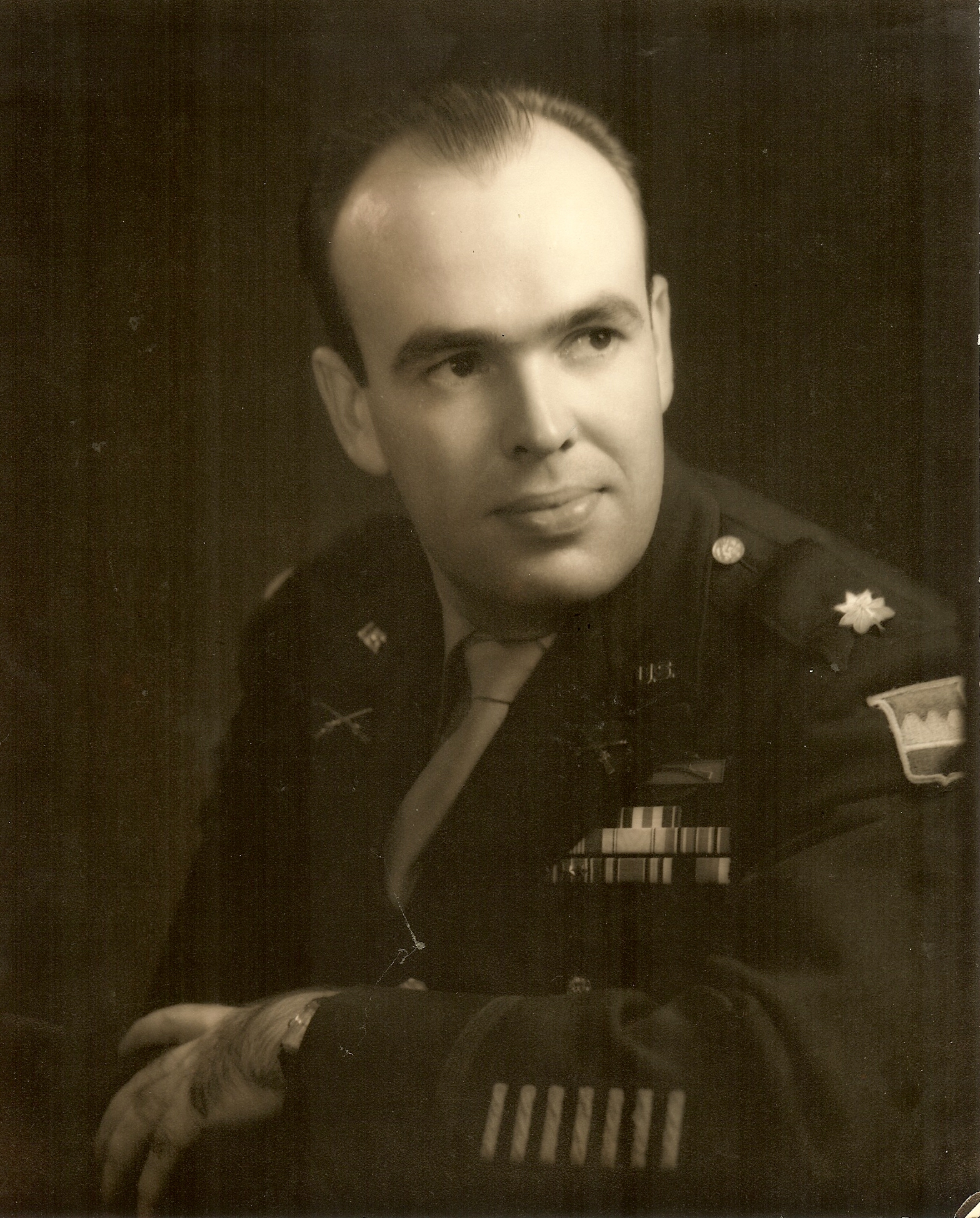
Today the Army buried my father, Major Jack Marshall, Sr., with full military honors. He had earned them, for he was a hero in World War II. Let me correct that: every soldier who serves in battle is a hero, but my Dad had a few special distinctions, like a Silver Star and a Bronze Star to go with his Purple Heart. He sustained a crippling wound to his foot from a hand-grenade, healed enough to jam what was left of it into a boot, and went on to fight in the Battle of the Bulge.
Under the clearest of blue skies, with the cemetery covered in snow, a caisson drawn by black horses, one without a rider, carried my father to a gravesite ceremony where the American flag draping his casket was carefully folded by six soldiers and given to my mother, following a 21-gun salute. My father was a hero off the battlefield as well, a profoundly ethical and courageous man throughout his life, and how he got that way is worth examining. Continue reading
Solving the Spouse Conflict Problem
When spouses are professionals whose jobs intersect, they will usually maintain that they never “talk shop” at home, and that for all intents and purposes, they are two unrelated workers, ships passing in the night. Nobody believes them, and nobody should. Continue reading
“The Ethicist” Strikes Out Again
I’ll make a deal with Randy Cohen,”The Ethicist” of The New York Times Magazine: I’ll stop criticizing his column when he stops justifying dishonesty. Lately, Cohen has not only been advising his correspondents to avoid telling the truth but headlining the questions where he does so.
Lie proud, Randy!
This week’s endorsement of forked tongues surrounded the sensitive issue of designating a guardian for one’s child. Parents had asked their good friends, another married couple, if they would agree to care for their daughter in the event that the parents perished while she was a child. After the couple enthusiastically agreed, the parents learned that their friends were not sufficiently responsible with their finances, and liked to “live large.” They no longer trust the couple with their daughter’s welfare, and want to re-assign the responsibility of being emergency guardians to relatives. This will require the parents to change their wills.
Their question to “The Ethicist”: Do they have to tell their friends? Continue reading

