Further Thoughts And Questions On “The Lottery Winner’s Sister-in-Law” (Part 2)

Money-box-gift

As promised, here are some proposed lines regarding the ethics quiz on the lottery-enriched brother and whether his financially-challenged sibling  should ask for a cut—and had a right to expect one. (Part 1 of the “Further Thoughts” is here)

All of the following assume that the lottery-winner does not have a personal emergency or crisis of his own that would require him to spend all or most of the money.

1. The wealthy brother is ethically obligated to offer financial assistance, if he can afford it without excessive hardship, without being asked, if his brother or his brother’s family is facing a health crisis of other catastrophe.

This is true regardless of whether his new financial resources come from luck, planning, work or skill, and regardless of how much money he has. Offering a loan rather than a gift is still fair and ethical. Charging interest under these circumstances is not, unless the poor brother has a record of not paying back earlier loans.

Possible exceptions: Continue reading →

Ethics Quiz: The Lottery Winner’s Sister-in-Law

_rich_man_poor_man“Dear Prudence” (a.k.a Emily Yoffe), my least favorite advice columnist (who answers weird questions from weird people at Slate), received an ethics quiz worthy query from a woman whose husband has had some business reverses and now, as he near retirement age, is looking at two jobs and tarnished golden years without a pension or vacations. Meanwhile, her husband’s brother (let’s assume this is true: it sounds like a hypothetical to me) won 50 million bucks in the lottery a few years ago, and is having a ball. The two brothers are on good terms and speak often. She asks,

“What I don’t understand is how he can stand to see his little brother so stressed and working so hard while he has more money than he could spend in a dozen lifetimes. Obviously he is under no obligation, but he does not seem to realize how hard it is to see how he spends his money on travel and amusements. I think he should help his brother out. What do you think?”

Prudence  thinks the poor brother should ask the rich brother for money, and that if he won’t, the wife of the poor brother should: Continue reading →

Not Every Disappointment Is Cable TV Or Social Media Fodder: The Case of The Dry Artificial Leg

WHEEEEEEEEE!

WHEEEEEEEEE!

In the old days, the saying was “You don’t have to make a federal case out of it.” Today it would be “You don’t have to put it on the internet.”

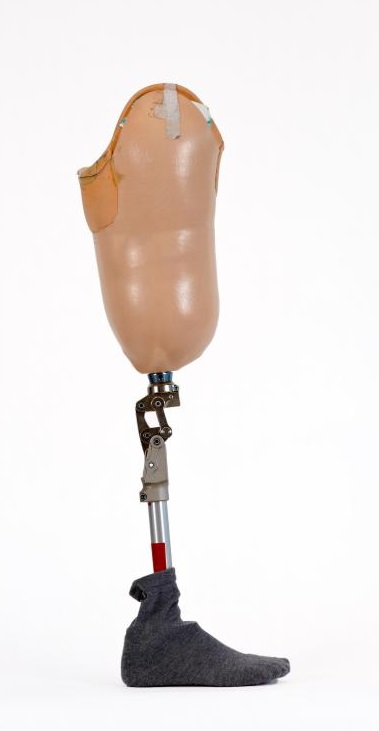
At Frontier City’s Wild West Water Works in Oklahoma City, a family objected strenuously because their 8-year-old daughter’s prosthetic leg caused her to be banned from the water slide. The attendant stopped the family at the entrance to the ride, explaining that park policy prevented individuals with prosthetic limbs from sliding because it risked scratching the sides of the slide. The family decided to make a federal case out of it, and the dispute ended up on in the local media, then the national media, then the internet, then social media

The complaint was that the park didn’t have this restriction listed. Okay, good point. That doesn’t mean they were obligated to let the daughter scratch the slide with her leg. I can imagine other perils of sliding with an artificial limb that neither the park nor its insurance carrier would want to risk. It’s a shame the little girl was embarrassed and disappointed. My son was once similarly disappointed when a ride he wanted to go on had a height requirement. Too bad. I didn’t make a federal case out of it. Not every restriction can be listed on park signs; the longer the text, the fewer people read it.

The family of the rejected girl, however, did make a federal case out of it. They got the news media involved, and soon the park was putting out this:

“Our goal at Frontier City is to create family fun and fond memories for each of our guests while placing a priority on guest safety. Our Ride Admission Policy has been developed in consultation with industry professionals, based on the recommendations of the ride manufacturer, past experiences, and evaluations of each ride using knowledge of the ride in all operating conditions.Like many water parks across the United States, regulations regarding loose articles and medical assistance devices are enforced to ensure the safety of each guest. Unfortunately, we can’t allow loose articles, swimwear with exposed metal ornamentation, casts, certain limb braces, or prosthetic devices on certain slides at Wild West Water Works.We never want to refuse our guests the opportunity to enjoy our attractions, but we must also always follow guidelines that have been set by our industry to insure the safety of all guests. To avoid any confusion or heartache in the future, we will strive to make sure this is communicated better in advance by adding the restrictions to our website and ride signage. We deeply regret any disappointment caused to our guests due to our Ride Admission Policies. Again, our first priority is guest safety and our mission is to provide the best experience possible for all of our guests.”

The park sounds completely reasonable, professional and fair. But one family had to react to a minor disappointment by casting the Frontier City as a heartless villain and their child as a victim, resulting in dozens of news stories across the country, blog commentary and Facebook posts. Some things are not worth making a fuss about. Some things should be handled with a shrug, a quiet suggestion of a better way to handle things in the future, agracious goodbye and maybe a letter afterwards.. Every minor dispute doesn’t have to be the Battle of Waterloo.

I fear we are raising a generation of entitled and hair-triggered victim-mongerers, armed with little cameras and video recorders, ready at any provocation to turn every mistake, disagreement, disappointment or ill-considered glance into 15 minutes of infamy for anyone unfortunate enough to cross their paths. In the future we will all be spending so much time apologizing to each other and explaining to the media what we meant that it will be increasingly impossible to just live. The insatiable web and 24-hour news cycle makes shaming a constant threat to the most minor offender, and gives everyone the power, under the right conditions, to bend others to their will.

But I guess that dystopian hell will be worth it if the next child with an artificial leg knows she can’t use the water slide at Wild West Water Works before she gets to the top.

__________________________

Pointer: Fred

Facts: KFOR


The Great Maine Diner Controversy

Marcys-Diner

Thanks to the internet, every day conflicts between ordinary citizens become opportunities for society-wide ethical evaluation . This can be extremely beneficial, helping to reveal disagreements regarding ethical conduct in common situations, and establishing social norms with efficiency that once would have been impossible. Of course, that requires that society reaches a reasonable consensus.

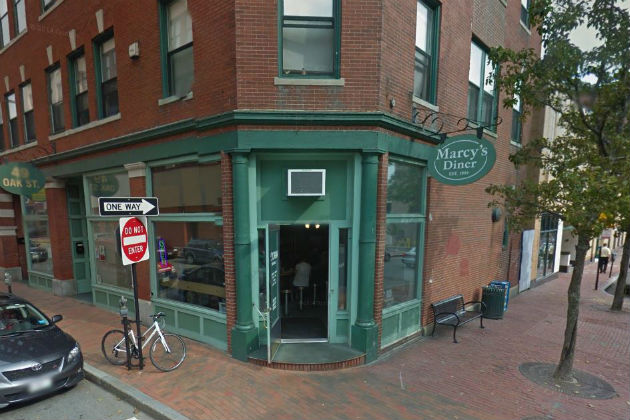
Last week a controversy emanating from a Portland, Maine diner called Marcy’s had blogs bloviating, pundits punditting and social media boiling over. Vacationing parents took their toddler to a crowded diner for breakfast, waited 30 minutes for a table and another 40 minutes for their food. The hungry child went on a crying jag that went on too long for the owner, who  suggested that the couple to leave in a less than polite manner, and finally shouted at the little girl to  “shut the hell up!” The couple left the diner.

The mother, Tara Carson, couldn’t resist registering her indignation on the Marcy’s Facebook page, the owner responded with even more colorful language than she did in the original confrontation, and social media appeared to divide into the “it takes a village so be sympathetic to parents of young kids and give them a break” camp and the “serves these entitled and incompetent parents right for being so inconsiderate and not controlling their child” camp, with the latter considerably smaller than the former. Then, not content to let the matter blow over, Carson got the Washington Post to publish her op-ed about the episode, which concluded, Continue reading →

Cognitive Dissonance Chronicles: Now “The Cosby Show” Is Suddenly Racist And Part Of A Conservative Plot

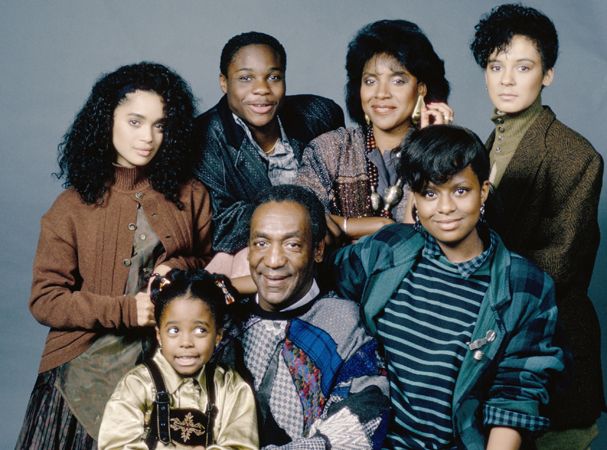
THE COSBY SHOW -- Season 3 -- Pictured: (front row l-r) Keshia Knight Pulliam as Rudy Huxtable, Bill Cosby as Dr. Heathcliff 'Cliff' Huxtable, Tempestt Bledsoe as Vanessa Huxtable (back row l-r) Lisa Bonet as Denise Huxtable Kendall, Malcolm-Jamal Warner as Theodore 'Theo' Huxtable, Phylicia Rashad as Clair Hanks Huxtable, Sabrina Le Beauf as Sondra Huxtable Tibideaux  (Photo by Alan Singer/NBC/NBCU Photo Bank via Getty Images)

When “The Cosby Show” was on the air on CBS from 1984 to 1992, it was unanimously praised—except by a few grumps and crackpots, for there are always grumps and crackpots—for being an unequivocally positive influence on racial understanding and the culture. Finally African American characters were on television every week who were not inner city criminals, hucksters, drug dealers or pimps. Finally, after dozens of white “Father Knows Best” style sitcoms, there was a comedy about black professionals heading a family with kids that used good grammar, didn’t skip school and were never in trouble with the law. “The Cosby Show” won awards and plaudits from educators and civil rights groups. It provided a positive model for an attainable future for black children, and an image of black Americans that combated racism by making it seem as illogical as it is. These were good people, good parents, good citizens, with the same values, hopes and dreams as everyone else.

The insidious power of cognitive dissonance is that it allows strong feelings about anyone or anything to unfairly and irrationally carry over to anything or anyone else that the object of those feelings touches. Today, as the fact that the creative force leading “The Cosby Show” had a hypocritical and despicable secret life as a sexual predator becomes undeniable, this process is triggering dangerous and ugly shifts in attitudes and advocacy. A confluence of events has resulted in Bill Cosby being teamed with the Confederate flag (remarkably, it murdered nine African American church members in Charleston! ) to trigger a troubling wave of attempted cultural and historical purges—and where it stops, nobody knows. Some progressives want to wipe all memory of Bill Cosby’s achievements from the nation’s consciousness, just as they want to  tear down every statue of a Confederate military hero and wipe the name of Robert E. Lee off hundreds of schools, streets and parks.

[Aside: Stations are now pulling The Cosby Show, once one of the most syndicated and ubiquitous of all sitcoms, from their schedules. This is just a reasonable business decision. The stations reasonably assume that the show will not be as entertaining or popular once it is impossible to watch Bill Cosby as Dr. Cliff without thinking about Dr. Cliff secretly drugging and raping his female patients. That’s not cognitive dissonance. That’s just reality. Actor Gig Young made some of the best romantic comedies of the Sixties with Doris Day and others. He was a skilled comic actor, but he murdered his wife and killed himself in a drunken rage, and it’s hard to laugh at Gig any more. Those movies are virtually never broadcast, and it is hard to find them on DVD. Among Bill’s victims are the member so of his cast, including the kids he professed to love like a father, who will lose millions in residuals because he couldn’t control his demons.]

A time machine is helpful in these matters, so Salon, the left-wing blog that is so predictable it sometimes catches me by surprise, since it is hard to believe that any publication will willfully rush into self parody, has suddenly decided that “The Cosby Show” was “based on a distorted and inaccurate presentation of the black community, one that has enabled a pernicious type of right-wing “colorblind” racism to flourish.”

Ah. Cosby is bad, so everything he did before we found out that he was bad was bad too. We weren’t just duped about him. We were duped about the values he stood for!

The author of the article is Chauncey De Vega, an African American journalist who doesn’t even try to hide one of his motives: he’s still steamed that Cosby dared to urge African American families to be responsible, and pointed out that wearing one’s pants like they do in prison wasn’t the way to get respect from employers and potential associates not recently out of prison.  Mostly, however, he is determined to re-cast “The Cosby Show” as complicit in embedding racism in U.S. society. He writes in part: Continue reading →

Ethics Dunce: University of Missouri

Robert Todd Lincoln would have refused this gig...

Robert Todd Lincoln would have refused this gig…

All right, I know this is the lowest of low-hanging fruit, but come on.

The University of Missouri at Kansas City just opened a Women’s Hall of Fame and sought an appropriate female leader to speak at the gala luncheon launching it. It not only chose a non-leader, non-accomplished, non-much of anything except lucky rich kid Chelsea Clinton, but also paid $65,000 for her to speak (she’s also a non-professional speaker) for only ten minutes, and then to answer questions—which carefully crafted limitations on the questions—for another 2o minutes.  The money goes to the Clinton Foundation, which makes no difference to the ethics of the transaction, which are revolting in many ways:

1. $65,000 for a ten minute speech—that rate is about 11 thousand bucks a minute— is outrageous unless the speaker is Abe Lincoln. It is virtually impossible to say anything in ten minutes that is especially valuable, and unlikely to the vanishing point that Chelsea Clinton is one of the rare people who could accomplish it.

2. Any college or university that cannot find a better legitimate educational use of $65,000 than this is too inept to stay open.

3. The school says that Clinton’s fee was funded by private donors, meaning that $65,000 worth of donations that could have gone to, say, scholarships were diverted into the Clinton Campaign and Influence Peddling Slush Fund. Continue reading →

Ethics Quiz: Hillary And Margaret

Making Ayn Rand seem like Shirley Temple...

Making Ayn Rand seem like Shirley Temple…

Many organizations find themselves conflicted when they accord proper respect and gratitude to their founders. The older an organization is, the more likely that its founder, however brilliant and accomplished, had scary skeletons in his or her closet, and worse, espoused views that modern minds find repugnant. The United States is awash in such founding dilemmas, beginning with Thomas Jefferson, whose private life, and some of his public life too, hardly met the high ideals and aspirations that lit the way for our nation’s creation. Revolutionary hero and “Father of the American Navy” John Paul Jones was an infamous pederast, and the man who built the F.B.I, J. Edgar Hoover, was a racist and extortionist who would have been right at home, perhaps more at home, with the KGB (except for his hatred of communists). There are many more, founders and creators of institutions in every sector of American life.

Margaret Sanger (1879-1966), however, is an especially hard case. The founder of the predecessor of Planned Parenthood openly and vigorously espoused beliefs that would make her a pariah today, and an embarrassment to the pro-choice movement. She was a racist, a white supremacist, a believer in eugenics, forced sterilization, and government prevention of the proliferation of the “unfit.” It is true that many of her most repulsive beliefs were considered acceptable and even progressive among intellectuals and activists of the time. It is also true that she was vocal in espousing them, and the work she is most honored for as a birth control advocate and an early feminist cannot be easily separated from her other, less admired positions.

Here are some of her more alarming quotes; you can research her writings and speeches more deeply here. Personally, I think she makes Ayn Rand look like Shirley Temple: Continue reading →

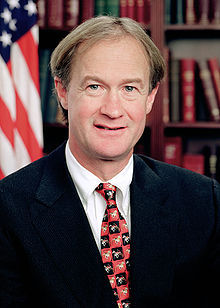
Lincoln Chafee’s Batty Ethics Argument For The Metric System

Lincoln_Chafee_official_portrait

Ugh. I can’t let this pass.

Yesterday I happened upon Lincoln Chafee on one of the Sunday shows, giving his elevator pitch for why he should be President. You may recall that Chafee, former Republican Senator and Governor of Rhode Island, turned independent after being defeated for re-election and now is following Bernie Sanders’ example, declaring himself a Democrat for the purpose of getting nominated. Chafee is another politician, like the Bush bothers and Hillary Clinton, who owes his initial political prominence to being related to a popular political figure rather than his own innate abilities. As he made obvious the more he spoke…

His two primary campaign positions were 1) “Wage peace”—whatever that means. This is right up there with John Lennon songs as serious policy discourse,  though I’m sure ISIS is fascinated by the concept, and 2) Adopt the metric system. Chafee borrowed this from the idea machine known as the Andrew Johnson administration, as Andy was the first President to officially acknowledge the benefits of the U.S. adopting the less eccentric measurement system used by Europe. I’m sure we all can agree that this is one of the most pressing issues facing the country today.

However, Chafee really got my attention, and sparked this post, when he attempted to combine his two prime objectives, which is no mean trick. I tried to find a transcript, video or a news report to document this, but so far I have failed: maybe everyone is trying to be nice. I swear I am not making this up, though I wish I were.

Chafee argued that the United States should adopt the Metric system because it invaded Iraq and didn’t find the weapons of mass destruction.

He really did. Continue reading →

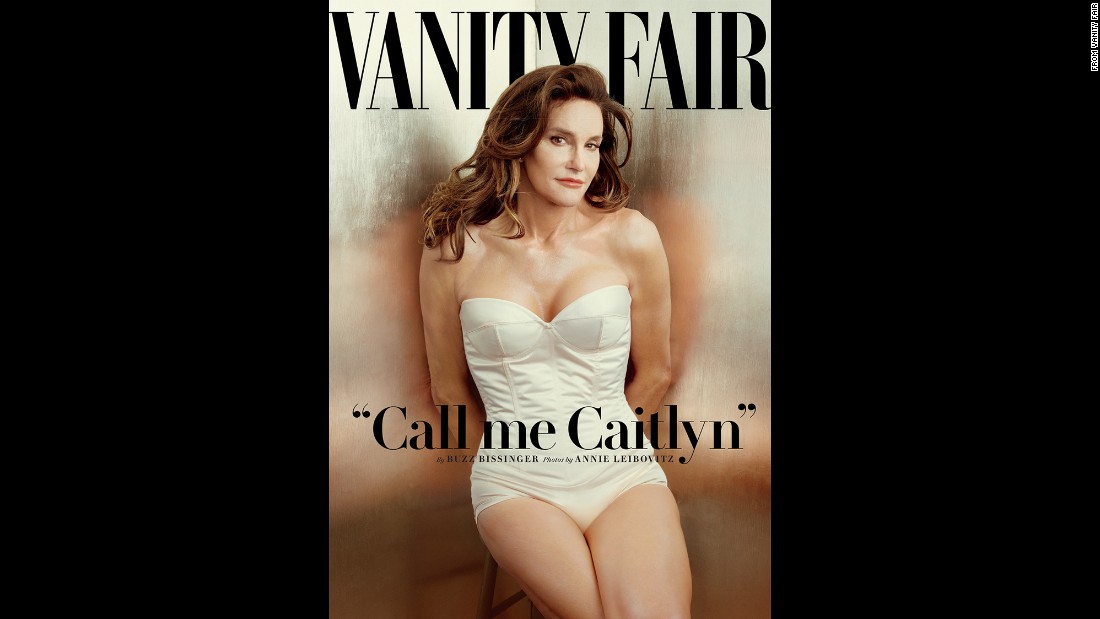
Confused Ethics Observations On Caitlyn Jenner, Up and Down the Cognitive Dissonance Scale

Cognitive DissonanceThis whole episode is pure cognitive dissonance hell for me, with high scale values clashing with low scale conduct, and the result being as hard to analyze neatly and dispassionately as the aftermath of an elevator crash. But I’m a fool, so I’ll take a shot at it anyway.

1. Bruce, now Caitlyn, Jenner’s openness about his transsexual issues is brave and may yet help this misunderstood and routinely derided group achieve acceptance. PLUS.

2. She should have played ethics chess, however, and as a public figure who, she now says, always planned this transition, was irresponsible not to. Associating herself with the traveling freak, venality, bad taste and atrocious values caravan known as the Kardashians guaranteed that anything she did thereafter would be a legitimate object of suspicion. MINUS.

3. Turning her transition from Bruce to Caitlyn into a reality show was similarly counter-productive and harmful to her cause, assuming the cause really matters to her. I doubt that it does.  Reality shows equal schlock, emotionalism, manipulation, phoniness—and money. That won’t help the trans population. MINUS.

4. As the first bona fide celebrity to undergo gender reassignment (no, I don’t call Chastity Bono a real celebrity), Jenner could have handled this in a modest, measured manner that made trans people look reasonable, dignified, and rational. Unfortunately, Bruce Jenner was always a fame-addicted narcissist,  so her handling of the process is what you’d expect from one. Too bad. MINUS.

5. Thus we have the over-praised, over exposed, over-hyped, Vanity Fair cover, which is pure sensationalism, an exploitation of a serious issue for magazine sales, and a fraud. (Literally anyone can be dressed, shaved, and made up to look feminine.) Is Jenner interested in legitimizing and de-stigmatizing gender reassignment, or getting hubba-hubbas for a titillating man-to-bimbo transformation? Is Playboy next for Caitlyn? Don’t bet against it. MINUS for Vanity Fair; MINUS for Jenner

6. Is this really the way an ethical father kindly, sensitively and responsibly handles this kind of tectonic life change when he has six children and four step-children, including teenaged daughters? Admittedly, the daughters are crypto-Kardashians, so normal rules of delicacy might not apply. Still… MINUS for Jenner.

7. Republicans, conservatives and Neanderthals who are incapable of comprehending this serious topic should shut up about it.  There is grounds to criticize many aspects of this episode in American culture, but just making snarky comments like Neil Cavuto did on Fox is unproductive, unkind, divisive, and, frankly—I’ve been on Neil’s show, and I hate to say it—makes one look like an ass. If you don’t understand what’s going on, Neil, there’s no law that says you have to cover it. MINUS for Cavuto.

8. I had to shut off TV to get way from the breathless coverage of Jenner’s “coming out” photo. This isn’t respectful or responsible coverage, this is “Look! Bruce Jenner is HOT!!! She has BOOBS!” coverage, juvenile, degrading, and transparently salacious. It shouts “freak,” and that is exactly what Jenner should not want, nor should any LGBT advocate. Of course, the conduct of Vanity Fair and Jenner asked for it. MINUS for the news media.

9. To the extent that Jenner’s act promotes more public discussion and understanding of the issues facing trans individuals, this all may have a beneficial effect that may outweigh the negatives. Right now, there is too much static to tell. PLUS.

I hope.

A Lesson In Moral Luck And Consequentialism

car-key

If I accomplish nothing more through Ethics Alarms than to cure some intelligent readers of the seductive fallacy of consequentialism and the insideous influences of moral luck, then the long, aimless trail of squandered opportunities, under-achievement, diffuse focus, quixotic quests, Pyrrhic victories and lost causes I call my life will not have been entirely in vain.

Last week I was again in the throes of consequentialism hate. The Boston Red Sox, in the midst of a terrible start to their season, brought up minor league prospect Eduardo Rodriguez for a spot start. He was spectacular, allowing no runs and looking like the team ace Boston has been searching for all season. Immediately after the game, articles popped up in the baseball media excoriating the team for not bringing him up from the minor leagues long before. It was obvious back in Spring Training, said unnamed scouts, that he should be with the big club. It was negligence and stupidity, said other pundits, that it had taken this long to promote him. Strangely, there had been no published arguments to this effect before his impressive debut. And would any of these “I could have told you so” pieces have been written if Rodriguez had been bombed out of the game in the early innings, as literally any starting pitcher may be in a given game?

No. That’s the marvel of hindsight bias, the human tendency to presume that what could have been known should have been known after it is known.  Consequentialism is its more destructive cousin. These same analysts will conclude that the decision to bring up the pitcher was a brilliant one, if tardy, because he performed well. If he had done badly, the decision would have been, in all likelihood, decreed ” a mistake.” This was the fallacy that Jeb Bush was recently pilloried for not embracing regarding his brother’s decision to invade Iraq.

And moral luck? That’s the phenomenon that makes hypocrites and fools of us all, pointing us to the suffocating arms of Dame Consequentialism. If two decision-makers take exactly the same course in exactly equivalent circumstances, the one who is the beneficiary of good fortune—moral luck—will be hailed as a genius. The unlucky soul whose identical plans are derailed by unpredictable misfortune will be handed the mantle of an incompetent failure.

Situations where reasonable decisions and actions are declared “mistakes,” or, as is more germane here, “unethical” according to how uncontrollable events and contingencies occur subsequent to the conduct itself are legion. I am always looking for the counter example, where wrongful conduct has a good result, and is there for forgiven, ignored, or even praised. Well, I found one, and it just happened to me.

I had an important though brief client meeting scheduled this morning, and I had managed to forget the exact time. It was either at 10:45 or 11:00, and I had to be on time, because he was on a tight schedule. My wife was annoyed at me for my scheduling, since she had to use the car to get to a long scheduled appointment of her own at noon and my meeting was 30 minutes away. To make things worse, I couldn’t reach my meeting partner to determine the right time ( a postponement was impossible). To complete the fiasco, I misplaced the car keys, delaying my departure until after 10:30. I was informed, as I left the house with my newly discovered keys (never mind where they were; it is too embarrassing), that if I didn’t have the car back by 11:45, I was dead.

I assumed I would be dead. Continue reading →