The House Ethics Committee Sends A Message: “Keep Your Corruption Within The Loopholes, And You’re Still ‘Ethical'”

"We just want to be friends."

“We just want to be friends.”

Let us stipulate that when a body’s ethics committee shows itself to be hopelessly confused about ethics, the chances that the body it is supposed to enlighten will be anything other than habitually, shamelessly and irreparable unethical are somewhere between Frosty’s chances of surviving in Hell, and the likelihood of me doing an infomercial for Wen Hair.

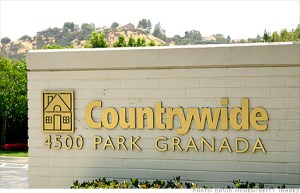
Remember the “Friends of Angelo” scandal? This was the so-called  “VIP program” that former Countrywide founder and CEO Angelo Mozilo used, not to be unkind, to bribe lawmakers into assisting Countrywide’s predatory mortgage loan practices, or at least to look the other way. In June 2008  it was revealed that key policy makers, including former Senate Banking Committee Chairman Christopher Dodd  (D-Conn.), and current Senate Budget Committee Chairman Kent Conrad (D-N.D.) received special terms on mortgages from Countrywide.

In 2009,the House Oversight Committee began investigating the program and learned that similar sweetheart loans were extended to almost a dozen lawmakers, executive branch officials, and other employees of Congress, the White House, Fannie Mae, Freddie Mac, and other government agencies. Countrywide also allowed some VIP program participants “free floats,” which meant that if interest rates fell during the time when loans were being processed, the company allowed applicants to take the lower rate at closing, something it does not typically do.

Let’s be clear: these are bribes. No matter whether they fall within or without specific laws or regulations, they are bribes. This is a large corporation providing special benefits to legislators and others in the government that it did not make available to the general public, in order to make “friends” with them. Why would a financial company like Countrywide want policy-makers indebted to it, to “like” it? Use your imagination. This is called creating a conflict of interest and warping independent judgment. We should expect our officials and elected representatives to recognize such transparent corruption, and avoid it. But they didn’t, and don’t.

One reason they don’t is that voters refuse to hold them accountable. Another is this:

From the LA Times:

“The House Ethics Committee has found no rules violations by  lawmakers and staffers who used a VIP loan program from Countrywide Financial Corp. saying the allegations of special treatment fell outside the panel’s jurisdiction. The committee’s leaders said its investigation largely led to the same conclusions as the Senate Ethics Committee, which determined in 2009 that there was “no substantial credible evidence” that Sen. Kent Conrad (D-S.D.) and former Sen. Christopher Dodd (D-Conn.) had broken rules by accepting loans through the special program…”

“The House Ethics Committee statement said that people in the VIP program appeared to be offered ‘quicker, more efficient loan processing and some discounts.’ But the committee said there was evidence showing those discounts “were not the best deals that were available at Countrywide or in the marketplace at large.” Because participation in the program “did not necessarily mean that borrowers received the best financial deal available either from Countrywide or other lenders,” it was not a violation of House rules to participate, according to the Ethics Committee.” Continue reading

Ethics Dunces: The American Public

Is this a great country, or what?

Is this a great country, or what?

No surprises here, but still:

A sickening  McClatchy poll released today shows that a majority of the U.S. public opposes all measures that are necessary to address the nation’s debt and deficit crisis, except increasing taxes on the rich…which, by itself will be of minimal assistance in addressing the long-term problem. Its advantage, of course, is that it involves no sacrifices from the vast majority of the public.

Such irresponsible, lazy, ignorant and foolish judgment by the public, of course, would not be an insuperable problem in a properly functioning republic, in which dedicated, informed, selfless and courageous public servants were willing to come together, compromise, and make difficult but necessary decisions that might be unpopular with their constituents. Or if the nation had elected a skilled and persuasive national leader who could persuade the public to reject narrow, short-term self-interest as patriots and Americans, for the benefit of future generations.

We don’t have those things, however, so the public’s lack of responsibility, knowledge and common sense is, if not fatal, a serious threat to the national welfare and long-term viability of the United States.

At least we’ll have no one to blame but ourselves, and perhaps the Founders, for foolishly entrusting a representative democracy to a people too ignorant and selfish to keep it working.

___________________________________

Facts: McClatchy

Graphic: It is future

Where Is “Mr. C” When We Need Him?

"Sing to me, Mister C!"

Perry in 1993: “Sing to me, Mister C!”

The holiday music is upon us and unavoidable, and one of the recordings that it is annoyingly ubiquitous is Perry Como’s “Home for the Holidays,” though you often hear the Carpenters’ version too. Como was a big TV star in the Sixties— bigger, really, than Andy Williams, who died last month, but who managed to linger in the public consciousness longer. Perry, unlike Andy, never had his “Moon River”—he was just an easy-going, smooth-singing B-list Bing Crosby baritone without the movies,  the comedy, and all the iconic songs, but for a while tuning in to hear “Mr. C” sing the hit ballads of the day was a middle America tradition. As I heard Perry, smooth as ever, sing his one holiday standard, it occurred to me that without that recording, he would be forgotten completely today. Sic Transit Gloria.

Yet Perry Como would still have something to contribute. For example, his last hit record, “It’s Impossible,” could become a useful public anthem to croon to Republicans as we all head over the so-called fiscal cliff.  Here’s Perry:

And here’s what he could croon to the GOP Congress today, changing just a few words:

Irresponsible, take a pledge to never tax, it’s irresponsible!
Irresponsible, and forget about the facts, it’s irresponsible.

Can we pay back all the trillions, and not raise some extra billions?
Cut the budget and not bother with the debt? So irresponsible.

Will Obama make the cuts that must be made? He’s irresponsible.
Does his folly mean you still don’t have to trade? You’re irresponsible.
And tomorrow, when we’re belly-up like Greece, I’m sure you’ll tell us
That your pledge cannot be blamed for what befell us.
You’re a miserable disgrace—and irresponsible.

We miss you, Mr. C.

Meet the Grants!

Hmmm…I wonder who’ll play Jennifer in the Lifetime movie?

If this developing story from Seattle was a Lifetime Network movie, I would regard it as proof positive that LMN was running out of plausible plots. Since it appears to be real, I regard it as proof positive that life is running out of plausible plots.

Meet the Grants. They make fun couple David Petraeus and Paula Broadwell look like Mike and Carol Brady.  Described as a Seattle “power couple”, he’s a successful lawyer, and she’s city prosecutor. He’s also an accused serial rapist.

Dan Grant faces seven charges of raping Chinese women working as massage therapists, and another charge for first-degree burglary. He has pleaded not guilty to all charges. The chances that there is sufficient evidence to charge a Seattle lawyer as a serial rapist and that the evidence is nonetheless erroneous are slim, as are the chances that the police would charge the husband of a prosecutor without an air-tight case. Still, the word alleged needs to be attached to all of this. This isn’t just alleged, however: a recently released search warrant shows that prosecutor Jennifer Grant moved her husband’s SUV from in front of the massage parlor where he allegedly raped one of the Chinese women to a location far away from both the parlor and the Grants’ home. Gee, thanks, honey! Now why would she do that? The Good Wife Prosecutor swears that she took no evidence from the SUV except a garage key card, but a search warrant affidavit indicates that police believed that the vehicle contained a knife, condom wrappers, phony police ID and DNA. Continue reading

Be Careful What You Wish For Dept.: “Occupy” May Finally Have a Plan, and Sure Enough, It’s Ethically Bats

Oh, yes,THIS is bound to work out well…

The core of my objection to Occupy Wall Street and its progeny was and is that it never had the discipline, cohesion or communications skills to make it clear what the “movement” really wanted to accomplish, other than generally blaming all the world’s ills on the wealthy and successful. This was the reason for its failure, though Occupy fans like to say that it “succeeded” by starting a national dialogue about corporate executive salaries and the growing disparity in income levels between the richest and the poorest Americans—as if that dialogue hadn’t been ongoing long  before the first sign went up in Zuccotti Park.

Now there are signs that the Occupy bitter-enders are hard at work launching a real, substantive effort with a specific goal, albeit and insane one: to bring down the financial system with a “debt strike.” ( In These Times headlined its story about this “You Are Not A Loan.” Pretty clever!) The idea is to refuse to pay back the interest or principal on outstanding debt, and to insist that all loans and interest  be forgiven, since the debt system is inherently corrupt and rigged to transfer wealth from the poor to the rich.

We shouldn’t have to expend a lot of argument on why this is unethical. People, companies and nations in serious debt reach that point because they spend more money than they have. They borrow money promising to repay, agreeing to pay an additional fee, interest, for the privilege of using money that doesn’t belong to them. The vast majority of debt is not amassed by desperate debtors who have to deal with the equivalent of Loan Shark Larry and risk broken legs or death unless they pay unconscionable fees. Most debt comes from wanting something before you can pay for it. While laws are in place to minimize predatory lending and to provide a safety net (in the form of bankruptcy) so people and companies don’t end up destitute and in debtor’s prison, essentially the system, like society itself, exists on trust, the cornerstone of all ethics.  Lenders give their money to trustworthy loan-seekers, and charge higher interest rates to those who they deem less trustworthy. That is fair. Continue reading

Ethics Quiz: The No-Tolerance Catch 22


Should you trust this guy to be reasonable?

The Des Moines Register reports on a jaw-dropping example of “no-tolerance” management at its saddest, and the astounding fact that it did not, in fact, occur at a an educational institution, but at a bank.

Wells Fargo Home Mortgage  fired 68-year-old Richard Eggers because in 1963, when he was 18, he put a cardboard cutout of a dime in a Laundromat washing machine and was duly convicted of operating a coin-changing machine by false means. Since that time, after spending two days in jail (they were strict in Iowa back then), Eggers has been on the straight and narrow. He is a Vietnam veteran, and tells the press that he can’t remember his last speeding ticket. He has also been a loyal and effective employee of Wells Fargo for seven years. So why fire him over a stupid and trivial crime he committed when Kennedy was President, TV was black and white, Mary Tyler Moore was exciting male viewers in her Capri pants on the brand new “Dick Van Dyke Show,”and people trusted Uncle Sam? Continue reading

Unethical Quote of the Week: Vice-President Biden (No, Not THAT Unethical Quote!)

 “I guarantee you, flat guarantee you, there will be no changes in Social Security. I flat guarantee you.”

—-Vice President Joe Biden, in reply to a supporter at a campaign stop in southern Virgina who told him,  “I’m glad you all are not talking about doing anything with Social Security.”

I know this feels like “Pick on Poor Joe Biden Week” at Ethics Alarms, but everyone has a lot of catching up to do in that regard.

The Washington Post picked up on the above quote by Biden, which it made the subject of an editorial and pronounced “depressing.” It is more than depressing, but then, the Post has to protect Democrats even when they prove themselves irresponsible or dishonest, as Biden does with this “guarantee.” As the Post quite accurately points out, Social Security is going broke, its trustees have called for immediate reforms, and the longer the government waits to do what is needed, the harder it is going to be to do it. Biden, however, and presumably his superior, President Obama, apparently believes that either refusing to take the steps that are essential to prevent a Social Security meltdown or lying to the public about the fact that they will have to take them is preferable to the alternative: responsible fiscal policy and governance and leveling with the public. Critics can scream about the broken system, economists can repeat the math, op-ed writers can warn against constantly “kicking the can down the road” until, like Greece and other profligate and incompetent societies, there is no more road, but if our leaders refuse to show political courage and do their duty, the U.S. has a guarantee, all right—a guarantee of future fiscal catastrophe. That’s okey-dokey with politicians like Biden however. He doesn’t need Social Security, and besides, he’ll be happily drooling in Madam Kluck’s Home for the Bewildered by then. Based on his recent conduct, maybe sooner than he thinks. Continue reading

The Economic Meltdown: Accountability Check

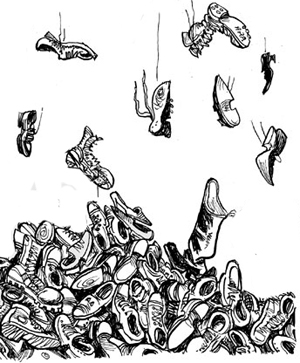
The shoe fits both Parties.

The ethics story of week was the dropping of the missing shoe in the “Friends of Angelo” scandal that helped drive Democratic Senator and party leader Chris Dodd into retirement. (More here.) It fell like this:

WASHINGTON (AP) — The former Countrywide Financial Corp., whose subprime loans helped start the nation’s foreclosure crisis, made hundreds of discount loans to buy influence with members of Congress, congressional staff, top government officials and executives of troubled mortgage giant Fannie Mae, according to a House report.

What the report indicates is that the bribery of regulators and members of Congress to allow the sub-prime mortgage con-game to continue was far worse and for more widespread than anyone realized. Countrywide offered special loan deals to dozens of influential government officials to stave off regulations that might have avoided or greatly lessened the mortgage collapse that triggered the current long-term economic crisis: 

“Documents and testimony obtained by the committee show the VIP loan program was a tool used by Countrywide to build goodwill with lawmakers and other individuals positioned to benefit the company,” the report said. “In the years that led up to the 2007 housing market decline, Countrywide VIPs were positioned to affect dozens of pieces of legislation that would have reformed Fannie” and its rival Freddie Mac, the committee said.

More: Continue reading

Ethics Quiz: The Bank, the Addict, and the Broken Egg

There was a little software problem when Bank of America acquired LaSalle Bank and the two were transferring account data. As a result, LaSalle depositor Ronald Page found that he could make unlimited ATM cash overdraft withdrawals, even though he had only $300 in his checking account.  This tempting state of affairs lasted for seventeen days, and then from December 1, 2008 to May 31, 2009, Page gambled like a man on fire.  Unfortunately for Page and Bank of America—but fortunately for several casinos—Page is a gambling addict. He withdrew, and gambled away, $1,543,104.00

Now the U.S. Attorney’s Office in Detroit says he is seeking to send him to jail for 15 months  after he pleaded guilty to charges of theft of bank funds. He is also going to be required to pay back the money, with interest, guaranteeing poverty for life.

Your Ethics Alarms Ethics Quiz question:

Is this fair? Continue reading

University Trustee Investment Conflicts: When the Stumps Start Showing

University boards are great for mutual back-scratching

Deep water hides all stumps, as the saying goes, and while the endowments of rich universities were piling up cash during the investment-friendly period before 2008, nobody questioned the universities’ choices of which companies and funds to invest in. Then came the meltdown, and endowments of over a billion dollars lost an average of 20% or more. That kind of hit has consequences, and among them were that a lot of programs got cut and a lot pf people lost their jobs.

That, in turn, provokes scrutiny: the deep water had receded, and the stumps were out to see in all their ugliness. As an article in Inside Higher Ed explains, among the stumps on display was the fact that many prominent universities invested their funds in places where their trustees had financial interests: Continue reading