Unethical Quote Of The Week: NYT Columnist David Brooks [UPDATED}

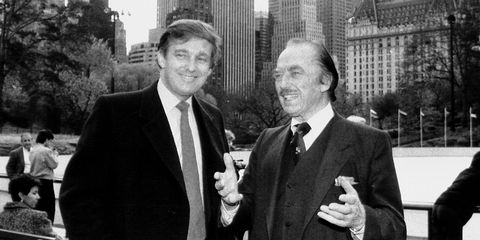
“Biographies describe a man intent on making his fortune and not afraid of skating near the edge to do so. At one point, according to Politico, federal investigators found that Frederick used various accounting measures to collect an extra $15 million in rent (in today’s dollars) from a government housing program, on top of paying himself a large “architect’s fee.” He was hauled before investigating committees on at least two occasions, apparently was arrested at a K.K.K. rally in Queens (though it’s not clear he was a member), got involved in a slush fund scandal with Robert Wagner and faced discrimination allegations.”

—New York Times columnist David Brooks arguing that Donald Trump, Jr.’s conduct in holding the controversial meeting  with some Russians and Russian-Americans to acquire useful negative information about Hillary Clinton for his father’s campaign came about because his family is just no damn good, as shown by the conduct of Fred Trump, the President’s storied father.

Unlike some commentators, I have no ethical problem with Brooks’ basic thesis. Culture molds ethics, children are influenced by the conduct and values modeled by their parents, and I have pointed out too many times to  count that Donald Trump doesn’t know ethics from a merry-go-round, and appears to have no  conventionally functioning ethics alarms at all. It makes perfect sense that Donald Jr. would grow up similarly handicapped.

However, Brooks’ evidence that Trump family patriarch Fred Trump was corrupt and without scruples is all innuendo and supposition, and thus dishonest, incompetent, and unfair. Let’s examine the components of Brooks’ attack:

  • “federal investigators found that Frederick used various accounting measures to collect an extra $15 million in rent (in today’s dollars) from a government housing program, “

Were the accounting measures illegal? Apparently not. Was the  “architect’s fee”? I guess not: Fred wasn’t indicted or prosecuted. Being investigated by the feds does not prove or indicate wrongdoing. Maybe Fred was cheating; I wouldn’t be surprised. But Brooks has no facts to support that assumption, just a pejorative characterizations.

  • “He was hauled before investigating committees on at least two occasions…”

I love the “hauled.” Being asked to testify isn’t evidence of wrongdoing either. Continue reading

Comment Of The Day: “Comment Of The Day: ‘No, Insurance Companies Treating People With Pre-Existing Conditions Differently From Other Customers Is Not Discrimination.’”

The health care/ACA/AHCA commentary from readers continues to be uniformly excellent. (It was originally spurred by the post, No, Insurance Companies Treating People With Pre-Existing Conditions Differently From Other Customers Is Not “Discrimination.”Spartan’s Comment of the Day on the topic has itself sparked its own Comment Of The Day, this one authored by Charles Green.

By fortune’s smiles, I was able to finally meet Charlie last week face to face, as he kindly alerted me that he would be passing through my neighborhood. Finally having personal contact with an Ethics Alarms reader is always a revealing and enjoyable experience, and this time especially so. I think you would all enjoy Charlie; I certainly did. Maybe I need to hold an Ethics Alarms convention.

Here is his Comment of the Day on the post, Comment Of The Day: “No, Insurance Companies Treating People With Pre-Existing Conditions Differently From Other Customers Is Not ‘Discrimination’.”

…The claim that “a free market system” and “freedom of choice” is the solution to all that ails us is a mindless mantra that is only occasionally true, but not always.

It’s important to be clear about when free market solutions are good, and when they are not. It’s not all that hard to sort out. Basically:

Free market solutions ought to be the presumptive default. Unless there is good reason to the contrary, they ought to be the rule.

1. Exception Number 1: Natural monopolies. It makes no sense to have competition for municipal water supplies; airports; multiple-gauge railroads; fishing grounds; groundwater; or police departments. The basic reason is the putative economic benefit is either simply not there, or is absurdly overwhelmed by the social confusion engendered by multiple suppliers.
In these cases, a form of regulated monopoly is desirable. (By the way, the airline industry at a national level is precisely this kind of market; we do not have too little competition there, but too little regulation).

2. Exception Number 2a: Wallet-driven market power monopolies. It’s strategy 101 in business schools that the way to be successful is to be #1 or #2, and the best way to do that is to get more market share than your competition, so you can drive them out of business. The one guaranteed way to do that is to cut prices so low that no one else can compete. Think Walmart. Think Amazon. Think Japanese in the 60s and 70s in any industry.
The reason we have anti-monopoly laws is to reset the playing field when a competitor dominates the market too strongly.

3. Exception Number 2b: Product-driven market power monopolies. Where the product is so obscure, expensive, infinitely variable, and difficult to understand that the producers are de facto in control, because it is too confusing and too dangerous to challenge them.
Drug prescriptions are an interesting example. The ‘free market solution’ to high drug prices was (partly) to let drug companies advertise, and to loosen up the definition of what constituted a ‘new’ drug. What did we get? New diseases like RLS, new definitions of ‘new’ (moving ‘off label’ to ‘on label’) and even higher drug company profits. Because who’s still going to argue with your doc? Especially when he or she gets side benefits from giving in to the latest DTC ads on network news programs?

Continue reading

Ethics Q & A On Obama’s Speaking Fees

Former President Barack Obama received a $400,000 speaking fee for an appearance at an A&E Network event  yesterday, just as controversy was building over Obama accepting the same fee to appear at a Wall Street firm’s conference.

What’s going on here?

The ex-President is cashing in, that’s what’s going on here. This has become standard operating procedure for former POTUSes, beginning with Gerald Ford, who was showered with criticism by Democrats and the news media for signing with the William Morris agency and picking up what was at the time considered obscene speaking fees from corporations and foreign governments. Ford’s fees are dwarfed by Obama’s, but then Barack is a much better speaker than the late President Ford was. (Almost anyone is.)

Jimmy Carter showed admirable restraint by not devoting his post-Presidency to enriching himself off of his years in office, but Ronald Reagan took some mega-fees to speak abroad. The Clintons, as we know too well, instantly went from rags to riches by selling their celebrity, an exercise that was especially dubious because Hillary was on the rise. Obama’s speaking fees are just one more step along the cashing-in path that both he and Michelle had already begun traveling with the astounding 65 million dollar deal the couple signed to write their biographies.

Some questions and answers on the ethics of Obama’s payday:

1.  Is Obama ‘s acceptance of all this money ethical?

In a vacuum, it’s hard to argue that it isn’t. He set a fee, and someone is willing to pay it. Hillary’s fee was $250,000; if she can get that much for her dry-as-toast delivery as a former Senator, Secretary of State and First Lady, Obama’s a bargain at $400,000. As a private citizen, he has the same right any of us do to sell his books and speeches at whatever the market will bear.

I, for example, get $37.56 for an hour long speech, and am glad to get it..

2. But it isn’t in a vacuum, right?

Right. Obama still has power and influence; he still promises to be a voice in the Democratic party. He’s not exactly a private citizen, and no ex-President is. Taking such a large payment from a Wall Street firm, after all of Obama’s rhetoric (and that of Bernie Sanders, the non-Democrat now being paraded as a leader of the Democratic party) condemning Wall Street has the decided whiff of hypocrisy about it. Not only, that, but as with Hillary Clinton and Bill, the payment of such jaw-dropping amounts for minimal service natural raises questions of pay-offs. Obama’s administration famously sought no criminal sanctions for Wall Street executives despite their  role in what Obama called “driving the economy into a ditch.” How do we know this wasn’t part of an installment payment to Obama for services already rendered, a quid pro quo? We don’t.

It is also hard to make sense out of those fees if they aren’t paying for something more than an hour long speech.

3. So these fees create “the appearance of impropriety?” Continue reading

Addendum: The Dishonest Tax Day Anti-Trump Protests (And The Misleading Defenses Of Them)

How quickly we forget…

I wasn’t going to post any more on this topic, but in 2012 CBS helpfully provided some historical perspective on the supposed “tradition” of candidates releasing tax returns. Some revelations:

1. Donald Trump was not the “first candidate since Nixon” to refuse to release his returns.

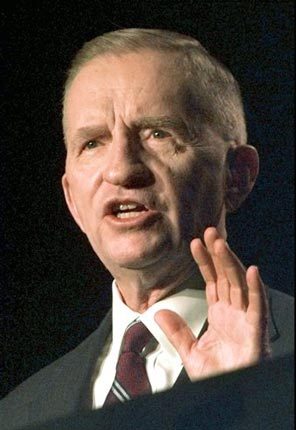
Who else didn’t? Why H. Ross Perot, the third party candidate who cost George H.W. Bush re-election in 1992! And what a coincidence: Perot was also a billionaire with complex finances and conflicts! Had he been elected, and that was not beyond the realm of possibility, he, not Trump, would have been the first President since George Washington without elected office experience or experience in military command.  Perot got almost 20 million votes  from Americans who presumable cared about other issues more than Perot’s tax returns, or his refusal to release them.

So Trump was following tradition and practice: the tradition and practice of all billionaires running for President to refuse to release their taxes. The tradition even extends to some half-billionaires: Steve Forbes, another businessman who made a strong run at the GOP nomination in 1996, also refused to release his returns.

(By the way, Perot’s returns were not a major issue in the election, nor did the mainstream media harp on it. But there was some semblance of fair journalism then.)

2. When tax returns are released by candidates, the opposition will still find reasons to object, raise suspicions, and claim that they are not enough. Mitt Romney released two years of returns, and Democrats said he was hiding something nefarious.

In 2008, Barack Obama released seven years of tax returns, then accused Hillary, his opposition for the nomination, of hiding something. “Senator [Hillary] Clinton can’t claim to be vetted until she allows the public the opportunity to see her finances — particularly with respect to any investment in tax shelters,” Obama’s spokesperson Robert Gibbs said. Continue reading

Now THIS Is An Unethical Joke…

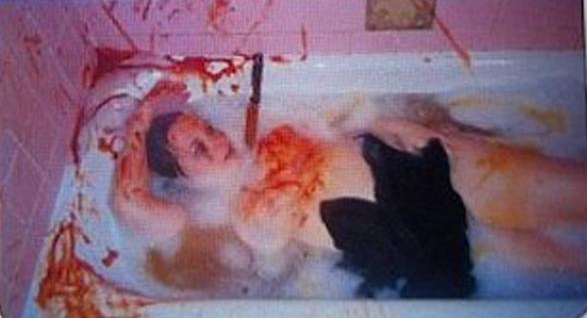
Ohio couple Micah Risner and his fiancée Nataleigh Schlette, mad wags that they are, decided to play an elaborate  practical joke on their families. The two pranksters staged gory photos of Schlette’s supposedly mutilated body (that’s one of them above) and sent the fake murder scene to family members. Risner texted his sister saying, “Please help me! I really didn’t mean to. I don’t remember. We was arguing and I woke up to this.” (His sister advised him how to cover up the murder. She wasn’t joking. I wonder if she also advised him to learn basic grammar? )

Other family members called the police, and when officers arrived to the abode where Risner and Schlette resided,  Schlette was alive and well!

HAHAHAHAHAHAHA!

Morons.

 The police were not amused for some reason, and arrested them—HAHAHAHAHAHAHA! –charging them under an oddball Ohio statute making it a crime to “induce panic”:

2917.31 Inducing panic.

(A) No person shall cause the evacuation of any public place, or otherwise cause serious public inconvenience or alarm, by doing any of the following:

(1) Initiating or circulating a report or warning of an alleged or impending fire, explosion, crime, or other catastrophe, knowing that such report or warning is false;

(2) Threatening to commit any offense of violence;

(3) Committing any offense, with reckless disregard of the likelihood that its commission will cause serious public inconvenience or alarm.

Prof. Turley, who found this gem, opines that the charge probably won’t stick, and I agree, especially since the family members aren’t pressing charges. This was a prank, and not aimed at “the public.” He suggests that police would have a better case if the hoax was on social media. I agree with that, too. Is it possible that the police knew this, but arrested them anyway to teach these idiots a lesson? If so, that was an abuse of power and process, and unethical. Continue reading

Ethics Quote Of The Day: Charlotte Hogg, Ex-Bank of England COO

“However, I recognise that being sorry is not enough. We, as public servants, should not merely meet but exceed the standards we expect of others. Failure to do so risks undermining the public’s trust in us, something we cannot let happen. Furthermore, my integrity has, I believe, never been questioned throughout my career. I cannot allow that to change now. I am therefore resigning from my position. I will, of course, work with you through any transition.”

—-The Bank of England’s chief operating officer and incoming Deputy Governor for Markets and Banking, Charlotte Hogg, in her letter of resignation over criticism regarding a possible conflict of interest and her failure to report it.

Charlotte Hogg, a senior Bank of England official who had been named a deputy governor, resigned this week after a Parliament committee found that she had failed to disclose a potential conflict of interest: her brother held a senior position at Barclay’s during her time at the central bank. Hogg insisted that she never breached her duties or passed along any confidential information to her brother, but she had helped draft an industry ethics code of conduct policy required a disclosure of such conflicts. This creates doubts about her integrity, judgment competence, as well as the appearance of impropriety.

The Parliamentary committee recently issued a report finding that Ms. Hogg’s professional competence “short of the very high standards” required to be deputy governor, adding that her failure to disclose her brother’s role was a “serious error of judgment.”

This is one of my favorite kinds of conflicts, because it may be only appearances at stake. What if, as is often the case (sadly), Hogg and her brother are estranged? What if she doesn’t speak to him? What if they hate each other? Never mind: the public, not knowing this,  will suspect that she might use her position to favor him or his bank, so disclosure is crucial to maintaining public trust. Not disclosing, in contrast, raises suspicions. Why didn’t she let everyone know about her brother? What was she hiding? Continue reading

Ethics Observation On The Trump 2005 Tax Return

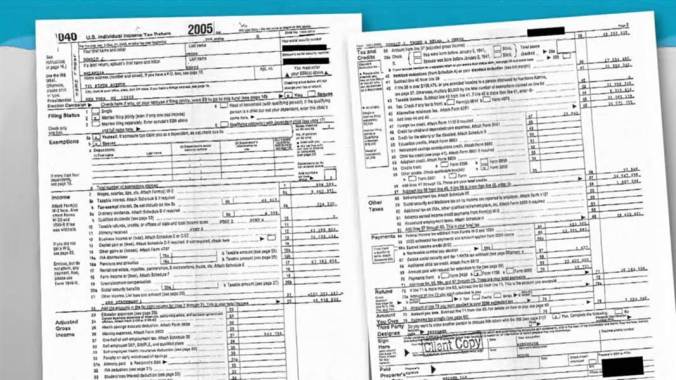
Yesterday, MSNBC host Rachel Maddow endlessly hyped the fact that  veteran investigative reporter David Cay Johnston had obtained President Trump’s 2005 federal tax return. When it was revealed, the scoop didn’t justify the hype. Trump  paid 38 million in taxes that year,  24% of his income—not the top rate, but not “nothing,” which was the rumor Democrats were selling during the campaign.

Ethics points:

1. Whoever leaked the return broke the law, and doing so was unethical.  No, it’s not illegal for the news media to take material stolen by others and sanctify it via their First Amendment protections.  It should be though. When they do this, they aide and abet a crime, and Freedom of the Press wasn’t supposed to allow THAT. At very least, journalists should be required to reveal the names of the criminals who steal and release our proprietary documents. The publication of these makes such thefts worse, not better.

2. I don’t see why the President’s tax returns from 12 years ago has any genuine relevance to anything now. The returns were relevant to the decision of whether or not people wanted to vote for him. Now, the tax documents have no purpose, except for the insatiable Trump-bashers to have something new to bash him with. Anything will do.

3. David Cay Johnston was dishing about his “scoop” with GMA’s George Stephanopoulos, and decided to start a new rumor. He speculated that Trump leaked the return himself.  No evidence, not a drop, and yet that’s what this veteran reporter felt was justifiable to say on national TV. Gee, can we call THAT fake news?

4. Then, as he did with Maddow, the reporter went on about all the conflicts of interest that Trump’s financial dealings have created. Again, this is re-litigating the election. At this point, there is no practical way to eliminate Trump’s conflicts and the appearance of impropriety that they create, and he’s not going to bother trying. Johnston, and others, including me, never made a clear case to the public why the President’s unprecedented financial entanglements should have been disqualifying; nor did Hillary, in part because her own financial entanglements were disqualifying. Well, the train left the station, y’all. You had your chance, and botched it. Johnston, like so many of the other bitter-enders who want to turn back time, ultimately get back to, “But…but…but…we never should have elected this guy! Surely there is something we can do to undo it!”

No, there isn’t. Cut it out. Continue reading

Latest Ethics Notes On The Hillary Clinton E-Mail Scandal Ethics Train Wreck, Part 3

denial

Continuing from Part 1 and 2…

9. Hillary Clinton’s presidential campaign circulated a draft letter critical of James Comey to former federal prosecutors, implicitly inviting them to comment publicly.  (This is an implied but unenforceable quid pro quo. These people are good...) Eric Holder, naturally, former US attorney general Michael Mukasey and poor, disgraced former Bush AG Alberto Gonzalez heeded the dog whistle, all disgracing themselves in the process.

Not one of them are privy to the evidence involved, and for these men to be using their positions and reputations to level charges and accusations at a high-placed law enforcement official based on speculation and partisan warfare is unethical. It is unfair, and  undermines the public trust. This is always something that former officials should avoid, as a near absolute. The Golden Rule also applies. These men know how hard these jobs are, and what they would have thought about  ex-officials criticizing them. Basic professional ethics principles discourage this.

Holder, of course, is a proven Clinton hack. Gonzalez might even make Comey look better by criticizing him, so thoroughly discredited is he. (My guess is that he’s desperately attempting to fashion a new pubic image.)

Mukasey’s comments may have been the worst of all. He took the opportunity of the current controversy to attack Comey again for his decision not to recommend that Clinton be indicted. (Meanwhile, CNN used his name in a misleading headline implying that he was criticizing Comey for his letter to Congress. It initially fooled me.) Speaking of the earlier Coney statement, he said,

“This wasn’t Comey’s call. It is not his function as director of the FBI to decide who gets charges and doesn’t. It’s his function to gather evidence. And he didn’t fulfill that function very well. But it’s certainly not his function to get up and pronounce on whether charges should be brought or whether a reasonable prosecutor would ever bring them.I don’t think he should have been this fix. I don’t think he should have put either himself or the bureau or the Justice Department in this fix.”

Wrong (1): it was Comey’s call, because Loretta Lynch told the public that Justice would accept the recommendation of the FBI regarding Clinton’s possible prosecution. Did Mukasey follow the story? I guess not.

Wrong (2): Comey’s extensive public statement in July was necessary to ensure transparency and trust after Loretta Lynch stupidly allowed Bill Clinton to appear to be brokering a deal with her. Presumably Mukasey wouldn’t have done that.

Wrong (3): So Comey did notput either himself or the bureau or the Justice Department in this fix.” Obama put them in this fix, by allowing his Secretary of State to skirt security policies. Holder put them in this fix, by operating such a blatantly partisan and political Justice Department that public trust in a fair investigation of the presumptive Democratic Party presidential candidate was impossible. Lynch put them in this fix, by not resigning.

To his credit, Mukasey did dismiss Harry Reid’s and Richard Painter’s Hatch Act nonsense with appropriate disdain, saying, “That’s baloney. I mean, you know, it’s sort of an amusing talking point for three and a half seconds, but it’s not serious.”

10. The issue is not whether Donald Trump is as corrupt and dishonest as Hilary Clinton, or even more so. In trying to shift focus to Trump to allow Clinton, as usual, to wiggle out of the well-earned consequences of her own wrongdoing by distraction, confusion, and diversion, Clinton’s corrupted allies are throwing every accusation and innuendo at Trump that they can concoct or dig up. It-Doesn’t-Matter. Trump is horrible, the bottom of the barrel, UNDER the barrel, at the bottom of a long, narrow pit under the barrel. Understood. That still doesn’t make Hillary less corrupt, less untrustworthy, and less dishonest. Nor less ruthless, cynical, manipulative, venal and totalitarian.

Continue reading

Trump’s Taxes

trump-taxes

“The New York Times obtained records from 1995 showing that Donald J. Trump declared a $916 million loss. The figure is so substantial that it could have allowed him to legally avoid paying federal income tax for 18 years,” exclaimed the New York Times in today’s big “scoop.”

Observations:

1. The New York Times should not be publishing anyone’s tax returns who has not publicly released them. It’s unethical. They Times has the right to print just about anything, or course, but like all newspapers, it is obligated to exercise that right responsibly and fairly. This is neither. Tax returns are private. These tax returns reveal no crime, and nothing unethical on Trump’s part.

2. Nor does the public have a “right to know” Trump’s taxes. It has a right to trust Trump less than otherwise because he refuses to release his taxes, and has a right to think less of Trump for not following the recent accepted practice of candidates to release their tax returns. The public has no more right to see his tax returns without his consent, however, than it has a right to see mine.

3. What Trump’s taxes “could” have allowed him to do isn’t news. Nor is it responsible speculation.

4. This tax expert argues persuasively that it is highly unlikely that the returns mean what the Times says they do. Either way, it is all innuendo and speculation.

5. Federal law makes it illegal to publish an unauthorized tax return: Continue reading

Someone Explain To Me, Please, Why Anyone Should Trust Wells Fargo With Their Money Ever Again?

Federal regulators announced today that  Wells Fargo employees secretly created millions of unauthorized bank and credit card accounts without their customers requesting them or being informed, knowing since 2011.  Employees even created phony PIN numbers and fake email addresses to enroll customers in online banking services, the CFPB said.The stealth accounts allowed the bank to charge millions in illicit fees,  while Wells Fargo employees boosted their sales figures and earned bonuses. Wells Fargo told CNNMoney that it had fired a staggering 5,300 employees over the last few years as they discovered the misconduct—but they didn’t tell customers what had been going on. .An investigation revealed that bank employees opened over 1.5 million unauthorized deposit accounts.

The scamster employees moved funds from customers’ legitimate accounts into newly-created ones without their knowledge or consent, regulators say. Then the victims were  charged for insufficient funds or overdraft fees when  there wasn’t enough money in their original accounts. Wells Fargo hustlers also submitted applications for 565,443 credit card accounts without their customers’ consent.

In response, the feds have hit Wells Fargo with the largest penalty since the Consumer Financial Protection Bureau began was founded in 201, ironically right around the timeWells Fargo started cheating its customer.. The bank agreed to pay $185 million in fines, along with $5 million to refund customers.

I don’t care how much the bank pays, or even if I get some of it (The Marshalls banked there, but as soon as I get home, that’s going to end.) I don’t care of I have to keep the nest egg in an old sock. I’m not trusting these people. The managers are inept or corrupt, and the lower employees are poorly trained and supervised, as well as crooks. This is a bank. The management has high fiduciary duties. It breached all of them. Continue reading