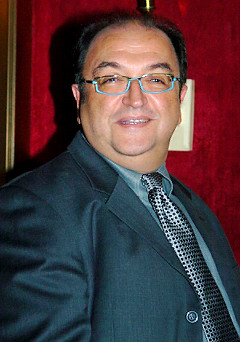
News value? We already knew that the acorn doesn’t fall far from the tree—did we need to read RFK, Jr.s diary to prove it?
This is a straightforward one. Apparently a New York Post reporter somehow came into possession of Robert F. Kennedy Jr.’s personal journal for 2001. It is, as I imagine President John F. Kennedy’s journal for, say, 1962 would have been, largely a diary about sex, chronicling RFK Jr.’s battles with and evident enjoyment of the family malady, at least on the male side, sex addiction.
The journal is juicy, to say the least, and it also has a tragic side: allegedly Kennedy’s wife Mary discovered and read it shortly before committing suicide last year. RFK Jr. is a radio talk show host, an author, and something of a conspiracy theorist; he also has participated in the shameful and deadly practice of scaremongering regarding vaccines. He is also a Kennedy with a famous father, so in a small bore, minor way, he is sort of a public figure, on the same scale as, oh, let me think…Joey Buttafucco, of Long Island Lolita infamy? Patrick Wayne, the Duke’s B-movie star son? That’s not quite it…something less than Jon Gosselin, Kate’s abused ex-hubby, and more than Daniel Baldwin, the least of the four Baldwin bros.
Your Ethics Alarms Ethics Quiz is this:
Is it ethical for the news media to acquire and publicize the details of a private journal belonging to a minor celebrity with no relevance to current events? Continue reading →
Deborah Brown Community School in Tulsa, Oklahoma forbids its students from wearing their hair in dreadlocks, afros “and other faddish styles.” Terrence Parker, a barber, challenged the rule by sending his 7-year-old daughter Tiana to class there wearing her hair in dreadlocks. She was told that she could not attend school with her hair in a (stupid and ignorant) rule-violating style. Tiana is now attending another school, while the story, reported on the web in various sources, is holding the school up to well-earned ridicule for a dress code that if not racist in intent, is racist in impact. Eventually, I would think, the school will be shamed into seeing the error of its ways, which is enforcing an inappropriately narrowly-viewed, culturally-biased interpretation of what constitutes a “presentable” hairstyle as opposed to one that might “distract from the respectful and serious atmosphere [the school] strives for.”
This is the way unethical rules get changed. Parker confronted the rule by violating it, and accepted the penalty while publicizing the unjust rule to the greater community, which is making its disapproval known. Continue reading →
Aniruddh Khachaturi an is from Mumbai, India, and has been in the U.S. for the past two years, studying computer science at Carnegie Mellon. For some reason his observations about what surprises him about American culture are newsworthy, according to Investors Daily, as opposed to, say, anyone else. They are thought-provoking, however, especially this : he is impressed with the nation’s “strong ethics”:
“…everyone has a lot of integrity. If someone cannot submit their completed assignment in time, they will turn in the assignment incomplete rather than asking for answers at the last minute. People take pride in their hard work and usually do not cheat. This is different from students from India and China as well as back home in India, where everyone collaborates to the extent that it can be categorized as cheating.”
I happen to think he is right, and that this is probably the reaction of most foreigners who spend much time here. Compared to almost everywhere else on the planet, the population of the U.S. is more ethical, and the U.S. culture is more concerned with ethical values, as one should expect in the only nation expressly founded as the expression of ethical ideals.
Nonetheless, our culture has shown alarming signs of growing more tolerant and even accepting of unethical conduct, and that is worthy of more than merely academic concern. Continue reading →
Responding sharply to a commenter’s expressed criticism of the argument that convicted classified data leaker Bradley, now Chelsea, Manning, sentenced to Federal prison and seeking treatment as a trans-gendered female, ought to have his treatment needs served by prison authorities at public cost, Ethics Alarms’ own expert on such matters (from Australia), provided this fascinating overview of U.S. law and medical ethics on the topic. Here is zoebrain’s Comment of the Day on the recent post flagging Fox News’ juvenile mockery of Manning’s gender issues, Ethics Dunce: Fox News:
“There are two disputes here. The first is whether prisoners have a right to medical treatment, and if so, to what degree.I’ll deal with that first.
“Brown v. Plata 131 S.Ct. 1910 (2011): “To incarcerate, society takes from prisoners the means to provide for their own needs. Prisoners are dependent on the State for food, clothing, and necessary medical care. A prison’s failure to provide sustenance for inmates “may actually produce physical ‘torture or a lingering death.’ ” ….Just as a prisoner may starve if not fed, he or she may suffer or die if not provided adequate medical care. A prison that deprives prisoners of basic sustenance, including adequate medical care, is incompatible with the concept of human dignity and has no place in civilized society.” Continue reading →
Who approved the playing of Aerosmith’s “Dude Looks Like A Lady” over photos of convicted Wikileaks leaker Bradley Manning in uniform and in feminine make-up and garb? Fire him.
This isn’t professional, and it isn’t the proper role of journalists to mock the gender identity issues of public or private individuals. Fox is playing to the worst of its core conservative audience, the gay- and trans-hating troglodytes, and thus embraces bigotry as reasonable and humorous. Manning’s sexual problems are of tangential news value, and to the extent that they are, they should be treated with sensitivity and respect, with Fox’s goal being to educate its audience, not to play playground tease.
It would be impressive and appropriate if one of the more responsible, independent Fox on-air personalities—Shep Smith? Megyn? O’Reilly?—would chide their network for this. They should be embarrassed.
[The following is blurry, but perhaps that is for the best. It is the only full version of the performance at issue currently available on YouTube, and it may not be there for long. Watch at your own risk.]
To listen to the horrified reaction to Miley Cyrus’s relatively obscene performance at the nationally televised MTV Music Video awards (not so long ago, Miley was that cute tween Hannah Montana on the Disney Channel) , one would think that rock and pop stars intentionally crossing the established lines of symbolic pubic sexual decorum was unprecedented. The furious and shocked condemnations seemed to emanate from some parallel culture, like the alternate universe that implicitly exists on CBS’s updated Sherlock Holmes drama “Elementary” (Sherlock is a precariously recovering alcoholic and drug addict; Dr. Watson is a former Charlie’s Angel) where nobody ever heard of “The Hound of the Baskervilles,” Basil Rathbone or the dancing men cipher, because Arthur Conan Doyle never invented the character. ( The British updated Sherlock, uncreatively titled “Sherlock,” is so far superior to “Elementary” —which isn’t bad–that it’s unsettling.) Have Isadora Duncan, Josephine Baker, Sally Rand, Elvis, the Stones, Jim Morrison,, Madonna and Christina Aguilera been erased from the past by some music-hating cyborg from a dystrophy future where everyone sings like Matt Munro?
Gross simulated sexual display on television prime time has unethical elements, to be sure. It’s uncivil, to begin with, intentionally placing socially objectionable content before a lot of viewers who don’t want to see it. That’s a breach of respect, but a minor one in this context. Janet Jackson flashed a breast during the Superbowl half-time show, after all: the argument that this was a family event that shouldn’t have been unexpectedly transformed into a peep show was grounded in fact. This week, however, I heard earnest mothers protesting that their delicate pre-teens were watching the MTV awards and had the innocence cruelly seared out of them by the unexpected and horrifying sight of Miley twerking ( simulating sex while dancing—a brand new addition to the Oxford dictionary) on Robin Thicke, dressed as Beetlejuice. Those mothers, not to be excessively cruel myself, are idiots.
What did they expect to see? This is a live show populated by competing shameless self-promoting narcissists who know that the performer who says or does the most outrageous thing will win the publicity game, and be a topic of debate for days or even weeks. Miley won, that’s all. If a child saw something age-inappropriate, the parents can only blame themselves. This was roughly the equivalent of letting your kid watch “The Walking Dead” and complaining to AMC that the show’s violence is excessive for children. Ethics breach #1 is by any parent who allowed a child to watch this show while wanting to protect the child’s exposure to sexually provocative material. Irresponsible, incompetent, and stupid. Continue reading →
Today, syndicated advice columnist Amy Dickinson (“Ask Amy”) answered a query with admirable directness, properly defining the proper use of ethics alarms for a woman who was puzzled about what to do when the answer should have been obvious. Unfortunately, Amy adopted the letter-writer’s incorrect terminology for an ethics alarm, based on the help-seeking “other woman” in an adulterous relationship writing that her relationship was beginning to feel “icky.”
As we have discussed here many times, “ick” and unethical conduct are not necessarily the same thing. Humans naturally assume that what is strange or instinctively repugnant is wrong, but that assumption always needs to be tested by sound and objective ethical analysis. The best current example: to heterosexuals, gay sex is “icky,” but that doesn’t make it unethical or wrong. When Amy uses the term “ick-o-meter,’ what she means is “ethics alarm.” Continue reading →
Leroy Fick (left); unidentified gropee, (right); Mayor Fick (far right)
“Fick” is a term of art on Ethics Alarms, describing the rare unethical miscreant who is not only engaged in misconduct but perfectly happy to profit from it in full view of the public eye, apparently without shame. The appellation is named after the despicable Leroy Fick, a Michigan lottery winning millionaire who exploited a loophole to keep getting public assistance. Ficks are the worst of the worst.
San Diego Mayor Bob Filner is a fick.
As the number of women who have accused him of groping, head-locking, kissing or otherwise sexually harassing them climbed beyond 18, Filner adamantly refused to do the right thing and resign (call me crazy, but I think even Bill Clinton would have had the decency to resign if a new Monica surfaced every other day for a month), even as other allegations of his misdeeds in the financial realm were being investigated. Knowing the recall effort rapidly gathering steam would cost the city many thousands of dollars, and understanding that San Diego was being humiliated as well as being barely governed while Mayor Fick, er, Filner, held it hostage, the city council has negotiated an exit by Filner, one that requires the city to pick up his legal tab, as well as the damages or settlements he would otherwise pay in any law suits against him arising out of his various incidents of harassment. Continue reading →
Commenting on the case of Elizabeth Paige Coast, a Virginia woman who finally came forward last year to confess that in 2008 she had falsely accused Johnathan C. Montgomery, a former neighbor, of raping her in 2000 when she was 10 years old and he was 14, advice columnist and blogger Amy Alkorn proposes this sentencing formula:
“I feel strongly that those who falsely accuse someone of rape should spend the amount of time incarcerated that the person they falsely accused would have.”
Coast’s victim was convicted of rape and spent four years in jail as a result of her lies. As for Coast, she was recently sentenced by Hampton Circuit Court Judge Bonnie L. Jones to only two months in jail, plus being required to pay Montgomery $90,000 in restitution for de-railing his life. The judge suspended the rest of a five-year sentence, and is allowing Coast to serve the remainder on weekends so not to unduly disrupt her life.
Coast’s lawyer had argued any jailing would send the wrong message to others who lie about false rapes. The prosecutor, agreeing with Alkon, asked for a 10-year sentence with six years suspended so she would serve the same length of time as Montgomery. It seems the judge agreed with the defense more than Alkon. I think Alkon is closer to the mark, but if we make the punishment for recanting rape accusers too severe, it is probably going to mean that some in Coast’s position will choose to let their victim rot and just live with a guilty conscience. Continue reading →
[The quote that follows is from the concurring opinion in the just-decided case of Elaine Photography v. Willock, which challenged the proposition, discussed and endorsed on Ethics Alarms in several posts, that a business could not and ethically should not refuse service to same-sex couples.]
“On a larger scale, this case provokes reflection on what this nation is all about, its promise of fairness, liberty, equality of opportunity, and justice. At its heart, this case teaches that at some point in our lives all of us must compromise, if only a little, to accommodate the contrasting values of others. A multicultural, pluralistic society, one of our nation’s strengths, demands no less. The Huguenins are free to think, to say, to believe, as they wish; they may pray to the God of their choice and follow those commandments in their personal lives wherever they lead. The Constitution protects the Huguenins in that respect and much more. But there is a price, one that we all have to pay somewhere in our civic life.
“In the smaller, more focused world of the marketplace, of commerce, of public accommodation, the Huguenins have to channel their conduct, not their beliefs, so as to leave space for other Americans who believe something different. That compromise is part of the glue that holds us together as a nation, the tolerance that lubricates the varied moving parts of us as a people. That sense of respect we owe others, whether or not we believe as they do, illuminates this country, setting it apart from the discord that afflicts much of the rest of the world.”
——- New Mexico Supreme Court Justice Bossun, concurring with opinion in Elaine Photography v. Willock, which rejected the claim that legally requiring a photography shop to take photographs of a same-sex marriage was a violation of the First Amendment.