From The Ethics Alarms “It’s About Time!” Files: Iowa Strikes Down A “Dangerous Animal” Ordinance

Pinky was a happy, healthy pet dog  until March 2016, when a friend visiting Pinky’s owner let her into the yard unsupervised. The neighbor’s cat, Rebel, had wondered into the yard, and Pinky had the feline in his maw until her owner ran out and commanded her to drop it.  Rebel survived the trauma, but needed three dozen staples for her wounds.

Pinky was impounded after the city’s humane officer declared her a dangerous animal under the city ordinance. Of course, Pinky is a pit bull mix, so bias was already working against her. The Des Moines ordinance that bans the keeping of “dangerous animals” includes banning any animal “that has exhibited vicious propensities in present or past conduct, including such that the animal … has bitten another animal or human that causes a fracture, muscle tear, disfiguring lacerations or injury requiring corrective or cosmetic surgery.”

Such an ordinance could only be written by someone willfully ignorant of the behaviors of dogs as well as the vicissitudes of moral luck. Our wonderful and gentle English Mastiff, Patience, for example, once caused a bloody wound to my wife’s scalp when she gave the dog an unexpected buss on the muzzle. The dog jerked her head in surprise, nicking my wife’s head with a tooth. The wound bled profusely, and required stitches—and it was 100% my wife’s fault. Patience literally wouldn’t hurt a fly…indeed, she was afraid of flies.

As for Rebel, any cat that invades a dog’s home turf is asking for trouble. Continue reading →

Morning Ethics Warm-Up, April 9, 2018: Experiment Results, Flowering Trees From Hell, And Ominous Signs From The Left..

Good morning…

…Mrs. Calabash, wherever you are…

1. Apologies for a lost Sunday. I was never able to get back to my computer yesterday. The combination of my responsibilities to the Georgetown Gilbert & Sullivan Society as it celebrated its 46th year of operation against daunting odds, some pressing client matters and important family matters just overwhelmed my schedule, plus I was wiped out by the early evening. Of course, based on the blog’s traffic this month and the continuing ethics rot, I console my self in the message of the most famous song from “Ruddigore,” GG&SS’s student production for the anniversary…especially the final line…

“This particularly rapid unintelligible patter isn’t generally heard, and if it is, it doesn’t matter.”

Ethics commentary in a nutshell.

2. However: The regulars came through in a pinch. The free swim produced at least four  Comment of the Day quality posts, including a history of the Gettysburg address. Thanks everybody. The experiment was a ringing success, and I will have more open forums in the future.

3.  This kind of thing is why I have a hard time taking environmentalist doom-saying seriously. We planted Bradford Pear trees, which are now blooming beautifully as is their wont, in front of our house almost 20 years ago. They have their downsides, to be sure, and you have to trim them back or they are likely to split or fall over. However, here is an environmentalist claiming that they are trees from hell, and who writes in part: Continue reading →

Ethics Self-Warm-Up, 4/8/2018: An Ethics Alarms Experiment

My gallant crew, Good Morning!

The combination of the 45th Anniversary of the Gilbert & Sullivan performing organization I founded as 1L student at Georgetown and some unusually complex ethics problems tosses to me by some law firm clients have conspired to put me out of action until this afternoon.

I’m opening this post up to commentary on any ethics issue you please. Stay on topic, please, and be civil.

Morning Ethics Warm-Up, 4/7/2018: “Ruggles Of Red Gap” And “Williamson No Longer Of The Atlantic'”


Good Morning…

(Do you remember when Saturday morning was fun? Stupid, but fun…)

1. Your cultural literacy note of the day. The Charles Laughton classic “Ruggles of Red Gap” was on Turner Movie Classics last night. The movie itself is wonderful—I recommended it in an Independence Day post here—but it is also a cultural literacy triumph.  In 1935, when the film was released, Lincoln’s Gettysburg address was in the process of falling out of the public’s consciousness. The film’s most famous scene, however, revived it. In a saloon, reference is made to “what Lincoln said at Gettysburg,” and all the cowboys in Red Gap ask each other, “What did Lincoln say at Gettysburg?” Then, quietly, unexpectedly, Ruggles the English butler (Laughton) and the only foreign-born man in the room, recites the speech. TCM host Ben Mankiewicz, in his post showing observations, revealed that when the film was first shown, audiences frequently stood and applauded Laughton’s rendition, and the Address itself became more widely known and quoted.

This is how popular culture works when it is in sync with national values, and not attempting to undermine them.

Here is the scene…for some reason YouTube doesn’t have it, but does have the entire film. The saloon scene begins at about the 56:09 mark:


2. The Atlantic-Kevin Williamson controversy. Unless you routinely plumb the depths of pundit wars and cultural bloodletting, you might well be completely unaware of this skirmish, but it is ultimately an ethics story. Continue reading →

Morning Ethics Warm-Up, 4/6/2018: The Good, The Bad, And The Ugly

Gooooood Morning!

1. From the Moral Luck files:

What you just saw is a bald eagle landing on Seattle Mariners starter James Paxton’s shoulder during the National Anthem before yesterday’s Mariners-Twins game.  Here’s a closer look…

The eagle got confused: it is supposed to go to his trainer, in one of the more spectacular Anthem displays that has ever been devised: I’ve seen this performance several times.  After the game, Paxton was asked why he didn’t try to escape. His answer:

“I’m not gonna outrun an eagle, so just thought, we’ll see what happens.”

Heck, he had already endured the horror of Dessa’s incredibly off-key rendition of “The Star Spangled Banner,” what’s a mere bald eagle attack? Seriously, Paxton’s quote is an ethics guide: Don’t panic, don’t act on emotion, assess the situation, see what happens, and act accordingly. Of course, the fact that this strategy worked out well helps: if the eagle had ripped his eyes out, everyone would be saying Paxton was an idiot not to run.

How I would have loved to see this happen to Colin Kaepernick!

2. How the President gets himself into ethics trouble. I just watched a clip of Trump speaking yesterday about California’s sanctuary cities. “The thing is that these cities are protecting bad people,” he said, with emphasis. Naturally, this will be characterized as racism. It’s not racism, however. The statement is just overly simplistic, and exacerbated in its inflammatory elements by the President’s rudimentary vocabulary, in which the only operable adjectives appear to be great, bad, horrible, wonderful, terrible, sad, and a few more. It is impossible to communicate about complex issues competently and fairly with such meager tools. Illegal immigrants have broken our laws and willfully so. That is not good, but it does not make all of them bad people….though many are. Continue reading →

Sunset Ethics, 4/5/2018: Sinclair, Opening Day Ethics, “The Crown” Ethics, And Fake News, Of Course.

Did everyone have a nice day?

1.  On the Sinclair broadcasting controversy. I was completely unaware of this, and Sinclair itself, until a couple of jerks accused me of cribbing my criticism of mainstream media bias from the company’s supposedly outrageous public statement. For the record, I don’t appeal to authority, and I make my own arguments. If other entities or pundits happen to reach the same conclusions, that’s to their credit. Go accuse them of following me. When a particular position stated by someone else strikes me as persuasive, I’ll credit the source.

Here is the script that Sinclair required the news anchors of its many local stations across the country. To save time, I’ll interject in BOLD…

“Hi, I’m(A) ____________, and I’m (B) _________________…

(B) Our greatest responsibility is to serve our communities. We are extremely proud of the quality, balanced journalism that XXXX News produces.

(A) But we’re concerned about the troubling trend of irresponsible, one-sided news stories plaguing our country. The sharing of biased and false news has become all too common on social media.

True. There is no denying this, and while the left-wing news media denies it as part of refusing to reform and do its job objectively and responsibly, the fact that the entity correctly framing the reality of U.S. journalism today is a conservative one does not alter the truth. Any news organization could have, and should have, sponsored the same statement.

(B) More alarming, some media outlets publish these same fake stories… stories that just aren’t true, without checking facts first.

This is also undeniable. The truth hurts. Tough.

(A) Unfortunately, some members of the media use their platforms to push their own personal bias and agenda to control ‘exactly what people think’…This is extremely dangerous to a democracy.

Completely accurate. It is terribly dangerous, and for a recent egregious example, look no further than the coverage of the anti-gun movement following the Parkland shooting.

(B) At XXXX it’s our responsibility to pursue and report the truth. We understand Truth is neither politically ‘left nor right.’ Our commitment to factual reporting is the foundation of our credibility, now more than ever.

If Sinclair means this, good. And that is the standard it should be held to going forward.

(A) But we are human and sometimes our reporting might fall short. If you believe our coverage is unfair please reach out to us by going to XXXX News.com and clicking on CONTENT CONCERNS. We value your comments. We will respond back to you.

How can anyone object to this?

(B) We work very hard to seek the truth and strive to be fair, balanced and factual… We consider it our honor, our privilege to responsibly deliver the news every day.

(A) Thank you for watching and we appreciate your feedback”

Since the statement is non-partisan, accurate, much-needed and one that every single news broadcast news source could and should have read to its viewers, daily if possible, there can be no valid ethical objections to it.

Deadspin, which has too many ethics problems of its own to count, attacked the statement as  america’s largest local TV owner turning its news anchors into soldiers in Trump’s war on the media.”

What utter dishonesty! As I said, and documented on the space ad nauseum, it cannot be reasonably denied that the statement’s characterization of news reporting is fair and accurate. Just because the resistances’s reviled President says something is so doesn’t mean it isn’t so, nor does his embrace of the obvious mean that to acknowledge the obvious is to support him. Deadspin then assembled a propaganda video of anchors across the nation saying the same thing, to make the process look sinister. Clever, but if you can’t see this for the misleading sliming it is,  get help. (Or, if you are NPR, get private funding.) Anyone could do the same thing with every baseball broadcaster who reads the MLB script about who owns the material in the broadcast. Anyone could do the same thing with the instructions I and many other CLE trainers read at the beginning of webinar. It can be done with the Pledge of Allegiance. Statements are scripted when it is important to have a carefully considered message communicated without variation. There is absolutely nothing improper, unethical or inappropriate about a stations owner requiring newsreaders to state the station’s mission, philosophy and basic ethical principles.

In fact, it is inappropriate not to. The howls from the Left are the very embodiment of the meaning behind the Bard’s famous line in “Hamlet” (Act 3, Scene 2 ),

The lady doth protest too much, methinks.

Except in this case, it would be, “The biased and partisan journalists who have been manipulating, hiding and distorting the news for years and hate being called on it doth protest too much.”

Methinks.

2. Another dumb “pay gap” controversy. I’m late slapping this one down. “The Crown, ” the Netflix series about Queen Elizabeth II, has been attacked by feminists, progressives and idiots—I’m sorry, but this is egregious—because actress Claire Foy, playing the Queen, was paid considerably less than co-star Matt Smith, who plays Prince Phillip.

The reason this was the case is that Foy, when she was cast, was a relative unknown, Smith, in contrast, had a ready-made fan base as one of the popular Doctors in “Doctor Who.” Thus he was worth more money to the producers in the beginning of the project. Marlon Brandon was paid much more than Al Pacino and James Caan in “The Godfather” for the same reason. This isn’t gender discrimination. This is business, specifically show business. Bigger stars get more money for legitimate and  obvious artistic and business reasons. Now there is a  petition to try to shame Smith into donating part of his salary from the series to Time’s Up.

This nonsense and gender-bullying. I needs to be sneered at and dismissed hard. Continue reading →

Comment Of The Day, Rebuttal #2: “Morning Ethics Warm-Up, 4/4/2018:…A Presidential High Crime…”

This is the second rebuttal to my criticism of the President’s effort to use his influence and power to harm Amazon. I’m very impressed with it, but I have to give a rationalizations alert, for there are several evoked here, including, a few versions of #1, Everybody does it,” #2 A. Sicilian Ethics, or “They had it coming,” #3. Consequentialism, or  “It Worked Out for the Best” #39. The Pioneer’s Lament, or “Why should [He] be the first?,” #45. The Unethical Precedent, or “It’s Not The First Time,” and probably others.

Here is Greg’s Comment of the Day on the #2 in “Morning Ethics Warm-Up, 4/4/2018: Baseball Lies, A Presidential High Crime, And A Judge Makes A Panty Raid”:

There is nothing wrong, much less anything impeachable, about the President making valid, policy-based attacks that target specific companies, even though the attacks may “suppress the companies’ stock values.” Attacks on Standard Oil were justified, even though stockholders in Standard Oil may have suffered. Trump’s comments about Amazon are fair. In any case, there is no reason to think that his remarks were intended to drive down Amazon’s stock price and very little reason to think that they will cause any particular harm to Amazon or its stock.

Trump’s recent tweets have made three points about Amazon, all of which he has made many times before: (1) Amazon benefits from a sales tax loophole that unfairly costs states money and disadvantages brick-and-mortar retailers, (2) Jeff Bezos uses the Washington Post to lobby for the continuation of this advantage and (3) the US Postal Service undercharges Amazon and should negotiate higher rates.

Trump has been making the first two points since at least 2015. He made them repeatedly during his campaign in tweets, in interviews and in speeches. Here’s the earliest reference that I found: https://www.washingtonpost.com/news/the-fix/wp/2015/12/07/donald-trump-called-out-jeff-bezos-on-twitter-then-bezos-called-his-bluff/?utm_term=.8573b4279b6d.

Trump has continued to make both points since he became president. Here’s just one example: https://www.bloomberg.com/news/articles/2017-08-17/trump-s-bruising-tweet-highlights-amazon-s-lingering-tax-fight. His Treasury Department has been studying the sales tax issue for over a year, http://thehill.com/policy/finance/343972-mnuchin-trump-administration-is-examining-online-sales-tax-issue, and his Justice Department last month filed an amicus brief in South Dakota v. Wayfair, a case currently before the Supreme Court, arguing that the Court should close the sales tax loophole that benefits Amazon and other online retailers.

Trump has been making the third point (about USPS rates) since at least December last year. http://fortune.com/2017/12/29/trump-amazon-post-office.

None of those previous statements and actions by Trump and his administration caused Amazon’s stock price to fall. Trump could not have expected that thisweek’s tweets, repeating exactly the same points that he has made many times before, would have any effect on Amazon’s stock price.

Moreover, Trump’s tweets haven’t made any threats against Amazon and he doesn’t seem to have any intention of taking any unilateral action to hurt Amazon. To the extent that his tweets may have affected Amazon’s stock price, they most likely did that by drawing investors’ attention belatedly to genuine issues regarding Amazon’s business model, in particular the possibilities that the Supreme Court might actually close Amazon’s sales tax loophole and that the USPS might actually negotiate a better deal with Amazon. If his tweets have pointed out concerns that investors previously hadn’t given proper weight, then he has done a valuable service for the markets. If these concerns turn out to be unjustified, then Amazon’s stock price will soon recover and Trump’s tweets will have done no harm. Continue reading →

Comment Of The Day, Rebuttal #1: “Morning Ethics Warm-Up, 4/4/2018:…A Presidential High Crime…”

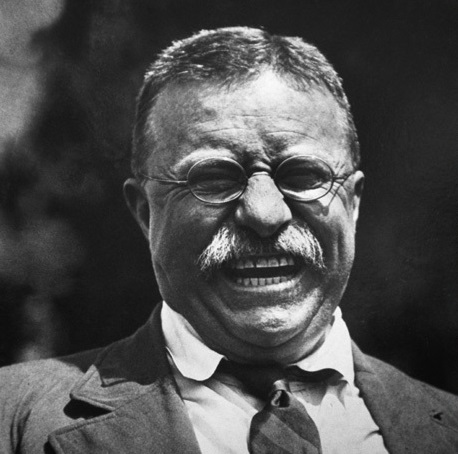
Is Teddy looking down from Rough Rider Heaven and smiling at Trump’s Big Tweet?

Of course, I knew suggesting that President Trump’s deliberate attacks on Amazon via Twitter was an impeachable offense would set heads a-blowing. The resulting debate has been fascinating, with interesting historical parallels being proposed. This comment, by Chris Marschner, is the first of two erudite and well argued rebuttals.

Not to hold you in unnecessary suspense, I am not convinced or dissuaded. I do not see Teddy Roosevelt’s  policy-oriented attacks on the era’s monopolies, correctly leading a movement to reform an area of widespread capitalist abuses that eventually were agreed to be criminal, with Trump’s tweeting crudely phrased animus to the public. Nor do I find Obama’s general criticism of big money lobbying efforts by energy interests in general and the Kochs in particular at the same level of abuse of power as Trump taking aim at the owner of the Washington Post,

I am a lifetime fan of Teddy, but he crossed many lines, and could have been legitimately impeached himself. As I have stated before in multiple posts, the power of the Presidency is too great to be abused with casual wielding against individuals and named businesses. As always, there are exceptions.  I’ll concede that taking on the robber barons and the monopolists in the early 20th Century can be fairly designated as one.  Chris seems to feel that there is a close parallel in Amazon’s growing power, but that’s not the case the President chose to make, instead focusing on a deal Amazon forged with the Postal Service, as much to keep the latter in business as to benefit Amazon.

Basic lessons in POTUS leadership: if you are going to cross lines of appropriate uses of  power, 1) You better be right and 2) Be Presidential about it.

Other examples, like Obama designating Massey Energy as responsible for the Upper Big Branch mining disaster before the investigation was complete, can not be so easily excused, but can be fairly labelled a mistake. (Obama made many, too many, such mistakes.) Trump’s attack on Amazon is neither as limited as Obama’s mistake, not as carefully considered and justifiable as Roosevelt’s trust-busting. I would like to see future Presidents restrained from abusing power in this way, even if it takes a trail before the Senate to do it. If we don’t restrain it, we will be sorry.

But the other side has some good arguments: by all means, read them.

Here is Chris Marschner’s Comment of the Day on the #2 in “Morning Ethics Warm-Up, 4/4/2018: Baseball Lies, A Presidential High Crime, And A Judge Makes A Panty Raid”:

I would like to point you to this in 2015:

https://www.usatoday.com/story/news/politics/2015/08/26/war-words-obama-v-koch-brothers/32423959/

“When you start seeing massive lobbying efforts backed by fossil fuel interests, or conservative think tanks, or the Koch brothers pushing for new laws to roll back renewable energy standards or prevent new clean energy businesses from succeeding, that’s a problem,” Obama said at the summit. “That’s not the American way.”

“Josh Earnest said the exchange illustrates the kind of president Obama set out to be.”

“This is exactly why the president ran for office, it’s why he ran for this office, is that for too long, we saw the oil and gas industry exert significant pressure on politicians in Washington, D.C.,” he said. And when Obama fights that influence, “the special interests, including the millionaires and billionaires that have benefited from that paralysis, start to squeal. And I guess in this case, at least one billionaire special interest benefactor chose to squeal to a Politico reporter.”

This type of rhetoric does not include Obama officials publicly stating (incorrectly and improperly) that one of the Koch brothers paid no income taxes. (http://freebeacon.com/politics/hazy-memories/)

Is it only an abuse of power when referencing specific individuals? Does it matter if you say the 1% don’t pay their fair share or is it an abuse of power only if you identify them by name?

I will concur with the Koch brothers that it is beneath the dignity of the president to go after a specific individual, but to suggest that it amounts to even a misdemeanor abuse of power is a stretch. If calling out a specific firm is an impeachable offense then why was there no call to impeach Obama when he routinely criticized and mocked Koch Industries, Fox News and others that did not line up with full throated support of his agenda.

But , Obama was not the first to chastise “punch down” on a business person. Who can forget the trust buster himself Teddy Roosevelt. JP Morgan was singled out for bad behavior. Continue reading →

Comment Of The Day: “No Wonder We Can’t Communicate With Each Other Or Have Coherent Debates: We’re Culturally Illiterate”

[I’m using this morning to post some important, backlogged Comments of the Day. Today’s Warm-Up will be after noon, if all does according to plan.]

Keith Walker registered a fascinating reflection on his experiences as a teacher in response to the post regarding the decline of cultural literacy. I do take umbrage at his categorization of my commentary about public school’s ongoing failure as “ranting” and his implication that I have designated teachers as “useless.” If I have criticized teachers and administrators, it has always been based on specific conduct. In Alexandria, VA., I had to pull my son out of one public school, a Catholic school and two private ones upon observing exactly the kind of incompetence, bias and abuse I have written about over the past eight years.  Indoctrination, child abuse, incompetence and sexual predation in the schools are real, and teaching is still a “profession” without codified ethics standards. Dedicated, smart, competent teachers are heroic, but their existence does not make my criticism and analysis less valid or less urgent.

Here is Keith’s Comment of the Day on the post, “No Wonder We Can’t Communicate With Each Other Or Have Coherent Debates: We’re Culturally Illiterate”

As one of those useless public school teachers so often ranted about in this space, I want to rise to the occasion here and, if not defend our profession, at least offer my take on things over my 31 years in the business.

I was a fairly new teacher when Hirsch’s book came out. I thought then that it was a silly tome, written from the perspective of a grumpy old man. I still don’t hold much respect for it, though I have become a grumpy old man myself. Who gets to decide what’s important cultural literacy? (Yes, I am about to say something like “it’s always been old white guys…”) I wonder if someone else had written that book if it would have contained different things?

But since 1988 several things have happened to make teaching these important things virtually impossible, the internet and standardized testing being two major ones. Yes, I know that standardized testing has been around for many decades; I remember taking the MEAP (Michigan’s state test) when I was a small boy in the 70s. But in the 70s test scores were not blasted across the front pages of newspapers everywhere, and politicians were not decrying our “failing public schools” and telling everyone that privatization and profits would be a much better plan for education.

The pressure on schools, teachers, and students to “succeed” on these tests is ridiculous, and it has gotten to the point that if it can’t be measured, we don’t have time to teach it. And everything is measured. As a music teacher I am happy to have a job any more; much of my curriculum isn’t “measurable” to a certain extent, and it certainly isn’t required for success in life. But I digress… Believe me, if Cromwell was going to be on the ACT, SAT, or AP History exams, you can bet he’d be talked about in schools. It’s all about competition, and everyone is fearing for jobs, funding, and students as we move to a market-based system of educating our next generations, and the members of that generation all want to get a 7.0 GPA and get into Harvard (starting as freshmen with 75 credits due to all of their AP test scores), and the way to do it is to excel on those tests. It’s fairly terrifying. Continue reading →

No Wonder We Can’t Communicate With Each Other Or Have Coherent Debates: We’re Culturally Illiterate

“Who?”

Ugh.

 I was watching the MLB channel this morning, and the hosts were discussing the Milwaukee Brewers and their general manager’s statement that the team would “keep its powder dry” until the mid-season trading deadline. All three hosts professed to have no idea whatsoever what the phrase about keeping powder dry meant. In his 1988 book “Cultural Literacy,” E.D.Hirsch, Jr., argued that children in the United States are not learning the basic knowledge that they need to function competently in society. the background information about world, Western and U.S. culture that literate writers and speakers assume their audience already has. The three MLB hosts were all schooled since 1988, and clearly, the problem has only gotten worse.

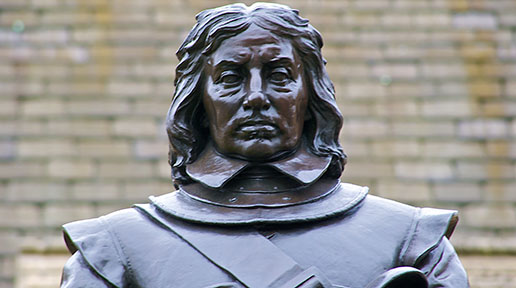
The phrase at issue is a useful and formerly famous one. It comes from a reported quote from Oliver Cromwell—Teddy Roosevelt wrote a biography of Oliver Cromwell. I bet fewer than one out of a thousand Americans could tell you who he was—during the Battle of Edgehill in 1642. Cromwell supposedly told his Roundhead troops in that opening fight of the English Civil War, ”Put your trust in God, my boys, but mind to keep your powder dry.” The last part of the quote is usually evoked to mean “keep cool,” but the entire quote is more profound. As the late language maven William Safire wrote in the New York Times, it means ”stay calm” but carries an implicit, most ominous threat: ”and be prepared to blow the enemy’s head off at the propitious moment.” Prayer is great, but the Lord helps those who help themselves. Or, as a World War II slogan had it, “Praise the Lord and pass the ammunition!” This was made into a popular wartime song by Frank Loesser, who wrote “Guys and Dolls.” I know: what’s “Guys and Dolls”? What’s “World War II?”

This morning’s depression reminded me of an essay by Patrick Deneen from 2016, titled “How a Generation Lost Its Common Culture.” He wrote in part, Continue reading →