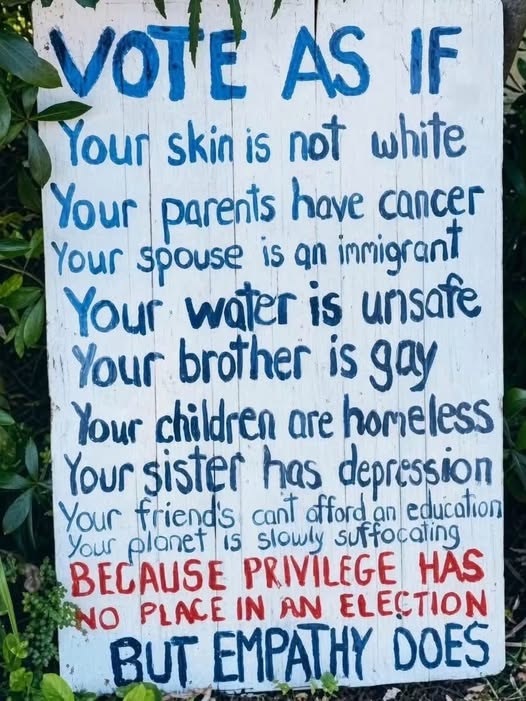
I want to apologize to Gamereg, who authored this terse and astute Comment of the Day for getting it posted so tardily. Fortunately, the foolish (but disturbingly typical) sentiments he was generous enough to thoroughly rebut remain evergreen and ever destructive even though the election has come and gone.
Before I turn it over to Gamereg, I want to express particular disgust at the first line. There is nothing racist about the Republican Party, its elected officials or Donald Trump, and yet this claim—not even claim now but official Big Lie—remains a staple of progressive, Democrat, Trump Deranged cant despite my efforts and those of many others to demonstrate beyond dispute that it is untrue. When I confront the “Trump is a racist” chanters and insist that they tell me what they think is their smoking gun, their answers range from “Oh, everybody knows he’s a racist” to “He said mean things about Barack Obama/Kamala Harris/ Colin Kaepernick/”The Squad” to “He called the white supremacy protesters in Charlottesville “very fine people “to “he called nations with ‘people of color’ ‘shit-hole countries'” to “huminiahuminahumina.” The most substantive response anyone has come up with is the October 1973 DOJ civil rights lawsuit against Trump, his father Fred Trump, and their real estate company, Trump Management Inc., alleging systemic violations of the Fair Housing Act of 1968 in New York City. The Trumps settled the lawsuit in 1975 by signing a consent decree without admitting any wrongdoing or liability. The Justice Department’s evidence was strong; undeniably, the Trumps engaged in racial discrimination. Also undeniably, the episode is fifty years old. Fifty years ago Bill Clinton, Hillary Clinton and Barack Obama opposed gay marriage. I stipulate that when a public figure’s last racially discriminatory act was a half century ago, the “racist” label cannot be sustained.
I also want to respectfully challenge Extradimensional Cephalopod, our esteemed missionary of effective and civil discourse with immovable ideologues who have adopted an unshakable belief and are inclined to disrespect anyone who attempts to dislodge it regardless of the evidence offered. I would like to read a non-fantasy formula for convincing a progressive shill that the first first line is the utter bias and counter-factual smear that it is.
He/She/It has been especially smug of late with the now familiar “Oh, you poor dim Earthlings, if only you could learn the skills I bring you, the talking past each other that has resulted in such bitterness and enmity in our political disputes would be no more!” I am reacting particularly to our recent debate on this thread, which contained a reference to my post seeking the most ethical way to treat a neighbor who tells me she cuts off anyone who doesn’t sufficiently oppose Donald Trump and support the Democratic Party.
Update: I invited her to dine out with me for Thanksgiving, since my family is dead or will be elsewhere, and she is estranged from hers. She was thrilled. We will not talk politics.
Here is Gamereg’s Comment of the Day on the post, “Scary Trump-Deranged/Wokified Facebook Friend Update”…


I’m happy to hear that you and your friend will be sharing Thanksgiving! I hope it is an enjoyable meal.
If you want someone to listen to you, you have to listen to them. They won’t listen to you if they don’t think you understand what they’ve said.
Why is that? It’s for the exact same reason you don’t want to listen to them: You know they’re wrong. It’s a waste of your time to listen to someone who is wrong. Isn’t it?
But they don’t know they’re wrong. If they did, they’d stop being wrong. They think they’re right, and they think you’re wrong. Therefore, they believe that listening to you is a waste of their time.
If you want them to consider that they might be wrong, you have to listen to them respectfully. You have to show that you understand their point of view. When they see that you still disagree, they are more likely to be willing to listen to your point of view. You’ll need to express that in a way they can understand that doesn’t attack them. Attacking them may feel like justified admonishment, but they will perceive it as a sign of weakness, the same way you would perceive an ignorant person condescending to you.
Anyone who knows anything about conflict resolution can tell you that. What I bring to the able is a way to do all that without going around in rhetorical circles for hours and maybe wanting to strangle someone by the end of it.
The framework I use strips people’s positions down to the bare essentials, and then explores possibilities for mutually agreeable solutions in the spaces that were previously covered up by people’s assumptions about what those solutions would look like.
Will it work on everyone? No, nothing works on everyone. Here are some results you can hope to achieve:
Very well. The first line does indeed imply that the Republican Party is racist (or, at a stretch, apathetically harmful to people of non-European descent). Arguing with someone about whether the Republican Party is racist is a losing game, because the issue is framed so that people talk past each other. You might as well be saying “nuh-uh!”
You seem to think that you can convince someone otherwise by parading facts in front of them, but that only works in professional contexts (and not even reliably). To argue using facts is to command them to trust the same people and sources you trust. Trust does not work that way.
I don’t know what they teach in law school, but in engineering school they teach us to understand a problem before attempting to solve it. I do this by reframing the issue in terms of outcomes. Racist is as racist does. Why does someone not trust the Republican Party to serve their group’s needs? What experiences have they had? What have they heard from people they trust? It is entirely likely that your facts cannot supersede theirs, for the same reason that dozens of safe bungee jumps do not automatically erase the shadow of a deadly accident.
You need to listen to figure out not just why they don’t trust the Republican Party not to be racist, but also how they would know if the Republican Party became worthy of their trust. (This is admittedly tricky, because most people don’t think about how they would recognize if the problem they perceive were fixed. They fixate on the objectives of electing politicians and passing laws, so they overlook other ways to accomplish their actual goals. If it’s not the solution they demand, they don’t register it as a solution. That’s another reason why humanity is still so bad at fixing problems.)
That’s why we have to get people to think about what they really want, but we can only do that if they respect us, and they’ll only respect us if we show that we’re willing to listen to them and respect their goals (not their methods) as they figure those out.
“What would indicate that the Republican Party is not racist?” Their first answer will be something unreasonable. “Bring DEI to every institution” or something. Patiently peel back their assumptions about how problems are solved, to get at the actual problems. “You want DEI because you don’t trust that people in power are responding to the needs of non-European ethnic groups. Where do you see those needs not being met? Is it possible that a person of European descent could meet those needs? I ask because I have some concerns about your proposed plan for DEI. Is it alright if I share those?”
If the person you’re talking to is actually a shill, they will try to justify their position. That’s fine. You’re not doing it for them. You’re doing it for the people watching. (Thank You For Smoking.) Or you’re doing it as practice for engaging with others later. What you’re getting better at is reframing the problem (“Republicans are racist”) to open up possibilities for solutions that don’t involve conceding to the destructive demands of the people making the accusation. For example, “You feel your group is getting insufficient help with overcoming the knock-on effects of past oppression, and you suspect that’s because people in power benefit from your desperation and see you as lesser. You feel you’re being used as a scapegoat for problems caused by rich and powerful decision-makers.” Then we can start considering things they may have overlooked, like how Republicans expect groups to become prosperous, or alternatives to the scapegoating explanation. (Are people actually being blamed at all? Or is blame being fairly allocated sometimes?)
I find that getting the reasoning process for a person’s beliefs out in the open and building up a respectable case for it is the easiest and most effective way to get them to consider alternatives to those beliefs.
That’s how a court of law works too, after all. No matter how obviously guilty a person is, they’re entitled to a fair trial with a zealous defense. If they don’t get that, we should all be up in arms. Well, if a person feels their position isn’t getting a fair hearing, they’ll lash out. So we make it clear they’re getting a fair hearing, and it has to be to their satisfaction, not just what we think ought to satisfy them. You get to decide how much time you’re willing to spend on it, but you asked me for the way to get someone to let go of a false belief, and this is how you create the conditions to make that possible.
The Values Reconciliation Workshop is still free for anyone who wants to take it. I’ve got a default scenario for the exercises, or we can examine any topic you like.
I’m happy to hear that you and your friend will be sharing Thanksgiving! I hope it is an enjoyable meal.
1. Don’t patronize me. An offensive strategy that is not conducive to conflict resolution.
2. The point is to do something for a lonely person who is good hearted and kind when I have no special commitment or exciting options myself.
Jack, that was meant as a genuine sentiment, entirely separate from the rest of my post. You mentioned that your relationship with your friend was still a positive one, and I was glad to hear it. Where I come from, when someone mentions something nice happening in their personal life, we consider it polite to offer a positive acknowledgement of it. When you said your friend was thrilled, I thought that meant you were happy that you were able to brighten her holiday and I wanted to express my own happiness that you were able to do that. I considered several ways of phrasing my reaction, but evidently I still didn’t hit the right note in a pure text medium.
For future reference, should I have said something different, or just ignored it entirely? That’s how my emails sound normally, so if my congratulations are starting to sound like my jabs, I may run into real trouble later. Is it just the context of our discussion that raises the possibility that it’s an insult?
It can be genuine and still be patronizing—genuinely patronizing. I don’t seek or require your approval, nor do you have standing to offer it, nor does your approval or disapproval convey any value to me. My point was that while confronting her with a political view that will, based on what I know about her, force her to treat me as a pariah and, as a result, be alone and miserable on the holiday, keeping that aspect of my consciousness out of the relationship will have no adverse effects and cause neither of us discomfort. It is not, as you suggested, “fear” of my opinions being rejected because I lack the skills to present them that motivates this approach, but simple kindness, prudence, consideration and utilitarianism.
Thanks for the honor! If I could edit my own response, I would’ve added “hypothetical” to the wife bit as well (since I’m both single and childless).
For what it’s worth, I agree with E. Cephalopod about 90%, but I agree with you on the part about holding back when sharing your opinion would cause you to lose more than you gain. I also try to be a little less wordy in my persuasions.
EC, I might’ve mentioned this before, but you might be interested in the Substack Slate Star Codex. It’s run by a pyschologist with a moderate political philosophy who uses his blog as an open forum for eggheads. The comment temperature is medium, but you still get passionate people from time to time. I encountered one such individual here: https://www.astralcodexten.com/p/links-for-november-2026/comment/379155989
The host had implied that people who used the term “suicidal empathy” think you’re supposed to be cruel to the outgroup and save compassion for the in-group. I took exception to this and the responses were interesting.
I could try voting as if I were not white, but I have several forms of government ID, so dems may not considered me qualified.