Idiot Ethics: A Brief Note

I used the term “idiot” three times in the recent post about Alex Jones. Periodically I get reprimands from commenters who chide Ethics Alarms for engaging in “ad hominem” attacks when it refers to a public figure as “an idiot.” IMy response is always the same: diagnosing someone as an idiot who behaves idiotically is not an “ad hominem attack.” Ad hominem means that one attacks a legitimate argument by attacking the arguer instead: “That must be wrong, because he’s an idiot!”  In the case of Jones, my point was very different: believing that John Podesta, in the middle of a Presidential campaign, would be running a sex ring out of a pizza place is per se idiotic, and it requires an idiot, like Alex Jones, to take such a story seriously. I’ll stand by that assessment.

Still you don’t read many pundits, and certainly no ethicists, who use that term, or related ones like dolt, dummy, moron and cretin. Is it unprofessional? It certainly isn’t common practice for professionals, though there are exceptions: the late Justice Scalia was not above calling out idiocy by name. I will even use the term occasionally in my ethics seminars, for example, to describe the lawyer who produced a hand grenade during his closing argument, and pulled the pin. Is this unfair? I don’t think so. Nor is it unfair to call the lawyer an idiot who recently had his pants burst into flame mid-argument to bolster his defense that his client didn’t deliberately set his car won fire, but that it spontaneously combusted.

Non-idiots don’t do things like that. If he doesn’t know he’s an idiot, someone needs to tell him.

Calling someone an idiot is an insult, obviously, and is a breach of civility. Civility, however, does not and should not interfere with the truth. Choosing to properly designate a prominent idiot as one is a public service, and to the more self-aware idiots, a kindness as well. Great damage can be prevented by making it absolutely unambiguously clear that someone is an idiot, as in “not smart, responsible, wise or educated enough to be trusted in his opinions or competence.”

Once upon a time, it was very rare for true idiots to rise to prominence and influence in the United States.  It was just too hard, and nobody was that lucky. This provided a great advantage over cultures where power and influence were conferred by birth.  Idiot kings and emperors were never in short supply. John Adams made the point that in America, the aristocracy, whose role in other nations was to stand as role models and typify the best of society, was uniquely created by ability, achievement, talent and intelligence. (John, a lawyer, naturally thought that lawyers fit the bill.) The bold concept behind American democracy was 1) that public education and civic duty would compel the citizenry to accept the responsibility of being capable of self-government, and that the “wisdom of crowds” would do the rest. Idiots literally could not rise to high office. They so obviously contrasted with the typical public servants that their careers fizzled out before the White House was within view. Stupid journalists, scholars, professionals and authors were also rare; indeed, it was once hard to find an idiot with a high school diploma, much less with an advanced degree. Continue reading →
Infowars’ Alex Jones, Purveyor Of The Most Untrustworhy Political Website North Of “The News Nerd,” Provides One Of The Most Disingenuous Apologies Imaginable

A few stipulations:

1. Anyone who for a second thought it was anything more than a bad spoof that John Podesta and Hillary Clinton were engaged in a child sex ring operating out of a D.C. pizza joint has gone waaaay beyond “Bias Makes You Stupid” to “Bias Makes People Who Are Stupid Already Too Dangerous For Human Companionship.”

2. Anyone who believes anything that appears on the conspiracy blog “Infowars” is a sitting duck for the next Ponzi scheme.

3. My theory is that Breibart pays Jones to make it look reliable and objective by comparison. And it gets its money’s worth..

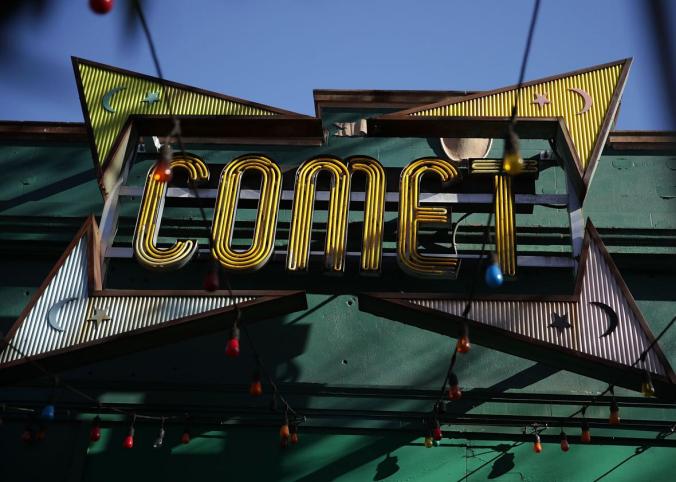
The so called Pizzagate conspiracy theory held that top Democratic officials were involved with a satanic child pornography ring centered around Comet Ping Pong, a pizza restaurant in Washington, D.C. There was never any evidence to support it, and more importantly, was ridiculous on its face. It did not originate with Alex Jones, the proprietor of far right Infowars, but since it was uncomplimentary to Democrats, Jones was supporting Donald Trump, and he has also claimed on Infowars that the 9/11 attacks were  carried out by the United States government and that the 2012 shooting at Sandy Hook Elementary School in Newtown  was a hoax concocted by anti-Second Amendment fanatics, the Pizzagate theory fit right in to the rest of the BS. Thanks in great part to Jones,  the hoax circulated on Facebook, Twitter and YouTube, flourished in online forums frequented by idiots, and produced more static interfering with a rational approach to a crucial election.

This hoax, unlike, say, the claim that the Pope had endorsed Donald Trump, had measurable consequences. The pizzeria, its owner and his employees received death threats. Their business has suffered. Nearby businesses have also been adversely affected, and the hoax even spread to several other pizzerias around the country for some reason.The restaurant was closed for two days in December after Edgar M. Welch, one of the above referenced idiots,  showed up at Comet Ping Pong to “investigate,” and fired a semiautomatic rifle  inside the pizzeria. Welch pleaded guilty on Friday to assault with a dangerous weapon and interstate transportation of a firearm. Good. One idiot down.

Now Jones has issued an apology. It was obviously crafted by lawyers: Comet Pizza had demanded one in February, and by law Jones had one month to retract his libel (arguably liable) to avoid being sued. The month would have been up this weekend. Here is that apology, with key sections bolded and numbered to make commenting here easier: Continue reading →

Nazi Memorabilia Ethics?

“ARRRGHHH!!!!”

I haven’t checked in on The Ethicist column in the New York Time Magazine in a while: the current resident, Kwame Anthony Appiah, is the real McCoy, unlike all of his predecessors, and his analysis of various queries from readers is usually valid and properly reasoned. This week’s featured issue is a strange one, however.

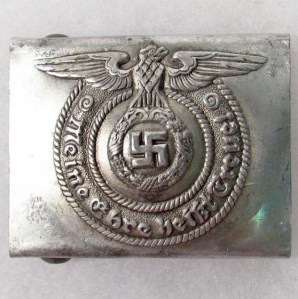
A Peter Hulit of Los Angeles wrote to ask what was the “ethical way” to deal with  a belt buckle from a Nazi uniform that was stored in his late father’s box of World War II memorabilia, collected during his service overseas. Hulit explained,

“I have kept it stashed in my desk. I’m now in my 60s and really don’t want it in my house..I have checked resale sites, and it does have some monetary value, but I do not want it to fall into hands that may use it symbolically for what my father fought against.”

I rate this question as more evidence of Nazi hysteria, one of the side-effect of the 2016 post election Ethics Train Wreck that includes the effort by the Left to slander opposition to Democrats, Clinton and Obama as nascent fascism. It is also a continuation of the historical air-brushing that Orwellian progressives seem to think will magically eliminate all evils from modern society.

World War II artifacts are history and are tools of acquiring knowledge. Knowledge is what those seeing German Nazi motivations in President Trump and his supporters sorely lack. There is no such thing as dangerous history. What is dangerous is to forget history, or to try to pretend that what happened did not.

Nor are objects cursed, or evil. People are evil, and history leaves evidence of evil deeds.  “I don’t want it in my house” smacks of superstition. It’s a belt buckle.

Hulit’s question seems to suck The Ethicist down some unethical holes that he should avoid, and usually does. For example, he writes, Continue reading →

Silence U Part 2: Indoctrination At Yale, and Beyond

A new, intensely short documentary about the cultural rot underway at Yale (but not only at Yale) is worth viewing, if you have a firm grip on your skull. Yale, is, of course, the source of many U.S. leaders and opinion-makers, including Supreme Court justices and recent Presidents. As one can see from the video, it is either indoctrinating the young minds in its charge in oppressive, anti-speech and liberty ideology, or, to give a large benefit of the doubt, failing to disabuse students of toxic and anti-democratic ideas that the educational system has also seeded.

Needless to say, but I’ll say it anyway, Yale is an elite institution, a role model for others, and supposed to represent the best of higher education. Its students will take their place among the intellectual and economic elite. Nobody who has been paying attention to the logical and legal contortions being used by the supporters of “the resistance” should be surprised that our most promising students are being trained to reason like this. The question is: does it make sense for a nation to actively support an educational system that appears to have become dedicated to undermining the basic values its founding was based upon?

The former-Provost of Stanford University, John Etchemendy, recently gave a speech he called “The Threat From Within” in which he said in part.

Over the years, I have watched a growing intolerance at universities in this country – not intolerance along racial or ethnic or gender lines – there, we have made laudable progress. Rather, a kind of intellectual intolerance, a political one-sidedness, that is the antithesis of what universities should stand for. . . . We need to encourage real diversity of thought in the professoriate, and that will be even harder to achieve. It is hard for anyone to acknowledge high-quality work when that work is at odds, perhaps opposed, to one’s own deeply held beliefs. But we all need worthy opponents to challenge us in our search for truth. It is absolutely essential to the quality of our enterprise.

The problem bites when a particular ideological sect gains power, and meticulously and systematically sets out to make diversity of thought inaccessible. Professors and scholars inhospitable to progressive cant are becoming extinct on college campuses, by design, just as they are an endangered species in newsrooms and Hollywood. Over at the increasingly had-left legal website “Above the Law”—you know, the one that kept erasing my e-mail alert requests every time Ethics Alarms criticized the site; the one that employs Ellie Mystal, a black lawyer who has advocated that black jurors refuse to convict black defendants—writer Joe Patrice  mocked the concept of advocacy for “viewpoint diversity” as argued in this letter from a group of law professors: Continue reading →

“The Good Illegal Immigrant,” Part IV—The Latest Installment In A Series Of Indeterminate Duration. Unfortunately.

Good.

[Earlier installments of “The Good Illegal Immigrant” are here, here and here.]

Not to creep into General Sheridan’s territory, but there is no such thing as a “good illegal immigrant.” The term is an oxymoron. In illegal immigrant in the United States is breaking the law every day, hour and minute he is here. Breaking the law is not good. Breaking the law every day is especially not good. Good people do not break the law every day.

Clear?

Roberto Beristain is the owner of a popular restaurant in Granger, Indiana called Eddie’s Steak Shed. He came to the United States illegally from Mexico City  in 1998. Somehow he obtained documentation to work in the country, even a Social Security card, and checked in with ICE each year. In 2000. Roberto and his wife, Helen  were visiting Niagara Falls—such an American thing for a couple to do!— and accidentally crossed into Canada. When officials realized he was in the U.S. illegally as he tried to return, Roberto was detained. Released on bail,  he was told he had to voluntarily leave the U.S. within a month. Beristain says he did not leave because Helen was pregnant.

Ah. All should be forgiven then! This is known as “making up your own exception to the law.” Also not good.

When Roberto checked in with  ICE last month, that 2000 episode finally came up. ICE took Beristain into custody because when he failed to deport himself, his voluntary order reverted to a final order of removal. Why did it take more than a decade for Immigration to notice?

Don’t get me started. Continue reading →

The False Lesson Of The GOP Failure To Replace Obamacare

“They called off the Charge of the Light Brigade, the incompetent fools!”

Ethics Alarms feels obligated to state what should be obvious, but increasingly is not, as abuse is heaped on the Republican House and President Trump for failing to be able, for now at least, to agree on a replacement/repeal/fix for the Affordable Care Act, “Obamacare” its close friends….enemies too, come to think of it.

The headlines on stories all over the web describe the lack of a GOP bill are brutal:The failure of the Republican health care bill reveals a party unready to govern (Vox)…Republicans Land a Punch on Health Care, to Their Own Face (New York Times)…Inside the GOP’s Health Care Debacle (Politico). Those are the nicest ones. The conservative media’s headlines are even more contemptuous. This only reflects how much the prevailing delusion on the Left and by extension the Left’s lapdog media and punditry, has infected political common sense, leaving a Bizarro World* sensibility about what ethical governing is about.

It may be futile to point this out from this obscure corner of the web, but hell, I’m a fan of quixotic endeavors: the House health care bill was a bad bill. Virtually everyone who examined it thought so. If the thing had somehow been passed by the Senate (it wouldn’t have been, so this meltdown just got all the abuse and gloating out of the way early) and signed by the President (who admits that he has no idea what a “good” health care system would be), it would have thrown millions of lives and the economy into chaos. It isn’t responsible governance to pass bad laws. (Why is it necessary to even say this?) It’s irresponsible. The Republicans wouldn’t show they were “ready to govern” by passing an anti-Obamacare bill that made a bad mess messier; they would have shown that they were fools, reckless and incompetent.

You know: like the Democrats when they passed the Affordable Care Act. Continue reading →

And The Obamacare Ethics Train Wreck Rolls On…

Barack Obama’s legacy is a series of ethics train wrecks of remarkable and depressing longevity. The oldest of them, the Obamacare Ethics Train Wreck. may never stop rolling, leaving destruction in its wake forever..

Observations:

1.   It is clear that the Republicans will not be able to repeal, undo, repair or reinvent Obamacare, aka The Affordable Care Act, consistently with their rhetoric and the wishes of the thoroughly messed-up law’s abundant critics. The many bills passed by the GOP-controlled House to that end during the Obama Administration were grandstanding only: they passed because there was 100% certainty they would be vetoed. Now that such bills actually risk becoming law, Republicans are, reasonably enough, not willing to take the leap into the void.

2. The President has told Congress that if they are not prepared to deal with the repeal and replacement of the ACA now, he will move on to other priorities.  This is entirely responsible, both politically and pragmatically. Passing a sweeping law in haste that will affect millions of Americans would be irresponsible.

3. This means, of course, that the President’s campaign pledge to repeal Obamacare and replace it with something “great” “on Day One” was nonsense. On one hand, it was reasonable for him, or anyone, to assume that after seven years of complaining the party’s legislators had a viable plan ready to replace the affordable Care Act. On the other, it was dishonest to make such a pledge without ascertaining with certainty that what Candidate Trump was promising was within the realm of possibility. “Day One” is obvious hyperbole, but anyone making such a statement must assume that it will  be widely interpreted as “before the next Ice Age,” and thus should not be uttered unless the pledge can be fulfilled eventually. Continue reading →

Incompetent Elected Official Of The Month: Rep. Devin Nunes (R-CA)

Usually the “Incompetent Elected Official” category comes down to some variety of a conclusion that can be summed up by the sturdy phrase, “What an idiot.”  This one is worse than that.

Representative Devin Nunes is chairman of the House committee investigating Russian interference in the Presidential election. This involves intelligence, investigations and secrets that are necessarily a matter of discretion until a final report can be released. No investigation can proceed in a trustworthy manner if every new shred of information becomes public, or worse, is revealed to parties who have a stake in the investigation. This has been understood by members of Congress since, oh, the first Congressional inquiry. The Constitution’s framers assumed that Congress would conduct investigations, just as as the British House of Commons did. James Wilson of Pennsylvania, Convention delegate, a future Supreme Court Justice and the Declaration of Independence signer that “1776” unjustly smears as a weenie , wrote in 1774 that House of Commons members were considered

“grand inquisitors of the realm. The proudest ministers of the proudest monarchs have trembled at their censures; and have appeared at the bar of the house, to give an account of their conduct, and ask pardon for their faults.”

During the First Congress in 1790, Robert Morris, who was the superintendent of finances during the Continental Congress and a financier of the American Revolution, asked Congress to investigate his handling of the country’s finances to clear his name of claimed improprieties. If Nunes doesn’t know the history of the legislative function he is involved in, he should.

Nunes had received intelligence that related to the President’s disputed claim that “he” (meaning who and what, it is unclear) had been wiretapped (meaning surveiled, presumably) by  “Obama” (meaning someone who reports to Obama, I’m guessing), and chose to bypass his committee members, Democrats, protocol and common sense by relaying it directly to the White House. The new information,  Nunes said, showed that American intelligence agencies monitoring foreign officials may have “incidentally” picked up communications from Trump transition team members, and thus the President’s much maligned accusation was kind-of, sort-of, bolstered.

Predictably, the President followed this good news with a tweet. Ugh.

Continue reading →

Top Ten Reasons Why Giving Chelsea Clinton A “Lifetime Impact Award” Is Unethical [UPDATED]

Next month, Variety magazine will host its annual “Women in Power” luncheon, and will give “Lifetime Impact  Awards” to several women in the fields of entertainment and public service.Among the honorees will be Chelsea Clinton. Here are the Top Ten Reasons the ridiculous award starts ethics alarms sounding:

1.  The award is incompetent and misleading. Chelsea has done nothing on her own to justify any award. She has been hired for a series of jobs based solely on the prominence of her famous parents, and is on the board of her family foundation, which has funded various humanitarian programs. These are passive achievements that any child of the Clintons would accumulate.

2. The award to Clinton immediately renders worthless Variety’s past and future “Lifetime Impact Awards”  to deserving and worthy recipients. It destroys any claim the award has to integrity and sincerity.

3.  The award is a lie. Chelsea Clinton is in her thirties, and hasn’t accumulated a lifetime, much less a lifetime of laudable achievements. It is grossly premature, contradicting its own title.

4. The award is cruel. It compels focus on the pathetic, privileged, exploited and exploitative existence of Chelsea Clinton thus far by proclaiming it to be something it obviously is not. Continue reading →

Ethics Hero: Notre Dame Political Science Professor Vincent Phillip Muñoz

Vincent Phillip Muñoz is the Tocqueville Associate Professor of Political Science and Concurrent Associate Professor of Law at The University of Notre Dame. Following the violent protest that prevented his announced lecture at Middlebury College earlier this month, Prof. Muñoz invited Murray to speak at the University of Notre Dame next week. This occasioned some protests and objections from students and faculty at his own college, and he responded with an essay at RealClearPolitics, writing in part…

Charles Murray is speaking at Notre Dame because I and another Political Science professor assigned his book “Coming Apart” in our classes. His visit is one of several outside lectures that are part of this semester’s Constitutional Studies offerings. My class, “Constitutional Government & Public Policy,” addresses some of the most important and divisive issues in American politics: abortion, gay marriage, religious freedom, inequality, freedom of speech, death penalty, race and the meaning of constitutional equality, immigration, euthanasia, and pornography.

 The class is designed to prompt students to think more deeply and thoughtfully about contemporary moral and political issues. I don’t assign a textbook or “neutral” readings that summarize the issues; I require students to read principled thinkers who advocate vigorously for their respective position. I want my conservative students to read smart, persuasive liberal thinkers, and I want my liberal students to read thoughtful conservatives. Educated citizens can give reasons for their beliefs and can defend intellectually the positions they hold. That requires that we understand and articulate the positions with which we disagree.

…“But Murray is controversial and will make students feel uncomfortable,” my faculty colleagues say. Don’t I know that he has been accused of being racist, anti-gay, and a white nationalist? I’m told that bringing him to campus is not fair to Notre Dame’s marginalized students.

I have no desire to inflict unwanted stress or anxiety on any member of the Notre Dame community, especially our minority students. I appreciate the concern for student well being that motivates some of the opposition to Murray’s visit. But I believe what is most harmful to students—and, to speak candidly, most patronizing—is to “protect” our students from hearing arguments and ideas they supposedly cannot handle.To study politics today requires handling controversial, difficult, and divisive topics…

The price of a real education is hearing powerful arguments that make us realize our opinions are based on untested assumptions. Only then, when we realize that we do not know as much as we think we know, can genuine learning occur.

I invited Dr. Murray to Notre Dame months ago…Given what happened at Middlebury, it would be cowardly to disinvite Murray now. Rescinding his invitation would communicate that violence works; that if you want to influence academia, sharpen your elbows, not your mind. It would tell those who engaged in violence—and those who might engage in or threaten violence—that universities will cower if you just appear intimidating. Rescinding Murray’s invitation would teach exactly the wrong lesson…

Notre Dame faculty critical of Murray have implored me to think about the larger context of what his visit means. I am. That is why I will not rescind his invitation. As a professor and program director, my job is to do what we are supposed to do at universities: pursue the truth through reasoned dialogue and discussion. Whether you find Charles Murray’s scholarship persuasive or objectionable, his visit offers an opportunity to learn. That is why I invited him to speak at Notre Dame. After Middlebury, it’s all the more important that he do so.

It is almost an insult to academia to call Prof. Muñoz ‘s statement heroic. It should be obvious. Dissenters from the position he articulates should be instantly recognizable as regrettable outliers, the opponents of academic freedom and freedom of thought, the advocates of censorship and ideological indoctrination. Yet increasingly it is this traditional view of higher education that Muñoz advocates that is under attack. Continue reading →