Playing Dangerous Cognitive Dissonance Games With U.S. The Supreme Court

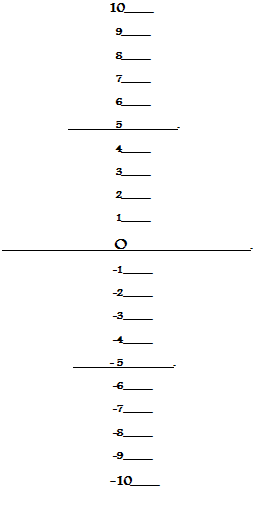
The cognitive dissonance scale, now being used to weaken a crucial U.S. institution for political gain.

The cognitive dissonance scale, now being used to weaken a crucial U.S. institution for political gain.

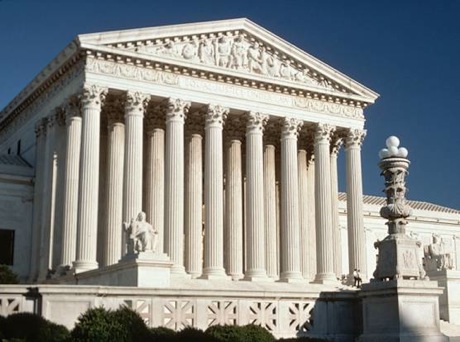
Of all government institutions, the U.S. Supreme Court has traditionally only trailed the Presidency in public trust and esteem. There are several good reasons for this. One is that being appointed for life, the Justices are presumed to be less subject to the personal and political agendas that make the positions of politicians suspect. Another is that the Court has often taken heroic stances that made the United States a better nation and more just culture. A third is that unlike elected political offices, that of a judge requires an education and technical expertise that the average citizen does not possess. The Justices are traditionally accorded the deference given to experts. Perhaps the most important reason we trust the Court is because we need to do so. It was made the third branch to protect the Constitution against violations of core rights, as well as to be an objective mediator when the other branches, or states, or courts, reach an impasse. Of the many ingenious devices the Founders put in place, the U.S. Supreme Court is one of the wisest.

That the Court is accorded inherent respect and trust is essential to the stability of our government. What the Court says, goes, and the culture and society, including the most furious dissenters in political parties and interest groups, must follow a ruling and constrain its efforts within those boundaries. There have been times when the Court recognized that its unique credibility obligated it to intercede in dangerous conflicts that might otherwise escalate to social unrest or worse. The 2000 Presidential election was a potentially dangerous situation because the result in Florida rested on a margin of error that the available technology was incapable of resolving with certainty.  Unlike the similarly dubious results in the 1960 election, the initial losing candidate and his party decided to plunge the nation into an electoral morass, in this case one complicated by politicized state courts, vague local statutes, confusing ballots, partisan media reports and varying standards of what constituted a vote, with the rotten cherry on top being a rare situation (it had happened only three times before)  in which a popular vote loser was  the apparent electoral vote winner. The Supreme Court stepped up and stopped it from spinning out of control, in essence declaring a winner. It was a courageous and responsible act, one that many (including me) predicted, and though it came at a high cost, one that exemplified why the Court’s public acceptance must be high—so it has some room to fall when it has to take a controversial stand.

This crisis was not the beginning of the effort by parties and activists to discredit the Court by impugning its motives and undermining the public’s trust, but it caused a permanent escalation. It was when the insinuation that a Justices nominated by Republican Presidents (or Democratic ones, depending on who’s leading the chorus of critics) see their job as bolstering that party’s policies and interests became routine. Continue reading →

Ethics Takeaways From Donald Trump’s Reply To Jake Tapper’s Question About “Traditional Marriage”

TrumpBoorish, arrogant blight on the American landscape that Donald Trump is, he has his uses.

Trump is that amusing if tragic anomaly, the low information Presidential candidate, kind of like Michele Bachmann. On Friday, right after the SCOTUS gay marriage decision was announced, he sent out a tweet blaming Chief Justice John Roberts for it, even though Roberts was one of the dissenters. Today, CNN’s Jake Tapper asked him to explain his stated support for “traditional marriage” by explaining Trump’s own non-traditional marital conduct in that context:

“What do you say to a lesbian who’s married or a gay man who’s married who says, ‘Donald Trump, what’s traditional about being married three times?’”

Trump’s marvelous response….

“Well, they have a very good point. But I’ve been a very hardworking person. And actually, I have a great marriage, I have a great wife now. My [first] two wives were very good..I really don’t say anything. I’m just, Jake, I’m for traditional marriage.”

….is a cornucopia of ethics-related information:

1. “Well, they have a very good point.” Translation: “I haven’t actually thought about this issue very much, I’m just asserting a position that seems to the one I think Republican voters who have thought about this as little as I have will agree with. Don’t expect me to be consistent or profound.”

Take-away: Trump has no respect for the public, his party, the office he purports top be running for, or the people who care deeply about the gay marriage issue, so he has literally devoted no time or effort to understanding the issues of the day, including this one. That attitude is, of course, an insult to all of us.

2. “But I’ve been a very hardworking person. “ The King’s Pass! Continue reading →

Ethics Observations On The King v. Burwell and Obergefell v. Hodges Decisions And Their Aftermath

supreme-court

 Obergefell v. Hodges, in which the Supreme Court considered whether states had to recognize a right to same-sex marriages, and King v. Burwell, in which the Court was called upon to clarify some incompetent drafting in the Affordable Care Act, could not be more dissimilar in terms of issues, topics, and significance. Nonetheless, because the two decisions involved hot political issues and arrived on consecutive days, and because they ended up favoring the positions that Democratic and progressive partisans support, they have been conglomerated in public discourse to fit several general themes, all, to varying degrees, misleading, simplistic, and biased. The decisions have also launched some of the most hysterical and embarrassing commentary in recent memory.

Some ethics, as opposed to legal, observations:

1. Anyone who hasn’t read the majority opinions and the dissents, who just skimmed them—believe me, if law school taught me anything, it taught me that skimming court opinions was a sure road to error and humiliation—or who read them but could not understand them, should be ignored, and perhaps gently mocked, for expressing any view at all about whether the decisions were the “right” ones. Quite simply, such people are not qualified to hold an opinion. They can have, and express, an opinion regarding whether the Court’s calls on Burwell or Obergefell are consistent with their own needs, desires, belief or political orientation, but they have no basis for asserting that either decision is wrong, or, right, on the law.

2. One can find it troubling and ominous, as I do, that the votes on the two cases were as predictable as they were. Objective legal scholars with integrity should be capable of ruling in ways that are not congruent with the personal political philosophies. A Democratic Presidential appointee who favors expansive government activity in health care control should be able to look at a statute designed to accomplish that purpose and still conclude, “Nope, the law mean what they want it to mean,” or “Sorry, the damn thing is unconstitutional.” Similarly, we should be able to trust a politically conservative justice to examine a statute that he objects to on principle and still conclude, “Yup, it passes the test.” Maybe all the Justices are capable of meeting this standard, but these two cases don’t suggest that. They suggest the opposite. Continue reading →

The Most Unethical Prosecutor Of All: Baltimore’s Marilyn Mosby

Mosby

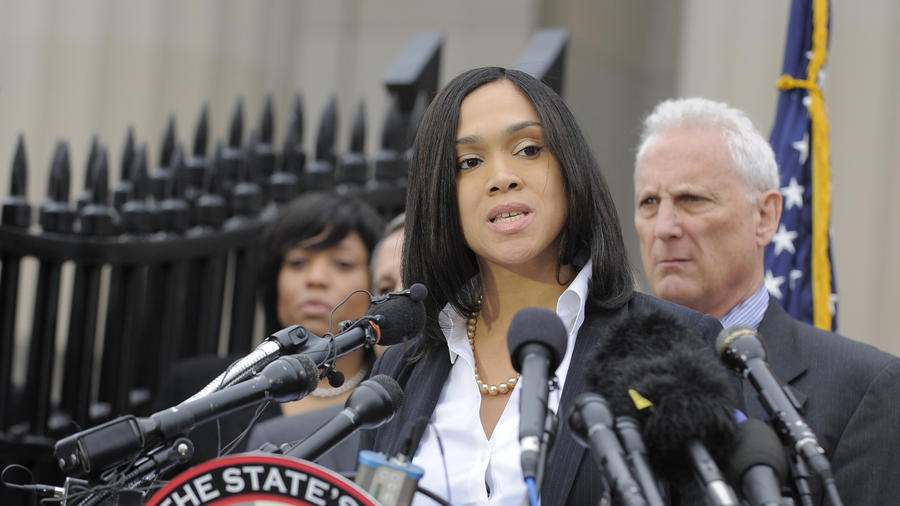
In a legal ethics seminar I taught this week for government attorneys, the vast majority of them voted that Marilyn Mosby’s vainglorious announcement of charges against six officers in the death of Freddie Gray was prosecutorial abuse, and a blatant violation of professional ethics rule 3.8, which directs that (this is the Maryland version)…

The prosecutor in a criminal case shall:

(a) refrain from prosecuting a charge that the prosecutor knows is not supported by probable cause;

…
(e) except for statements that are necessary to inform the public of the nature and extent of the prosecutor’s action and that serve a legitimate law enforcement purpose, refrain from making extrajudicial comments that have a substantial likelihood of heightening public condemnation of the accused and exercise reasonable care to prevent an employee or other person under the control of the prosecutor in a criminal case from making an extrajudicial statement that the prosecutor would be prohibited from making under Rule 3.6 or this Rule.

Of course it was a breach of ethics, and an outrageous one. Her statement, which I discussed here, not only overstated her justification for bringing the charges, which were rushed and announced before a careful investigation was completed, it also stated that the officers were guilty, and worse, that the charges were being brought because the demonstrating and rioting protesters has demanded it. Mosby’s words suggested that she stood with the mob. Continue reading →

Introducing A Third Niggardly Principle, And A Dilemma: Does It Apply To The Confederate Flag?

Scarolina flag

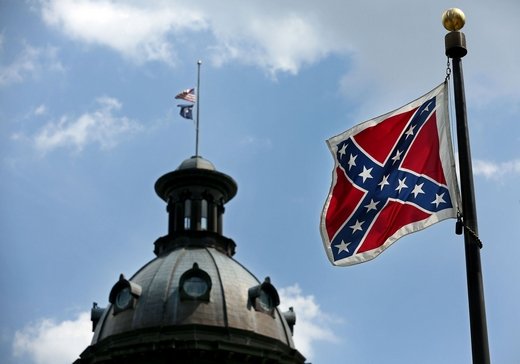
Before unveiling the new Third Niggardly Principle, indulge me some observation  on the emergence of a renewed controversy over the Confederate flag as a response to the Charleston, South Carolina shooting of nine black churchgoers last week:

1. The Confederate battle flag did not cause Dylann Roof to start shooting. If  all the Confederate flag had been retired to museums 100 years ago, it would not have turned him into a civil rights advocate.

2. The effort of anti-flag advocates, who are frequently advocates of censorship and restrictions on free speech as well, to exploit this tragedy to advance their pet grievance is transparent and obnoxious, and is even more attenuated than the furious efforts of anti-gun zealots to do the same thing.

3. The flag, like many symbols, represents different things to different people. Racial hate and bigotry is only one of them. The flag legitimately represents pride in a family legacy (“My great grandfather died bravely in Pickett’s Charge”), the historical record, opposition to federal government overreach,  aesthetic appeal, or defiance of authority generally (“I’m a rebel”). Old Glory also represents different things to different people, and we do not ban it because what it symbolizes to some people is unpleasant for them. (Yes, I know some schools have done exactly that. One hopes they are outliers)

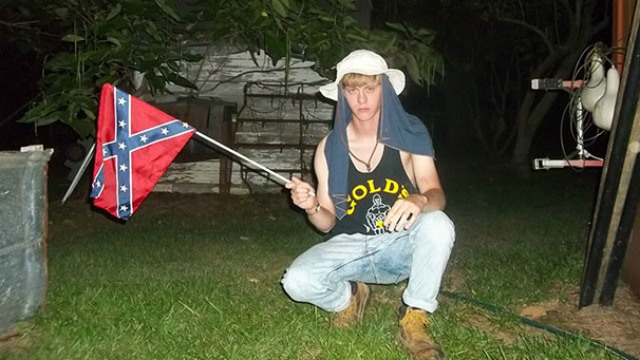
4. Mitt Romney’s much praised tweet—“Take down the #ConfederateFlag at the SC Capitol. To many, it is a symbol of racial hatred. Remove it now to honor #Charleston victims.” —is simple-minded and irresponsible. (See the previous post.) Is Mitt arguing that any speech, symbol or expression that “many” find offensive should be suppressed? It sounds like it to me. Since Roof’s act had nothing to do with the flag, nor was it related to slavery or the Confederacy, how does taking the flag down “honor” his victims? Sure: Roof liked the flag, because of what it symbolized to him. He also liked Gold’s Gym:

dylann-roof1

Would closing down all the Gold Gyms in South Carolina honor his victims? The fact that the attack was racially motivated and that racists often display Confederate flags does not make a state flying the flag complicit in the shootings. Stop using Twitter to discuss complex issues, Mitt! Continue reading →

Unethical Quote Of The Day: Hillary Clinton

“We have to have a candid national conversation about race and about discrimination, prejudice, hatred. But unfortunately the public discourse is sometimes hotter and more negative than it should be, which can, in my opinion, trigger people who are less than stable. For example, a recent entry into the Republican presidential campaign said some very inflammatory things about Mexicans. Everybody should stand up and say that’s not acceptable. You don’t talk like that on talk radio. You don’t talk like that on the kind of political campaigns. I think he is emblematic. I want people to understand it’s not about him, it’s about everybody.”

—Democratic Presidential Anointee Hillary Clinton, in an interview with KNPB’s Jon Ralston, discussing the Charleston church shooting of nine African-American worshipers

Note that this is just the unethical quote of the day, rather than week or month, and to be fair, it probably wasn’t even the most unethical quote of the day on this particular topic. Later today I hope to announce the top ten most unethical public statements on the Charleston tragedy (so far), and it is not certain that Hillary’s comment will even make the list.

It’s that bad out there.

I wonder if anyone in the Democratic Party is at all concerned that Clinton is apparently incapable of speaking without a script and avoiding saying absurd and outrageous things? Or do Democrats not recognize that they are outrageous? Which is more disturbing, that they seem ready to hand the most powerful job on earth to this awful, addled, corrupt woman knowing how terrible her judgment and political skills are, or that they can’t tell how terrible they are?

Or that there isn’t a single qualified individual in the entire party that they think is far superior? Or two? Or a hundred?

Well, like wading through day old garbage, let’s analyze this mess. Yuck:

1. To suggest that Donald Trump’s crude statements about illegal immigrants (which was, you know, literally accurate, just needlessly offensive) did have, could have had or is “emblematic” of rhetoric that might have “triggered” Dylann Roof’s act is slimy, gutter level politics at its worst. Clinton implicates Republicans in a murder by linking the party to a self-promoting fraud who is not a serious candidate. Nice.

2. She doesn’t have the guts or fairness to name the man she is sliming (the host asked her to). Who campaigns like that? “I’m not going to name names, but a certain Republican who just entered the race and said this...”  Feminists should throw up: this is girly campaigning…for 7th grade class president.

3. Does Hillary not recall that the Democrats and various pundits thoroughly disgraced themselves by accusing Rush Limbaugh and Sarah Palin of “triggering” the Tuscon shooting that wounded Rep. Giffords, in a flagrant effort to shut down the speech of political opponents and tie them to the act of a madman? Or did she approve of that miserable, censorious tactic? Presumably it is the latter, because this statement exemplifies the same foolish, dishonest lack of ethics.

4. Hillary begins by saying that we need to have a candid conversation, and then goes on to condemn Trump for being candid. Trump has nothing to recommend in his character or leadership ability whatsoever, but candor is not a quality he lacks. Clinton can’t  maintain honesty and integrity in the span of one short statement in an interview! How can there be candor on race, if  everyone should stand up and say that candor is not acceptable? Hillary’s version of candor is “candor that doesn’t disagree with what my party has declared as acceptable speech and belief.”

Perhaps worst of all, Clinton made a victim out of Donald Trump, and allowed him to say in response, “politicians are just no good.” This is as close to correct as Trump will be in his entire life, except that Hillary Clinton makes other politicians look good by comparison.


Dear Republican Presidential Candidates Trying To Cast The Charleston Shooting As An Attack On Religious Freedom: Shut Up, Please. You’re Embarrassing Yourselves.

PLEASE-SHUT-UP!

PLEASE-SHUT-UP!

I really thought that nothing could be as cynical and divisive as the President’s attempt to exploit the Charleston massacre for political objectives.

Why do I always underestimate the crass stupidity of Republicans?

“You just can’t think that things like this can happen in America. It’s obviously a crime of hate,” GOP Presidential candidate Rick Santorum told radio host Joe Piscopo yesterday—yes, that’s what Joe is doing now. Rick waxed on…

“Again, we don’t know the rationale, but what other rationale could there be? You’re sort of lost that somebody could walk into a Bible study in a church and indiscriminately kill people. It’s something that, again, you think we’re beyond that in America and it’s sad to see. All you can do is pray for those and pray for our country This is one of those situations where you just have to take a step back and say we — you know, you talk about the importance of prayer in this time and we’re now seeing assaults on our religious liberty we’ve never seen before. It’s a time for deeper reflection beyond this horrible situation.”

Now here is Lindsey Graham, also running for President: “It’s 2015. There are people out there looking for Christians to kill them.” Sen. Rand Paul, a reliable dolt, also weighed in with the same theme:

“What kind of person goes into church and shoots nine people? There’s a sickness in our country, there’s something terribly wrong, but it isn’t going to be fixed by your government. It’s people straying away, it’s people not understanding where salvation comes from.”

This is shameless, shameful, and stupid beyond all understanding. Gee, guys, did you notice any other common characteristics of the people attacked? Does that seem like just a coincidence to you? Did you detect any special feature about the killer that might suggest another motivation other than infringing on freedom of worship? Continue reading →

Ethics Dunces: The 21 Republicans Who Voted Against The Torture Ban

torture

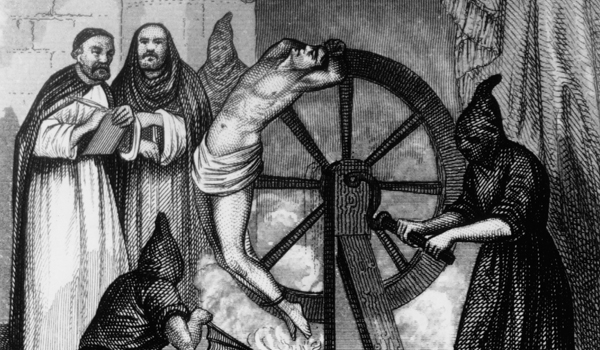
As I explained long ago, torture is already a human rights abomination forbidden by U.S. principles, values, tradition and culture. That does not mean, and has never meant, that the nation’s official and sincere opposition to torture as an ethical absolute must not be subject to a genuine existential exception.  It does mean that an official policy that allows torture degrades the very reason for the nation’s existence.

This vital reason doesn’t even reach the fact that the United States has signed international treaties that state, unequivocally, that it deplores and rejects torture. That one is less complex; as I wrote about the Bush Administration’s doubletalk at the time…

Typically, the Administration is trying to finesse this uncomfortable fact by playing legalistic word games, requesting a “clarification” of what constitutes torture. This is intellectually dishonest, and blatantly so. The methods it wants to define as “something other than torture”…threatened drowning, cold room interrogations with subjects doused with water, beatings and other forms of assault and battery, obviously violate provisions of the Geneva Convention such as those requiring prisoners of war to be treated with “personal dignity” and “humanely,” and that they should not be subjected to “hardships and sufferings.” Meanwhile, torture is defined in Article 1 of the 1984 Convention as “any act by which severe pain or suffering, whether physical or mental, is intentionally inflicted on a person for such purposes as obtaining from him or a third person information or a confession.” Simulated drowning, by this definition, is torture, and passing some official “clarification” that declares otherwise won’t change that. Depriving prisoners of sleep and making them stand wet in 50 degree temperatures aren’t going to suddenly become “humane” either, nor will such treatment suddenly cease to cause “hardship” and “suffering.”

The United States exists on the ideal that it, unique among nations past and present, asserts and acts upon its original dedication to the values of human life, liberty and pursuit of happiness above all else. The United States’ identity is that of the Good Citizen, the hero, the trustworthy one. Of course that’s a high aspiration; of course we will fall short of it sometimes, of course such an aspiration appears arrogant and superior to others, and so what? Continue reading →

Obama’s Remarks On The Charleston Shooting Were Unethical, And Here’s Why:

Because every tragedy is a chance to sell policies on emotion alone...

Because every tragedy is a chance to sell policies on emotion alone…

President Obama’s comments this morning again emphasized his tendency to stoop to reckless, careless and divisive rhetoric when far better is called for.

He said in part:

We don’t have all the facts, but we do know that once again, innocent people were killed in part because someone who wanted to inflict harm had no trouble getting their hands on a gun.

Now is the time for mourning and for healing. But let’s be clear. At some point, we as a country will have to reckon with the fact that this type of mass violence does not happen in other advanced countries. It doesn’t happen in other places with this kind of frequency.

And it is in our power to do something about it. I say that recognizing the politics in this town foreclose a lot of those avenues right now. But it’d be wrong for us not to acknowledge it, and at some point, it’s going to important for the American to come to grips with it and for us to be able to shift how we think about the issue of gun violence collectively.

The fact that this took place in a black church obviously also raises questions about a dark part of our history. This is not the first time that black churches have been attacked, and we know the hatred across races and faiths pose a particular threat to our democracy and our ideals….

Observations:

1.  How does Obama know that the shooter had “no trouble getting their hand on a gun”? He doesn’t know that, and it is a misstatement  to say that this assumption of his is a fact. We know that the shooter had a gun when he used it, and that’s all. For all Obama knows, he had a very difficult time getting his hands on a gun. For all Obama knows, it took the killer months, accomplices, money, elaborate maneuvers. Or is he saying that having a gun at all is proof that it was too easy to get one? What does that suggest?

2. Obama waited barely a few hours before politicizing a tragedy, and using it to stump for his gun policies. This was inappropriate, disrespectful, crass and cynical.

3. Reasonable and enforced gun regulations are necessary and rational, but it is intellectually dishonest —and politically inept—to use this kind of an incident (or Newtown) to promote them. Nothing short of outright gun banning will stop people like the Charleston shooter from acquiring guns, and gun banning is not going to happen, ever, nor should it. The anti-gun zealots who would love to see guns banned just respond to the Pavlovian stimulus of this kind of rhetoric, and the pro-gun nuts will see this as an outright effort to repeal the Second Amendment. This kind of statement accomplishes nothing but to gin up “the base,” and, frankly, I think that’s all it’s intended to do. Continue reading →

CNN Brings Us The Anti-American Cheap Shot Of The Year In Response to The South Carolina Massacre

Roof

Seconds ago, I just heard a guest on CNN—I didn’t notice his name, and I don’t want to know his name—tell Carol Costello that not only was church shooter Dylann Roof (above, and now in custody) sick, but that there was a great “sickness in a country that could produce a Dylann Roof,” who could pray with a congregation and then slaughter the people he just prayed with.

Carol Costello, true to her shameless, unthinking, knee-jerk jerkish soul, just nodded in agreement. Heaven forbid that she might contradict a solemn African-American race-baiting hack who had just impugned an entire nation based on the conduct of a single deranged man among 319 million.

Why stop with judging the nation by this act? Surely it proves the vile attitudes of the white race, the toxic values of males, and the inherent evil of gun owners. It proves that churchgoers are hypocrites, and that 21 year-old males are the violent, potential rapists that college campuses are now being urged to so treat them.

This CNN guest was succeeded by Costello favorite Michaela Angela Davis, daughter of the infamous Berkeley Sixties radical (and criminal) Angela Davis, who proclaimed that Roof was typical, that before this administration such crimes went unnoticed—gee, I wonder how many church massacres were covered up by those racists in the Bush Administration?— and that the attack was definitely racist terrorism, particularly because this Charleston church was important in civil rights history, and the oldest African American church still standing in the South.

Again, Costello uncritically went along with these ideological leaps.

How did Davis know that Roof chose that church for its historical significance, or was even aware of its significance? She didn’t; nobody did. Do we know that he was only interested in shooting blacks, or that when he reportedly stated that he wanted to kill blacks, he wasn’t planning on visiting other churches to announce, “I want to kill Hispanics/Asians/Catholics/Jews/ Whites”? No, we don’t.

Airing such inflammatory, premature, evidence-free assumptions is incompetent and irresponsible journalism. Endorsing an unconscionable anti-U.S. culture, history and values cheap shot like that of Costello’s previous guest is a breach of citizenship as well.

To be fair, though, CNN is getting faster at inflaming public opinion following race-related tragedies.

Practice makes perfect.

 UPDATE: CNN’s John Berman just interviewed an African-American pastor in Charleston who said, “If you can’t be safe being black in a church, where can anyone be black in the country?”

What the hell does that mean? Berman’s awkward response:

“Good point.”

No, John, it is an emotional, incoherent, inflammatory, fear-mongering point.