The Washington Post Tries To Hide A Muslim Attack From Its Readers: What’s Going On Here? Or Rather, What The HELL Is Going On Here?

Now, see, THIS Post has informative headlines...

Now, see, THIS Post has informative headlines…

I have no hidden agenda; I really would like to know.

Sharp-eyed media critic Ian Tuttle noticed how the Washington Post headlined a news story from Detroit in which a Muslim man, Terrence Lavaron Thomas, asked two strangers at a Southfield, Mich., bus stop whether or not they were Muslim and when they answered in the negative, stabbed them with a  knife. This was the headline:

wapo-headline1

What? That suggests the opposite of what happened!  We are told “conservatives” on social media objected. Really? Only conservatives are bothered by incompetent, misleading or intentionally false news reports? Anyway, the Post’s editors said, apparently, “Oh, all right, if you’re going to be all picky about it,” and changed the headline to this…

WaPo Muslim headline 2 - revised

Except that “Are you Muslim? No? THEN DIE, INFIDEL!!!” is not what I or any fair and rational person would call a “discussion.”  Once again those pesky “conservatives”—you know, the ones who don’t appreciate the press lying to them–complained, so again the Post changed the headline:

WaPo Muslim headline3

So now that irrelevant Muslim angle is missing entirely, because this has no possible relationship to  Muslim extremists around the world burning people alive, cutting off the heads of Christians, kidnapping and killing children or any of that nasty stuff. Continue reading →

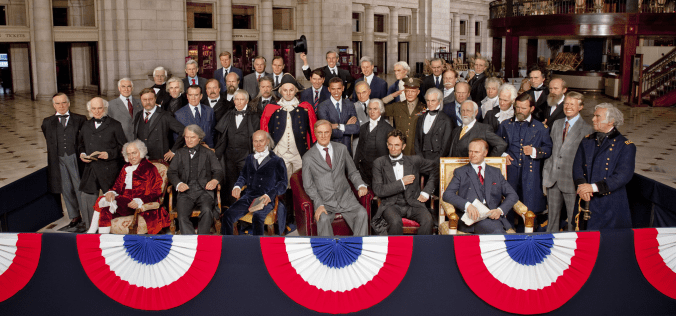
A Presidents Day Celebration (PART 4 and Final): The Wild, Wild Ride From FDR to W.

smiling-presidents

All of the Presidents (except FDR) in this last section were alive and kicking while I was, and so to me they are both more real and less fascinating to some extent. Familiarity breeds, if not contempt, a tendency not to idealize. These leaders are no more flawed than their predecessors, they just seem that way thanks to mass media.

Franklin D. Roosevelt

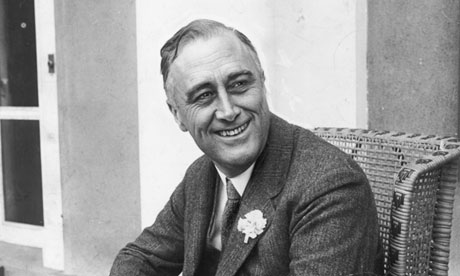
Franklin Roosevelt

Three terms plus, a World War, a Depression, a transformative Presidency and an epic life spent in public service: FDR is another President who can’t be summed up in an anecdote, one book, or a hundred. He accomplished enough great things to be a deserving icon; he committed enough wrongs to be judged a villain. (He was pretty clearly a sociopath, but a lot of great leaders are, including a fair proportion of ours, including some of the best.) The only completely unfair verdict on this Roosevelt is not to acknowledge the importance and complexity of his life. Here are some of my favorite items about him:

  • FDR wrote down a plan when he was still in school outlining the best way for him to become President. The plan was essentially to follow his distant cousin Theodore’s career steps: Harvard, Assistant Secretary of the Navy, Governor of New York, Vice-Presidential candidate, and President. (He skipped “Rough Rider.”) Amazingly, he followed it, and it worked.
  • Conventional wisdom holds that FDR’s polio transformed his character, and that without that crisis and challenge he would have been content to be a rich dilettante. I doubt it, but there is no question that he fits the Presidential survivor template, and that his ordeal made him stronger, more formidable and more determined.
  • Many Presidents had strong mothers, especially, for some reason, many of our Chief Executives from Roosevelt to Obama. Franklin’s mom, however, wins the prize. It’s amazing Eleanor didn’t murder her. But Mrs. Roosevelt is why Eleanor was there in the first place: all of our Presidents raised by strong mothers married very strong wives.
  • If a computer program were designed to create the perfect American leader, it would give us FDR. He was the complete package; his charisma, charm and power radiate from recordings and films that are 90 years old. That smile! That chin! That head! That voice! He is one of the very few Presidents who would be just as  popular and effective today as the era in which he lived.
  • And just as dangerous. FDR is also a template for an American dictator, which, I believe, he would have been perfectly willing to be. It’s no coincidence that Franklin was the only President to break Washington’s wise tradition of leaving office after two terms.
  • Political and philosophical arguments aside, at least four of Roosevelt actions as President were horrific, and would sink the reputation of most leaders: 1) Imprisoning Japanese-Americans (and German-Americans, too); 2) Ignoring the plight of European Jews as long as he did, when it should have been clear what was going on; 3) Handing over Eastern Europe to Stalin, and 4) Knowing how sick he was, giving little thought or care to who his running mate was in 1944.
  • Balancing all that, indeed outweighing it, is the fact that the United States of America and quite possibly the free world might not exist today if this unique and gifted leader were not on the scene. Three times in our history, the nation’s existence depended on not just good leadership, but extraordinary leadership, and all three times, the leader we needed emerged: Washington, Lincoln, and Franklin. I wouldn’t count on us being that lucky again.

I left the bulk of reflection about the character and leadership style of Theodore Roosevelt to one of Teddy’s own speeches to embody, and I’ll do the same for his protege.

On September 23, 1932, New York Governor Franklin D. Roosevelt gave a speech at Manhattan’s Commonwealth Club. (Everyone, conservative, liberal or moderate, should read it….here.) It was a defining statement of progressive principles and modern liberalism, redefining core American values according to the perceived needs of a changing nation and culture.  It is a radical speech, and would be regarded as radical by many today, even after much of what Roosevelt argued was reflected in the policies of the New Deal.

After sketching the origins and progress of the nation to the present, he flatly stated that the Founders’ assumptions no longer applied:

A glance at the situation today only too clearly indicates that equality of opportunity as we have know it no longer exists. Our industrial plant is built; the problem just now is whether under existing conditions it is not overbuilt. Our last frontier has long since been reached, and there is practically no more free land. More than half of our people do not live on the farms or on lands and cannot derive a living by cultivating their own property. There is no safety valve in the form of a Western prairie to which those thrown out of work by the Eastern economic machines can go for a new start. We are not able to invite the immigration from Europe to share our endless plenty. We are now providing a drab living for our own people….

Just as freedom to farm has ceased, so also the opportunity in business has narrowed. It still is true that men can start small enterprises, trusting to native shrewdness and ability to keep abreast of competitors; but area after area has been preempted altogether by the great corporations, and even in the fields which still have no great concerns, the small man starts with a handicap. The unfeeling statistics of the past three decades show that the independent business man is running a losing race. Perhaps he is forced to the wall; perhaps he cannot command credit; perhaps he is “squeezed out,” in Mr. Wilson’s words, by highly organized corporate competitors, as your corner grocery man can tell you.

Recently a careful study was made of the concentration of business in the United States. It showed that our economic life was dominated by some six hundred odd corporations who controlled two-thirds of American industry. Ten million small business men divided the other third. More striking still, it appeared that if the process of concentration goes on at the same rate, at the end of another century we shall have all American industry controlled by a dozen corporations, and run by perhaps a hundred men. Put plainly, we are steering a steady course toward economic oligarchy, if we are not there already.

Clearly, all this calls for a re-appraisal of values.

So Franklin Roosevelt re-appraised them: Continue reading →

A Presidents Day Celebration (PART 3): When The Going Got Tough

 presidents.

The Presidents really get interesting now, as a political leadership culture in the U.S. matures, the stakes of failure become greater, and technology, labor upheaval, expanding big business and greater influence on world affairs transforms the Presidency into truly the toughest job on earth.

Grover Cleveland

grover

Another one of my favorites, Cleveland was known for telling the truth ( he as called “Grover the Good”), but he participated in one of the most elaborate deceptions in Presidential history.

As explained in historian Matthew Algeo’s 2011 book, “The President Is a Sick Man,”  President Cleveland noticed an odd bump on the roof of his mouth in the summer of 1893, shortly after he took office for the second time. (Cleveland is the only President with split terms, the hapless Republican Benjamin Harrison winning an electoral college victory that gave him four years as the bland filling in a Cleveland sandwich.) The bump was diagnosed as a life-threatening malignant tumor, and the remedy was removal. Cleveland believed that news of his diagnosis would send Wall Street and the country  into a panic at a time when the economy was sliding into a depression anyway, and agreed to an ambitious and dangerous plan to have the surgery done in secret. The plan was for the President to announce he was taking a friend’s yacht on a four-day fishing trip from New York to his summer home in Cape Cod. Unknown to the press and the public was that the yacht had been transformed into a floating operating room, and a team of six surgeons were assembled and waiting.

The 90 minute procedure employed ether as the anesthesia, and the doctors removed the tumor, five teeth and a large part of the President’s upper left jawbone, all at sea. They also managed to extract the tumor through the President’s mouth while leaving no visible scar and without altering Cleveland’s walrus mustache. Talking on NPR in 2011, historian said,

“I talked to a couple of oral surgeons researching the book, and they still marvel at this operation: that they were able to do this on a moving boat; that they did it very quickly. A similar operation today would take several hours; they did it in 90 minutes.”

But the operation was a success. An artificial partial upper jaw made of rubber was installed to replace the missing bone, and Cleveland, who had the constitution of a moose, reappeared after four days looking hardy and most incredible of all, able to speak as clearly as ever. How did he heal so fast? Why wasn’t his speech effected? He endures doctors cutting out a large chuck of his mouth using 19th century surgical techniques and is back on the job in less than a week? No wonder nobody suspected the truth.

Then, two months later, Philadelphia Press reporter E.J. Edwards published a story about the surgery, thanks to one of the doctors anonymously breaching doctor-patient confidentiality. Cleveland, who in his first campaign for the White House had dealt with Republican accusations that he had fathered an illegitimate child by publicly admitting it, flatly denied Edwards’ story, and his aides  launched a campaign to discredit the reporter. Grover the Good never lies, thought the public, so Edwards ended up where Brian Williams is now. His career and credibility were ruined.

Nobody outside of the participants knew about the operation and the President’s fake jaw until twenty-four years later, after all the other principals were dead except three witnesses.  One of the surgeons decided to  publish an article to prove that E.J. Edwards had been telling the truth after all.

This is a great ethics problem. Was it ethical for Cleveland to keep his health issues from the public? In this case, yes, I’d say so. Was it unethical for the doctor to break his ethical duty? Of course. Was Edwards ethical to report the story? Sure.

The tough question is: Was Cleveland ethical to deny the story and undermine the reporter’s credibility? I think it was a valid utilitarian move, and barely ethical: it was better for the nation to distrust one reporter than the President, especially when his secret was one he responsibly withheld, and his doctor unethically revealed. Continue reading →

Unethical Quote of the Month: Talking Points Memo Blogger Alana Levinson

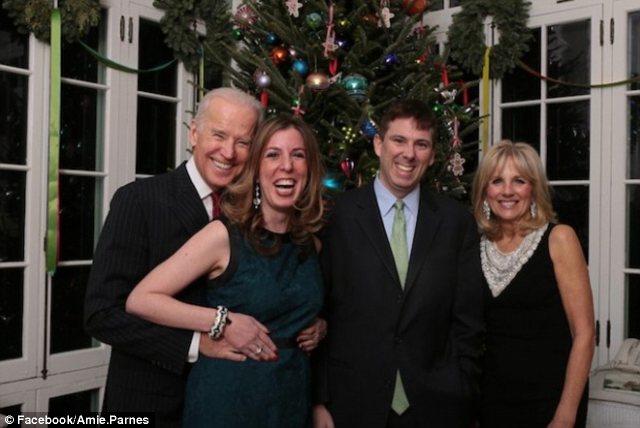
Biden Harassment

Now I’m wondering whether I’m a “bad liberal” to call him out. That means aligning myself with conservatives who love crying “double standard” on issues like this, not because they actually care about feminism, but to push their liberal media bias agenda.

—–Alana Levinson writing at Talking Points Memo about Joe Biden’s blatant “creepy uncle” sexual harassment at public events, and the news media’s failure to condemn it.

Wait, what?

Is this some kind of weird mutation of logic that only liberals and journalists understand, like the unique language identical twins make up for themselves?

Alana makes a strong case–it’s not hard to make, however—that Vice-President Biden routinely, publicly and shamelessly engages in the exact same conduct that gets employees and executives warned, sued and fired all over America as feminists cheer (as well as non-feminists with a brain, because the employees and executives should be warned, sued and fired).  It’s called “abusing power and position to cop a feel.” Then she writes the quote above, which I don’t understand at all:

Sexual harassment is unethical, disrespectful of women, and illegal.

Liberals have been at the forefront, to their credit, of making this recognition a cultural sea change.

The Vice President of the United States regularly undermines this signature liberal and feminist achievement by flaunting his cluelessness and archaic sexism at public events, either because he’s not paying attention to his own party’s rhetoric (scary) or because he knows he can get away with it (disgusting).

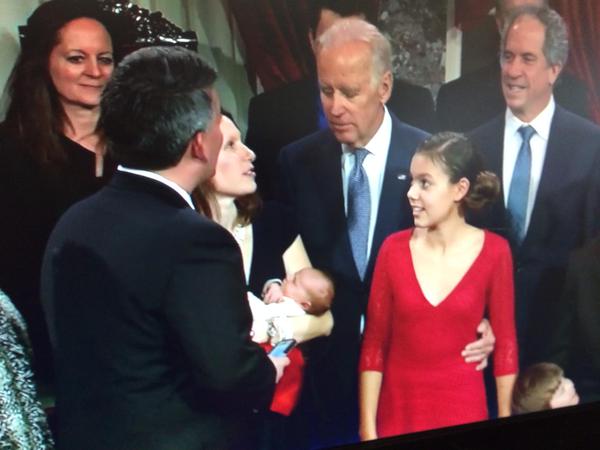
So she’s being a bad liberal if she points out that this is wrong and needs to stop forthwith, and a good liberal to allow it continue, allow the Vice President to act as if women (and, ick, little girls)…

Biden grope2

…are his personal fondle-toys while they silently endure public humiliation and silent discomfort? Continue reading →

The Little Blue Jon Stewart Caboose On The Brian Williams Ethics Train Wreck

Blue Caboose

I’ve stopped updating the passenger list on the rapidly slowing Brian Williams Ethics Train Wreck. Essentially it’s all biased and unethical journalists outing themselves and not being honest or sufficiently self-aware to realize it.

Bulletin: Brian Williams being exposed as an untrustworthy journalist isn’t a “tragedy” for anyone but Brian Williams and NBC’s bottom line, and he was no more a “giant” of broadcast journalism than Joe McCarthy was a “giant” of the U.S. Senate. He was a fraud, and his exposure and fall was a good thing, as exposures of frauds always are. His demise (he isn’t coming back, and NBC should stop the speculation and just say so) does serve as a useful trap for similarly unethical and biased journalists, like TIME’s Joe Klein, who made no sense at all while bemoaning the treatment of Williams in an interview on Fox News, first using a straw man argument:

“I think that we’re living in an era where the ferocity of the prosecution is much greater than the severity of most of these crimes.”

No one’s alleging any “crimes,” Joe. Journalists who are paid huge contracts to deliver the news in a professional and trustworthy fashion can’t be allowed to stay on the air. Absent the “ferocity,” Williams would still have his job today, because news organizations value their profit over integrity and ethics. Plenty of people don’t care if journalists are ethical or not, and can’t tell the difference. If critics don’t make their legitimate complaints strongly enough, the majority’s apathy prevails.

Then Joe went for the rationalizations, this time, #19 and #20:

“And all of us make mistakes. All of us do make mistakes.”

Someone explain “signature significance” to Joe Klein, because Williams’ helicopter fable was a perfect example of it, as I surmised from the first report of the episode. Yes, good journalists make mistakes, but ethical and trustworthy journalists don’t make mistakes like that, even once—telling a false story about being in one helicopter under fire when the reporter was really in another. Sure enough, we have since learned that Williams made up lots of stories that upon examination could not have been true (Joe apparently wants to ignore all that), like seeing bodies floating in the French Quarter after Katrina, like claiming that he was imbedded with elite SEAL team that took down bn Laden. They weren’t doubted at the time because we didn’t know Brian Williams was a serial liar then. “Mistakes” are not the issue. Moreover, Williams’ “false memory” defense, complete with “experts” sent out to the media to explain this phenomenon, was also a lie, and a carefully devised one. His other false reports, slowly becoming known like the endless trail of Bill Cosby victims, prove it.

Next for Joe: euphemisms. Continue reading →

A Presidents Day Celebration (PART 2): The Good, The Over-matched, And Then There’s Abe

presseal

The Presidents between #7, Jackson, and #16, Lincoln, are almost entirely unknown to most of the public: not one in a hundred can name them all, and of those almost none can name them in order. Eight one-term Presidents, all trying to stave off the civil war in various ways, and all failing that mission.

I will never understand why learning the Presidents in order isn’t a standard requirement in the public schools. It’s not hard; it is a useful tool in placing events in American history, and it prevents embarrassments like the Cornell law grad I once worked with who couldn’t place the Civil War in the right century. Besides, we’re Americans, damn it. The least we owe the 43 patriots who have tried to do this job, some at the cost of their lives, many their health, and many more their popularity, is their place in our history and their names.

On with hailing the Chiefs with some of my favorite facts about them:

James K. Polk

“Hail to the Chief,” which had been sporadically in use since Madison’s day, became the official anthem of the office during the Polk Administration. Polk was a small, unimpressive man, and it was said that he needed the musical announcement when he entered a room or no one would notice him. Looks can be deceiving. James K. Polk was as wily, tough and as ruthless as they come. One reason may be that he was another Presidential survivor of an ordeal that would kill most people: as a teenager, he underwent a bloody frontier operation for gallstones with no anesthesia, tied to a table, biting on a rag.

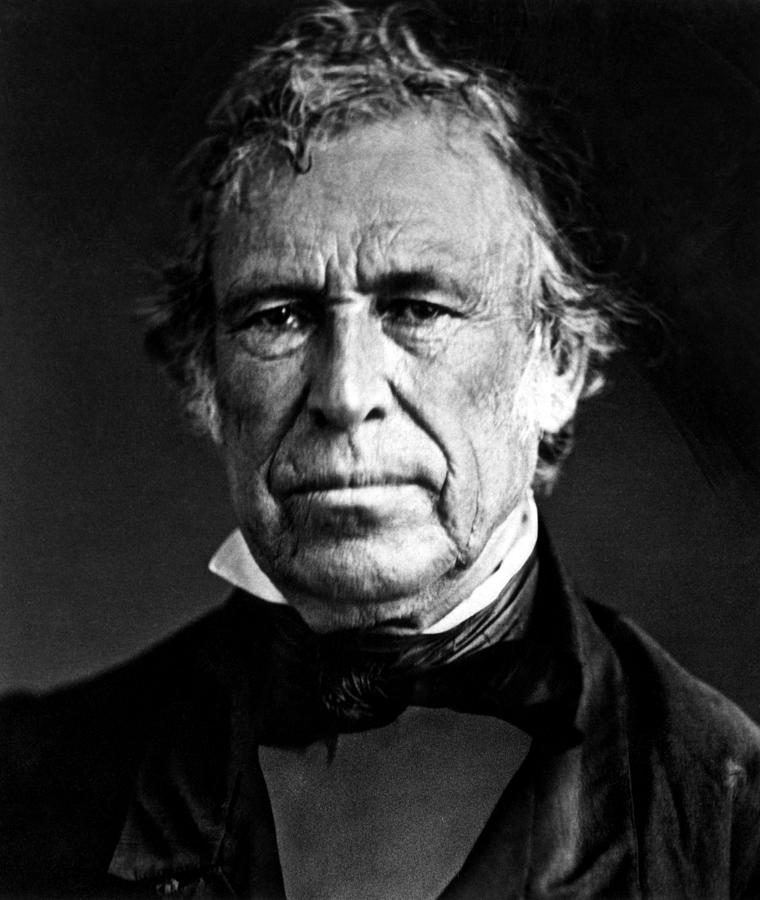
Zachary Taylor

zachary-taylor

General Taylor, who was pursued by both the Whigs and the Democrats who both wanted to nominate him for President, was a great experiment  He was not a member of any political party, had never held public office prior  to becoming President, and had never even voted before becoming Chief Executive. He was also nearly illiterate. We often long for an apolitical President, a true, rather than a pretend, “outsider.” Taylor would have been an interesting test case, though the pre-Civil War political and social chaos was hardly the most promising period to try out the theory. Unfortunately he died of cholera less than half-way into his administration.

And he wasn’t even elected in a year ending in a zero! Continue reading →

A Presidents Day Celebration (PART 1): I Love These Guys, I Really Do. Yes, Every One Of Them.

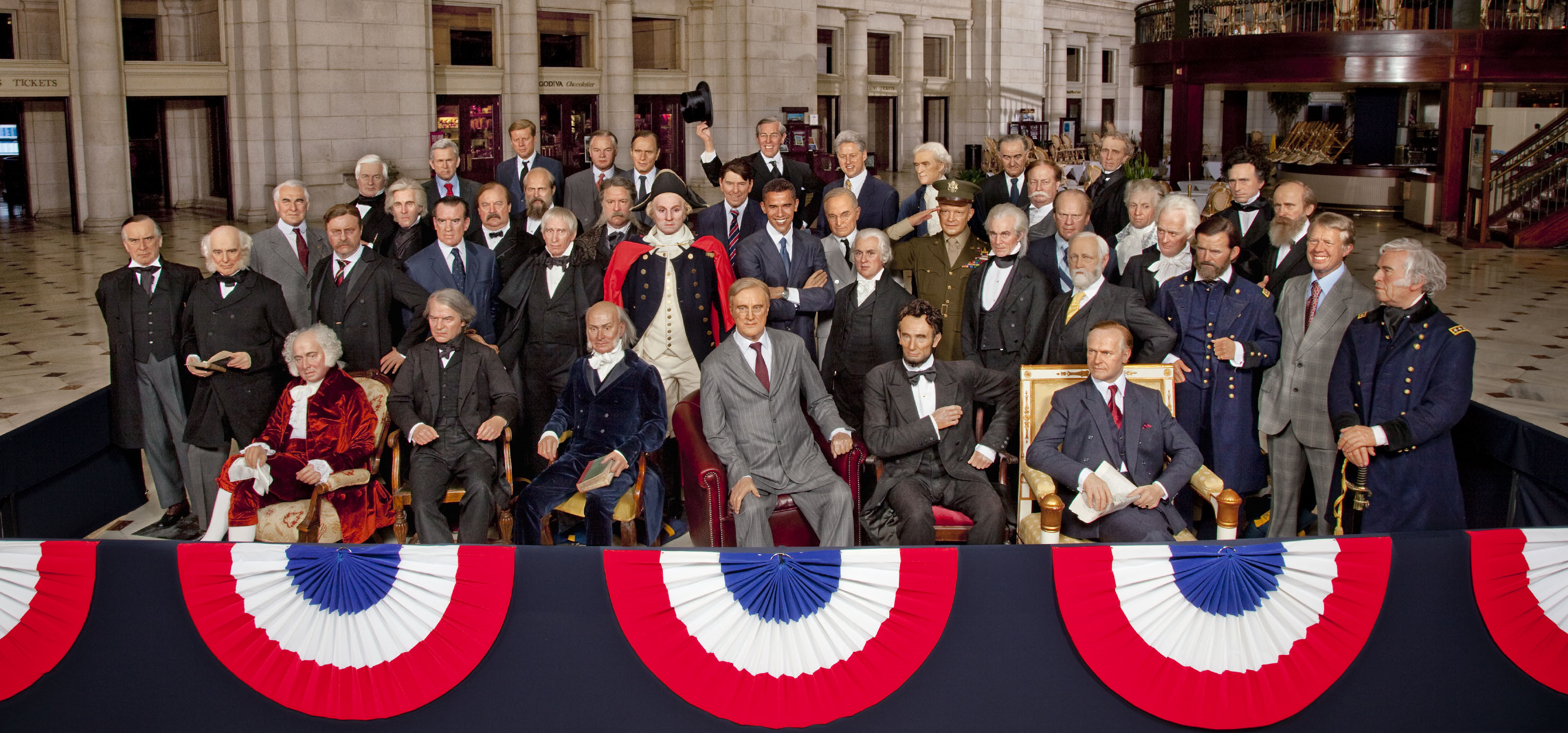
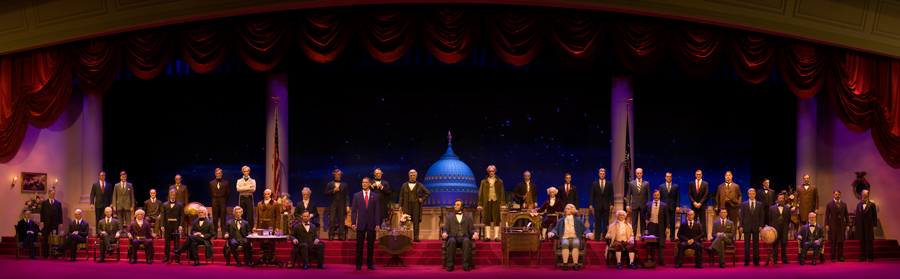
Hall of the Presidents

I have a lifetime love affair with the Presidents of the United States.

I love these guys, every one of them. The best of them are among the most skilled and courageous leaders in world history; the least of them took more risks and sacrificed more for their country than any of us ever can or will, including me. Every one of our Presidents, whatever their blunders, flaws and bad choices, was a remarkable and an accomplished human being, and exemplified the people he led in important ways. Every one of them accepted not only the burden of leadership, but the almost unbearable burden of leading the most dynamic, ambitious, confusing, cantankerous and often unappreciative nation that has ever existed. I respect that and honor it.

I have been a President junkie since I was eight years old. It’s Robert Ripley’s fault. My father bought an old, dog-eared paperback in the “Believe it or Not!” series and gave it to me. It was published in 1948. One of Ripley’s entries was about the “Presidents Curse”: every U.S. President elected in a year ending with a zero since 1840 (William Henry Harrison) had died in office, and only one President who had dies in office, Zachary Taylor, hadn’t been elected in such a year. The cartoon featured a creep chart—I still have it—listing the names of the dead Presidents, the years they were elected, and the year 1960 with ???? next to it. When Jack Kennedy, the youngest President ever elected, won the office in 1960, my Dad, who by that time was sick of me reminding him of the uncanny pattern, said, “Well, son, so much for Ripley’s curse!”

You know what happened. (John Hinckley almost kept the curse going, but Ronald Reagan, elected in 1980, finally broke it.) That year I became obsessed with Presidential history, devising a lecture that gave an overview of the men and their significance in order. My teacher allowed me to inflict it on my classmates.  Much later, Presidential leadership and character was the topic of my honors thesis in college. When I finally got a chance to go to Disneyland, the first place I went was the Hall of Presidents. When the recorded announcer said, “Ladies and Gentlemen, the Presidents of the United States!” and the red curtain parted to show the audio-animatrons of all of them together, it was one of the biggest thrills of my life.

Today I will honor our past Presidents with some of my favorite facts about each of them, trying hard not to get carried away. Is it ethics? It’s leadership, which has always been the dominant sub-topic here, but yes, it’s ethics.  I know I’m hard on our Presidents, as I think we all should be: supportive, loyal, but demanding and critical. I am also, however, cognizant of how much they give to the country and their shared determination to do what they think, rightly or wrongly, is in the country’s best long-term interests. File this post under respect, fairness, gratitude, and especially citizenship. And now…

“Ladies and Gentlemen, the Presidents of the United States!“

Continue reading →

Comment of the Day: “The President’s Irresponsible And Untrue ‘One in Five Women Are Raped’ Claim”

numbers_statistics_stats

Rich (in CT) adds a superb and learned enhancement to the day’s post about President Obama’s dubious rape claims during the Grammy Awards.  It raises a question I hadn’t considered before: is part of the problem that researchers are as clumsy in their understanding of language as liberal arts types are in their use of statistics and numbers? The word “rape” has meaning; this is no place for Humpty Dumpty’s habit of using words to mean whatever one pleases. [“When I use a word,’ Humpty Dumpty said in rather a scornful tone, ‘it means just what I choose it to mean — neither more nor less.’ ’The question is,’ said Alice, ‘whether you can make words mean so many different things.’’The question is,’ said Humpty Dumpty, ‘which is to be master — that’s all.”—― Lewis Carroll, “Through the Looking Glass” ] Rich writes, “This data is important, as mental health and sexual disease propagation is affected by such contact, even if the traditional criteria imaged for “rape” is not met. ” I’ll concede that the data is important, but shouldn’t important data be clearly and accurately described? The data isn’t about rape! It’s about a variety of conduct linked by the researchers that they chose to call “rape,” knowing, presumably, that people who never read the data will take the misleading “rape” description and use it to confuse, persuade, deceive, and engage in scaremongering for political gain.

Rich writes that “not enough evidence is given to suggest that either study is unethical in and of itself.” Isn’t using vague, overly broad and misleading terminology for a study that is going to be made public intrinsically unethical—irresponsible, incompetent, untrustworthy?

Here is Rich (in CT)’s enlightening Comment of the Day on the post “The President’s Irresponsible And Untrue ‘One in Five Women Are Raped’ Claim”: Continue reading →

Now THIS Is An Ad Hominem Attack! or “Boy, Is Howard Dean An Ass, or What?”

“True, Harry didn’t go to college, but he’s a Democrat.”

People commenting on Ethics Alarms constantly accuse me of making ad hominem attacks, when what they mean to say is “You’re name-calling.” I’ll cop to name-calling. It’s can be a bad habit, but it has its uses, best illustrated when President Ronald Reagan referred to the Soviet Union as an “evil empire.” The description was true, and it immediately focused values-based criticism on a government and culture that needed it and deserved it.

Ad hominem, in contrast, is a logical fallacy in which one attempts to counter a substantive argument by attacking the character or other aspects of the advocate that can’t possibly have any bearing on the argument’s validity. For example, “you’re uglier than a pug” does nothing to disprove the substance of your adversary’s position, even if he is. Similarly, Bill Cosby has argued, even before 34 women accused him of raping them, that his advocacy of black community responsibility should not be undermined because of questions about his own rectitude.

There is nothing inherently fallacious, however, about diagnosing the conduct or statements of someone as proof that he or she is a fool, or a liar, or a jerk. It may not be civil, and it may be unfair, but it is not an ad hominem attack. As I have  explained it before, if I say you are an idiot because I think your comments are idiotic, that is a legitimate, if rebuttable assumption. (I may also be using “you are an idiot” as shorthand for “you are talking/sounding/acting like an idiot, and should avoid that.”) If I say you are an idiot, and therefor everything you say must be dismissed and ignored as the rantings of an idiot, that’s an unethical debating technique, ducking the argument by impugning the advocate.

Distinguishing between these very different but similar-appearing phenomenon can be a problem when trying to be fair to someone whose prior statements and conduct have already generated a negative diagnosis, and thus a bias. I have concluded, for example, that Joe Biden is a dolt, that Michele Bachmann is not playing with a full deck; that Sarah Palin is intellectually lazy and irresponsible, that Newt Gingrich is manipulative and untrustworthy, that Bill Maher is a pompous, none-too-bright blowhard and that Howard Dean is a vicious and unscrupulous ideologue. Nonetheless, I have to fight to assess what they say on the basis of merit, not my well-considered assumptions. It’s hard. When an idiot asserts something, is it unreasonable to be more skeptical of the statement than one would if, say, a brilliant, credentialed, unbiased observer said the same thing? (Wow—I can’t think of a single one!) No. And this is why ad hominem attacks, especially coy, subtle, clever ad hominem attacks, work so well in politics.

This brings us to that vicious and unscrupulous ideologue, Howard Dean. Continue reading →

The President’s Irresponsible And Untrue “One in Five Women Are Raped” Claim

In a video that aired during the Grammy Awards on Feb. 8, President Obama stated, as President of the United States and a certifiable hero to the kind of citizens who watch the Grammy Awards, this:

“Right now, nearly one in five women in America has been a victim of rape or attempted rape.”

Let’s begin with the fact that this is false, or at least, there is no reason to believe it is true, or even close to true. (More about this in a minute.) Was the President’s statement a lie? We can’t tell. If the President believes that rape is so common that 20% of all women are raped, then what he said is not a lie (a false statement knowingly made by the speaker in order to deceive), which leads to some uncomplimentary conclusions:

a. He has a remarkably low opinion of his own nation and culture…but then we knew that, didn’t we?

b. He believes what he is told without challenging it or examining an assertions’ origin, methodology and assumptions. Really? This guy is supposed to be brilliant. I would think such a jaw-dropping and frightening statistic would mandate some examination, but see a.

c.  Why hasn’t this been a major focus of his administration? Isn’t the President alarmed about this? Why is the Attorney General running around the country holding the hands of parents of dead kids who attack police officers and fighting attempts to make voters prove who they are at the polls if women are being raped like The U.S. is the Congo? Why is the Presidentusing his time to make faces on videos to sell Obamacare? Isn’t this clearly a reason to make one of his “I will not rest” speeches, in this case not resting until the rape frequency in the Land of the Free is lower than that of a Columbia ghetto? He believes 20% of the women in the country under his stewardship  being raped in their lifetimes doesn’t rate mentioning in his “if wishes were horses” State of the Union, and relegates this horrendous health and crime emergency to…the Grammys?

If Obama doesn’t know if the stat is true, but said it anyway, then he was irresponsible. He’s President of the United States; people believe him, even after the shattered pledge of transparency and “If you like  your health care plan…” and the “red line” and all the rest. He can not fairly, honestly, ethically state that something is true when he doesn’t know whether it is true or not. That is a lie, then: not the statistic itself, but the implication that he believes it.

Or he knows the statement is false, and made it to deceive, because the ends justifies the means.

In the discussion following last week’s post about the persistence of the false narrative that Bush’s 2000 electoral vote victory was “stolen,” I briefly referenced the now mostly abandoned fake “1 in five” statistic  on campus rape, the one that prompted the 2014 Unethical Quote of the Year from Senator Claire McCaskill when it was debunked. This prompted blog warrior Liberal Dan to re-state the President’s proposition, since he is one of those people who continue to believe the President despite all evidence to the contrary. “One in 5 women are raped,” he wrote, unequivocally, linking to a 2011 New York Times study.

I wish I had the time and space to muse about what it says about an intelligent American when a stat like that one, whether it is used by the Times, the President, or Lena Dunham, doesn’t set off his or her ethics alarms, Fake-Stat-O-Meter and bullshit buzzer. This is what happens, though, when the President makes a factual assertion. I knew the stat was crap; I just don’t have the time to prove it’s crap to people who want to believe it. I assumed someone would pretty quickly, and sure enough, the Washington Post’s hard-working, liberal-biased but diligently trying to compensate Fact-checker Glenn Kessler came through.

In his Washington Post column today, Kessler gives us the results of his research into Obama’s lazy/irresponsible/dishonest claim. His findings? Continue reading →